
Marc-William Palen
History Department, University of Exeter
Follow on Twitter @MWPalen
From the long death of slavery to how Rosa Luxemburg anticipated the end of capitalist globalization, here are this week’s top picks in imperial and global history.
The Long Death of Slavery
Empire Podcast
Emancipations are never clean, they don’t happen overnight. Instead, they are long, drawn-out, messy processes that leave many still oppressed. Listen as William and Anita are joined by Kris Manjapra to discuss the century of emancipations and their legacy. [listen here]
Africa, the Center of History
Adom Getachew
New York Review of Books
W.E.B. Du Bois, the African American sociologist and historian and a cofounder of the National Association for the Advancement of Colored People, was fond of the Latin phrase Semper novi quid ex Africa (out of Africa, always something new). Although of Greek origin, the phrase is most often associated with the Roman philosopher Pliny the Elder, who included it in his Natural History (77 CE). For Pliny, Africa was a place of strange and unusual creatures. For Du Bois, however, the continent was most remarkable for its contributions to human development. “It is probable that out of Africa came the first civilization of the world,” he insisted. From his publication of The Negro in 1915 until his death in 1963, in Ghana—where he was at work on an ambitious Encyclopedia Africana—he wrote against the conception of Africa as what Hegel called the place without history.
Du Bois’s project was twofold. He first sought to show that Africa did indeed have a history. From its “dark and more remote forest vastnesses came…the first welding of iron, and we know that agriculture and trade flourished there when Europe was a wilderness,” he wrote. Second, he aimed to explain how African achievements had been erased by the processes that produced European global dominance. The depiction of Africa as the place without history was the product rather than the cause of the enslavement and forced migration of over 12 million Africans, followed by the colonial conquest of the continent. In the course of this historical drama, he argued, “‘color’ became in the world’s thought synonymous with inferiority, ‘Negro’ lost its capitalization, and Africa was another name for bestiality and barbarism.” [continue reading]
Indo-Caribbeans in the UK: ‘Our stories are yet to be heard’
Luke Wolstenholme
BBC
Jana Ally struggled to fit in with the British Asian community around her when she was younger. Her parents took her to an Indian dance class because they wanted her “to have something where I can relate back to my culture”. But 25-year-old Jana says she couldn’t relate because she isn’t Indian.
She’s Indo-Caribbean, part of a community that came to the UK as part of the Windrush generation. They’ve built a bright, vibrant culture since, but tell BBC Asian Network their stories aren’t often heard and not many people know about them. The UK census has no classification for “Indo-Caribbean” – like it does “Black Caribbean” for example – meaning no-one knows the exact population figures. The closest classification is “Asian other”, which is something that Jana says hasn’t been helpful growing up. “It just really made me feel like I was other, it made me feel like I was invisible and overlooked,” she says. “I look like I am South Asian, even if just half, and so I just started to fit into that box.” [continue reading]
Rosa Luxemburg Anticipated the Destructive Impact of Capitalist Globalization
Peter Hudis
Jacobin
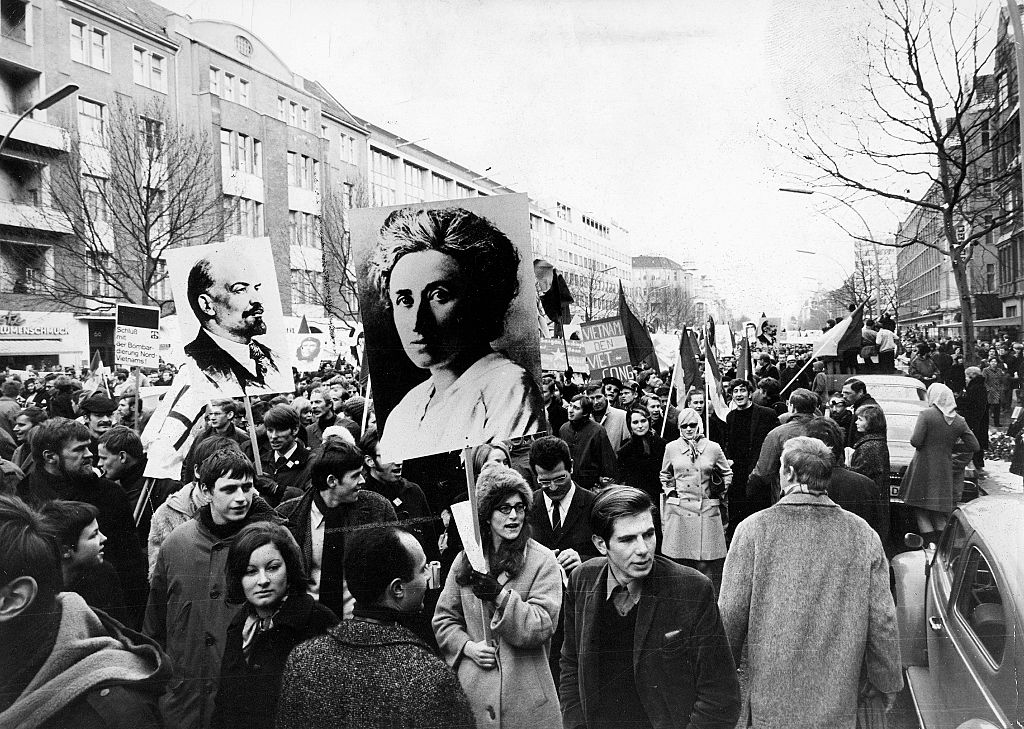
Few issues have taken on greater importance in recent decades than the destructive impact of capitalist globalization on indigenous peoples, noncommodified social relations, and the natural environment. It therefore should come as no surprise that there has been a revival of interest in one of the outstanding analyses of this phenomenon: Rosa Luxemburg’s 1913 work The Accumulation of Capital: A Contribution to the Economic Theory of Imperialism.
Luxemburg’s book was published on the eve of World War I, but some of its themes are strikingly relevant to our own time. A new, much improved English translation has become available over the last decade as part of the project to publish her complete works. In this essay, I will give a short introduction to the key arguments Luxemburg made about the dynamics of capitalism and discuss how they might be applied to the system today. [continue reading]
 Imperial & Global Forum
You must be logged in to post a comment.