
Marc-William Palen
History Department, University of Exeter
Follow on Twitter @MWPalen
From Chile’s coup at 50 to the imperial history behind the London meat industry, here are this week’s top picks in imperial and global history.
CHILE’S COUP at 50
Kissinger Briefed Nixon on Failed 1970 CIA Plot to Block Allende Presidency
Peter Kornbluh
National Security Archive
As the commander in chief of the Chilean army, Gen. René Schneider, lay dying in a hospital after being shot in a CIA-backed coup plot in October 1970, President Nixon placed a phone call to his national security advisor, Henry Kissinger, to ask “What is happening in Chile?” according to a transcript of their conversation posted today by the National Security Archive. Kissinger told the President that the CIA-backed plot to block Socialist president-elect Salvador Allende from being inaugurated—an operation ordered by Nixon five weeks earlier—had not succeeded. The Chilean military turned out to be “a pretty incompetent bunch,” according to Kissinger, having failed to seize power after the removal of Gen. Schneider, Chile’s top pro-constitution officer.
“There’s been a turn for the worse,” Kissinger explained, referring to the Schneider assassination, “but it hasn’t triggered anything else. The next move should have been a government takeover, but that hasn’t happened.” “The [congressional] election is tomorrow and the inauguration is [November] third,” Kissinger informed Nixon. “What they could have done is prevent the Congress from meeting. But that hasn’t been done. It’s close, but it’s probably too late.” [continue reading]
Digitising the volumes of the South African Native Affairs Commission
Chloe Rushovich
Cambridge University Libraries Special Collections
As a part of a shared digital curation project, Creating New Connections, Cambridge University Library has recently digitised Godfrey Lagden’s presentation copy of the South African Native Affairs Commission (SANAC) report and minutes of evidence. These volumes were presented to the Royal Commonwealth Society (RCS) collection by Frances Audley Preston (née Lagden), one of Godfrey Lagden’s daughters. The SANAC volumes were initially identified for digitisation by the Smuts Professor of Commonwealth History, Saul Dubow, who has published on the history of segregation in South Africa. The SANAC volumes are important to South African history as they mark one of the earliest discussions of racial segregation and serve as a precursor to the Natives’ Land Act of 1913, the Natives’ Urban Areas Act of 1923, and, ultimately, the Group Areas Act of 1950.
The commission, chaired by Sir Godfrey Lagden (1851-1934), later a vice-president of the Royal Colonial Institute (an earlier iteration of the RCS), took evidence from settlers and Africans across the four colonies, then known as The Cape (Western Cape, Eastern Cape, Northern Cape, parts of North West province), Transvaal (Limpopo, Mpumalanga, North West province, Gauteng, parts of KwaZulu-Natal), Natal (KwaZulu-Natal), and Orange River (Free State province), and across the territories then known as Rhodesia (Zimbabwe), Bechuanaland (Botswana), and Basutoland (Lesotho) between 1903 and 1905. [continue reading]
Blistering barnacles! Tintin mystery in Brussels after bust of Hergé vanishes
Lisa O’Carroll
Guardian
It would have been a suitable assignment for Tintin, the intrepid Belgian boy reporter and his multitalented, intuitive dog Snowy. Across Brussels, where Hergé, the creator of the eponymous comic books, was born, there are constant reminders of one of its most famous exports. A giant image of the character clinging to the back of a steam train from the book Tintin in America adorns one of the exits from the city’s Eurostar station, while a mural of Tintin, his seafaring friend Captain Haddock and Snowy covers the gable end of a house just over a mile away, surviving graffiti and vandalism.
But less than 10 days ago, a bust of Hergé that was situated in a quiet residential area away from the tourist trail disappeared, leading to speculation it had succumbed to the growing decolonisation movement. It later emerged that the mayor of the local municipality of Etterbeek decided to remove the sculpture of the cartoonist, whose real name was Georges Remi, after a glass box covering it for safety had been badly damaged. [continue reading]
The Tran Quang Co Memoir: A Translator’s Introduction
Merle Pribbenow
Sources and Methods
During the mid to late 1980s, the Communist regime in Vietnam faced a range of crises that threatened its very existence. The country’s economy was in ruins as the result of the regime’s harsh implementation of disastrous hardline socialist economic policies. Vietnam’s sole remaining source of foreign assistance, the Soviet Union, was in the process of collapsing and was drastically cutting back its aid (both military and economic) to Vietnam. The nation was also staggering under the crush of the effort to maintain an army of more than 1.5 million soldiers engaged in three different armed conflicts (in Cambodia, against the Chinese Army along Vietnam’s northern border, and supporting the efforts of its Communist allies in Laos to eliminate a nascent guerrilla insurgency in that country). Hundreds of thousands of Vietnamese citizens were fleeing the country by boat every year.
The Socialist Republic of Vietnam had become a virtual international pariah and it was completely surrounded by hostile neighbors (China and the countries of the Association of Southeast Asian Nations (ASEAN) that were backed by the United States. In December 1986, desperate to extricate the nation from its desperate straits, the Communist Party’s 7th National Party Congress voted for a radical change of policy, called Doi Moi (or “renovation”), which included instituting a Chinese-style semi-free market economy to replace the country’s socialist government-controlled economic system, ending all three of Vietnam’s armed conflicts, and opening Vietnam up to the outside world in order to seek outside aid and investment. [continue reading]
Meat and Museums
Jack Hanlon
History Workshop
‘Smithfield might be one of the best and most unknown treasures in Argentina,’ writes avid golfer Javier Pinton in a review of Smithfield Golf Course in December 2022. Located 50 miles outside Buenos Aires, in Zárate, this golf course is an unlikely testament to the global history of London’s Smithfield market. The course was first established as a leisurely accessory to a British-owned factory and refrigeration works which shipped chilled beef from Argentina to London throughout the first half of the twentieth century. Established in 1903 by the Brewster family, the ‘Smithfield and Argentine Company’ was one of many British companies involved in the Argentine meat industry, forming a part of a global food system that supplied Britain with produce from its settler colonies and ‘zones of influence’ in the Southern Hemisphere.
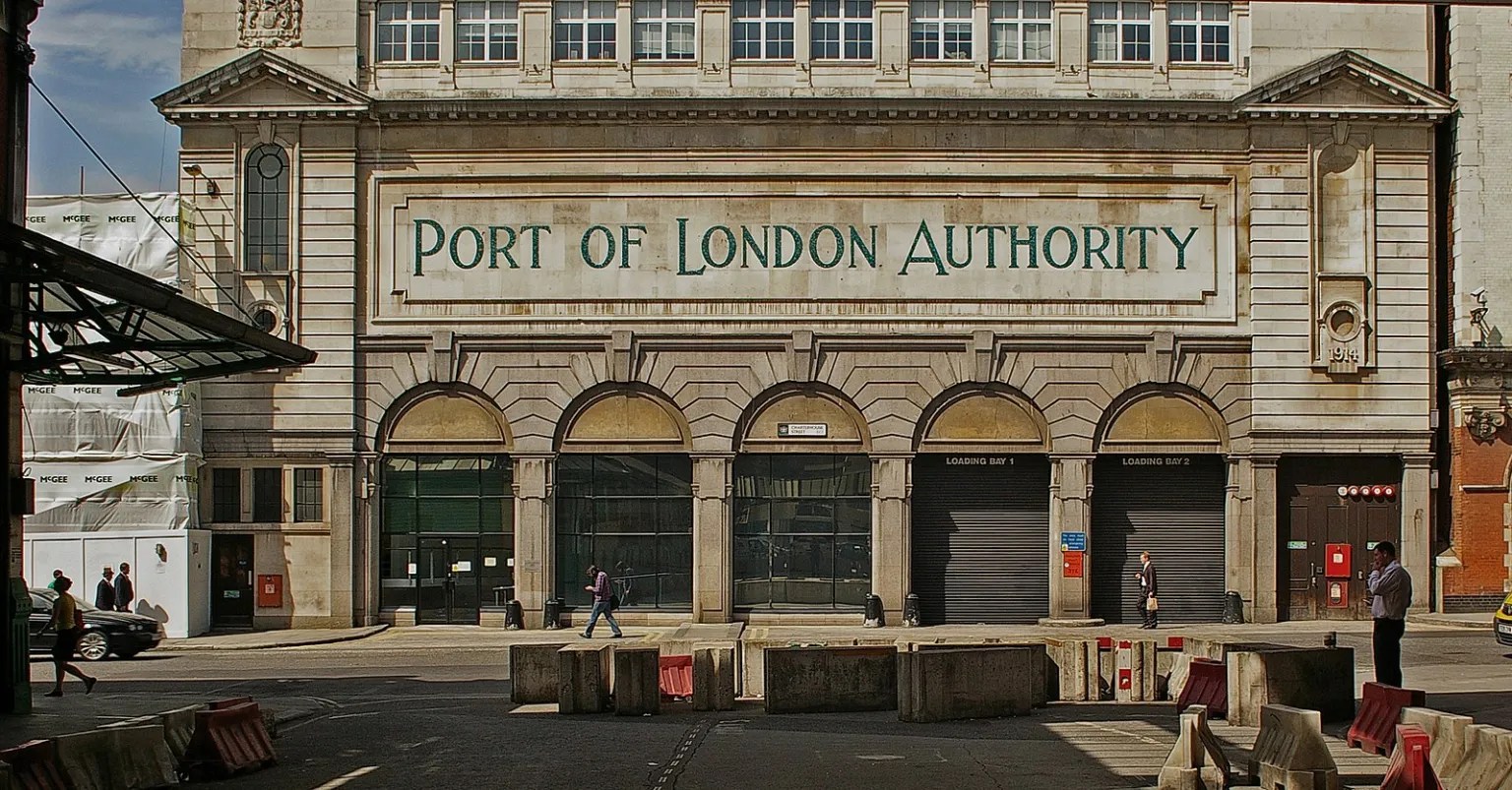
As the naming of the factory suggests, the Brewsters had a long history at London’s Smithfield market and envisioned their Zárate ‘Smithfield Frigorifico’ as a direct satellite of its metropolitan namesake. When they were expelled from Argentina by Peron in the 1940s, the plantfunctioned under the same name although now under Argentine control. The site continued to export meat over the coming decades before falling into disrepair and abandonment, finally closing its doors in 1990. In a remarkably timely parallel, both of these Smithfield’s are currently being converted into museums. In London, the market will soon close its gates for the final time: the city’s meat traders are being relocated to the urban fringe and the Museum of London will relocate into a derelict wing of the market building. Meanwhile, in Zárate, the Smithfield frigorifico is being converted into a ‘Museo de la Carne’. [continue reading]
 Imperial & Global Forum
You must be logged in to post a comment.