
Marc-William Palen
History Department, University of Exeter
Marc-William Palen
History Department, University of Exeter
Cross-posted from the Faculty of Humanities, Arts and Social Sciences Research
University of Exeter
We are inviting expressions of interest from post-doctoral researchers considering making an application for the 2024 Leverhulme Early Career Fellowships scheme. The call opens 1 January 2024. The closing date for applications is 22 February 2024 at 4pm and further information and guidance can be found on the Leverhulme Trust’s website. We will be supporting a limited number of applications for the scheme and there will be an internal sift for candidate selection.
Leverhulme Early Career Fellowships aim to provide career development opportunities for those who are at a relatively early stage of their academic careers, but who have a proven record of research. The expectation is that Fellows should undertake a significant piece of publishable work during their tenure, and it is hoped that Fellowships will lead to a more permanent academic position, either within the same institution or another institution. Approximately 145 Fellowships will be available in 2024.
Continue reading “Leverhulme Early Career Fellowships”
Kensa Broadhurst
University of Exeter
Cross-posted from A Study of the Cornish Language from the late eighteenth to the early twentieth century
Last week I was in the very privileged position of attending the PhD Academy at Venice International University. The week long course promised to improve research practice and transversal skills for young scholars, but in reality it offered far more than that. Nineteen PhD researchers from sixteen nations, based in Europe, Asia, Africa, and the Americas and representing the widest possible range of research topics, alongside faculty staff from Italy, Belgium, and Slovenia, came together to both learn from each other and share experiences and ideas. It was a true example of international collaboration between well-established scholars and those just setting out on their research journeys. For me, it was incredible to be at an academic event and be the only representative from the United Kingdom. As such, it allowed me to gain a wide range of valuable insights, alongside getting to know a group of people who are all either leaders in their field, or with the potential to be so in the future. All this, in one of the most beautiful settings in the world (and one which offers many research questions of its own), Venice.

Venice International University is a collaboration between nineteen universities from all over the world. It offers summer schools (such as the one I attended in June on Linguistic Landscapes), the PhD Academy, and opportunities for undergraduates to spend a semester at the university on the island of San Servolo, located between the historic centre of Venice and the Lido. As such, the university is a true example of both interdisciplinarity and international collaboration.
Continue reading “Interdisciplinarity and International Collaborations”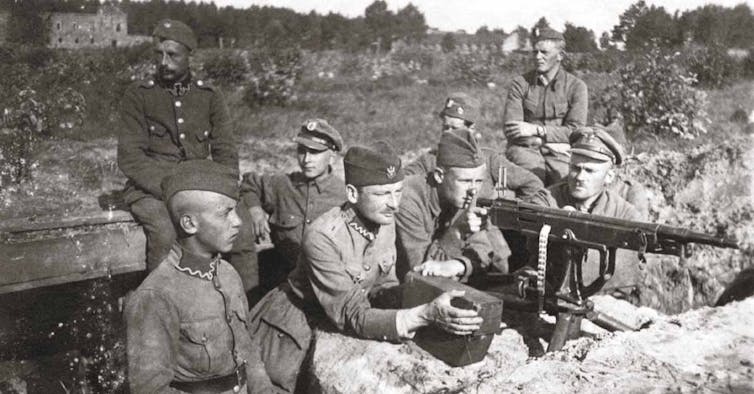
Peter Whitewood
York St John University
From the beginning, Russia has framed its invasion of Ukraine as necessary for the defence of the country. According to Vladimir Putin, Nato’s deliberate and aggressive encroachment into a region once dominated by Moscow is to blame, as the west seeks to dismember Russia. By extension, Ukraine – a country, according to Putin, without agency and turned into a Nato military outpost – is little more than a pawn in Washington’s nefarious game.
Some conspiracies in Russian propaganda come and go – notably the absurd claims that the US had developed bioweapons sites across Ukraine. But Putin’s core geopolitical framing of the war has remained consistent: Nato and the forces of the “collective west” represent an existential threat to Russia.
Given the popular notion of rival geopolitical blocs and the “no-limits friendship” between Moscow and Beijing, comparisons to the former cold war are commonplace. Commentators and academics are keen to scrutinise various similarities and distinctions. But there is an underappreciated comparison between Russia’s invasion of Ukraine and another act of aggression a century earlier: the Red Army’s invasion of Poland in 1920 under Vladimir Lenin.
Although more than 100 years ago, the Bolsheviks framed this conflict in strikingly similar terms to the conspiracies running through Russian propaganda today. Continue reading “Russia’s disastrous decision to invade Poland in 1920 has parallels with Putin’s rhetoric over Ukraine”

Marc-William Palen
History Department, University of Exeter
Follow on Twitter @MWPalen
Alun Withey
University of Exeter
Cross-posted from Dr Alun Withey
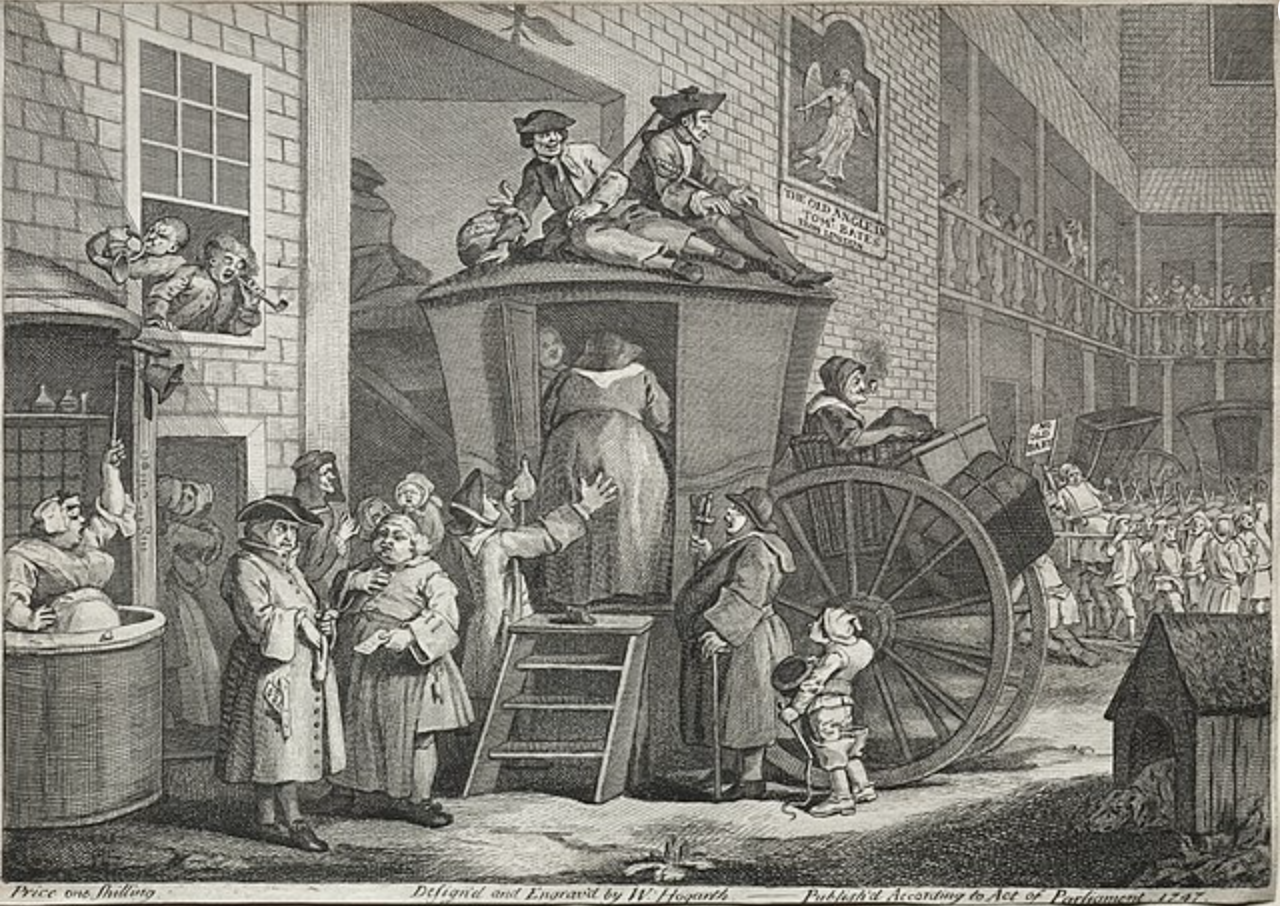
As my new project on the history of travel, health risk and preparation begins to get underway, one of the things that I am thinking about is the place of travel within early modern medical remedy culture. What kinds of conditions could befall travellers? What did early modern people think that the processes of travel, and different kinds of transport, could do to their bodies, and what types of remedies were available to deal with them. Research is still at a very early stage, but there are already some interesting hints that remedies were available to treat a variety of travel-related conditions.
Before the broadening of travel in the 18th century, many journeys were relatively short, and local. As a great deal of work has shown in recent years, the early modern population was surprisingly mobile. People travelled from parish to parish, and from rural to urban areas as they visited market towns to buy and sell goods. Perhaps the majority of journeys were taken on foot, on horseback or on a cart or, for those with means, in small carriages. By the later eighteenth century, post carriages were also available to private passengers.

Marc-William Palen
History Department, University of Exeter
Follow on Twitter @MWPalen
Marc-William Palen
History Department, University of Exeter
Follow on Twitter @MWPalen
 Imperial & Global Forum
You must be logged in to post a comment.