
Marc-William Palen
History Department, University of Exeter
From the new colonialist food economy to strolling into Germany’s conflicted postcolonial memory, here are this week’s top picks in imperial and global history.
The New Colonialist Food Economy
Alexander Zaitchik
Nation
This past summer, the global trade regime finalized details for a revolution in African agriculture. Under a pending draft protocol on intellectual property rights, the trade bodies sponsoring the African Continental Free Trade Area seek to lock all 54 African nations into a proprietary and punitive model of food cultivation, one that aims to supplant farmer traditions and practices that have endured on the continent for millennia.
A primary target is the farmers’ recognized human right to save, share, and cultivate seeds and crops according to personal and community needs. By allowing corporate property rights to supersede local seed management, the protocol is the latest front in a global battle over the future of food. Based on draft laws written more than three decades ago in Geneva by Western seed companies, the new generation of agricultural reforms seeks to institute legal and financial penalties throughout the African Union for farmers who fail to adopt foreign-engineered seeds protected by patents, including genetically modified versions of native seeds. The resulting seed economy would transform African farming into a bonanza for global agribusiness, promote export-oriented monocultures, and undermine resilience during a time of deepening climate disruption. [continue reading]
Artworks seized from three US museums over Nazi looting claims
Oscar Holland
CNN
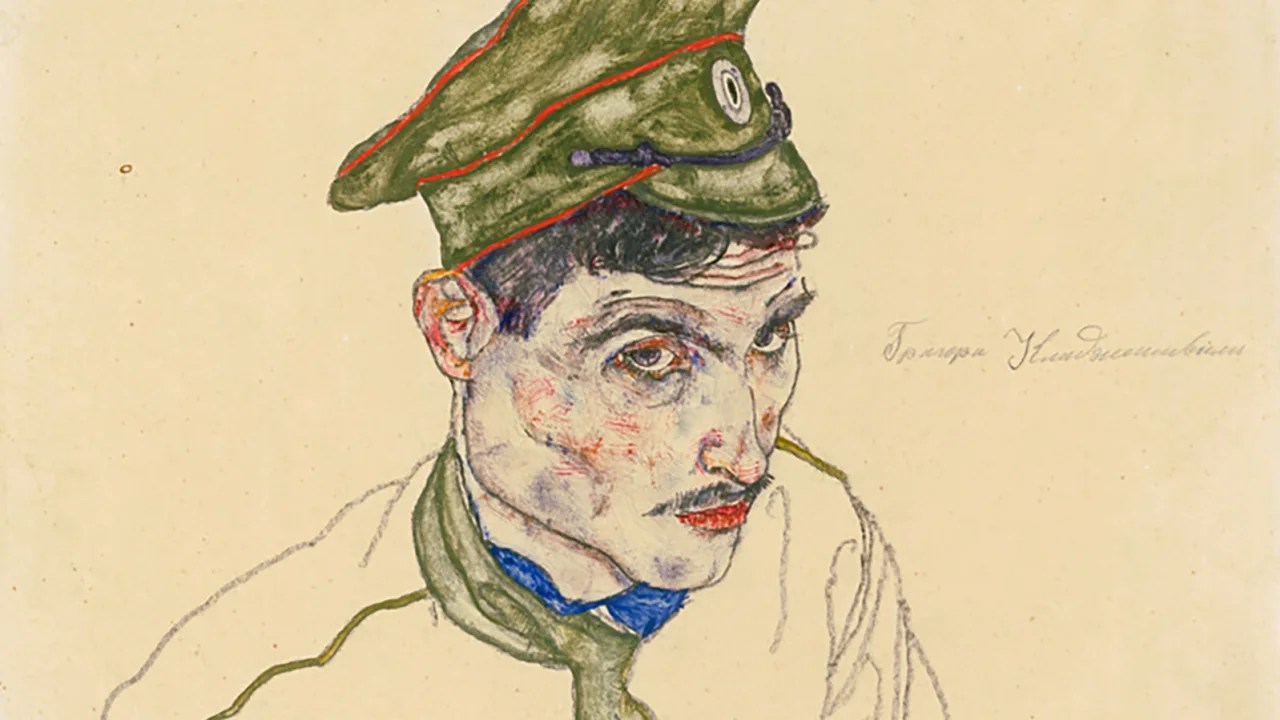
US investigators seized artworks by Austrian painter Egon Schiele from three museums amid claims Nazis stole them from a Jewish collector during World War II. Museums in Chicago, Pittsburgh and Oberlin, Ohio were named in search warrants issued by New York state’s Supreme Court, which said it has “reasonable cause” to believe that the works in their collections are “stolen property.”
The Manhattan District Attorney’s office declined CNN’s request for comment on the nature of its investigation, though all three artworks — the Chicago Institute of Art’s “Russian Prisoner of War,” Carnegie Museums of Pittsburgh’s “Portrait of a Man” and the Allen Memorial Art Museum’s “Girl with Black Hair” — are currently part of civil lawsuits filed by the heirs of Fritz Grünbaum. Prior to the war, Grünbaum, a well-known Austrian comic, cabaret star and songwriter, amassed an art collection of almost 450 works, according to court documents filed by his heirs. Among them were 81 artworks by Schiele, an expressionist painter and protégé of Gustav Klimt. [continue reading]
Does Japan’s Economy Prove That Neoliberalism Lost?
Michael Hirsh
Foreign Policy
In case you hadn’t noticed, the world economy’s gone rather topsy-turvy. Japan is up while China is down—and in danger of Japan-like deflation. The United States is practicing Japanese-style protectionism and industrial policy, while Japan is championing what Washington used to promote: newer, better open trade rules.
These trends represent a virtual reversal of the neoliberal narrative we had grown used to since the end of the Cold War, when the disintegration of Soviet communism appeared to discredit the whole idea of government-directed economic growth. This was followed by the collapse of Japan’s bubble economy in the early 1990s, which in turn touched off a long period of slow, geriatric growth in the granddaddy of the East Asian “miracle.” But the economics profession, having made so many bad calls since this long, strange trip of globalization began, can’t keep up. That’s because most mainstream economists still have trouble admitting that their model of free-market fundamentalism—the “Washington Consensus”—has failed catastrophically, and in several dimensions. [continue reading]
HG Wells, Hitler and Tasmania’s dark past: the stories behind arrival cards in Australia’s National Archives
Tory Shepherd
Guardian
Years after he wrote The War of the Worlds – inspired by European massacres of Tasmanian Aboriginal people – HG Wells arrived in Australia, his documents describing him as a “man of letters”. On his infamous visit to Australia in 1938, he never made it across Bass Strait, but he did manage to create an international uproar by criticising the Nazi government in an era of appeasement.
By the time Wells came to Australia he was one of the world’s most famous authors and thinkers. His 1898 classic imagines Martians fleeing a dying planet to take over Earth, landing in the genteel English countryside. It had been catapulted back into the public’s mind only weeks before Wells’s trip thanks to a panic-inducing radio broadcast of the text by Orson Welles on 30 October 1938. [continue reading]
A Stroll Into Germany’s Conflicted Postcolonial Memory
Anne van Mourik
Justice Info
Berlin still has a monument commemorating German soldiers who died as “heroes” during the Namibian campaign, which resulted in the genocide of the Herero and Nama about 120 years ago. This tombstone shows how dominant and resistant to change Germany’s narrative is about its colonial past, according to scholar Anne van Mourik, who reflects on the controversial monument located in the German capital’s Columbiadamm garrison cemetery that may be soon removed.
In the garrison cemetery on Columbiadamm in Berlin’s Neukölln district, there is a four-foot-tall stone which commemorates seven German soldiers who volunteered for the “campaign in South West Africa” between January 1904 and March 1907 and “died a hero’s death”. In other words: this monument does not commemorate victims, but perpetrators of genocide. [continue reading]
 Imperial & Global Forum
You must be logged in to post a comment.