
Marc-William Palen
History Department, University of Exeter
Follow on Twitter @MWPalen
From South Africa’s forgotten freedom fighter to the origins of the Israel-Palestine conflict, here are this week’s top picks in imperial and global history.
Dimitri Tsafendas: South Africa’s Forgotten Freedom Fighter
Clare Xanthos
Medium
t’s nearly 30 years since the end of legalized racial oppression in South Africa — known officially as “apartheid.” However, most people still don’t know the name of an important anti-apartheid hero — a man named Dimitri Tsafendas (pronounced “Sa-fendas”); October 7th marks the 24th anniversary of his death in a psychiatric hospital.
In an attempt to bring an end to white supremacy in South Africa, Tsafendas assassinated South Africa’s then-Prime Minister, Hendrik Verwoerd, in 1966. The South African government responded to the assassination of the Prime Minister by incarcerating Tsafendas for the rest of his life; holding him for decades on death row; systematically torturing him; and labelling his actions as the senseless work of a “madman.” [continue reading]
Lenny Henry hopes Windrush drama will generate conversation about immigration
Tara Conlan
Guardian
Lenny Henry says he hopes his new Windrush-based drama Three Little Birds will prevent the “Disneyfication” of the racism his parents’ generation encountered and generate a conversation among children. The ITV series, which Henry wrote and stars in, is based on stories from his family and friends that he discussed with executive producer Russell T Davies. It shows the trials and racism faced by three women emigrating from Jamaica to England in the 1950s. In one scene they see a sign in a window that says, “no Blacks, no dogs, no Irish” and racist graffiti saying “wogs out”.
Speaking at the launch of the show, Henry denied suggestions their inclusion was too blunt, explaining that as he grew up, a local politician had the slogan “If you want an N-word for a neighbour vote Labour” – and Enoch Powell had made his “rivers of blood” speech in nearby Wolverhampton. He said: “We existed in a time of overt racism. What’s so brilliant about these people who came to this country and walked cold streets [and] overcame … is they did survive and they made friends, had allies and had relationships here. [continue reading]
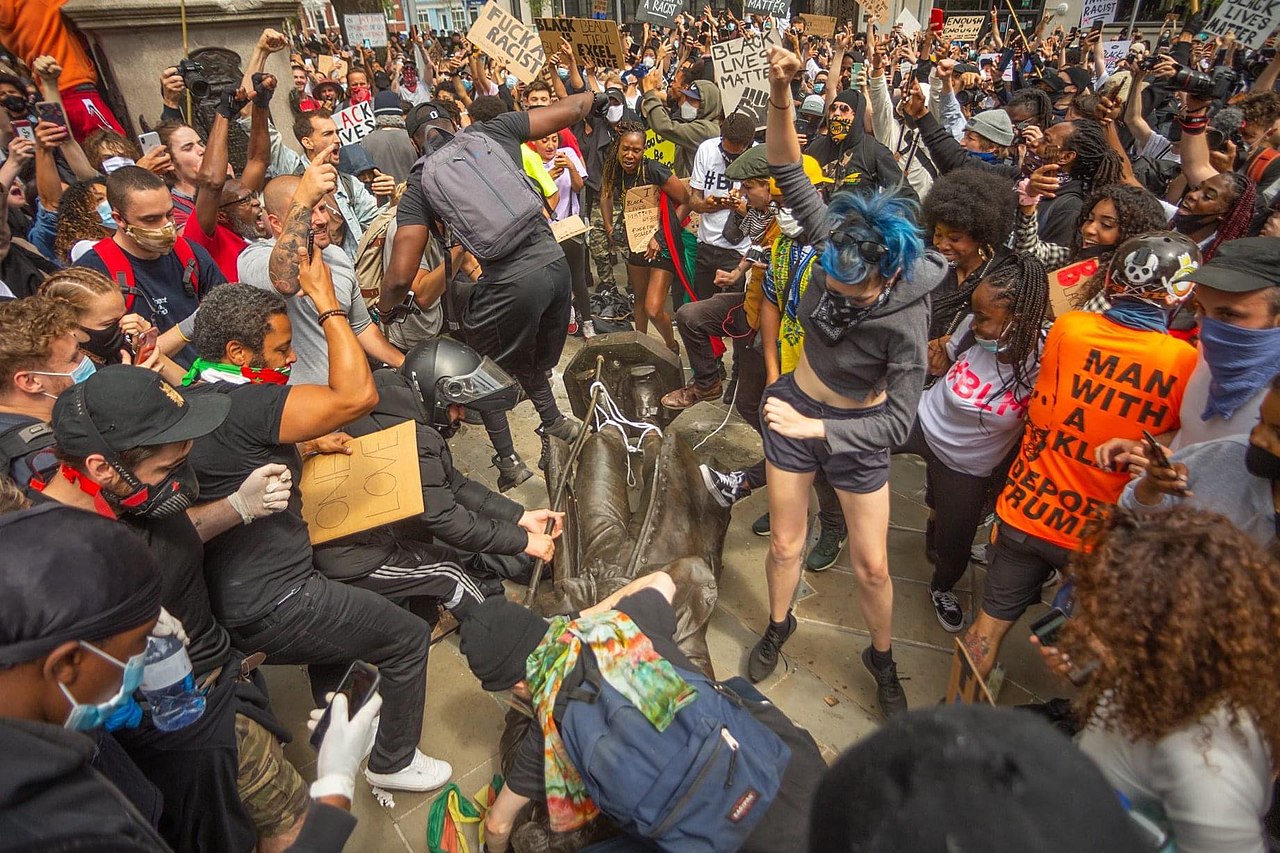
Plan to ‘retain and explain’ controversial statues is flawed – why we should always question our monuments
Claudine van Hensbergen
Conversation
The long-awaited government guidance on the official “retain and explain” policy suggests the UK’s contested statues and monuments be retained as long as additional context is provided. But given their controversial past, how do we go about that?
Done properly and creatively, with adequate funding and accurate, innovative storytelling, this could throw light on the different ways in which we might understand Britain’s past. The guidance has been several years in the making. The 2020 toppling of the Bristol statue of 17th-century slave trader Edward Colston led to contentious debate. A trial for criminal damage ensued but the “Colston Four” were cleared, their defence arguing that the act was “on the right side of history”. [continue reading]
Yes supporters say voice referendum ‘unleashed a tsunami of racism’
Sarah Basford Canales
Guardian
Indigenous groups who supported the voice campaign have broken their week of silence to express shock and grief at last Saturday’s result, accusing Australians who voted no of committing “a shameful act whether knowingly or not”.
The 12-point statement – issued on Sunday evening and described as being the “collective insights and views of a group of Aboriginal and Torres Strait Islander leaders, community members and organisations who supported yes” – said Australia had chosen “to make itself less liberal and less democratic” by voting no at the 14 October referendum. Australians overwhelmingly rejected the proposed Indigenous voice to parliament, with the highest yes vote recorded in the Australian Capital Territory at 61%, followed by Victoria at 45%. Queensland had the lowest yes vote at 31%. [continue reading]
Origins of the Israel-Palestine Conflict
William Dalrymple, Anita Anand, and Tom Segev
Empire Podcast
The Balfour Declaration was published on the 9th November 1917. It stated the intent of the British government to create a Jewish homeland in Palestine. This week, William and Anita are joined by Tom Segev to discuss the declaration and the ensuing British mandate for Palestine. [listen here]
 Imperial & Global Forum

You must be logged in to post a comment.