‘Remembering death in British military campaigns after 1945’ – Annual lecture of the Centre for Histories of Violence & Conflict (5 June)

The challenge of commemorating wars: Developing an archive of family response to British military death after 1945. Photographs: Newport. Credit: Stuart Griffiths.

Professor Helen Parr (Keele University) will deliver the annual lecture of the Centre for Histories of Violence & Conflict on Wed. June 5 at the University of Exeter.

When: Wed. June 5 from 3.30pm-5pm.

Where: Digital Humanities Laboratory, Queen’s Building, University of Exeter.

Abstract: How has Britain commemorated its military campaigns after the era of total war? After 1945, Britain was almost continually engaged in conflict, but the numbers of British military dead were comparatively small. By focusing on a fundamental, but neglected, war experience – the memory of death – this lecture will explore how experiences of and attitudes towards military death changed with British military engagements and world role, and as society altered from the stoicism and reticence of the world wars, towards a more individualised, emotionally expressive culture. Based on ongoing archival research and on oral history, and tracing changes in commemoration from the Korean war to the recent conflicts in Iraq and Afghanistan, the lecture suggests that the world wars have shaped British expectations of commemoration, but that how Britons think of death in military service has been transformed.

Continue reading “‘Remembering death in British military campaigns after 1945’ – Annual lecture of the Centre for Histories of Violence & Conflict (5 June)”
Martin Thomas on ‘The End of Empires and a World Remade’

Cross-posted from Princeton Ideas

Empires, until recently, were everywhere. They shaped borders, stirred conflicts, and set the terms of international politics. With the collapse of empire came a fundamental reorganization of our world. Decolonization unfolded across territories as well as within them. Its struggles became internationalized and transnational, as much global campaigns of moral disarmament against colonial injustice as local contests of arms. In The End of Empires and a World Remade, Martin Thomas tells the story of decolonization and its intrinsic link to globalization. He traces the connections between these two transformative processes: the end of formal empire and the acceleration of global integration, market reorganization, cultural exchange, and migration.

Continue reading “Martin Thomas on ‘The End of Empires and a World Remade’”

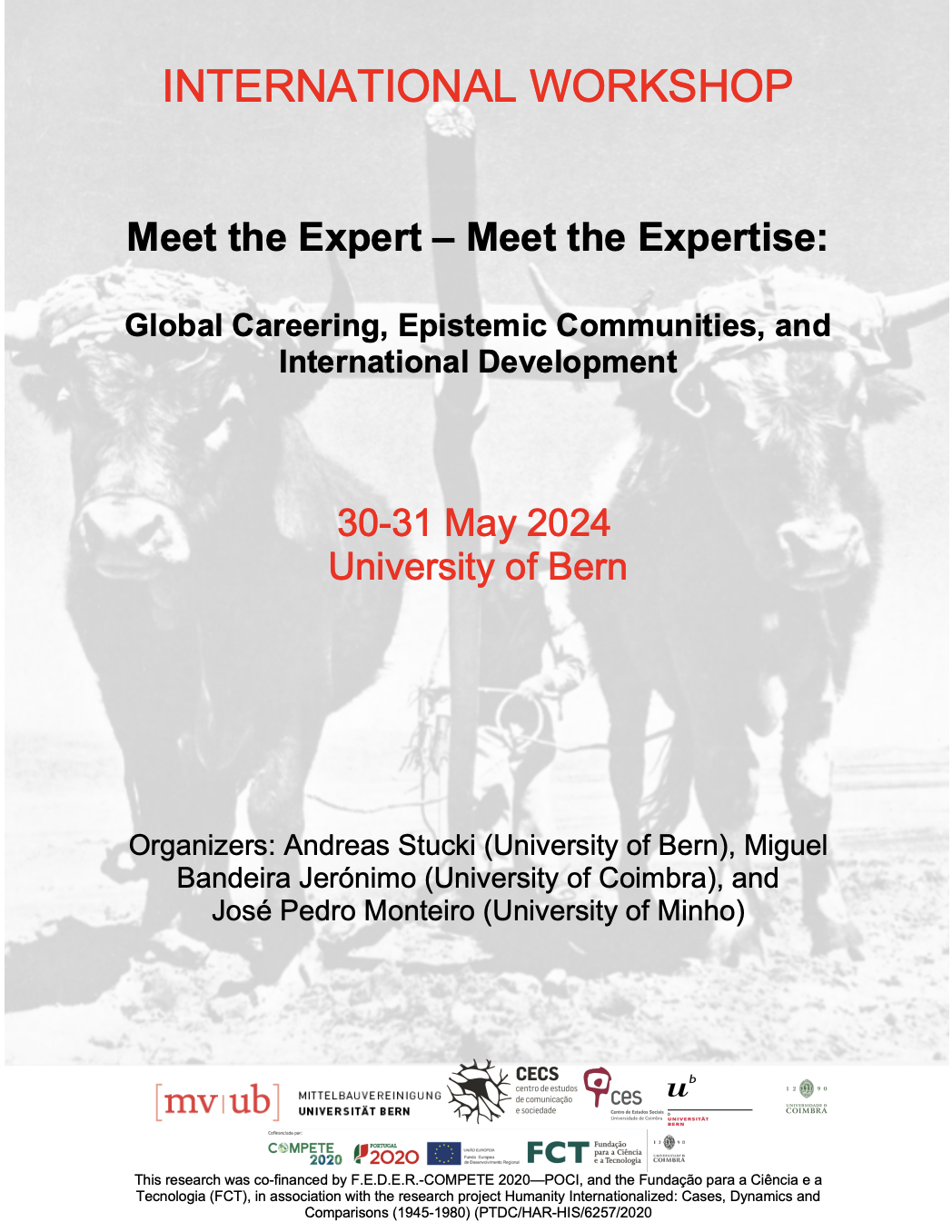
Workshop – Meet the Expert, Meet the Expertise: Global Careering, Epistemic Communities, and International Development

Thursday, 30 May 2024, 6-8 p.m. Unitobler, Lerchenweg 36, room F005

KEYNOTE

Martin Thomas (University of Exeter): Development’s Dilemmas: late colonialism and its constraints

Continue reading “Workshop – Meet the Expert, Meet the Expertise: Global Careering, Epistemic Communities, and International Development”