
Marc-William Palen
History Department, University of Exeter
How Trump’s re-election could upend the world. Here are this week’s top picks in imperial and global history.
How History Will View Trump’s Return
Ravi Agrawal, Julian E. Zelizer, and Joanne Freeman
Foreign Policy
What was supposed to be one of the closest elections in history ended early Wednesday morning with a decisive victory for former U.S. President Donald Trump. The election took place against a backdrop of a particularly divided and polarized electorate. Does history have any precedents for the current moment? Does it have lessons? How will Joe Biden’s presidency be judged, and under what conditions will Trump begin his next term? Watch FP’s Ravi Agrawal in conversation with historians Julian E. Zelizer and Joanne Freeman. [watch here]
Trump’s New Trade War With China Is Coming
Micah McCartney
Newsweek
With Donald Trump’s decisive victory in Tuesday’s presidential contest, the U.S.-China trade war is set to further escalate. The ongoing trade conflict between the world’s two largest economies began in 2018 when Trump launched a series of tariffs targeting hundreds of billions of dollars in Chinese goods, citing what he called unfair trade policies and intellectual property theft.
Trump, who has previously called himself the “Tariff Man” and described tariff as “the most beautiful word in the dictionary,” has threatened to impose 10 percent duties on all imports or higher and as much as 60 percent on Chinese goods specifically. These additional measures could be implemented under Section 301 of the U.S. Trade Act of 1974, which allows the U.S. to investigate and respond to foreign trade practices deemed unfair or damaging to U.S. interests. [continue reading]
Trump’s world order: election win brings fears of a combustible US foreign policy
Patrick Wintour
Guardian
n the first Trump term Richard Moore, then the political director of the UK Foreign Office and now the head of MI6, admitted half of Britain’s diplomats woke up each morning dreading what they might read on the president’s Twitter feed. The sheer unpredictability of Trump’s caprice, and his faith in his quixotic charisma, made it hard for diplomats to operate. It would often taken feverish consultations with Trump’s senior aides, including some in the Pentagon, before a plan – such as a premature withdrawal of 2,500 US troops from Afghanistan – could be finessed.
Now, for all the pro-forma congratulations, that sense of foreboding is back. Although only 4% of the American electorate said foreign policy was the most important issue to them in the election, for those watching from abroad it was the all-consuming preoccupation. That is hardly surprising, as Trump represents an injection of highly combustible material into an already explosive world. Two wars are raging, one now including North Korean troops fighting alongside Russia, and the other still capable of pitting Iran against Israel. And a third with China is looming. In the eyes of Republican foreign policy thinkers, that is at least two wars too many. [continue reading]
‘Tariff man’ Trump puts Britain in firing line of new global trade war
Richard Partington
Guardian
Outside the US embassy in London, a steady line of visitors arrive for visa appointments. On the windswept south bank of the Thames, the fortress-like building is not the most welcoming proposition: it stands isolated, a cold glass cube hemmed in by a medieval-style moat. Inside, after Donald Trump’s election victory last week, the atmosphere was not much warmer. Having flown in to promote US trade links with Britain, the governor of New Jersey, Phil Murphy, knew his job had just got a lot harder.
“It is the elephant in the room. As a Democrat, it was a very sober day on Tuesday,” said Murphy, one of the party’s most senior figures, speaking to a small group of journalists at the embassy on Friday. What had been a mission to promote his state’s economic ties had become an exercise in damage limitation. [continue reading]
‘We have won’: Russians envision new global system with Trump victory
Francesca Ebel and Catherine Belton
Washington Post
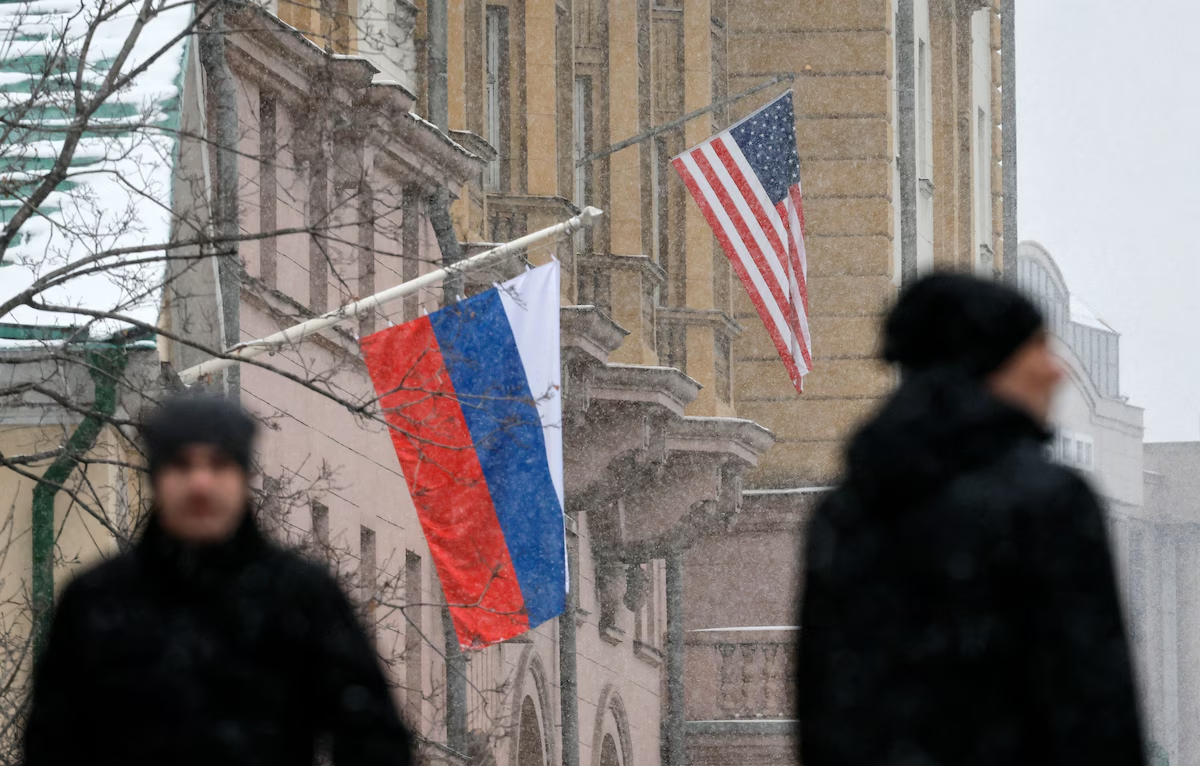
MOSCOW — Donald Trump’s stunning political comeback has created an opening for Russia to shatter Western unity on Ukraine and redraw the global power map, according to several influential members of the Russian elite. In the corridors of power in Moscow, the win for Trump’s populist argument that America should focus on domestic woes over aiding countries like Ukraine was being hailed as a potential victory for Russia’s efforts to carve out its own sphere of influence in the world.
In even broader terms, it was seen as a victory for conservative, isolationist forces supported by Russia against a liberal, Western-dominated global order that the Kremlin (and its allies) have been seeking to undermine. In his first remarks since the election, President Vladimir Putin said Thursday that the West’s post-Cold War monopoly on global power was “irrevocably disappearing,” before going on to praise Trump for behaving “courageously” during an attempt on his life this summer. [continue reading]
‘Brave new world’: Donald Trump’s victory signals end of US-led postwar order
Henry Foy, Alec Russell, and Michael Stott
Financial Times
The western-led multilateral world order that flourished after the end of the cold war and embodied a more hopeful collaborative spirit has for years been showing signs of strain. Now the re-election of Donald Trump with his “America First” agenda threatens to accelerate its decline — if not render it irrelevant. “Welcome to the brave new world,” said a senior EU official of the consequences of Trump’s emphatic election victory. “It’s very, very bad for everyone,” they said — not just in Europe but in Asia, Africa, the Middle East and South America. “Nobody is a winner. Except, perhaps, [Vladimir] Putin.”
Many leaders of developing economies profoundly disagree. A more inward-looking America, retreating from its traditionally dominant role on the global stage, creates an opportunity for the so-called middle powers, such as Brazil and Indonesia, to take a bigger role in reshaping the world more to their liking. [continue reading]
 Imperial & Global Forum
You must be logged in to post a comment.