
Marc-William Palen
History Department, University of Exeter
From a complicated history of slavery and resistance to the True Chronicles of the Blida Joinville Psychiatric Hospital, here are this week’s top picks in imperial and global history.
Inside a 1760 schoolhouse for Black children is a complicated history of slavery and resilience
Ben Finley
Associated Press
A Virginia museum has nearly finished restoring the nation’s oldest surviving schoolhouse for Black children, where hundreds of mostly enslaved students learned to read through a curriculum that justified slavery. The museum, Colonial Williamsburg, also has identified more than 80 children who lined its pinewood benches in the 1760s. They include Aberdeen, 5, who was enslaved by a saddle and harness maker. Bristol and George, 7 and 8, were owned by a doctor. Phoebe, 3, was the property of local tavern keepers. Another student, Isaac Bee, later emancipated himself. In newspaper ads seeking his capture, his enslaver warned Bee “can read.”
The museum dedicated the Williamsburg Bray School at a large ceremony on Friday, with plans to open it for public tours this spring. Colonial Williamsburg tells the story of Virginia’s colonial capital through interpreters and hundreds of restored buildings. [continue reading]
Insults and a haka in New Zealand parliament as MPs debate Māori rights bill
Eva Corlett
Guardian
New Zealand’s parliament has erupted into fiery debate, personal attacks and a haka over a controversial bill that proposes to radically alter the way New Zealand’s treaty between Māori and the crown is interpreted. The treaty principles bill was tabled by the libertarian Act party – a minor partner in New Zealand’s coalition government – and passed its first reading on Thursday, amid scathing speeches and disruptions.
A vote on the bill was momentarily suspended, when opposition parties and people in the public gallery joined in a haka (Māori dance or challenge), led by the Te Pāti Māori MP Hana-Rawhiti Maipi-Clarke, who proceeded to rip up a copy of the bill. The bill seeks to remove a set of well-established principles that has flowed from New Zealand’s founding document, the treaty of Waitangi – an agreement signed in 1840 between more than 500 Māori chiefs and the crown, and which is instrumental in upholding Māori rights. [continue reading]
A new ‘race science’ network is linked to a history of eugenics that never fully left academia
Lars Cornelissen
Conversation
The Guardian and anti-fascist group Hope Not Hate have revealed the existence of a new network of far-right intellectuals and activists in an undercover investigation. Called the Human Diversity Foundation (HDF), this group advocates scientific racism and eugenics. Although it presents itself as having a scientific purpose, some of its figureheads have political ambitions in Germany and elsewhere.
Research shows these kinds of groups are nothing new and are linked to eugenics groups that have been active since the second world war. Defending the scientific legitimacy of eugenics, these organisations worked to keep a discredited intellectual tradition alive. [continue reading]
Bosnian Serb general Krstić says he ‘aided and abetted’ Srebrenica genocide
Julian Borger
Guardian
A Bosnian Serb general jailed by the war crimes tribunal in The Hague for the 1995 Srebrenica massacre has confessed to having “aided and abetted the genocide”. Survivors and families of the more than 8,300 people who died in the mass killing reacted with scepticism to the confession by Radislav Krstić, a corps commander who led the assault on the Muslim enclave of Srebrenica and oversaw the execution of captured men and boys.
The campaign groups Mothers of Srebrenica and the Association of Victims and Witnesses of Genocide suggested the confession was a ploy to win early release. They said others convicted of war crimes from the Bosnian war had made confessions only to recant once they were released. “This kind of behaviour is a continuation of the already established practice of war criminals who are trying to get free in every possible way,” the groups said in a joint statement. [continue reading]
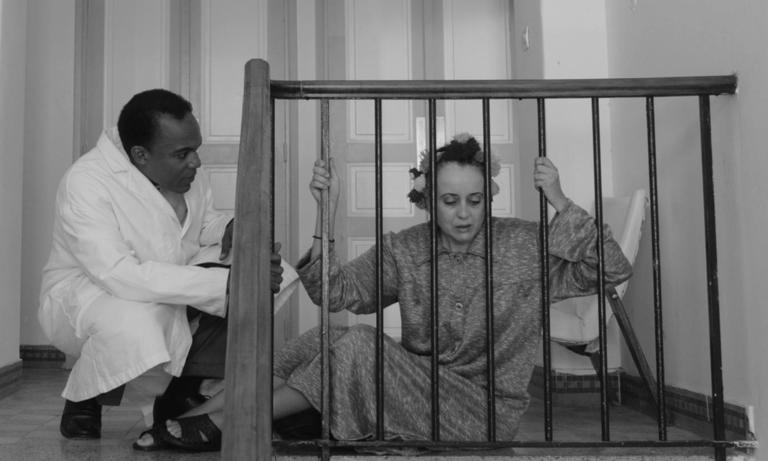
True Chronicles of the Blida Joinville Psychiatric Hospital in the Last Century, when Dr Frantz Fanon Was Head of the Fifth Ward between 1953 and 1956 – review
Phuong Le
MSN
Having previously co-directed a documentary on revolutionary thinker and psychologist Frantz Fanon, Algerian film-maker Abdenour Zahzah channels this research into his sober fiction feature debut. Shot on location in black and white, the film charts Fanon’s time as the head doctor of a psychiatric ward in the Algerian city of Blida. After his arrival in 1953, he would soon revolutionise the racist and antiquated practices employed by the institution, which segregated its French Christian patients from their Algerian Muslim counterparts.
Fanon’s achievements during his tenure are recounted in an episodic, vignette-like fashion. From incorporating creative and athletic activities as a part of therapy to implementing more humane treatments for the Indigenous patients, he radically transformed the hospital. His successes, however, were met with disapproval from some of his white French colleagues. Zahzah explores such tensions – as well as Fanon’s relationship with the patients – primarily through conversation; much of the narrative is made of discussion or consultation scenes, filmed largely in shot-reverse shot style. Even with Alexandre Desane’s grounding presence in the lead role, the ubiquitousness of these compositions results in stylistic monotony – a stark contrast to Fanon’s famously incendiary writing. [continue reading]
 Imperial & Global Forum
You must be logged in to post a comment.