The co-directors of Exeter’s Centre for Imperial and Global History (CIGH), Dr. Chris Sandal-Wilson and Dr. Rebecca Williams are really excited to begin a new term of CIGH seminars.
This post explores the significance of the fact that the decline of the phrase “Imperial Federation” in British imperial discourse coincided with its replacement by the term “British Commonwealth.”
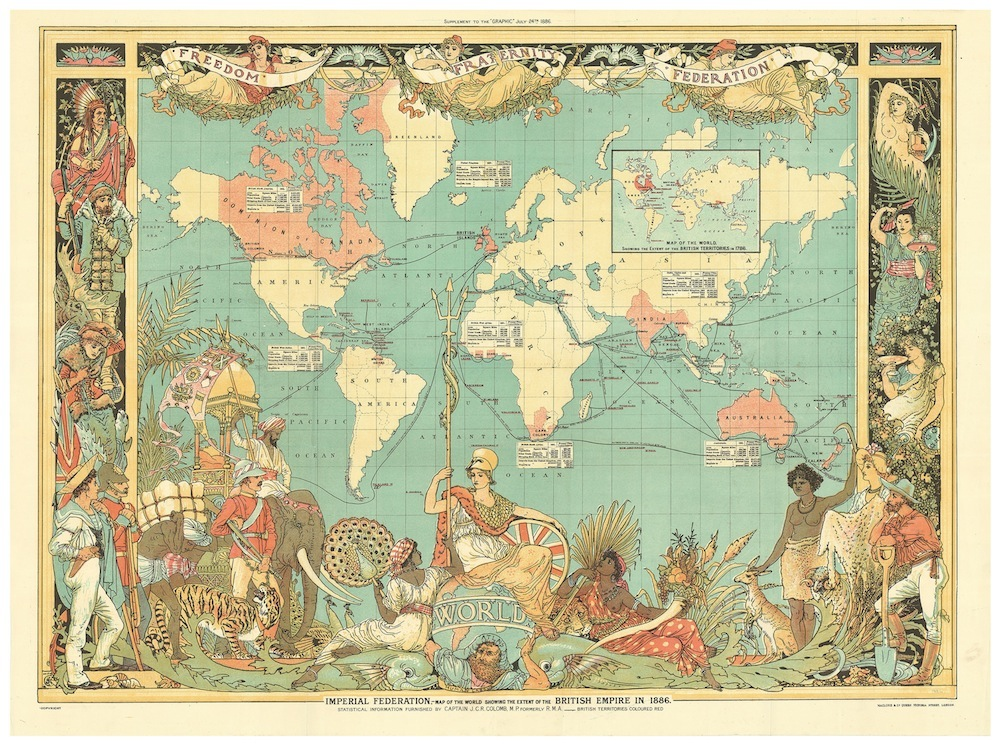
The concept of Imperial Federation was a political idea that gained public attention in the 1870s and evolved into a political movement following the establishment of the Imperial Federation League in 1884. The movement sought to unify the empire in a federal structure and counteract tendencies toward separation.
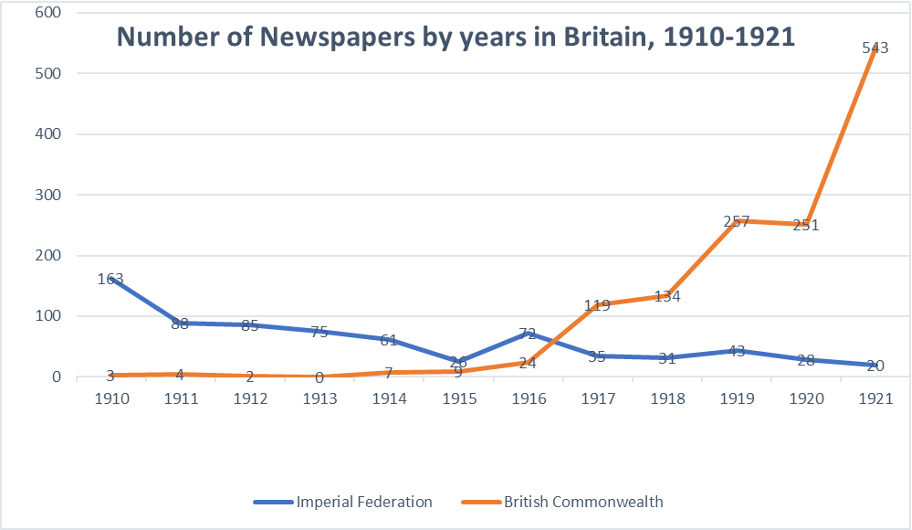
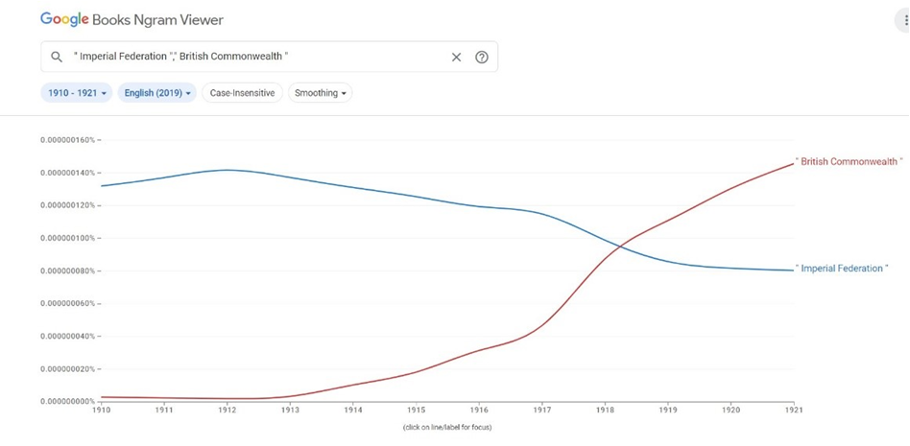
An analysis of newspapers from 1910 to 1921, conducted using the Gale Primary Sources database, reveals that the term “British Commonwealth” was rarely used in the context of the empire before 1916. In contrast, the term “Imperial Federation” saw a marked decline in usage after 1910, showing an inverse relationship with the rise of “British Commonwealth.” This trend is clearly observable in both the Gale Primary Sources database and Google Books Ngram.
Consequently, a hypothesis emerges that the term “Imperial Federation” was gradually supplanted by “British Commonwealth,” a shift largely attributed to changes in the perception of the empire following the First World War.
Gale Primary Sources database
Google Books Ngram
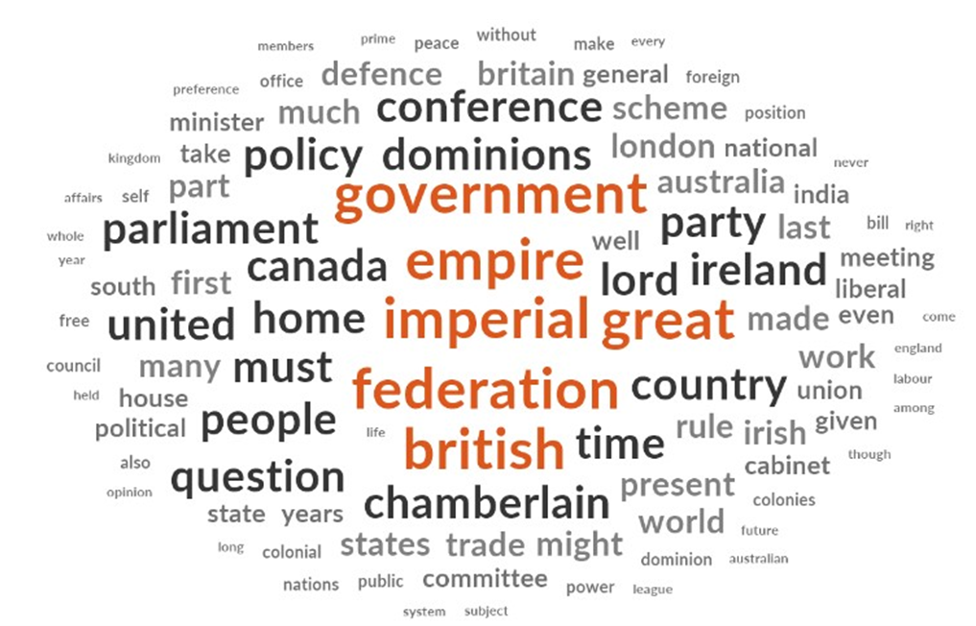
A word frequency analysis from 1910 to 1921 reveals that the terms “imperial parliament,” “Dominions,” and “Ireland” appeared frequently during this period. This suggests that the decline in the rhetoric of Imperial Federation was largely driven by opposition from the Dominions and Ireland to the concept of an “imperial parliament”.
Demonstrators protesting a treaty to return control of the Panama Canal to Panama, U.S. Capitol building, Washington, D.C, Sept. 7, 1977. Warren K Leffler—US News & World Report Magazine Collection/PhotoQuest/Getty Images


 Imperial & Global Forum
You must be logged in to post a comment.