
Marc-William Palen
History Department, University of Exeter
From global Guyana to turning points in world history, here are this week’s top picks in imperial and global history.
Global Guyana: An Interview with Oneka LaBennett
Kiana Knight and Oneka LaBennett
Black Perspectives
Kiana M. Knight (KMK): You previously published She’s Mad Real: Popular Culture and West Indian Girls in Brooklyn, which is the only ethnographic monograph on Brooklyn’s Caribbean girls’ identity formation through the lens of popular culture. Your extensive oral history research on Bronx women’s contributions to hip hop music also grapples with Black women’s relationship to popular culture. Tell us how your new book, Global Guyana, builds on and departs from your previous work.
Oneka LaBennett (OLB): Readers can see how Global Guyana builds on my previous attention to Black women’s relationship with popular culture particularly in Chapter Two, “Rihanna’s Guyanese Pattacake and the Homewrecking State in Barbados.” The world knows Rihanna as a Bajan or Barbadian superstar. But her mother, Monica Braithwaite, and her maternal grandmother are Guyanese. In fact, Rihanna credits her maternal kin with shaping her worldview and inspiring her cosmetics empire. In the chapter, RiRi is a springboard for examining the Barbadian stereotype that paints Guyanese women as homewreckers. Intersectional race/gender formations and migratory processes come to a head in Guyana in ways that we don’t usually consider. When we look into Rihanna’s family ties in Guyana, we begin to see that her family story is part of a long history of intermarriage between Bajan men and Guyanese women. These familial ties are connected to global racial capitalism. Post emancipation, Barbados had a large labor force, but a dearth of land. Bajan men began migrating to Guyana to find work, and while they were there, they often married Guyanese women. This started an enduring process of kinship ties between the two countries. [continue reading]
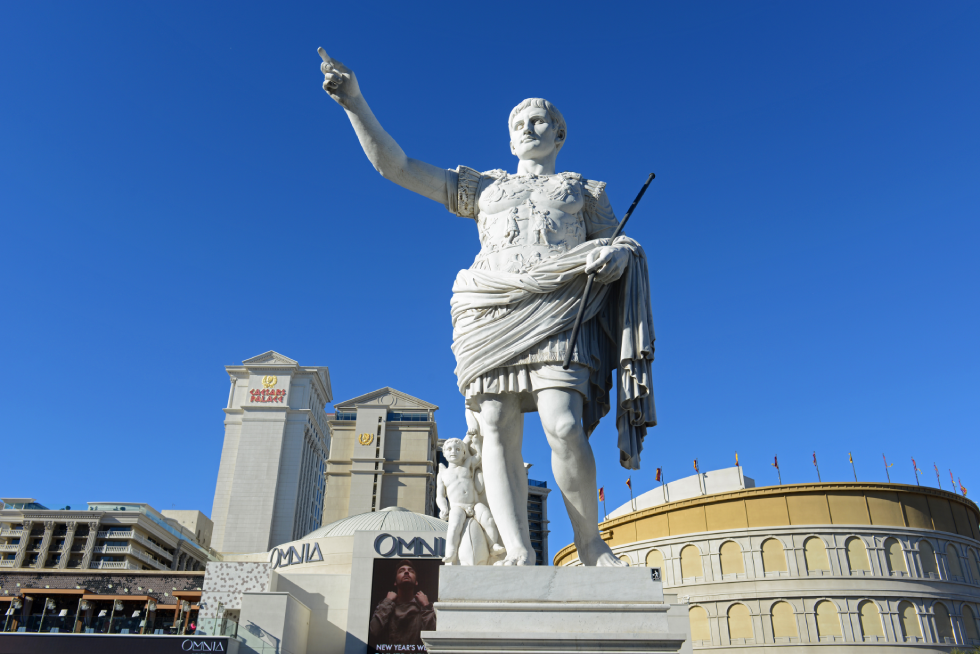
Hail Caesar: Trump and the New American Empire?
Dominic Alessio
Fair Observer
In the British Museum stands the early ninth-century BC limestone obelisk of Assyrian emperor Shalmaneser III. The illustrations decorating it reveal rows of supplicants from the four quarters of the Assyrian empire all bending the knee.
Whilst the Assyrian empire may now be long forgotten, and the modern world decolonized after World War II, as historian Krishan Kumar writes, “The ‘end of empire’” is not necessarily “the end of empire.” For, as the 21st century comes into its adolescence, President Vladimir Putin’s Russia invades Ukraine, China threatens Pacific hegemony, Turkey stretches its muscle, and now US President-Elect Donald Trump looks yonder to potentially annexing Canada, Panama and Greenland. In a January 7, 2025, news conference, Trump announced to the world that he intended to expand US territory by either economic and/or military might and to change the name of the Gulf of Mexico to the “Gulf of America.” [continue reading]
Carter and Cuba: A Legacy of Dedicated Diplomacy Toward Normalization
Peter Kornbluh and William LeoGrande
National Security Archive
The late President Jimmy Carter, who was laid to rest last week after a state funeral in Washington, D.C., adamantly believed that the U.S. embargo on Cuba was “a deprivation of American civil liberties” and called restrictions on trade and travel “unconscionable,” according to an interview published for the first time today by the National Security Archive. The interview recorded Carter’s continuing commitment to normalizing relations with Cuba long after he had attempted, through secret diplomacy, to do so during his presidency. “I felt that it was time for us to have completely normal relations with Cuba,” as Carter reflected on his time in the White House. “And I felt then, as I do now, that the best way to bring about a change in its Communist regime was to have open trade and commerce, and visitation, and diplomatic relations with Cuba.”
The Archive posted an audio file and transcription of the exclusive interview—conducted by the co-authors of Back Channel to Cuba, William M. LeoGrande and Peter Kornbluh, at the Carter Center in Atlanta in July 2004—along with a revealing selection of formerly TOP SECRET White House, NSC and State Department records on the Carter administration’s back-channel efforts to negotiate better bilateral ties with Cuba. The documentation covers what one secret briefing paper described as “the extremely complex and nettlesome” issues in U.S.-Cuba relations during Carter’s tenure as president, the secret meetings between emissaries, as well as Carter’s post-presidency efforts to act as a secret interlocutor between Washington and Havana to resolve the 1994 balsero crisis. [continue reading]
Trump is trying to undo the 14th amendment. Historians are horrified.
Katie Hawkinson
Independent
One hundred and fifty-seven years ago, the United States adopted a Constitutional amendment guaranteeing citizenship to people born on U.S. soil, one of the American bedrocks of equality. Now, that guarantee is under attack. President Donald Trump issued an executive order Monday night — just hours into his presidency — seeking to end birthright citizenship in the U.S. People across the country were quick to react: more than 20 states and pregnant women sued the Trump administration, a federal judge in Seattle temporarily blocked the order and activists across the country mobilized in an effort to combat the order.
“What we are seeing now is a challenge to one of the foundational pillars of equality and democracy in the United States,” Dr. Martha Jones, an American history professor at Johns Hopkins University, told The Independent. “In a country in which, over nearly all of our history law and politics have been corrupted by racism and xenophobia, birthright has been the great equalizer.” [continue reading]
Are we at a turning point in world history?
David Motadel
Guardian
In 1919, at the height of a global crisis that resulted from the turmoil of the Russian Revolution, the devastation of the first world war, and the collapse of Europe’s great continental empires, the Irish writer William Butler Yeats penned his famed warning to humanity, mourning the end of the old world: “Things fall apart; the centre cannot hold / Mere anarchy is loosed upon the world.” His words were recently invoked by Joe Biden, addressing the United Nations general assembly. Today, just as then, he warned, the world is facing a critical historical juncture: “I truly believe we are at another inflection point in world history where the choices we make today will determine our future for decades to come.”
The then president took the opportunity to offer some historical reflections. He recalled the global upheaval of the early 1970s, when he was first elected senator, at the height of the cold war, with wars raging from the Middle East to Vietnam, and a crisis simmering at home: “Back then, we were living through an inflection point, a moment of tension and uncertainty.” Throughout the 20th century, humankind had resolved major watershed crises. Today, with escalating wars from eastern Europe to the Middle East and with deepening divisions in our societies, it was time again, he urged, for concerted action. [continue reading]
 Imperial & Global Forum
You must be logged in to post a comment.