
Marc-William Palen
History Department, University of Exeter
From the reality of settler colonialism to the end of the postwar order, here are this week’s top picks in imperial and global history.
The Reality of Settler Colonialism
Samuel Hayim Brody
Boston Review
Christopher Nolan’s film The Prestige presents a three-act structure said to apply to all great magic tricks. First is the pledge: the magician presents something ordinary, though the audience suspects that it isn’t. Next is the turn: the magician makes this ordinary object do something extraordinary, like disappear. Finally, there’s the prestige: the truly astounding moment, as when the object reappears in an unexpected way.
Poet and literary critic Adam Kirsch, author of the recent book On Settler Colonialism: Ideology, Violence, and Justice, doesn’t present himself as a magician. But there is no denying that he is a master rhetorician, putting his talents to work in repeated sleights of hand. The purpose of the book is to relieve its readers of the sense that there is anything respectable about the central topic of discussion. Judging by an unfortunate review from Michael Walzer that appeared in the Jewish Review of Books, which more or less thanks Kirsch for doing the reading so he doesn’t have to, On Settler Colonialism is already working its magic, and I am afraid that it will continue to provide this public disservice for years to come. Its ultimate goal: to make the idea of settler colonialism disappear. [continue reading]
Trump’s threats on Greenland, Gaza, Ukraine and Panama revive old-school US imperialism of dominating other nations by force, after decades of nuclear deterrence
Monica Duffy Toft
Conversation
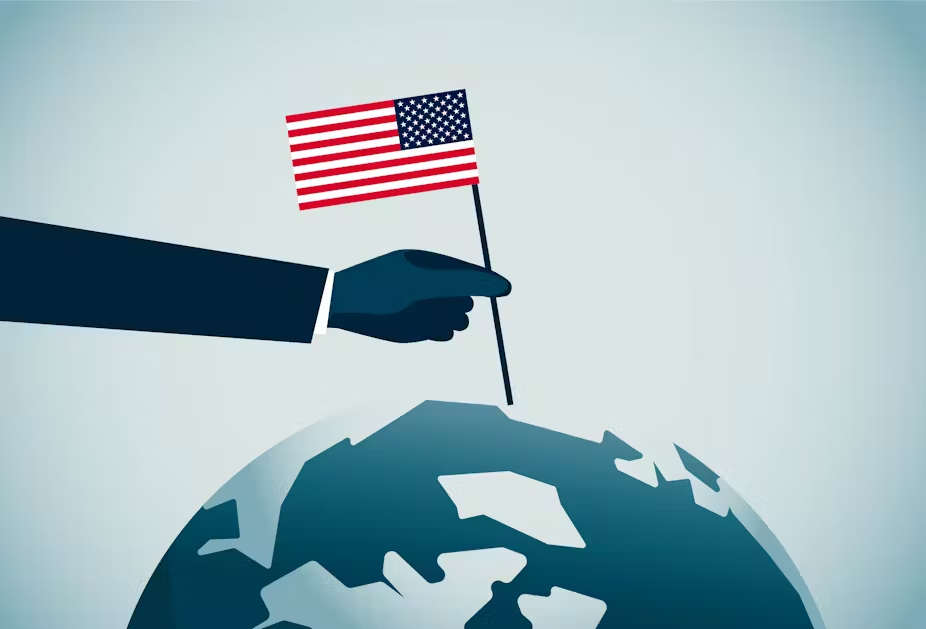
Imperialist rhetoric is becoming a mark of President Donald Trump’s second term. From asserting that the U.S. will “take over” the Gaza Strip, Greenland and the Panama Canal to apparently siding with Russia in its war on Ukraine, Trump’s comments suggest a return to an old imperialist style of forcing foreign lands under American control.
Imperialism is when a nation extends its power through territorial acquisition, economic dominance or political influence. Historically, imperialist leaders have used military conquest, economic coercion or diplomatic pressure to expand their dominions, and justified their foreign incursions as civilizing missions, economic opportunities or national security imperatives. [continue reading]
Donald Trump’s bully tactics are nothing new
Editorial Board
Globe & Mail
Years before he became U.S. president, the Republican standard-bearer made it clear that he would use tariffs to build up American industry at the expense of other countries. “Vote for the Republican ticket, stand by protective policy, stand by American industries, stand by that policy which believes in American work for American workmen, that believes in American wages for American laborers, that believes in American homes for American citizens.” Donald Trump wasn’t the one to give that speech (though he surely agrees with its sentiments). It was delivered in 1885 by future president William McKinley, then an Ohio congressman. Five years later, he was instrumental in introducing steep increases to U.S. tariffs that created an economic and political crisis in Canada.
The Republican secretary of state at the time ventured that Canada, its economy starved, would come begging to join the United States. The talk of annexation ignited nationalist fervour in Canada, then a mere 24 years old, becoming a central issue in the federal election. All of which is to say: Mr. Trump’s bullyboy tariff tactics are anything but new, and nothing that Canada hasn’t managed to rally against in decades past, to surprisingly good effect. [continue reading]
Thomas Keegan
Conversation
When I first arrived at the top secret Porton Down laboratory, I was aware of very little about its activities. I knew it was the UK’s chemical defence research centre and that over the years it had conducted tests with chemical agents on humans. But what really happened there was shrouded in mystery. This made it a place which was by turns fascinating and scary. Its association with the cold war, reinforced by images of gas mask-wearing soldiers and reports of dangerous (and in one case fatal) experiments, also made it seem a little sinister.
The shroud of secrecy resulted in it being the subject of some lively fiction, such as The Satan Bug by Alistair MacLean, which revolves around the theft of two deadly germ warfare agents from a secret research facility and in the “Hounds of Baskerville” episode of the BBC drama Sherlock in which the hero uncovers a sinister plot involving animals experiments. [continue reading]
Trump’s Gaza Plan May Mark the End of the Postwar Order
A. Dirk Moses
Jacobin
US president Donald Trump’s proposal to annex the Gaza Strip and transfer its two million Palestinian inhabitants to Egypt and Jordan has provoked a predictable outcry. Virtually all Arab states, led by Saudi Arabia, oppose the idea. Human rights organizations and international lawyers note its violation of international law.
By contrast, most Israelis welcome the proposal, and its supporters point to precedents from the first half of the last century: the Turkish-Greek population exchange of 1923, the millions of ethnic Germans expelled from Eastern Europe at the end of World War II, and the partition of India in 1947. Ruling out the transfer of Palestinians indicates a double standard against Israel, they complain. [continue reading]
 Imperial & Global Forum
You must be logged in to post a comment.