
David Thackeray
University of Exeter
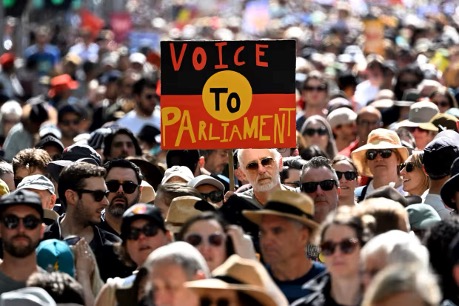
Our new special issue of Parliamentary History, ‘Settler Colonialism and Parliamentary Democracy- Histories and Legacies’, co-edited by me and Amanda Behm, emerges at a time of acute public interest in the practices of settler democracy. In 2023 efforts to establish an ‘indigenous voice to parliament’ in Australia were defeated in a referendum but drew attention to a long history of contestation of the national constitution by indigenous peoples and their allies. In New Zealand ongoing efforts by the coalition’s minority partner to reform the legal status of the Treaty of Waitangi have been met by protests and claims of historical amnesia by opponents of the bill. The papers in this special issue seek to offer a better understanding of the practices which connected supporters and opponents of settler democracy across and beyond the British empire.
Arran Jenkins explores the popular fascination with parliamentary debate in Britain during the latter half of the 19th century. Parliamentary debating societies became integral to a flourishing public ‘culture of debate’ with the movement peaking in popularity in both Britain and Australia during the 1880s. They provided a testing ground for new ideas about public debate seeking to maintain interest in an increasingly crowded commercial leisure market.
Alex Martinborough considers how the writing of settler constitutions provoked questions about the role of the British parliament in the imperial constitution. In the 1860s and 1870s Westminster politicians faced concurrent crises in Canada, New Zealand and South Africa. Debates about constitutional reform and the future of self-government were subsequently transnational and interconnected. Humanitarian critics of settler rule appealed to Britain to intervene to protect the welfare of indigenous peoples. Martinborough argues that a specific model of self-government emerged between 1860 and 1910 which justified imperial inequality and allowed British politicians to disavow responsibility for the injustices of settler colonialism.
Max Hamon provides us with an important insight into how indigenous peoples challenged the advance of settler political authority, exploring the Red River Resistance on the fringes of the Canadian Confederation in the late 1860s and early 1870s. Louis Riel, a champion of the rights of the Métis led a short-lived provisional government, which negotiated the terms on which the colony joined Canada as the province of Manitoba. It may be useful to think of the conventions which took place in Red River as a form of ‘Metis parliament’ in which indigenous, imperial, and American concepts of constitutional thought met.
Charles Reed turns the spotlight on Black British subjects made in and by empire and British traditions in South Africa, who expressed loyalty and belief in the idea of empire — embracing arch-imperialist Cecil Rhodes’ 1898 campaign promise of ‘equal rights for all civilised men south of the Zambesi’. Their critiques fundamentally turned on the meaning and purpose of the British constitution and parliamentary traditions, readings that informed legal strategies and arguments that took campaigners all the way to the top of the imperial hierarchy via a petition to the British House of Commons.
Ed Selkirk Ford explores a neglected aspect of the struggles to define the future of Australian settler democracy and nationhood in the run-up to federation in 1901. In debating the merits of proportional representation, Australians often looked to guidance from British authorities and constitutional traditions. However, they also took inspiration from other national models and argued that any attempt to introduce PR should recognise the unique challenges that the new nation faced. Debates about electoral reform were often shaped by wider anxieties about Asian immigration and the future of ‘White Australia’.
David Thackeray considers the career of his great-great-grandfather John Barr. We consider two episodes towards the end of Barr’s life as a means of exploring the silences which sustained settler democracy, his involvement in an Empire Parliamentary Association tour in 1926 and an inquiry into disturbances in Samoa the following year. The Australian tour was widely publicised and sought to present the British ‘Commonwealth’ ideal in action. By contrast, the Samoan enquiry sought to stymie the progress of the island nation’s self-determination movement and its proceedings were hidden from public view.
Lauren Lauret explores the career of Levinus Keuchenius, arguably the most important representative of the Dutch East Indies to sit in the Netherlands parliament during the 19th century. Keuchenius rejected the notion that he sat in the Dutch parliament as a ‘Indies specialist’ and sought to stress that the interests of the Netherlands were tied to the health of its colonies, thereby challenging the notion of a clear division between metropolitan and colonial representation. Lauret reminds us that the transnational culture of British parliamentarism formed only part of a wider debate about the boundaries of inclusion in European parliamentary culture.
John Mitcham provides another perspective on the issue of ‘colonial representation’, exploring the presence of settler elite politicians in British politics, further demonstrating the lack of clear boundaries between politics in metropole and colony. Figures such as Billy Hughes and Jan Smuts were able to play a prominent role at Westminster, particularly during the Great War and its aftermath, presenting themselves as representatives of settler interests who were not beholden to party loyalties. Expertise drawn from life in the settler colonies was seen as valuable in informing British politicians’ response to the domestic crises they faced.
We conclude with Rachel Johnson’s examination of the changing ceremony of the state opening of the South African parliament from Union to the emergence of a multiracial democracy after 1994. By focusing on episodes of disruption and protest Johnson contends that the ceremony can offer us important insights into how ideas of the nation were reshaped over time. Ongoing criticisms of the South African parliament’s anachronistic practices, and the connections between forms of disruption over time, provide an important reminder that colonial legacies continue to shape the practices of parliamentary democracy to the present day.
 Imperial & Global Forum
You must be logged in to post a comment.