
Marc-William Palen
University of Exeter
Cross-posted from the Transimperial History Blog
Beginning around 1870, the protectionist US Empire sparked a global economic nationalist movement that spread like wildfire across the imperial world order. Late-nineteenth-century expansionists within the Republican Party got things started in the 1860s when they enshrined what was then known as the “American System” of protectionism — high protective tariffs coupled with subsidies for domestic industries and internal improvements — as official US imperial economic policy. By 1900, American System advocates within the GOP carved out a protectionist colonial US empire to insulate itself from the real and perceived imperial machinations of the more industrially advanced British, who had unilaterally embraced a policy of free trade in the 1840s.[1] As I explore in my new book, Pax Economica: Left-Wing Visions of a Free Trade World (Princeton University Press, 2024), the late-nineteenth-century US Empire’s combination of economic nationalism, industrialization, and continental conquest made the American System the preferred model for Britain’s imperial rivals.[2] One unintended consequence of this protectionist transformation of the imperial order was also that the American System helped inspire anticolonial nationalists within the remit of the British Empire where free trade had been forced upon them, most notably Ireland, India, and China.
How the American System of Protectionism Became a Transimperial Anti-British Export
Britain’s other imperial rivals were quick to follow the protectionist path of the US Empire. Nationalists in France, Russia, Germany, Canada, Australia, Japan, and the Ottoman Near East were seduced by the American System’s successful combination of protectionism, industrialism, nationalism, militarism, and empire-building.[3] The Long Depression (c. 1873-1896) sped up this “neomercantilist” countermovement.[4] For Britain’s rivals, the Anglophobic depression-driven search for economic self-sufficiency required high tariff walls alongside colonial expansion so as to monopolize each empire’s access to raw materials and to export surplus populations and capital. By the turn of the century, the American System of protectionism ruled the imperial economic order; British adherence to free trade became the exception.
This transimperial anti-British protectionist phenomenon is key to understanding why, in relatively rare cases where colonies felt the direct coercive effects of British free-trade imperial policies – as in Ireland, India, and China — leading anticolonial nationalists also turned to American System-style policies. In other words, the transimperial embrace of the US Empire’s expansionist brand of economic nationalism was, however ironically, also reflected within anticolonial nationalist networks crisscrossing the US, British, Japanese, and German empires.

The irony was even more acute because the American System of protectionism had never been devised for colonial spaces like these. For leading American System theorists like the German-born US citizen Friedrich List (1789-1846), author of the highly influential protectionist text The National System of Political Economy (1841), such “uninstructed, indolent” areas as Ireland, India, and China were supposed to remain exploitable colonial sources of raw materials and export markets for surplus manufactured goods and populations for the industrializing Euro-American imperial metropoles. They were not intended to be anticolonial sites of infant industrial protectionist agitation.[5] And yet this was precisely what transpired in these early-twentieth-century colonial spaces. They became unusual laboratories wherein the American System of protectionism was refashioned from an economic weapon of the imperial order into a defensive tool to undermine it.
The American System’s Transimperial Influence Within Anticolonial Ireland, India, and China
The era’s systemic racial hierarchical structures contributed to coercive free-trade policies within the confines of the British Empire as applied to Ireland, India, and China. British imperial policymakers subscribed to the belief that the “white” settler colonies of Australia, Canada, New Zealand, and South Africa were an extension of the metropole, whereas “uncivilized” colonies and semi-colonies like Ireland, India, and China were deemed racially inferior and thus couldn’t be given fiscal autonomy.[6] Racism thus helped justify British free-trade imperialism in these colonial spaces. Irish, Indian, and Chinese tariffs (or their lack) fell under the coercive free-trade dictates of British colonial administrators.[7] Or as Indian nationalist economist Romesh Dutt put it in 1902, “in India the Manufacturing Power of the people was stamped out by protection against her industries, and then free trade was forced on her so as to prevent a revival.”[8]
Without fiscal autonomy, Irish, Indian, and Chinese anticolonial nationalists got creative with grassroots methods of protectionist protest such as the boycott. The term “boycott” itself had recently been introduced by way of late-nineteenth-century Ireland, stemming from the colony’s anticolonial protestations against British monopolization and taxation of Irish lands. One particularly ruthless British land agent in late Victorian Ireland named Charles Cunningham Boycott became emblematic of this colonial exploitation. Irish renters organized themselves to stop doing business with Boycott, hence the term’s inspiration.[9] By focusing narrowly on the defensive anti-imperial aspects of the American System of protectionism and utilizing grassroots methods of organizing and economic protest, anticolonial nationalists in China, India, and Ireland sidestepped the imperial expansionist impulse that normally accompanied the American System’s implementation.
The American System of economic nationalism began making noticeable anticolonial nationalist inroads within Ireland in 1905 when Arthur Griffith (1871-1922) kickstarted the Sinn Féin Party with a speech in Dublin. In it, Griffith noted List’s influence on his own anticolonial opposition to British free trade: “I am in economics largely a follower of the man who thwarted England’s dream of the commercial conquest of the world . . . Frederich [sic] List.” Griffith wished to put the National System “in the hands of every Irishman” and put “aside the fallacies of Adam Smith and his tribe.” Griffith drew upon List as well as American System economist Henry Charles Carey (1793-1879) in putting forth his protectionist plan for procuring Irish independence.[10]
In India, much as in Ireland, opposition to British free-trade imperial policies fuelled anticolonial nationalist passions. Indian nationalist leaders viewed the American System’s successful implementation in the United States, Germany, and Japan as examples of how India could reindustrialize and gain economic independence.[11] Illustrating the American System’s transimperial crossings, select cities in Germany and the United States became what Kris Manjapra describes as “the most important centers for Indian anticolonial internationalism” for developing “a highly articulated international imagination . . . by which Bengali thinkers saw their own experiences mirrored back in political events that had occurred, or were occurring, in China, Japan, the United States, and Germany.”[12] Indian economic nationalist dissent culminated in the Swadeshi (“home rule”) movement, which arose in direct response to Lord Curzon’s partition of Bengal in 1905, the very year that Arthur Griffith inaugurated Sinn Féin.
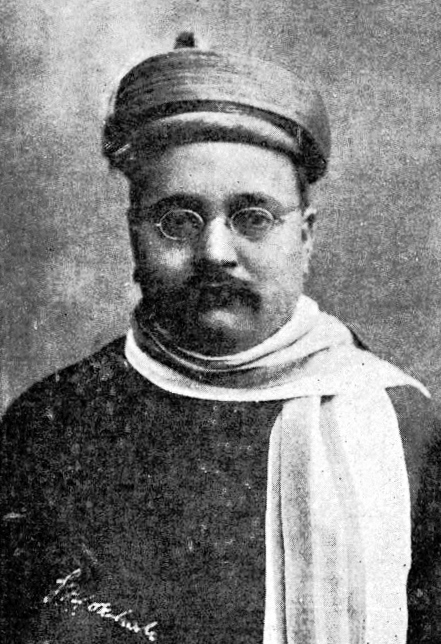
Indian nationalists like Gopal Krishna Gokhale wasted little time before pointing to the widespread transimperial embrace of the American System as evidence of Swadeshi’s universalism. At the 1906 Indian National Congress, Gokhale drew attention to Joseph Chamberlain’s protectionist Tariff Reform movement in Britain as well as the protectionist policies of France, Germany, and the United States to illustrate how “the Swadeshi movement is one which all nations on earth are seeking to adopt in the present day.”[13] Sinn Féin’s protectionist project was seen as a further reflection of Swadeshi’s universal appeal. Griffith’s 1905 Dublin speech was soon republished in Hindustani and distributed widely within Indian nationalist outlets. One such newspaper explained that “Mr Griffith’s scheme” was “of great service to us just now. . . . The new policy is called ‘Sinn Féin’ policy, which is only another name for our ‘Swadeshi’ policy.”[14]
Transimperial intellectual networks put interwar Indian nationalists in close contact with protectionist academics centered in Berlin, part of what Ole Birk Laursen refers to as Weimar-era Berlin’s “cosmopolitan anticolonialism.”[15] For example, German nationalist academics, inspired by the ideas of List and the American System, were frequently invited to Calcutta University. Indian academics, in turn, attended German universities to help inform Indian nationalist projects.[16] Friedrich List’s National System, in particular, became what Manu Goswami describes as a “foundational text” for South Asian anticolonial nationalists, as did the writings of Henry Charles Carey.[17] Benoy Kumar Sarkar (1887-1949), for example, drew upon the American System ideas of List while a prominent leader of the interwar Swadeshi movement. He completed the first Bengali translation of List’s National System following visits to Japan, the United States, and Germany. As late as 1932, he observed how List’s National System remained “the Bible of a people seeking a rapid transformation of the country from the agricultural to the industrial stage.”[18] The transimperial intellectual adaptation of the American System in India thus played a key ideological part within the early-twentieth-century Swadeshi anticolonialist movement.
Around the time Sarkar was finishing his Bengali translation of List’s National System, China’s American System-inspired anticolonial nationalists were making their presence felt. For example, Ma Yinchu (1882-1982) – who would go on to become president of Peking University – gave a lecture in the early 1920s upon his return to China, following his US studies at Columbia, Yale, and New York University. China, he argued, required Friedrich List’s protectionist prescription because of Britain’s continued exploitation of China’s markets through coercive free trade. Without complete tariff autonomy and industrialization, “China would forever remain a supplier of raw materials and a consumer of manufactured goods.” Other Chinese nationalists soon heeded Ma Yinchu’s words. In 1925 Liu Binglin (1891-1956), after his studies at the University of London and the University of Berlin, completed a Chinese biography of List to push back against the British-influenced idea that “economic undertakings have no national boundaries.” Wang Kaihua similarly published the first Chinese translation of List’s National System in 1927, stemming from his PhD research at the University of Tübingen. The Chinese minister in Germany, Wei Chenzu, noted in the translation’s preface that List’s work remained germane to China because it “has been deprived of the right to set its tariffs” and flooded with foreign manufactured goods. It was therefore “highly proper that List’s theory should be adopted in China.” The impressive industrial rise of Germany and the United States at a time of preeminent British naval and commercial power punctuated how List’s American System could aid Chinese “patriots and political economists” in their anticolonial cause.[19]
Conclusion
Nineteenth-century protectionist theorists like Friedrich List had devised and updated the American System explicitly for industrializing Euro-American empires. The American System was never meant for colonial spaces deemed “uncivilized” by late-nineteenth and early-twentieth-century imperialists. Yet anticolonial nationalists in early-twentieth-century Ireland, India, and China — working across transimperial networks that encompassed the United States, Britain, Germany, and Japan — refashioned this same protectionist toolkit of Britain’s imperial rivals into defensive economic weapons of emancipation.
Further Reading
Burton, Antoinette. The Trouble with Empire: Challenges to Modern British Imperialism. Oxford: Oxford University Press, 2015.
Goswami, Manu. Producing India: From Colonial Economy to National Space. Chicago: University of Chicago Press, 2004.
Harnetty, Peter. Imperialism and Free Trade: Lancashire and India in the Mid-Nineteenth Century. Manchester: Manchester University Press, 1972.
Helleiner, Eric. The Neomercantilists: A Global Intellectual History. Ithaca: Cornell University Press, 2021.
Manjapra, Kris. Age of Entanglement: German and Indian Intellectuals Across Empire. Cambridge, MA: Harvard University Press, 2014.
Palen, Marc-William. Pax Economica: Left-Wing Visions of a Free Trade World. Princeton: Princeton University Press, 2024.
Palen, Marc-William. The “Conspiracy” of Free Trade: The Anglo-American Struggle over Empire and Economic Globalisation, 1846-1896. Cambridge: Cambridge University Press, 2016.
Szlajfer, Henryk. Economic Nationalism and Globalization: Lessons from Latin America and Central Europe. Translated by Maria Chmielewska-Szlajfer. Leiden: Brill, 2012.
[1] On the protectionist aspects of the US empire, see especially Benjamin O. Fordham, “Protectionist Empire: Trade, Tariffs, and United States Foreign Policy, 1890-1914,” Studies in American Political Development 31 (2017): 170-192; Marc-William Palen, “The Imperialism of Economic Nationalism, 1890-1913,” Diplomatic History 39 (Jan. 2015): 157-185; Palen, The “Conspiracy” of Free Trade: The Anglo-American Struggle over Empire and Economic Globalization, 1846-1896 (Cambridge: Cambridge University Press, 2016).
[2] Marc-William Palen, Pax Economica: Left-Wing Visions of a Free Trade World (Princeton: Princeton University Press, 2024). See also Palen, “Empire by Imitation? US Economic Imperialism in a British World System, c. 1846-1946,” in The Oxford Handbook of the Ends of Empire, ed. by Martin Thomas and Andrew Thompson (Oxford: Oxford University Press, 2018): 195-211; Palen, “Economic Nationalism in an Imperial Age, 1846-1946,” in Aviel Roshwald, Matthew D’Auria, and Cathie Carmichael, ed., The Cambridge History of Nationhood and Nationalism (Cambridge: Cambridge University Press, 2023), II: 538-558.
[3] Palen, Pax Economica, chapter 1.
[4] On “neomercantilism,” see especially Eric Helleiner, The Neomercantilists: A Global Intellectual History (Ithaca: Cornell University Press, 2021).
[5] List quoted in Mauro Boianovsky, “Friedrich List and the Economic Fate of Tropical Countries,” History of Political Economy 45 (2013), 658. See also Onur Ulas Ince, “Friedrich List and the Imperial Origins of the National Economy,” New Political Economy 21 (2016): 380-400; Henryk Szlajfer, Economic Nationalism and Globalization: Lessons from Latin America and Central Europe, trans. by Maria Chmielewska-Szlajfer (Leiden: Brill, 2012).
[6] Gary B. Magee and Andrew S. Thompson, Empire and Globalisation: Networks of People, Goods and Capital in the British World, c.1850-1914 (Cambridge: Cambridge University Press, 2010), 61; David Thackeray, Forging a British World of Trade: Culture, Ethnicity, and Market in the Empire-Commonwealth, 1880-1975 (Oxford: Oxford University Press, 2019), 3-4; Stephen Howe, Anticolonialism in British Politics: The Left and the End of Empire, 1918-1964 (Oxford: Oxford University Press, 1993), 30.
[7] R. J. Moore, “Imperialism and ‘Free Trade’ Policy in India, 1853-4,” Economic History Review 17 (1964): 135-145; Peter Harnetty, Imperialism and Free Trade: Lancashire and India in the Mid-Nineteenth Century (Manchester: Manchester University Press, 1972).
[8] Romesh Dutt, The Economic History of India (London: Kegan Paul, Trench, Trubner, 1902), 302.
[9] Antoinette Burton, The Trouble with Empire: Challenges to Modern British Imperialism (Oxford: Oxford University Press, 2015), 94-96.
[10] Arthur Griffith, The Sinn Fein Policy (Dublin: James Duffy & Co., 1906), 11; T. K. Whitaker, “From Protection to Free Trade—The Irish Experience,” Social & Policy Administration 8 (June 1974), 96; Thomas A. Boylan and Timothy P. Foley, Political Economy and Colonial Ireland (London: Routledge, 2005 [1992]), 156; Denis O’Hearn, The Atlantic Economy: Britain, the US and Ireland (Manchester: Manchester University Press, 2001), 108.
[11] Mary Cumpston, “Some Early Indian Nationalists and their Allies in the British Empire,” English Historical Review 76 (April 1961): 279-97; Howard Brasted, “Indian Nationalist Development and the Influence of Irish Home Rule, 1870-1886,” Modern Asian Studies 14 (1980): 37-63; Brasted, “Irish Nationalism and the British Empire in the Late Nineteenth Century,” in Oliver MacDonagh, W. F. Mandle, and Pauric Travers, eds., Irish Culture and Nationalism, 1750-1950 (New York: St. Martin’s Press, 1983): 83-103. Ireland and India’s food insecurity provided a further point of anticolonial convergence. See Peter Gray, “Famine and Land in Ireland and India 1845-1880: James Caird and the Political Economy of Hunger,” Historical Journal 49 (2006): 193-215; Jill Bender, “The Imperial Politics of Famine: The 1873-74 Bengal Famine and Irish Parliamentary Nationalism,” Éire-Ireland 42 (Spring/Summer 2007): 132-156; Michael Silvestri, Ireland and India: Nationalism, Empire and Memory (London: Palgrave Macmillan, 2009).
[12] Kris Manjapra, Age of Entanglement: German and Indian Intellectuals Across Empire (Cambridge, MA: Harvard University Press, 2014), 42.
[13] M. G. K. Gokhale, “The Swadeshi Movement in India,” Unity (1 March 1906), 13.
[14] Lúing, “Arthur Griffith,” 127-28.
[15] Ole Birk Laursen, “Cosmopolitan Anticolonialism: The Transimperial Networks of the Hindusthan Association of Central Europe in Weimar Era Berlin,” Transimperial History Blog (14 March 2024), https://www.transimperialhistory.com/cosmopolitan-anticolonialism/
[16] Manjapra, Age of Entanglement, 49; Burton, Trouble with Imperialism, 99-100; Chandra, Rise and Growth of Economic Nationalism in India, 210-216.
[17] Manu Goswami, Producing India: From Colonial Economy to National Space (Chicago: University of Chicago Press, 2004), 215-224, 336n14; Bipan Chandra, ed., Ranade’s Economic Writings, xiv, xviii.
[18] Kris Manjapra, Age of Entanglement, 150; Andrew Sartori, “Beyond Culture-Contact and Colonial Discourse: ‘Germanism’ in Colonial Bengal,” in An Intellectual History of India, edited by Shruti Kapila (Cambridge: Cambridge University Press, 2010), 81-82.
[19] Helleiner, Neomercantilists, 268-69; Mei Junjie, “Friedrich List in China’s Quest for Development,” in Harald Hagemann, Stephan Selter, Eugen Wendler, eds., The Economic Thought of Friedrich List (New York: Routledge, 2019): 213-222.
 Imperial & Global Forum


You must be logged in to post a comment.