
Mitchel Stuffers
Assistant Editor at CIGH Exeter & PhD Candidate in History, University of Exeter
From questioning when World War II ended to Trump’s ‘invasion from within’, here are this week’s top picks in imperial and global history.
World War II Didn’t End in 1945
Dexter Fergie
Bloomberg UK
A new history of the war lengthens the conflict’s timeline and argues that its “ragged ends” complicate the neat morality tale we still tell today.
Eighty years ago, the Soviet Union, the US, Great Britain, and the rest of the Allies encircled Berlin, forcing Nazi Germany to surrender. A few months later, Tokyo fell too. As news spread, conga lines broke out in Piccadilly Circus and revelers crowded Times Square. On Sept. 2, 1945, after six years of bloodshed, the war was finally over. Or was it? [Continue reading]
The Netherlands to return Dubois fossil collection to Indonesia
Editorial Board
Dutch News
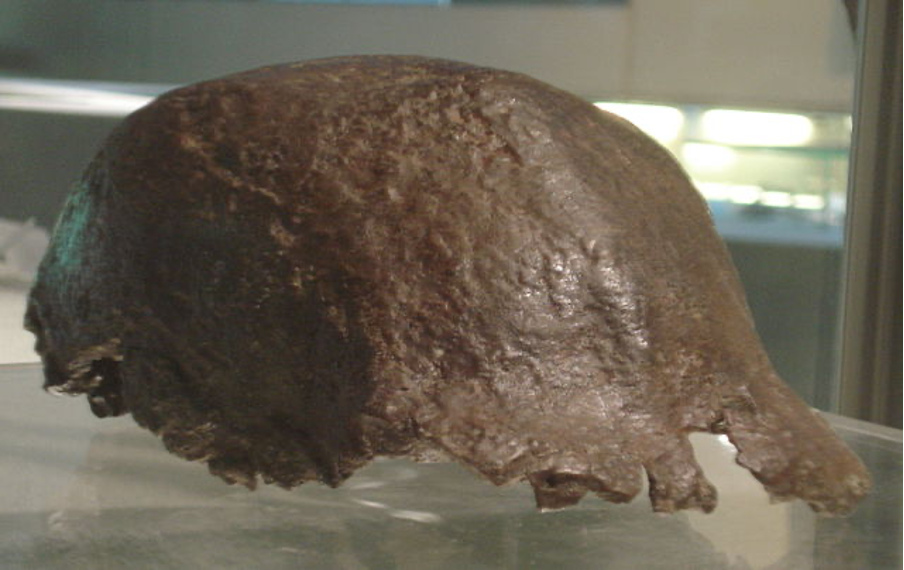
The Netherlands is returning a major archaeological collection to Indonesia, including the skullcap discovered by Dutch scientist Eugène Dubois in 1891 which provided the first evidence of an extinct human species.
The so-called Dubois collection consists of some 28,000 fossils and has been held in the Netherlands for more than a century. It will be returned after the cabinet accepted advice from the independent Commission for Colonial Collections. [Continue reading]
A History That Needs to Be Retold
Vivien Chang
Los Angeles Review of Books
Vivien Chang reviews Howard W. French’s The Second Emancipation: Nkrumah, Pan-Africanism, and Global Blackness at High Tide.
KWAME NKRUMAH WAS BORN the day his grandmother was buried. It was a fitting coincidence for the man who would preside over the Gold Coast’s transition from colony to nation, whose own life’s arc would be marked from birth by the inseparability of endings and beginnings. Born Francis Nwia Kofi Nkrumah in 1909, the future first prime minister of Ghana grew up in a small village in southwestern Gold Coast—then under British occupation—at a moment of profound transformations. The early 20th century was characterized, above all, by an imperial land rush, economic instability, and brewing discontent in colonized territories across the Global South. In the Gold Coast’s case, the British had just prevailed in a series of wars with the Asante that spanned three quarters of a century, effectively consolidating Britain’s sphere of influence in a region of great commercial importance. [Continue reading]
States Should Implement Recommendations in UN Report on Reparations
Human Rights Watch
Human Rights Watch (HRW)
HRW Oral Statement – EID to Advance Racial Justice and Equality in Law Enforcement – HRC60
Mr. President,
Human Rights Watch welcomes the OHCHR’s timely report calling on governments and private institutions to urgently deliver comprehensive, rights-based and community-centered reparatory justice to address both historical and ongoing harms related to colonialism and enslavement. These measures are essential to dismantling persistent systemic racism.
Human Rights Watch has documented the impacts of ongoing abuses and injustices linked to these legacies while seeking to amplify the voices of communities calling for reparations. [Continue reading]
Trump vows to use ‘dangerous’ US cities as army training grounds to fight ‘invasion from within’
Peter Rubinstein & William Morgan
Mirror UK
President Donald Trump and Defence Secretary Pete Hegseth have suggested using American cities as training grounds for the armed forces, hinting at an “invasion from within” that could warrant “overwhelming and punishing violence on the enemy.”
Despite the US military’s primary role being to address foreign threats, Trump has proposed using it on American cities. He and Hegseth, a former Fox News pundit, addressed hundreds of top military officials who were hastily summoned from around the globe to Virginia. [Continue reading]
 Imperial & Global Forum
You must be logged in to post a comment.