
Mitchel Stuffers
Assistant Editor at CIGH Exeter & PhD Candidate in History, University of Exeter
From post-colonial African accounts to further developments in minority communities in America, here are this week’s top picks in imperial and global history.
‘This is strength’: stories of enslaved Africans in Grenada will be made into searchable archive
Geneva Abdul and Chris Osuh
The Guardian
The stories of enslaved African people and more than 1,000 British plantation owners who were compensated after abolition will be brought together in a searchable archive for the first time.
The project is backed by a prominent British family who have owned up to their ancestors’ role in slavery. It is being created by Stephen Lewis and focuses on his native Grenada where the British Trevelyan family has publicly apologised for its “crimes against humanity” for their ownership of more than 1,000 enslaved Africans. [Continue reading]
Algeria: French loses ground as English takes hold in universities amid diplomatic tensions
Muhamed Saeed Bala
Daily Mail Africa
Diplomatic relations between Algeria and France have entered a turbulent phase, with ambassador recalls, expulsions, and sharp criticisms over freedom of expression marking recent exchanges. Disputes surrounding Western Sahara, the conviction of writer Boualem Sansal, and the case of influencer Amir Boukhors have already strained ties. Now, a new front of friction has emerged: the role of the French language in Algeria.
From the 2025 academic year, medical and pharmacy students in Algerian universities will no longer receive instruction in French, but in English, according to reports in Le Monde. This shift is not merely a pedagogical adjustment. It represents a deliberate political move to diminish the role of a language long seen as a colonial legacy. [Continue reading]
Indigenous Nations Plan a Tariff-Free Trade Corridor Across the US-Canada border
Sonal Gupta
Mother Jones
“We’re not begging for crumbs anymore. We’re demanding what’s rightly ours.”
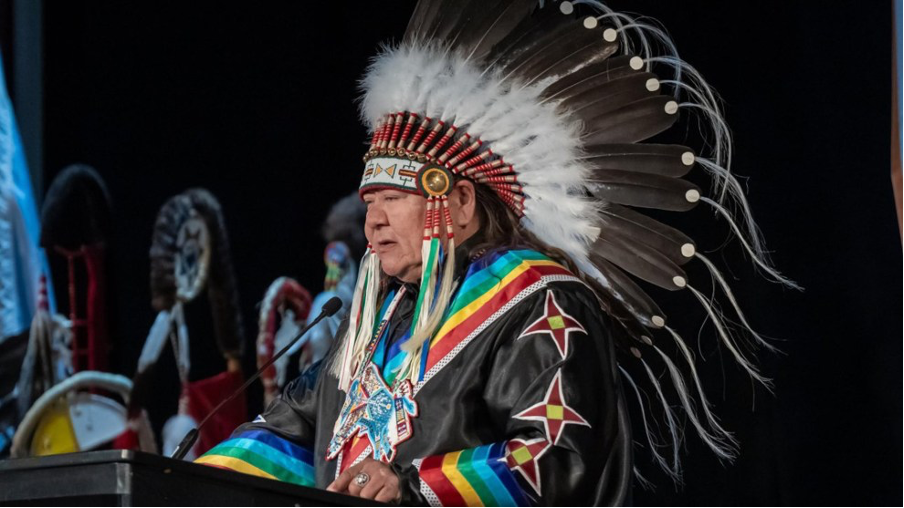
Just west of Fort Qu’Appelle in Saskatchewan, the Standing Buffalo Dakota Nation is working across the US border to revive centuries-old trade routes as part of a new Indigenous-governed trade corridor.
Trucks from the First Nation could soon be transporting food, furniture and even critical minerals south of the border along ancestral pathways once used to move buffalo hides and pemmican across the plains—without paying taxes or tariffs. [Continue reading]
How a simple question about American hotels led to ‘the greatest immigration story never told’
Catherine E. Shoichet
CNN Travel
Little kids line up in white graduation caps and gowns. Family members pose for formal photos at a wedding. Cousins laugh as they cut into the frosting of a giant birthday cake.
These scenes from Amar Shah’s childhood flash across the screen in a new film. And they share something in common. All the photos were taken at motels owned by Indian immigrant families. [Continue reading]
‘This is a west African story’: how modern art tackled Nigeria’s identity crisis
Jason Okundaye
The Guardian
What distinguishes modern Nigerian art from its traditional form? I had this question in mind when I attended a private viewing of Tate Modern’s new exhibition, Nigerian Modernism, which traces artwork from the period of indirect colonial rule to post-independence.
Walking through the gallery with the curator Osei Bonsu, learning about the incredible ways in which modern Nigerian artists sought to define, shape and rebel against the beautiful but contested state, I found answers. [Continue reading]
 Imperial & Global Forum
You must be logged in to post a comment.