
Mitchel Stuffers
Assistant Editor at CIGH Exeter & PhD Candidate in History, University of Exeter
From the dark past of the medical sector to concerns about further conflicts in the Middle East, here are this week’s top picks in imperial and global history.
The dark history of medical illustrations and the question of consent
Lucy E. Hyde
The Conversation
They were pregnant. Some were prisoners. Others were the poorest of the poor, forgotten in death as in life. Yet dissection and depiction of their bodies have become the foundation of anatomical teaching.
Cradled in the pages of anatomy textbooks are figures stripped bare, not only of skin but of identity. Eduard Pernkopf’s infamous Nazi-era atlas contains exquisite, hyper-realistic drawings created from the bodies of political prisoners executed under Hitler’s regime. [Continue reading]
A History of Hamas
Rund Abdelfatah, Ramtin Arablouei, Julie Caine, Anya Steinberg, Lawrence Wu, Casey Miner, Cristina Kim, Devin Katayama, and Peter Balonon-Rosen.
NPR: Throughline
With peace talks once again underway between Israel and Hamas, and hopes again growing for a permanent ceasefire, we’re bringing you our episode on the origins of Hamas: where it came from, how its influence grew, and what it represents. Next week, our episode on Benjamin Netanyahu and the rise of Israel’s right wing. This episode first ran in November 2023.
We’ve done episodes on Hamas, Israel, Lebanon, Iran, and more. Find them all in our series, “The Cycle”. [Continue reading]
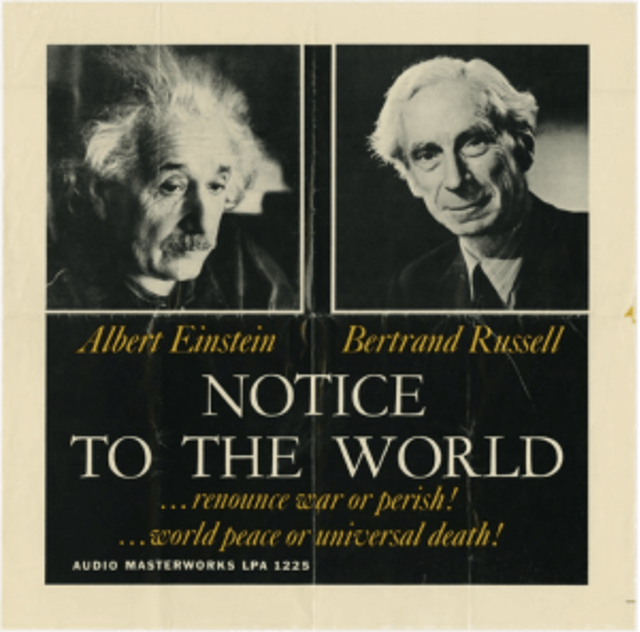
Albert Einstein and the problem of war
Lawrence Wittner
Peace and Health Blog
Although Albert Einstein is best-known as a theoretical physicist, he also spent much of his life grappling with the problem of war.
In 1914, shortly after he moved to Berlin to serve as director of the Kaiser Wilhelm Institute of Physics, Einstein was horrified by the onset of World War I. “Europe, in her insanity, has started something unbelievable,” he told a friend. “In such times one realizes to what a sad species of animal one belongs.” Writing to the French author Romain Rolland, he wondered whether “centuries of painstaking cultural effort” have “carried us no further than . . . the insanity of nationalism.” [Continue reading]
“We Are Still Looking For Independence; Nigeria Only Changed Colonial Masters” — Sowore
Editorial Team
Sahara Reporters
Human rights activist and convener of #RevolutionNow Movement, Omoyele Sowore has reiterated his position that Nigeria is yet to attain true independence, saying that Nigerian leaders have replicated the colonial-era oppression.
Sowore made the remarks on Wednesday, October 1, 2025, during a peaceful protest organised by the #RevolutionNow movement in Abuja as Nigeria marks its 65th Independence Day anniversary.
The former presidential candidate of the African Action Congress (AAC) argued that despite six and a half decades since Britain formally handed over power in 1960, Nigerians remain trapped under systems that deny them basic freedoms and dignity. [Continue reading]
Syria’s Parliamentary Election Results: Alarming Similarities to Iraqi Constituent Assembly of 2005 That Produced a Civil War
Juan Cole
Substack
Syria’s parliamentary elections on October 5 raised alarm flags for me on several grounds.
First, they were not conducted on the basis of a direct vote. Sixty “constituencies” were established to elect 121 members of the People’s Assembly of Syria (only 119 were actually elected). Another 70 members will be appointed by the self-appointed president of the country, Ahmad al-Sharaa (nom de guerre Abu Muhammad al-Julani), a former leader of al-Qaeda in Syria who came to power when guerrillas swept into Damascus last fall. [Continue reading]
 Imperial & Global Forum
You must be logged in to post a comment.