
Mitchel Stuffers
Assistant Editor at CIGH Exeter & PhD Candidate in History, University of Exeter
From recent observations and reports in Asia and Africa to the centenary of the Locarno Treaties, here are this week’s top picks in imperial and global history.
‘A Global Transit Point’: Investigating Human Trafficking and People Smuggling in South Asia
Sama Faruqi
Global Investigative Journalism Network
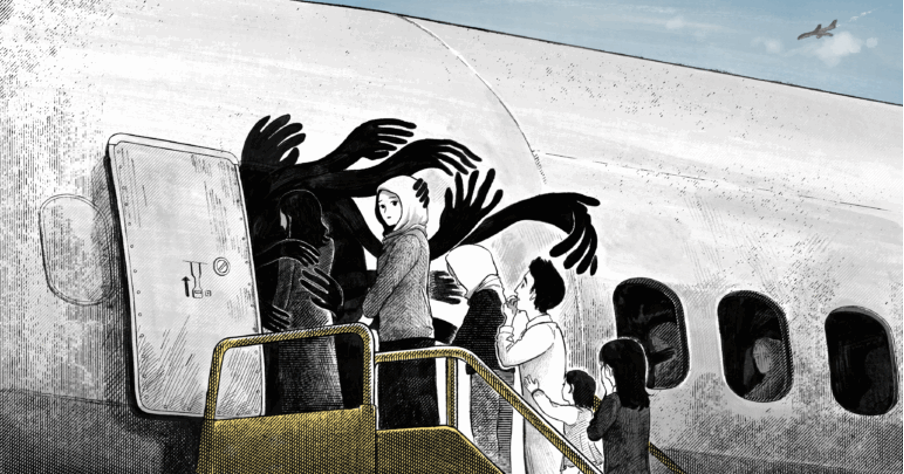
South Asia is a major origin, transit, and destination point for internal and transnational human trafficking and smuggling, due to the region’s porous borders, high rates of poverty and unemployment, and weak law enforcement.
Since 2010, the issue has been exacerbated by wars, political violence, and instability in Afghanistan, Syria and Libya, which have transformed trafficking routes. Economic migrants have merged with refugees fleeing conflict and persecution, and the numbers have risen since the COVID-19 pandemic and widespread job losses. [Continue reading]
The Great Reckoning: What the West Should Learn From China
Kaiser Kuo
The Ideas Letter
The world feels unsettled, as if history itself were changing tempo. The familiar landmarks of the modern age are blurring, slipping away, and the stories we once told ourselves about progress and power no longer map cleanly onto the terrain before us. What we are living through seems, with each new day, less like a passing rearrangement of power, less like a momentary realignment of nations. We sense something deeper and more enduring: a transformation whose outlines we are only beginning to discern. History no longer feels like something unfolding behind us but something rushing toward us, urgent and impossible to ignore.
The economic historian Adam Tooze, reflecting on his recent, intense engagement with China, put it to me in July with characteristic directness: “China isn’t just an analytical problem,” he said. It is “the master key to understanding modernity.” Tooze called China “the biggest laboratory of organized modernizations there has ever been or ever will be at this level [of] organization.” [Continue reading]
Trump repeats claim India will cut Russian oil imports
Nikita Yadav
BBC News, Delhi
US President Donald Trump has reiterated that India has agreed to reduce its purchase of Russian crude. Trump said Indian PM Narendra Modi had assured him during a phone call on Tuesday that Delhi “was not going to buy much oil from Russia” as he too “wants to see the war end with Russia-Ukraine”.
Modi acknowledged Trump’s call and his “warm greetings” on the festival of Diwali in a social media post but didn’t comment on Russian oil. Trump had made similar remarks last week, but the Indian foreign ministry said at the time said it was “not aware” of any phone call between the leaders. On Wednesday, an official at the ministry told the BBC that it had no new comment on Trump’s latest remarks. [Continue reading]
Senegal report shows WWII massacre ‘premeditated’ by French colonial forces
FRANCE 24 Editorial Team
NPR
French forces’ 1944 massacre of African World War II troops demanding pay in Senegal was “premeditated” and covered up, with previous death tolls vastly underestimated, according to a paper submitted to the Senegalese president, an exclusive copy of which was obtained by AFP.
According to French colonial authorities at the time, at least 35 infantrymen were killed during the massacre at the Thiaroye camp, near Dakar.
This toll is likely significantly low, according to the committee of researchers who authored the report, who said the “most credible estimates put the figure at 300 to 400” deaths. [Continue reading]
The Locarno Treaties: echoes and learning for today
Amy Smith
United Nations Archives Geneva
This month marks the centenary of the Locarno Treaties, historians and archivists are again drawn to that moment of hope on the banks of Lake Maggiore in October 1925. In a recent episode of the UN Library & Archives Geneva podcast The Next Page, Patrick O. Cohrs, Professor of International History at the University of Florence, offered a panoramic view of his interpretation of the “long” twentieth century and Locarno’s place in this picture, enjoining listeners to consider the long twentieth century as a learning process and a period of transformation in international politics. [Continue reading]
 Imperial & Global Forum
You must be logged in to post a comment.