
Mitchel Stuffers
Assistant Editor at CIGH Exeter & PhD Candidate in History, University of Exeter
Mitchel Stuffers
Assistant Editor at CIGH Exeter & PhD Candidate in History, University of Exeter
Mitchel Stuffers
Assistant Editor at CIGH Exeter & PhD Candidate in History, University of Exeter
Mitchel Stuffers
Assistant Editor at CIGH Exeter & PhD Candidate in History, University of Exeter
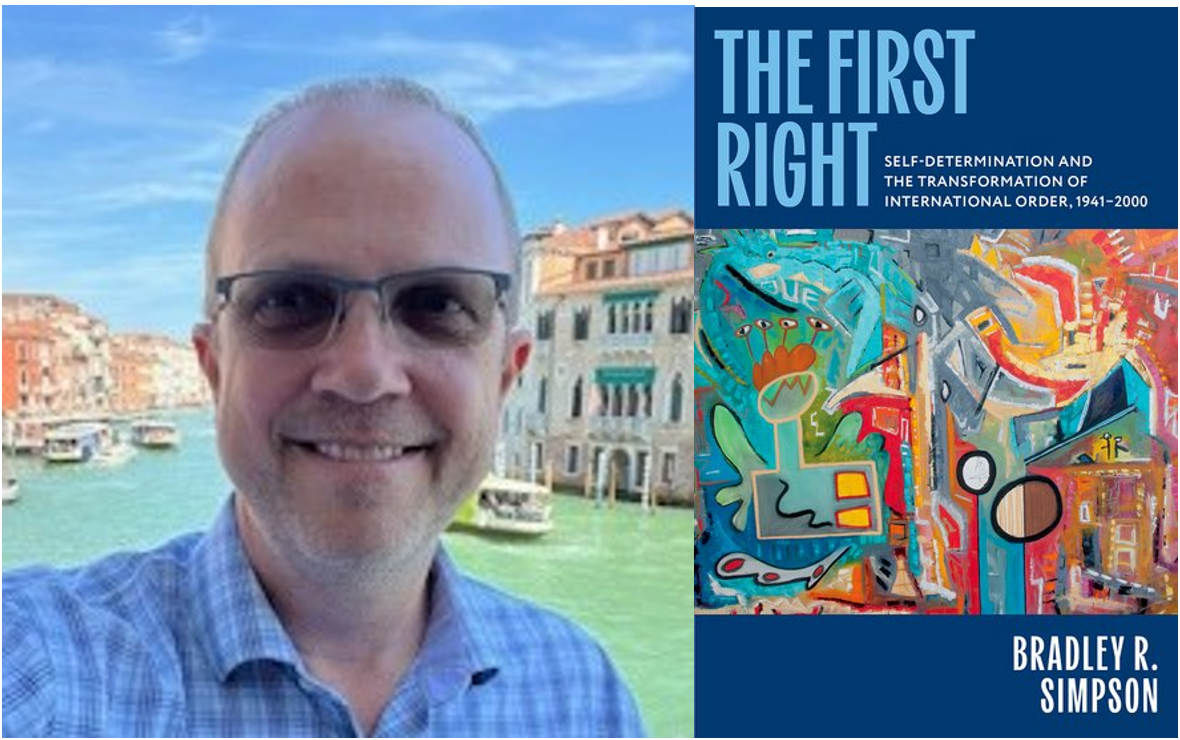
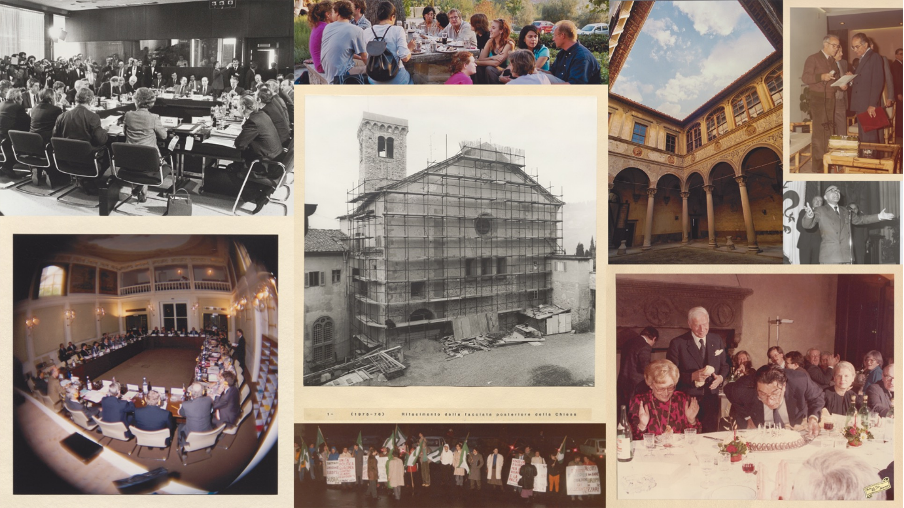
We are delighted to welcome Professor Bradley Simpson (University of Connecticut). He will be discussing his new book The First Right: Self-Determination and the Transformation of International Order, 1941–2000 (Oxford University Press, Oct. 2025). His talk is jointly convened by the Centre for Histories of Violence and Conflict and the Centre for Imperial and Global History.
Wednesday 19 November 2025, 2:30pm-4pm
Amory B310 and on Teams
Abstract: The idea of self-determination is one of the most significant in modern international politics. For more than a century, diplomats, lawyers, scholars, activists, and ordinary people in every part of the globe have wrestled with its meaning and implications for decolonization, human rights, sovereignty, and international order. This talk will examine self-determination as a century-long contest between contending visions of sovereignty and rights whose meaning has often emerged not just from the United Nations and great power diplomacy but from the claims of peoples, places, and movements on the margins of international society.
Click here to read the book’s introduction for free until 1 December.

Bio: Brad Simpson is Professor of History at the University of Connecticut. He teaches and researches twentieth century U.S. foreign relations and international history, and has an interest in US-southeast relations, political economy, human rights and development. His first book, Economists with Guns: Authoritarian Development and U.S.-Indonesian Relations, 1960-1968 (Stanford 2008) explores the intersection of anti-Communism and development thinking in shaping U.S. Indonesian relations. He is also founder and director of a project at the non-profit National Security Archive to declassify U.S. government documents concerning Indonesia and East Timor during the reign of General Suharto (1966-1998). This project will serve as the basis for a study of U.S.-Indonesian-international relations from 1965 to 1999, exploring how the international community’s embrace of an authoritarian regime in Indonesia shaped development, civil-military relations, human rights and Islamic politics.
Francine McKenzie
Western University
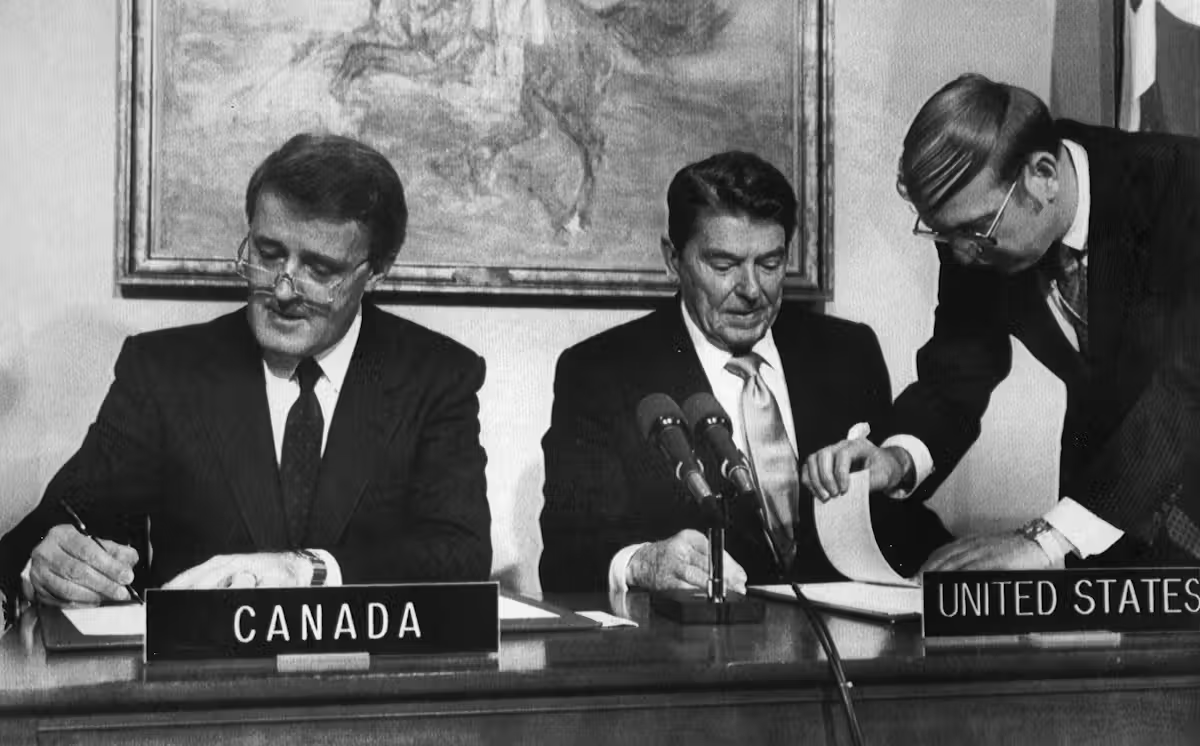
Like so many of America’s trading partners, President Trump’s announcement of Liberation Day in April 2025 and the introduction of new and higher tariffs rocked Canada. Since the initial jolt, officials from the two long-time trade partners and allies have met to resolve their trade dispute. An uneasy calm started to settle in. But now Canada-US trade relations are worse than ever. The reason: a dispute about Ronald Reagan’s views on trade.
Can the free-trade beliefs of Reagan, who was President of the United States from 1981-1989, cause a breakdown in the Canada-US trade relationship today?
Continue reading “How Ronald Reagan is Reigniting the Canada-US Trade Conflict”
Mitchel Stuffers
Assistant Editor at CIGH Exeter & PhD Candidate in History, University of Exeter
Marc-William Palen
Editor, The Imperial & Global Forum
University of Exeter
The University of Exeter’s Faculty of Humanities, Arts and Social Sciences has just announced its newest round of funded PhD opportunities for domestic and international students. Come study History with us!
Mitchel Stuffers
Assistant Editor at CIGH Exeter & PhD Candidate in History, University of Exeter
 Imperial & Global Forum
You must be logged in to post a comment.