
Mitchel Stuffers
Assistant Editor at CIGH Exeter & PhD Candidate in History, University of Exeter
From the Western Sahara’s autonomy plan to Europe’s east-west divide, here are this week’s top picks in imperial and global history.
W. Sahara autonomy plan sparks hopes of progress
Editorial Team
France24
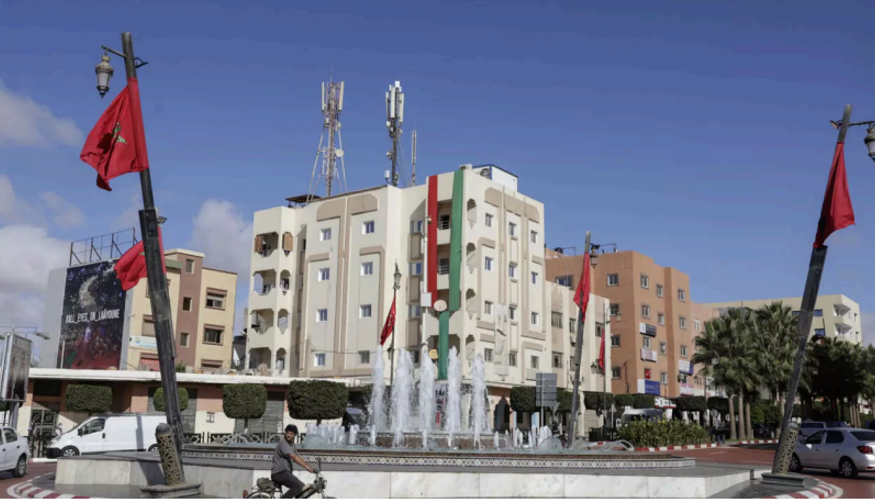
Its main city of Laayoune, with modern apartment blocks built among sand dunes some 20 kilometres (12 miles) from the Atlantic Ocean, already projects an image of growth and stability. But the sprawling desert city of around 250,000 people remains at the heart of the conflict that has pitted Rabat against the Algiers-backed Polisario Front, which seeks independence for the mainly tribal native Sahrawi people.
Cafes and restaurants in Laayoune are full, and official portraits of King Mohammed VI and Moroccan flags hang from balconies. Many Sahrawi tribal leaders interviewed by AFP voiced support for Rabat’s plan. [Continue reading]
Ethiopia receives historic artefacts held in Germany for 100 years
Wycliffe Muia
BBC News
Twelve historical artefacts have been formally returned to Ethiopia after being kept by a German family for more than 100 years. The artefacts, originally collected in the 1920s by Germany’s then-envoy to Ethiopia Franz Weiss and his wife Hedwig, were handed over on Wednesday to the Institute of Ethiopian Studies at Addis Ababa University.
The collection included crowns, shields and paintings, all considered culturally and historically significant in Ethiopia. “The artefacts still stand as a symbol of the long-standing and friendly relationship between Germany and Ethiopia,” said Ferdinand von Weyhe, Germany’s envoy to Ethiopia. [Continue reading]
‘He was just trying to earn a few kopecks’: how newly translated stories reveal Chekhov’s silly side
Viv Groskop
The Guardian
With daft jokes and experimental wordplay, the first comprehensive translations of his lesser-known stories show Anton Chekhov in a new light
Few writers are as universally admired as Chekhov. As Booker winner George Saunders puts it, “Chekhov – shall I be blunt? – is the greatest short story writer who ever lived.” Novelists from Ann Patchett to Zadie Smith cite him as an inspiration. His plays The Seagull, Three Sisters, Uncle Vanya and The Cherry Orchard still pack out theatres internationally. In the past year alone, Andrew Scott wowed audiences in his one-man Vanya for London’s National Theatre and Cate Blanchett took on the role of Arkadina in The Seagull at the Barbican. But how much did you know about his silly side? [Continue reading]
‘No topic is too difficult’: children’s series on life in communist East Germany wins an Emmy
Kate Connolly
The Guardian
In Fritzi’s Footsteps tells story of a girl growing up in Leipzig who witnesses the fall of the Berlin Wall
The creators of a children’s television series about life in communist East Germany have said they hope it will awaken interest in the region’s history, after it was awarded an International Emmy. Auf Fritzis Spuren (In Fritzi’s Footsteps) tells the story of a 12-year-old girl living in the eastern city of Leipzig and how she experiences life in the east and the events that lead to the fall of the Berlin Wall.
“It definitely shows that no topic is too difficult for children,” said the lead actor, Julian Janssen. “It’s precisely the difficult topics that should be addressed.” [Continue reading]
An east-west divide deeper than the cold war: what I saw on my summer trip to Russia
Matthew Alford
The Conversation
I went to Moscow this summer on a trip that was as awkward as it was illuminating. I left feeling Russia is not just a changed country, but a separate civilisation. As one academic I met there explained: “Russia is not a fortress. Maybe as the Soviet Union, it was. But we are very open to the rest of the world – this time it’s the west that has drawn the iron curtain.”
Due to western sanctions over the war in Ukraine, you cannot travel to Russia – or even book travel online – from the UK. Bank cards are useless, you can’t acquire roubles beforehand, and cash has to be converted from US dollars after arrival. For over a week, I did not see a single person from any English-speaking country. At the border, the queues were split bluntly into “Russians and Belarusians” and “foreigners”, with the latter a crush of 400 or so central Asian migrants. A guard confiscated my passport on arrival and snapped: “Have question? Call embassy”, before shutting a thick steel door on me. [Continue reading]
 Imperial & Global Forum
You must be logged in to post a comment.