
Mitchel Stuffers
Assistant Editor at CIGH Exeter & PhD Candidate in History, University of Exeter
From Gustav Klimt’s ‘disguised’ portrait to recent Chinese investments in Africa, here are this week’s top picks in imperial and global history.
How a desperate lie saved a Gustav Klimt portrait from the Nazis – and helped shape its record sale price
Benedict Carpenter van Barthold
The Conversation
Gustav Klimt’s Portrait of Elisabeth Lederer has sold to an anonymous phone bidder for US$236.4 million (£180.88 million) at Sotheby’s New York. Only Leonardo Da Vinci’s Salvator Mundi has achieved a higher hammer price. For modern art, Klimt is the uncontested champion.
What’s more, this record was achieved despite a cooling global art market, and with Klimt lacking the universal household recognition of Da Vinci in much of the world. The painting is valued so highly because it carries a deep personal and political history – and because the artist’s incredible skill once helped it serve as a life-saving disguise. [Continue reading]
US Halts Immigration Processing for 19 Nations
Reporter DW (Deutsche Welle)
Tempo
TEMPO.CO, Jakarta – The US government on Tuesday suspended the processing of all immigration applications from 19 countries in Africa, Asia and the Middle East. President Donald Trump’s administration cited national security concerns as the basis for the move after an attack on National Guard members in Washington last week. An Afghan national was arrested as a suspect.
What is the US Immigration Ban?
Under the new policy, all applicants from the affected countries must undergo a comprehensive vetting process. The administration has not specified how long the pause will last or whether additional nations could be added. [Continue reading]
African nations push for recognition of colonial crimes and reparations
Editorial Team
AP News
ALGIERS, Algeria (AP) — African leaders pushed Sunday to have colonial-era crimes recognized, criminalized and addressed through reparations.
At a conference in Algiers, diplomats and leaders convened to advance an African Union resolution passed at a meeting earlier this year calling for justice and reparations for victims of colonialism. In his opening speech, Algerian Foreign Minister Ahmed Attaf said Algeria’s experience under French rule underscored the need to seek compensation and reclaim stolen property. [Continue reading]
Chinese consumer brands flood into Africa as old investment model fades and exports jump 28%
Evelyn Cheng & Victoria Yeo
CNBC
Chinese business dealings in Africa, once dominated by state-owned enterprises, are now increasingly shifting toward consumer products from the private sector. While Africa’s faster-growing economies, such as Kenya, Uganda and Zambia, see annual growth rates of 4.8%, 6.4% and 5.8%, respectively, the GDP of the overall continent’s 50-plus countries is 4.1%. That is according to IMF’s economic outlook report last month.
Chinese investments in Africa’s resource-intensive sectors have declined by roughly 40% since their 2015 peak, amid weaker returns and falling construction revenues in traditional commodity industries, according to Rhodium Group China Cross-Border Monitor released on Nov. 18 this year. Meanwhile, China’s exports to Africa have surged by 28% year-on-year over the first three quarters of 2025, following a 57% increase from 2020 to 2024, the report said. [Continue reading]
Namibia Seeks Stronger Chinese Investment in Strategic Projects
Andrew Maramwidze
Namibian Mining News
The Namibian government is strengthening its push to attract Chinese investment across key sectors as it positions itself as a strategic cooperation hub for China in southern Africa. China is already Namibia’s largest source of foreign direct investment, accounting for about 30 percent of total inflows and its second-largest trading partner after South Africa. More than 50 Chinese companies operate in the country, including major investors behind the Swakop Uranium’s Husab Mine and the Rossing Uranium Mine.
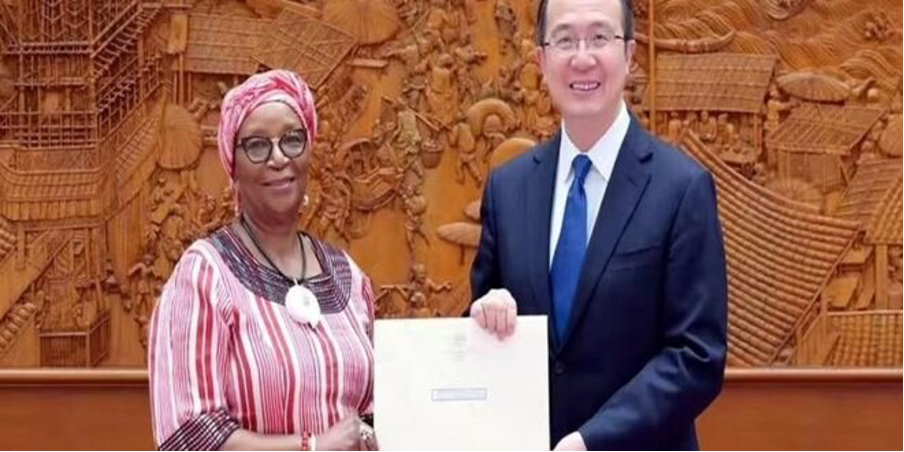
“Namibia welcomes partners who share our vision to add value to our resources, expand renewable energy and strengthen agriculture for food security. We believe in cooperation where both Namibia and China benefit,” said Tonata Itenge-Emvula, Namibia’s new Ambassador to China. [Continue reading]
 Imperial & Global Forum
You must be logged in to post a comment.