
Mitchel Stuffers
Assistant Editor at CIGH Exeter & PhD Candidate in History, University of Exeter
From regional insecurity under Sudan’s civil war to waste-dumping as a form of neocolonialism, here are this week’s top picks in imperial and global history.
Sudan’s Civil War Is a Regional Security Stress Test
James Foggo
National Interest
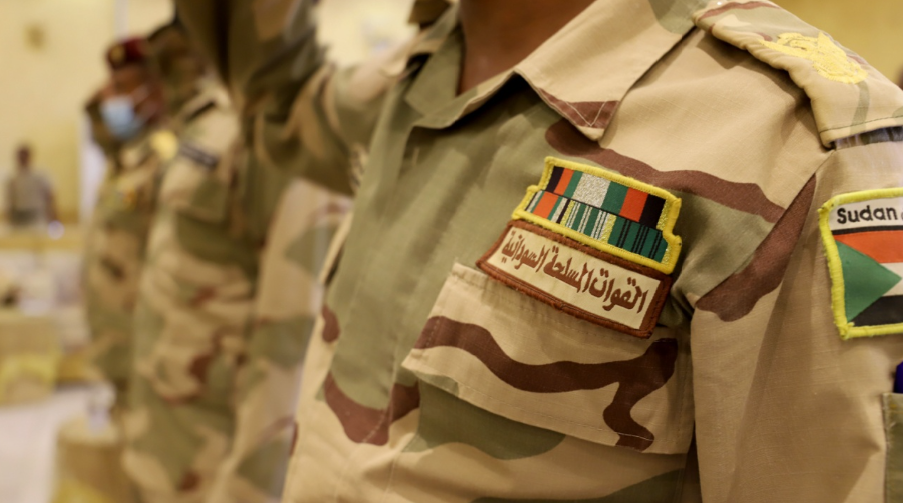
Sudan’s civil war has transitioned from an internal contest for power into a multidimensional regional security challenge. What initially appeared to be a struggle between rival armed formations has evolved into a conflict increasingly shaped by external military involvement, long-range strike capabilities, and the proliferation of unmanned systems.
Recent investigative reporting by The New York Times, documenting the use of a covert drone operating base on Egyptian territory to conduct strikes inside Sudan, highlights a broader and consequential trend: Sudan’s instability is now intersecting directly with regional force posture, deterrence dynamics, and Red Sea security. Advanced long-range drones have been operating for months from Egypt’s Western Desert, striking targets hundreds of miles inside Sudanese territory. From a military perspective, the precise nationality of the operators is secondary to the operational implications. The conflict is no longer geographically bounded. External actors are influencing tactical outcomes and shaping the operational environment, not merely providing material support to local forces. [Continue reading]
Naming Stakeknife would be ‘step towards apology’
Eimear Flanaganand & Claire Graham
BBC News
Naming the agent Stakeknife could be the “final piece of the jigsaw” towards a government apology, according to the solicitor acting for the victims of the Army’s IRA spy. It follows a report from a Westminster committee which urged the government to formally identify the high-ranking agent who was linked to 14 Troubles murders. Stakeknife was the west Belfast man Freddie Scappaticci, who died in 2023.
The final report of a investigation into his crimes, which cost in excess of £40m, was published last year but its authors could not secure government permission to name Stakeknife. Successive governments have refused to identify the agent under the ‘neither confirm nor deny’ policy which is sometimes adopted in matters of national security. In response to the MPs’ report, the government said the secretary of state will update Parliament as soon as he can. [Continue reading]
U.S. Hands Over Some NATO Commands to European Allies
Editorial Team
New York Times
The United States will hand over some NATO commands to European allies, NATO said on Tuesday, in an effort to show that European allies of NATO are taking more responsibility for conventional war planning. The United States will remain in overall charge of NATO and allied forces through the Supreme Allied Commander Europe, a post that has always been held by an American. The role is currently filled by Gen. Alexus G. Grynkewich of the U.S. Air Force.
The move further underscores the American command role in NATO. The United States will take over maritime forces, NATO said, and is now in charge of the three core capabilities: land, air and maritime. The United States has said for years that its European allies should take on more responsibilities within NATO, allowing Washington to shift its focus to the Pacific in line with its own security priorities. [Continue reading]
Commonwealth boss confident of progress on slavery reparations
Alasdair Pal
Reuters
The secretary-general of the Commonwealth, a 56-nation group headed by Britain’s King Charles, said on Wednesday she expected member nations to make progress towards beginning negotiations on reparations for the transatlantic slave trade. The Commonwealth, which grew out of the British Empire, is one of the world’s largest international organisations, representing around 2.7 billion people. Its members include Australia, India, 21 African nations and Caribbean states such as Barbados and Jamaica.
Charles has spoken of his profound regret over slavery and has backed research into the British monarchy’s historical links to the trade. However, Britain, like most former colonial powers, has dismissed calls for reparations. In an interview, Commonwealth Secretary-General Shirley Botchwey, a former foreign minister of Ghana who has publicly backed reparations from Great Britain, said she was supporting member countries in seeking redress. [Continue reading]
Waste as a new form of colonialism in Africa and Asia
Cosimo Graziani
Agenzia Fides
The search for rare earths for energy transition is often regarded as a form of neo-colonialism, and today it is the area in which this phenomenon manifests itself most clearly, especially due to its geopolitical and economic effects. However, there are other neo-colonial practices that are less visible but with equally negative consequences at the local level. One of these is the export of waste to Africa and Asia by Western countries, particularly the export of plastic, clothing, and electronic waste. The export of waste to the Global South is a phenomenon that has been ongoing for decades and that in the past was addressed through attempts to regulate and stem, notably with the drafting of the Basel Convention on the Control of Transboundary Movements of Hazardous Wastes (1989). In addition to halting waste movements, the Convention also aimed to assist developing countries in the ecological management and disposal of waste.
Unfortunately, despite its intentions, the Convention failed to produce concrete results in international waste management. On the contrary, the situation has worsened over the years. The global export of waste has been dubbed “Waste Colonialism,” precisely because it remains a form of exploitation by countries with a colonial past over their former colonies. [Continue reading]
 Imperial & Global Forum
You must be logged in to post a comment.