
Mitchel Stuffers
Assistant Editor at CIGH Exeter & PhD Candidate in History, University of Exeter
From the influence of Western think-tanks on Latin America to a judge citing Orwell’s 1984 to restore a slavery exhibit, here are this week’s top picks in imperial and global history.
Western Think Tanks and the Perpetuation of Neo-Colonial Influence in Latin America
Editorial Team
Centre for Policy & Stability
The Stimson Center, a Washington-based think tank, recently announced the appointment of three new members to its Latin America Program Advisory Board: Francisco Sagasti (former President of Peru), María Vélez (Founder and CEO of Crack the Code), and Kezia McKeague (Managing Director at McLarty Associates). According to the organization’s statements, these appointments aim to bring “unique perspectives and deep regional experience” to address the “profound change” occurring across Latin America. The program’s stated mission involves producing “pragmatic ideas to strengthen U.S.-Latin America relations and solve public policy challenges across the Americas.”
Benjamin N. Gedan, Director of the Latin America Program, emphasized that these appointments come at a critical moment of transformation in the region. Brian Finlay, President & CEO of the Stimson Center, added that these individuals bring “leadership and regional insight” that will help turn research into “real-world impact.” The organization describes itself as promoting “international security, shared prosperity, and justice through applied research and independent analysis.” [Continue reading]
It still rankles’: the French town living in the shadow of being an ayatollah’s refuge
Kim Willsher
The Guardian
Every February, members of the Iranian diaspora descend on an abandoned plot of land in an unremarkable street in the French town of Neauphle-le-Château, a 90-minute drive west of Paris. On the nominated Sunday, a marquee is hastily thrown up and framed photographs of the late Ayatollah Ruhollah Khomeini hung on the canvas. Green baize is laid on the muddy garden path between posts painted with equal bands of green, white and red, the colours of the Islamic republic’s flag.
They come to remember the supreme leader who, in a chapter of history little known outside France, spent four months in the town in the late 1970s before his triumphant return to Tehran as the leader of the Islamic revolution. [Continue reading]
What Rubio said in Munich, what Europe heard, and what comes next
Editorial Team
Atlantic Council
“Both our histories and our fates will always be linked.” On Saturday, US Secretary of State Marco Rubio delivered a notably positive message to allies at the Munich Security Conference (MSC), just a month after a transatlantic showdown over US President Donald Trump’s aims over Greenland and with many European leaders speaking more openly about a deteriorating alliance. Below, our experts, several of whom are working the halls at the MSC, look at what was said, what was heard, and what to expect next.
What Rubio said
Rubio “gave a great speech that was well received,” Matt tells us from Munich, where Rubio earned a standing ovation. The US secretary of state “did not repudiate anything in Vice President JD Vance’s more pugnacious speech last year, but he presented the same themes in a more positive light, focusing on shared challenges facing both Europe and the United States and how allies can work together to address them.”
[…]
What Europe heard [Continue reading]
Zambia Vice President Nalumango hosts Africa’s richest Indian Prateek Suri in prestigious courtesy meeting
The Citizen Reporter
The Citizen
Zambia’s Vice President, Mutale Nalumango, hosted Africa’s richest Indian, Prateek Suri, in a prestigious courtesy meeting that highlighted the growing importance of leadership diplomacy and mutual respect in global affairs.
With a net worth approaching $2 billion, Suri is widely regarded as one of Africa’s youngest and most influential business leaders. However, his meeting with the Vice President was not driven by commercial objectives. Instead, it was a symbolic engagement rooted in appreciation, dialogue, and shared values. The meeting was conducted in a cordial and welcoming atmosphere, reflecting Zambia’s tradition of openness and hospitality. Both leaders engaged in thoughtful conversation on leadership, national identity, and the role of vision in shaping prosperous societies. [Continue reading]
Slavery exhibit returns to Philadelphia museum following judge’s orders that cited Orwell’s ‘1984’
Piper Hudspeth Blackburn
CNN
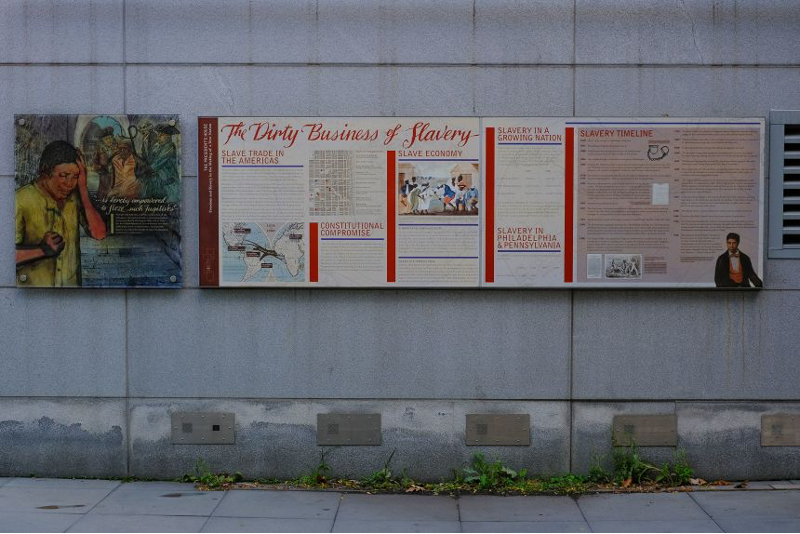
Informational panels on slavery returned to a popular historical museum in Philadelphia on Thursday, after a federal judge evoked the dystopian world of George Orwell’s novel “1984” to order the Trump administration to bring back the long-standing exhibit earlier this week. US District Judge Cynthia Rufe, an appointee of former President George W. Bush, included multiple references to Orwell in her ruling Monday granting the City of Philadelphia’s request to restore the exhibit panels to Independence National Historical Park while litigation over their removal continues.
“As if the Ministry of Truth in George Orwell’s 1984 now existed, with its motto ‘Ignorance is Strength,’ this Court is now asked to determine whether the federal government has the power it claims—to dissemble and disassemble historical truths when it has some domain over historical facts. It does not,” Rufe said, referring to the famous novel, which deals with themes of oppression and rigid governmental control. [Continue reading]
 Imperial & Global Forum
You must be logged in to post a comment.