
Mitchel Stuffers
Assistant Editor at CIGH Exeter & PhD Candidate in History, University of Exeter
From famine as a weapon to Scotland’s anti-suffrage woman MP, here are this week’s top picks in imperial and global history.
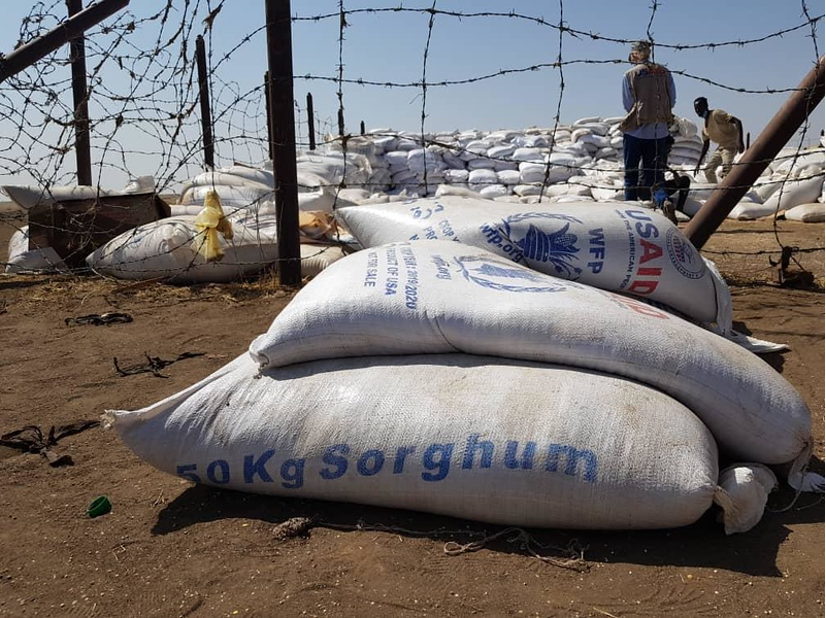
The Violence of Hunger: Starvation, Famine, and Responsibility
Anne van Mourik, Lucy Gaynor, & Solange Fontana
NIOD: Dutch Institute for War-, Holocaust, and Genocide Studies
Modern famine is man-made. It is political and used as a tool of violence, rather than occurring as a natural disaster. This longread explores how hunger and mass violence are connected, how we can recognize it, and hold those responsible to account.
In August 2025, experts from the Integrated Food Security Phase Classification system (IPC), a globally recognised system that rates levels of food insecurity in a region, declared famine in Gaza. It made official what many experts had warned for months. The crisis in Gaza has worsened at a shocking pace under Israel’s blockade. By tightly controlling food aid and essential supplies, Israel has pushed the territory into famine conditions. Airstrikes have destroyed farmland, greenhouses, and water systems, wiping out much of Gaza’s ability to grow its own food. Mass starvation is also currently unfolding in Sudan, South Sudan, Somalia, Ethiopia, Syria, and Yemen. In all these cases, hunger is not a natural disaster or an accident. It is man-made: the outcome of human decisions. Often it is used as a weapon of war or genocide.
Hunger and mass violence often appear together: violence causes hunger, and hunger can be a form of violence. In this longread, we will explore the relation between the two, and ask how we can recognize starvation and famine, and how we can respond to it. What is the relationship between hunger and mass violence? How can we recognise, understand, and react to starvation, and famine? [Continue reading]
How the United States lost Iran
Sergey Radchenko
Engelsberg Ideas
Iran is not the worst disaster in the history of United States foreign policy – not even close – but it gets written about a lot. One reason is that Iran remains a source of instability in the Middle East – rarely more clear than now – and, if its nuclear ambitions are to be taken seriously, a long-term threat to American security. The other reason is that the story of US failure in Iran is so incredibly colourful and so full of spectacular misjudgments that it will long serve as a case study in poor policy, badly executed.
Scott Anderson’s new book is a worthy addition to the genre. King of Kings can be read, alternatively, as a biography of the Shah or as a study of US foreign policy. The subtitle to the book’s US edition – ‘a story of hubris, delusion and catastrophic miscalculation’ – aptly sums up both the Shah’s inadequacies and the breathtaking failures of the Carter administration, which never quite knew what it wanted to do in Iran, and even when it knew what it wanted, didn’t know how to do it. Even before he digs into Carter, Anderson charges Richard Nixon and Henry Kissinger with precipitating the Iranian revolution by giving the Shah carte blanche to run his country the way he saw fit while selling him American weapons practically without restrictions. [Continue reading]
Germany becomes world’s fourth-largest arms exporter – SIPRI
Ulyana Krychkovska & Iryna Balachuk
Ukranianska Pravda
Germany has significantly increased its arms exports, overtaking China to become the fourth-largest exporter of weapons in the world, according to data from the Stockholm International Peace Research Institute (SIPRI).
[…]
Germany accounted for 5.7% of global arms exports between 2021 and 2025. Deliveries of German weapons increased by 15% compared with the period from 2016 to 2020. SIPRI noted that nearly a quarter of Germany’s exports (24%) had been supplied to Ukraine as military aid. [Continue reading]
Vast scale of overseas human remains held in UK museums decried by MPs and experts
David Batty
Guardian
The vast number of overseas human remains held by UK museums is a shameful legacy of colonialism, with many items kept in ways that are sacrilegious, according to MPs and archaeologists.
An investigation by the Guardian found that UK museums hold more than 263,000 items of human remains from around the world, including whole skeletons, preserved bodies, such as Egyptian mummies, skulls, bones, skin, teeth, nails, scalps and hair. Responses to freedom of information (FoI) requests from the Guardian revealed that 37,000 items of human remains are known to originate from overseas, including thousands from former British colonies. The countries of origin of another 16,000 items are unknown. [Continue reading]
Scotland’s anti-suffrage woman MP: How the Duchess of Atholl changed her mind
Amy Gray
University of Reading
For International Women’s Day 2026, we are privileged to be able to post this ‘long read’ by Amy Gray whose recent biography, Red Duchess: Kitty Atholl, A Rebel in Westminster, challenges the anti-feminist headlines often associated with Scotland’s first woman MP and takes a longer view of her politics. During the period covered in this piece, Kitty’s name and title changed three times, from Katharine Ramsay to the Marchioness of Tullibardine and then the Duchess of Atholl. She is referred to throughout as Kitty for simplicity.
In 1923, the voters of Kinross and Western Perthshire elected their local duchess as Scotland’s first woman MP. Eyebrows were raised, not just because of her title and sex, but because the Duchess of Atholl was the only one of the early women MPs who had actively campaigned against her own right to vote. As late as 1917, she was adamant that it was not yet time to widen the franchise, so what changed? [Continue reading]
 Imperial & Global Forum
You must be logged in to post a comment.