
Mitchel Stuffers
Assistant Editor at CIGH Exeter & PhD Candidate in History, University of Exeter
From the UN declaring transatlantic slavery the gravest Crime against Humanity to the global impact of the US-Iran war, here are this week’s top picks in imperial and global history.
General Assembly Declares Enslavement of Africans ‘Gravest Crime against Humanity’, Debates Legal Implications
Editorial Team
UN Meetings Coverage and Press Releases
The General Assembly today declared the trafficking of enslaved Africans and racialized chattel enslavement of Africans as the gravest crime against humanity as Member States debated the legal ramifications of such a declaration.
The Assembly adopted the text “Declaration of the Trafficking of Enslaved Africans and Racialized Chattel Enslavement of Africans as the Gravest Crime against Humanity” (document A/80/L.48) with a recorded vote of 123 in favour to 3 against (Argentina, Israel, United States), with 52 abstentions. By its terms, the Assembly affirmed the importance of addressing historical wrongs affecting Africans and people of African descent and emphasizes that claims for reparations represent a concrete step towards remedying historical wrongs. [Continue reading]
‘These connections are overlooked’: how British companies profited from slavery in Brazil long after abolition
Tiago Rogero
Guardian
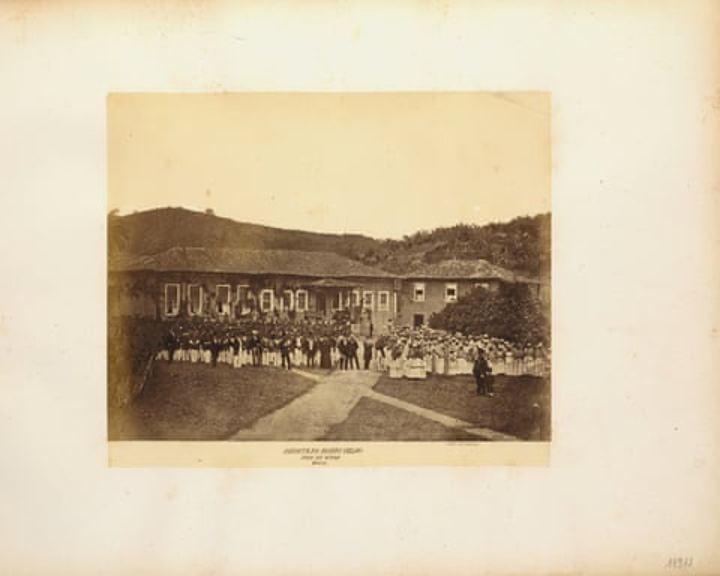
In 1845 British citizens and companies were already legally prohibited from owning or buying enslaved people overseas, yet that year 385 captives were “transferred” to a British mining company in Brazil named St John d’El Rey. Despite a global campaign waged by the UK against slavery and the transatlantic slave trade, the move was not technically illegal because the enslaved people were not sold but “rented” – a practice permitted overseas under the 1843 Slave Trade Act.
There was a maximum term of 14 years, after which they should all have been freed – but that did not happen. The British ambassador to Brazil became aware of the case but, citing a lack of evidence, looked the other way. [Continue reading]
Surprise, embarrassment, unease in Japan after Trump uses Pearl Harbor to defend Iran war
Associated Press
Politico
Senior U.S. and Japanese officials tend to shy away from anything but very careful public comments about Japan’s 1941 sneak attack on U.S. forces at Pearl Harbor. So there was embarrassment, confusion and unease on Saturday in Japan after President Donald Trump casually used the World War II attack to justify his secrecy before launching the war against Iran. The Japanese discomfort was compounded by the fact that Japanese Prime Minister Sanae Takaichi was sitting awkwardly at Trump’s side as he spoke.
Partly, the reaction is linked to the crucial security and economic role that the U.S. plays for Japan, its top ally in the region. Put simply, Japan needs to make sure the U.S. relationship thrives. That’s why Takaichi was in Washington. But it’s also a reflection of just how fresh the political debate about Japan’s role in World War II remains here, even 80 years after its end. [Continue reading]
Lionel Jospin obituary
Kim Willsher
Guardian
In the run-up to the first round of the French presidential election of April 2002, the Socialist party leader and prime minister Lionel Jospin, who has died aged 88, was a firm favourite to become the next leader of France. According to every opinion poll, Jospin would face Jacques Chirac, seeking re-election, in the second round vote and the two candidates were neck and neck.
It would be hard to overestimate the stupefaction and political earthquake when, at precisely 8pm on Sunday 21 April, the results of the first round were announced: Jospin had been knocked into third place by the far-right National Front leader Jean-Marie Le Pen and thus was out of the race. Outside the Socialist party’s headquarters in central Paris shocked supporters gathered in tears to hear Jospin declare it was “a bolt from the blue” and announce he would leave politics. [Continue reading]
From India to Italy, Trump’s Iran war is rippling through the world economy
Swati Pandey, Laura Curtis and Mark Niquette, Bloomberg
Economic Times – India
The supply shockwaves from the US and Israel’s war in Iran are spreading across the global economy, raising concerns about an inflation hit to companies and consumers that will require policymakers to raise borrowing costs. While President Donald Trump’s chaotic tariff campaign took months to filter through supply chains, the spiking prices for oil, gas, aluminum, fertilizers and chemicals since the bombing of Tehran began on Feb. 28 have rapidly been felt by factory managers, farmers and freight carriers.
Now the effects are reaching industries that might’ve seemed insulated from the fallout, or too far away to feel it. And that’s unlikely to be reversed soon even as Trump signaled Monday that a potential cease fire was possible. [Continue reading]
 Imperial & Global Forum
You must be logged in to post a comment.