Making Society Work Again: Workfare in Transatlantic Context Since the Sixties

Professor Bernhard Rieger (University of Leiden) will be at the University of Exeter on a Visiting International Academic Fellowship between 13 and 18 May. As part of his visit, he has kindly offered to give a lecture entitled ‘Making Society Work Again: Workfare in Transatlantic Context Since the Sixties.’ 

Drinks and nibbles will be provided. All welcome.

When/where: Tuesday 14 May from 16.30 in Laver 218 (Streatham Campus).

Abstract: Social policies to combat poverty and unemployment in Western societies have changed fundamentally since the 1960s. While policy makers had once regarded the poor and jobless as victims of structural disadvantages beyond an individual’s control, a swelling chorus argued from the 1980s on that material deprivation and rising unemployment were caused by “cultures of poverty” whose norms and values predisposed benefit recipients against regular work, thereby inflating welfare costs. In response, politicians have replaced firm entitlements to benefit payments with “workfare” regimes that link temporary welfare assistance to expectations of a speedy (re-)integration into the world of work. Focussing on the United States, Britain and Germany, this lecture assesses the rise of workfare concepts since the Sixties as well as their social and individual impact.

How Pinochet turned Chile into a globally admired model of authoritarian capitalism

Anti-Soviet, authoritarian, pro-market. The self-professed ‘father of the Chilean model’ as official guest in Deng Xiaoping’s China.

Tobias Rupprecht
University of Exeter
Follow on Twitter @Tobepastpresent

Augusto Pinochet was an avid global traveller throughout the 1990s. A potent symbol of Cold War anti-Soviet authoritarianism and market radicalism, the former military ruler of Chile usually made a great stir during his trips across Latin America, East Asia, Southern Africa, continental Europe, and to the United Kingdom. In a recent article in Global Society, I assess the public reactions, political debates, and legal consequences that Pinochet’s appearances caused. Scholars of Pinochet’s international perception have for the most part focussed on his criminal reputation among human rights activists and the victims of military rule in Chile. Yet, many pro-market reformers and anti-Communists in countries transitioning from socialism to capitalism did not see Pinochet as a criminal dictator of the Cold War. Margaret Thatcher also had a soft spot for him. For them, his economically successful ‘Chilean model’ had become a source of legitimacy for an authoritarian path of modernisation. Continue reading “How Pinochet turned Chile into a globally admired model of authoritarian capitalism”

Exhibition launch: The Painters of the City: North Africa 1880-1920

EXHIBITION LAUNCH Thu 9 May 2019, 18:00

Institute of Arab and Islamic Studies
University of Exeter
Stocker Rd
Exeter EX4 4ND

  • Free, no advance booking required

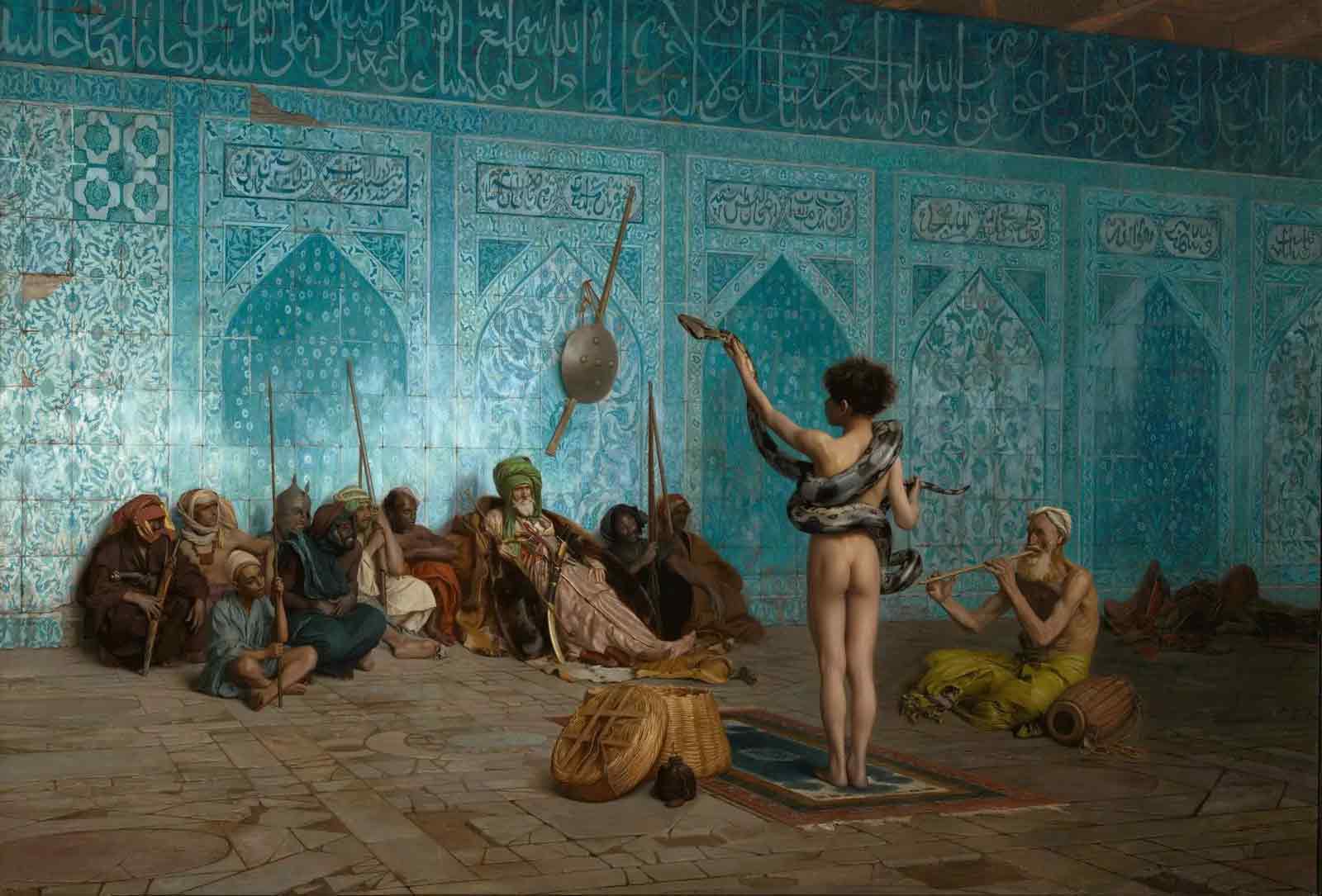
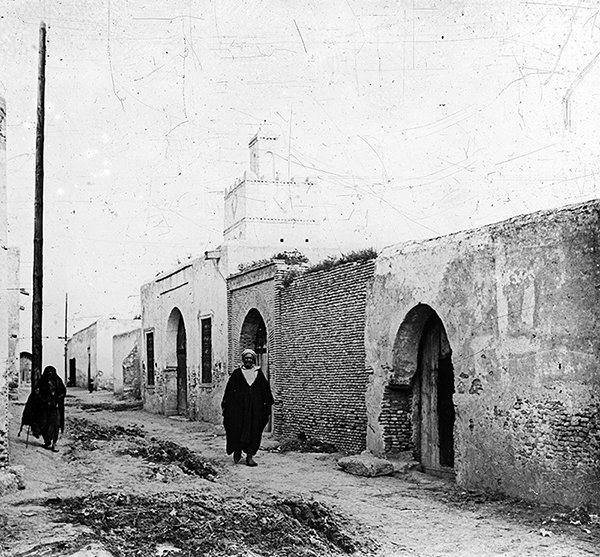
You are invited to the launch of The Painters of the City: North Africa 1880-1920. This exhibition has been curated by Professor William Gallois, and explores a mystery which also constitutes a unique moment in the history of art.

In the last years of the 19th century and the first decades of the 20th century, new forms of painting emerged on and around buildings in cities and towns across north Africa. They were identifiably related to existing cultural forms – especially tattoos , textiles and jewellery – but their sudden appearance in the form of murals and frescoes was unprecedented.

The launch of the exhibition is on 9 May at 18:00 in The Street Gallery.

Come along for drinks and nibbles! All are welcome.

For more information about the exhibition, please click here.

If you have any questions or enquiries, please email William Gallois at w.gallois@exeter.ac.uk.

Job Klaxon: Postdoctoral Research Associate for ‘Population Control and the Emergency in India’ Project

Job details

Job title: Postdoctoral Research Associate

Job reference: P67255

Date posted: 25/04/2019

Application closing date:23/05/2019

Location: Exeter

Salary: The starting salary will be from £29,515 to £34,189 on Grade E, depending on qualifications and experiencePackageGenerous holiday allowances, flexible working, pension scheme and relocation package (if applicable).

Job category/type: Academic

Job description

College of Humanities

This fixed term, full time post is available from 1st July 2019 to 23rd January2020

Summary of the role

The College wishes to recruit a Postdoctoral Research Associate to support the work of Dr. Rebecca Williams.  

This Academy of Medical Sciences funded post will work on the project ‘Population Control and the Emergency in India: The Shah Commission Regained.’ 

The post will include archival research in national and regional archives in India; completion of oral history interviews; preparation of literature reviews; assisting with the preparation of grant applications; assisting with the preparation of a journal special issue, and completion of other tasks as required to support the project

About you

The successful applicant will be able to present information on research progress and outcomes, communicate complex information, orally, in writing and electronically and prepare proposals and applications to external bodies.

Applicants will possess a relevant PhD (or be nearing completion) or possess an equivalent qualification/experience in a related field of study and be able to demonstrate sufficient knowledge in the discipline and of research methods and techniques to work within established research programs.

Applicants will have knowledge of modern Indian history, and be able to conduct research in national and regional archives in India, conduct oral history interviews, prepare literature reviews, assist with the preparation of grant applications, and conduct administrative tasks as necessary for the project.

You can view the Job Description and Person Specification document here.

For further information please contact Dr. Rebecca Williams, e-mail R.Williams2@ex.ac.uk or telephone (01392) 723153

What we can offer you

  • Freedom (and the support) to pursue your intellectual interests and to work creatively across disciplines to produce internationally exciting research;
  • Support teams that understand the University wide research and teaching goals and partner with our academics accordingly 
  • An Innovation, Impact and Business directorate that works closely with our academics providing specialist support for external engagement and development
  • Our Exeter Academic initiative supporting high performing academics to achieve their potential and develop their career
  • A multitude of staff benefits including sector leading benefits around maternity, adoption and shared parentalleave (up to 26 weeks full pay), Paternity leave (up to 6 weeks full pay), and a new Fertility Treatment Policy
  • A beautiful campus set in the heart of stunning Devon

    Click here to apply

This Week’s Top Picks in Imperial & Global History

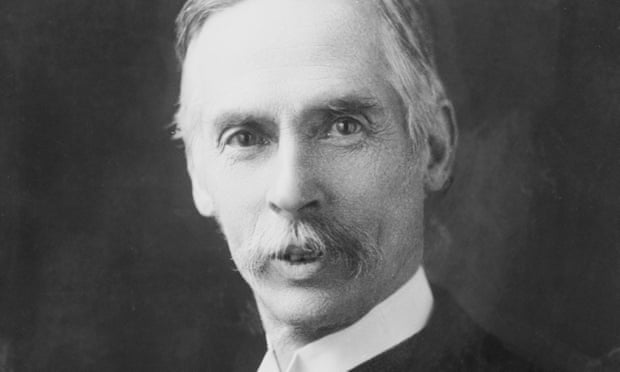
Imperial theorist J. A. Hobson. Photograph: Elliott & Fry/Getty Images

Marc-William Palen
History Department, University of Exeter
Follow on Twitter @MWPalen

From the recent Corbyn-Hobson controversy to global history’s future, here are this week’s top picks in imperial and global history. Continue reading “This Week’s Top Picks in Imperial & Global History”

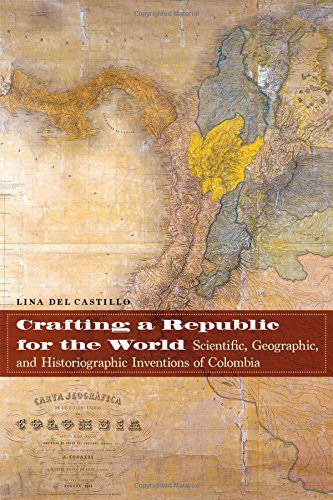
Crafting a Republic for the World in 19th-Cent. Colombia

Lina del Castillo
University of Texas at Austin

Cross-posted from Not Even Past

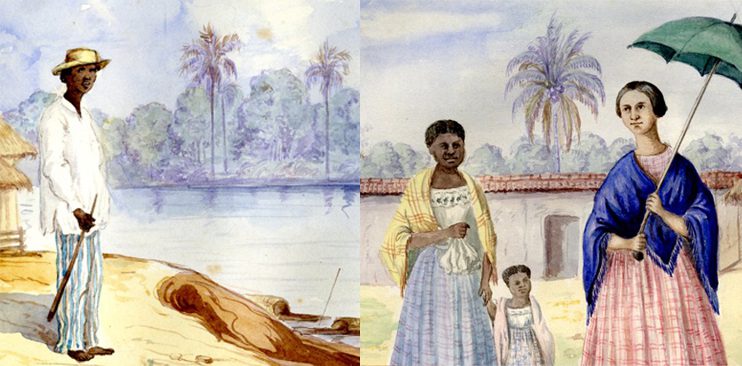
The powerful myth of ‘American exceptionalism’ would have us think that the United States alone offered the world universal ideals of democracy, self-determination, and shared prosperity. However, if we open our eyes beyond canonical nineteenth-century writers such as Alexis de Tocqueville, an alternate story emerges. The long-ignored yet staggering number of works by publicists, historians, geographers, novelists, economists, and jurists from Caracas, Bogotá, Santiago de Chile, Buenos Aires, Mexico, Quito, and Lima begin to reveal the remarkable dimensions of modern republican experiments in Spanish America.Early republican experiments in Spanish America occurred at a time when there were no models to follow. While republicans in Europe battled monarchists and the clerical old regime, while they increasingly imagined their republics as colonial empires of racial inferiors, and while republicans like Thomas Jefferson and James Madison in the United States built their republic on white supremacy and industrialized slavery in cotton plantations, a generation of Spanish American sociologists, economists, anthropologists, and political philosophers became the world’s republican vanguard.
Continue reading “Crafting a Republic for the World in 19th-Cent. Colombia”

Colonialism: A Shared EUropean History and Legacy – A Lecture by Prof. Elizabeth Buettner

You are warmly invited to attend the fourth annual lecture of the Centre for Imperial and Global History, which will be delivered by Prof. Elizabeth Buettner of the University of Amsterdam. Her lecture will be entitled ‘Colonialism: A Shared EUropean History and Legacy’.

When/where: It will take place on Thursday 16 May at 5pm in the Queen’s Building, Margaret Rooms 2 & 3.

Attendance is free but please do register on Eventbrite.

Prof. Buettner’s research centres on British imperial, social, and cultural history since the late nineteenth century along with other European nations’ histories of late colonialism, decolonisation and their domestic ramifications. In the coming years she looks forward to expanding upon previous research on postcolonial South Asian migration and cultures in diaspora, placing South Asians in Britain within wider transnational contexts. Prof. Buettner received her BA from Barnard College of Columbia University and her MA and PhD from the University of Michigan at Ann Arbor. She has taught in England at the University of York since 2000 and in 2012-2013 held a senior research fellowship at the Freiburg Institute for Advanced Studies in Germany in conjunction with a British Academy mid-career fellowship. Buettner’s publications include Empire Families: Britons and Late Imperial India (Oxford University Press, 2004) together with articles in the Journal of Modern History, History & Memory, Scottish Historical Review, Annales de Démographie Historique, Ab Imperio, Food and History, and a number of edited collections.

ABSTRACT

Brexit-era Britain saw discussions of Europe and Britain’s imperial past explode in political and public culture, with some leading figures in the ‘leave’ campaign notoriously going so far as to look forward to an ‘Empire 2.0’ of enhanced global engagements once Britain became freed from continental shackles. Yet imperial histories, heritage, and legacies are anything but a uniquely British ‘island story’. This talk builds upon selected themes addressed in my book Europe after Empire: Decolonization, Society, and Culture (Cambridge University Press, 2016), where I considered Britain as well as French, Belgian, Dutch, and Portuguese histories of coming to terms with the end of empire at home with a special emphasis on migration, multicultural societies, and memories of empire in postcolonial Western Europe. It connects topics that have received most attention among scholars who focus on Western European national cases with a newer but growing body of work that positions colonialism and empire as decisive aspects of European history across the continent, extending to Nordic countries as well as Central and Eastern Europe. Making the ‘imperial turn’ not only characteristic of specific nations but rather a shared European history entails taking a ‘continental turn’, one that allows fresh approaches to Europe’s overseas and continental empires past and illuminates the still understudied colonial history and heritage of today’s European Union.

This Week’s Top Picks in Imperial & Global History

ILLUSTRATION BY THE GLOBE AND MAIL (SOURCE: ISTOCKPHOTO)

Marc-William Palen
History Department, University of Exeter
Follow on Twitter @MWPalen

From Trump’s strange new order of economic nationalism to the in-between world of the African Goans, here are this week’s top picks in imperial and global history.

Continue reading “This Week’s Top Picks in Imperial & Global History”

This Week’s Top Picks in Imperial & Global History

Hans Sloane collected this specimen of cacao in Jamaica in the 1680s. Sloane often collected on or near slave plantations, taking advantage of slavery’s infrastructure to advance his science. NHM IMAGES

Marc-William Palen
History Department, University of Exeter
Follow on Twitter @MWPalen

From how to film a revolution to exposing scientists’ debt to the slave trade, here are this week’s top picks in imperial and global history.

Continue reading “This Week’s Top Picks in Imperial & Global History”

Globalization Under and After Socialism

Besnik Pula. Globalization Under and After Socialism: The Evolution of Transnational Capital in Central and Eastern Europe. Stanford: Stanford University Press, 2018. 272 pp. $65.00 (cloth), ISBN 978-1-5036-0513-8.

Reviewed by Tobias Rupprecht (University of Exeter)
Published on H-Diplo (April, 2019)
Commissioned by Seth Offenbach (Bronx Community College, The City University of New York)

Cross-posted from H-Diplo

A common narrative about Eastern Europe’s globalization starts with the political changes of 1989: first, the new political and economic elites shelved communism, then they (re-)entered the world economy. Scholars who studied this “transition” no longer bothered much with socialism, which they often saw as exogenous to the region’s post-1989 history. Socialism was seen in opposition to a market economy, and its legacies as roadblocks to overcome while neoliberal globalization was imported from the outside. Besnik Pula, political scientist at Virginia Tech, questions this view in his book Globalization Under and After Socialism. Based on numerous interviews with institutional actors from five East European countries, some historical archival documents, and a lot of economic data, he argues that Eastern European states were forced to react with institutional reforms to a stagnating postwar statist model of development. Some of them integrated their economies into international value chains as early as the 1970s. Eastern Europe’s globalization had its roots in reform socialism, and the different paths taken under socialism impinged on postsocialist political economies.

Pula engages mostly with political science literature and seems to strike a balance between the functionalism of the “varieties of capitalism” school and institutional economics, while expanding the analysis chronologically to include late socialism.[1] As a historian, I do not feel competent to judge the book’s theoretical merits; from the point of view of historiography, his argument is certainly convincing, if not entirely novel. In a recent research review, James Mark and I have surveyed what has already become a burgeoning field on state socialism in global history.[2] After socialist Eastern Europe was left out of academic debates on pre-1989 globalization, socialism has been reintegrated into the history of modern globalization in two different ways: as a rather passive victim of a much more competitive global capitalism on the one hand, and as an active co-producer of globalization on the other. While Pula does not address the contested question of the interplay of globalization and the collapse of socialist polities, and overall focuses more on the industrial sector than the state, his account is a felicitous combination of the two strands. He demonstrates how some socialist countries started attracting foreign direct investments (FDIs) and encouraged collaboration with emerging transnational corporations (TNCs), creating paths that shaped economic developments in the 1990s. Continue reading “Globalization Under and After Socialism”

This Week’s Top Picks in Imperial & Global History

Constantinople. Credit: Culture Club/Getty Images

Marc-William Palen
History Department, University of Exeter
Follow on Twitter @MWPalen

From Brexit’s postcolonial clairvoyants to making socialism sexy, here are this week’s top picks in imperial and global history.

Continue reading “This Week’s Top Picks in Imperial & Global History”

This Week’s Top Picks in Imperial & Global History

Paul Robeson in New York with Indian Prime Minister Jawaharlal Nehru, 1957. M.B. Duberman, Paul Robeson.

Marc-William Palen
History Department, University of Exeter
Follow on Twitter @MWPalen

From being grounded in the Bandung Era to the African American engineer who got stuck in the USSR for 50 years, here are this week’s top picks in imperial and global history.

Continue reading “This Week’s Top Picks in Imperial & Global History”

Yellow Peril: The Rise of an Imperial Scare

Tom Harper
University of Surrey

The Yellow Peril – symbolised by British author Sax Rohmer’s Chinese mastermind Fu Manchu, the self-described ‘Yellow Peril incarnate in one man’ (1913) –  is possibly the most influential paradigm informing the image of China and East Asia in Western popular consciousness [1]. This image depicts China as an implacable oriental opponent of the Western world, a uniform mass with little or no individuality and prone to extreme cruelty. While the perception of the China threat, such as fears over a full blown Sino-American trade war or fears over Chinese ‘student spies’, might appear to be a more recent development, it actually follows a path long trod in the European imperial imaginarium and perpetuated through American strategies in Asia during the 20th century [2]. These same policies have played an important role in influencing and proliferating the Yellow Peril paradigm. Continue reading “Yellow Peril: The Rise of an Imperial Scare”

This Week’s Top Picks in Imperial & Global History

A mural in Bogside in Derry/Londonderry near the site of the events of Bloody Sunday. murielle29/flickr, CC BY-SA

Marc-William Palen
History Department, University of Exeter
Follow on Twitter @MWPalen

From England’s unreadiness for self-government to the continuing divisiveness of Bloody Sunday, here are this week’s top picks in imperial and global history.

Continue reading “This Week’s Top Picks in Imperial & Global History”

Keynote Lecture by Paul Kennedy – The Second World War at Sea, from Top to Bottom: A Braudelian Look at the Allied Victory

Centre for Maritime Historical Studies Keynote Lecture

Professor Paul Kennedy, CBE (Yale University)

‘The Second World War at Sea, from Top to Bottom: A Braudelian Look at the Allied Victory’

When: Wednesday 20 March, 2019, 1700-1830

Where: Amory C417 (University of Exeter, Streatham Campus)

All Welcome

Paul Kennedy is one of Britain’s leading historians. Perhaps best known for his seminal publication The Rise and Fall of the Great Powers, his earlier work focused on the history of the Royal Navy and the wider contexts in which it operated. Paul’s book The Rise and Fall of British Naval Mastery, published in 1976, examined the diverse elements that contributed to a nation’s exercise of naval power, including geopolitics, economics and logistics. This was a landmark publication, and one of the first academic works dealing with naval history to intervene in and enlighten wider historiographical debates; it was recently re-issued with a new introduction to coincide with the 40th anniversary of its publication. Paul continues to write and publish on the intersections between naval history, international relations and grand strategy. Paul was made a CBE in 2001, elected a Fellow of the British Academy in 2003, and was awarded the Caird Medal in 2005 for his contributions to naval history.