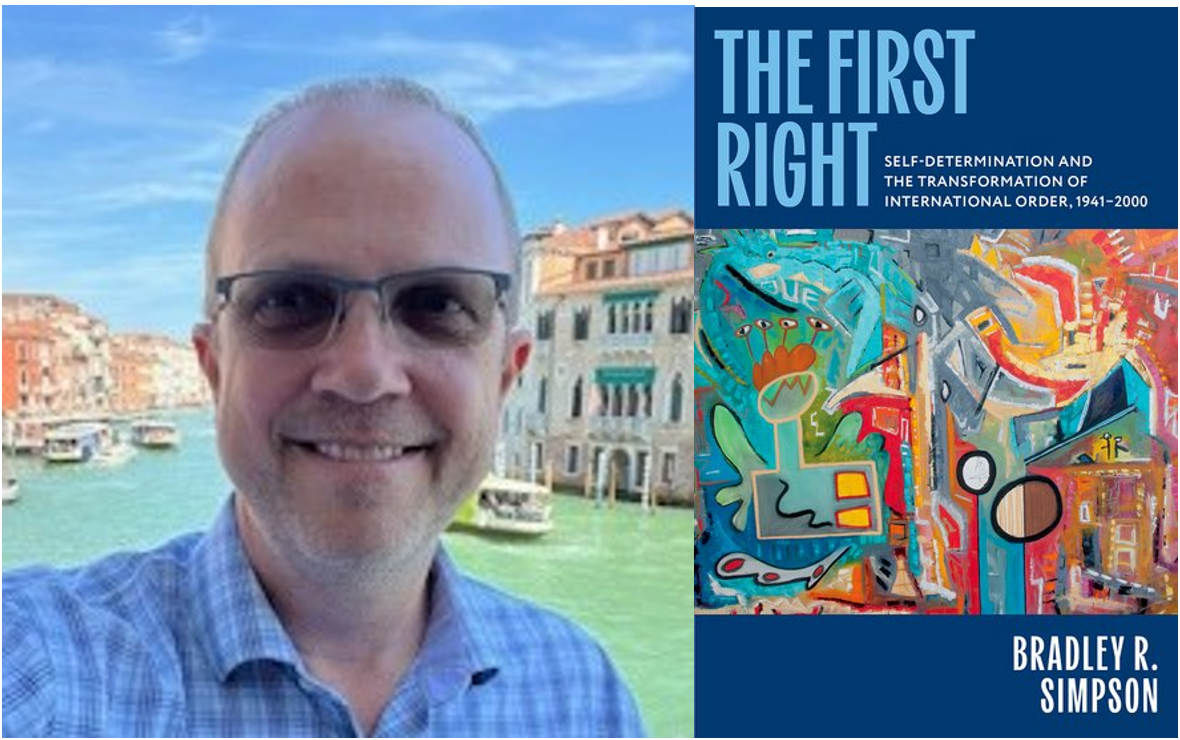
The First Right: Self-Determination and the Transformation of International Order, 1941–2000 – A CIGH Seminar with Brad Simpson (19 Nov.)

We are delighted to welcome Professor Bradley Simpson (University of Connecticut). He will be discussing his new book The First Right: Self-Determination and the Transformation of International Order, 1941–2000 (Oxford University Press, Oct. 2025). His talk is jointly convened by the Centre for Histories of Violence and Conflict and the Centre for Imperial and Global History.

Wednesday 19 November 2025, 2:30pm-4pm

Amory B310 and on Teams

Abstract: The idea of self-determination is one of the most significant in modern international politics. For more than a century, diplomats, lawyers, scholars, activists, and ordinary people in every part of the globe have wrestled with its meaning and implications for decolonization, human rights, sovereignty, and international order. This talk will examine self-determination as a century-long contest between contending visions of sovereignty and rights whose meaning has often emerged not just from the United Nations and great power diplomacy but from the claims of peoples, places, and movements on the margins of international society.

Click here to read the book’s introduction for free until 1 December.

Bio: Brad Simpson is Professor of History at the University of Connecticut. He teaches and researches twentieth century U.S. foreign relations and international history, and has an interest in US-southeast relations, political economy, human rights and development. His first book, Economists with Guns: Authoritarian Development and U.S.-Indonesian Relations, 1960-1968 (Stanford 2008) explores the intersection of anti-Communism and development thinking in shaping U.S. Indonesian relations. He is also founder and director of a project at the non-profit National Security Archive to declassify U.S. government documents concerning Indonesia and East Timor during the reign of General Suharto (1966-1998). This project will serve as the basis for a study of U.S.-Indonesian-international relations from 1965 to 1999, exploring how the international community’s embrace of an authoritarian regime in Indonesia shaped development, civil-military relations, human rights and Islamic politics.
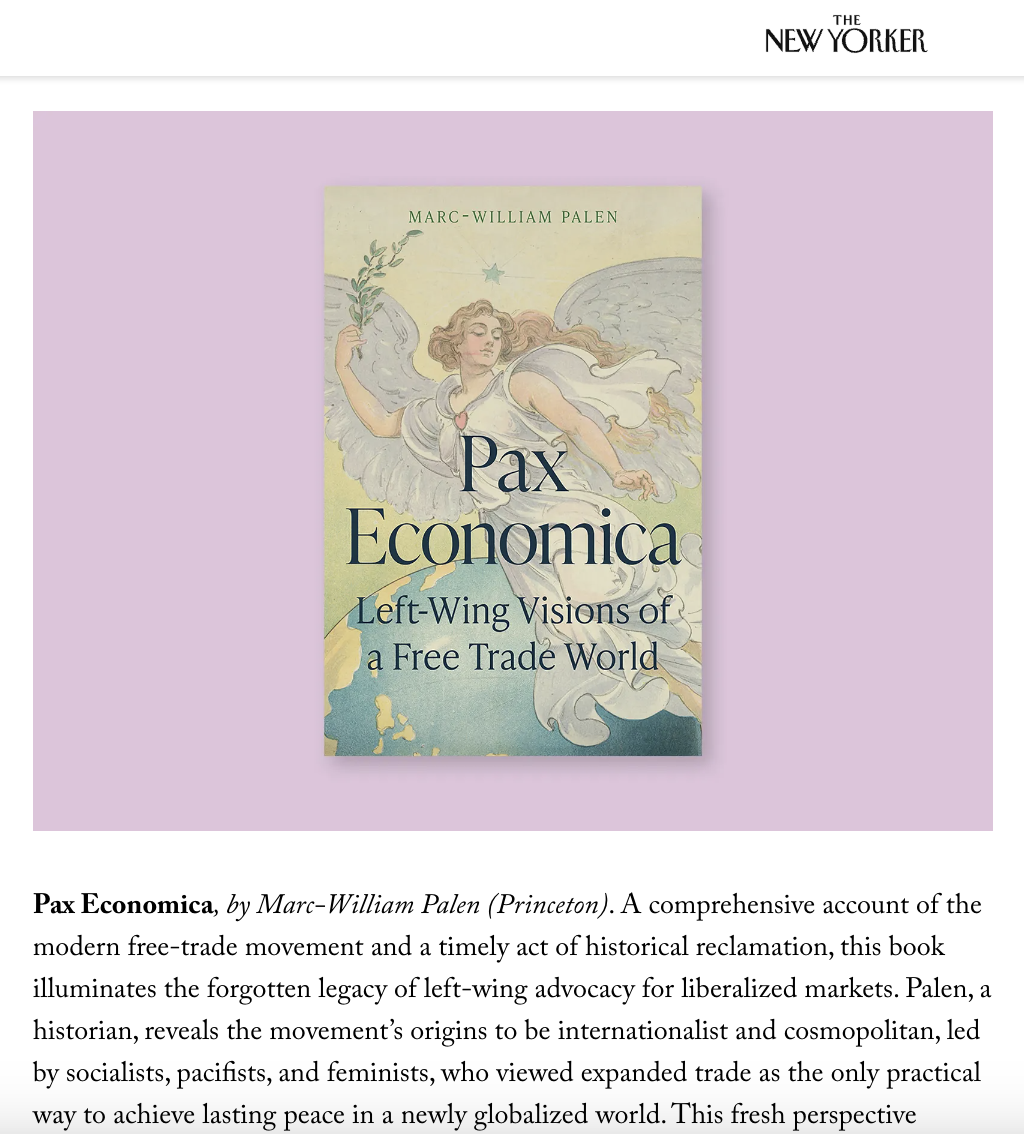
Pax Economica – UK Publication Day, In the News & Upcoming Book Events

Marc-William Palen
History Department, University of Exeter
Follow on Twitter/X @MWPalen

It’s been a whirlwind since Pax Economica was published in the USA in late February, and hopefully more to come after today, the official publication day for the UK/Europe.

I am truly grateful for all the support, endorsements, and reviews that Pax Economica has already received from across the political spectrum, including making the New Yorker’s “Best Books” 2024 list.

In case Forum readers are interested, included below are details regarding some upcoming book events for April and early June, including the UK book launch on Wed, April 24 (5pm) hosted by the Rothermere American Institute at the University of Oxford.

Also, I am based in Venice, Italy, until early June, so for any interested Italian subscribers to the Forum, please just get in touch via email. I’d be delighted to visit and discuss the book.

Continue reading “Pax Economica – UK Publication Day, In the News & Upcoming Book Events”

RAI Book Launch – ‘Pax Economica: Left-Wing Visions of a Free Trade World’ – Wed. 24 April

Book Launch

Wed. 24 April, 17:00

Rothermere American Institute, 1a South Parks Road, OX1 3UB

Open to the public

Today, free trade is often associated with right-wing free marketeers. In Pax Economica, historian Marc-William Palen shows that free trade and globalisation in fact have roots in nineteenth-century left-wing politics. In this counterhistory of an idea, Palen explores how, beginning in the 1840s, left-wing globalists became the leaders of the peace and anti-imperialist movements of their age. By the early twentieth century, an unlikely alliance of liberal radicals, socialist internationalists, feminists, and Christians envisioned free trade as essential for a prosperous and peaceful world order. Of course, this vision was at odds with the era’s strong predilections for nationalism, protectionism, geopolitical conflict, and colonial expansion. Palen reveals how, for some of its most radical left-wing adherents, free trade represented a hard-nosed critique of imperialism, militarism, and war.

Continue reading “RAI Book Launch – ‘Pax Economica: Left-Wing Visions of a Free Trade World’ – Wed. 24 April”

ISRF Book Launch: ‘The End of Empires and a World Remade’ – 24 May

A book launch & conversation with Martin Thomas, author of ‘The End of Empires and a World Remade’. Hosted by Lars Cornelissen.

Was the twentieth-century collapse of European colonialism as definitive as it is often portrayed? How can we do justice to the historical complexity of decolonization while maintaining a broad global perspective?

In The End of Empires and World Remade: A Global History of Decolonization, Professor Martin Thomas [University of Exeter] brings together perspectives from global history, comparative politics, and international relations to re-evaluate decolonization in all of its historical messiness.

Continue reading “ISRF Book Launch: ‘The End of Empires and a World Remade’ – 24 May”

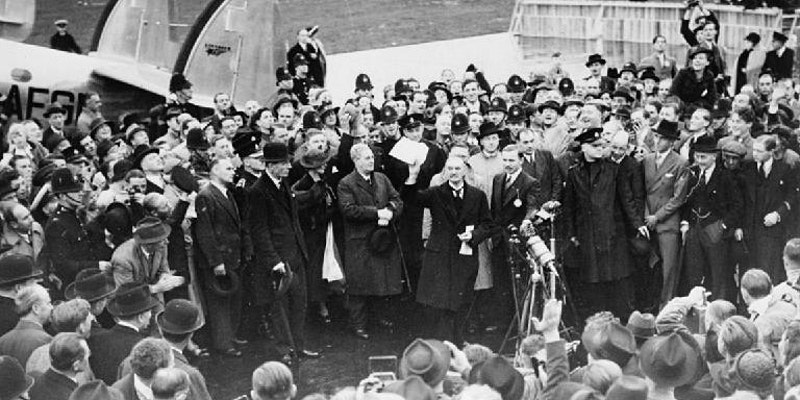
Book Launch event for The Munich Crisis, Politics and the People (March 11)

“The People in Times of Crisis: Past and Present: Book Launch event for The Munich Crisis, Politics and the People”

About this Event

Convened by Prof. Julie Gottlieb (University of Sheffield), Prof. Daniel Hucker (University of Nottingham) and Prof. Richard Toye (Exeter University), and chaired by Prof. Gaynor Johnson (University of Kent)

Please join us for this event when we will launch our new collaborative book The Munich Crisis, Politics and the People. The authors came together for a conference in 2018, the 80th anniversary of the signing of the highly controversial but pivotal Munich Agreement, a diplomatic event that was all-absorbing for people throughout Europe and beyond. The days, weeks, and months when the world was on the brink of another global conflict war were days of acute crisis, uncertainty, anxiety, and private and public suspense and nervousness. At this event we will come together to reflect on the Munich Crisis in light of the current global crisis, hearing unmistakable resonances, drawing some parallels, as well as thinking about how the ‘People’s Crisis’ of 1938 differed in important ways from the all-consuming global pandemic today.

This event will be chaired by Prof. Gaynor Johnson, with short presentations by the editors, and Q&A with the contributors.

Date And Time

Thu, 11 March 2021

17:00 – 18:30 GMT

Click here to register