
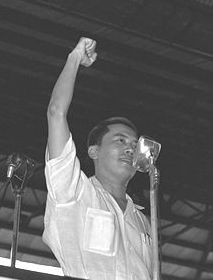
This year marks the 50th anniversary of ‘Operation Coldstore’, when in 1963 Singapore’s Internal Security Council authorised the arrest of over 100 leftist and labour activists. The arrests severely weakened both Barisan Sosialis, a left-wing political party, and the trade union movement, thereby consolidating the Popular Action Party’s (PAP) position as the dominant political force in Singapore. As a result of the PAP’s triumph, the role of trade unions in official histories of Singapore’s struggle for independence has largely been overlooked, with left-wing activists commonly depicted as nothing more than stooges for the Malayan Communist Party (MCP). The marginalisation of the role of trade unions in Singapore’s fight for independence is typical of many former colonial territories, where the actions of labour activists and trade unions during the period of decolonisation are overlooked in favour of broader narratives that focus on imperial decline and the triumph of nationalist elites. Yet, as was demonstrated in the 1950s and 1960s during the struggle for independence and again during the pro-democracy campaigns of the 1980s and 1990s, trade unions in the global south have and continue to play a critical role in movements for social and political change. Continue reading “Reconciling Trade Unionism with Decolonisation in the Global South”
 Imperial & Global Forum
You must be logged in to post a comment.