Ten million like Mobeen?

Ghee Bowman
University of Exeter

Cross-posted from Force K-6

I recently watched a great documentary on Channel 4, called ‘The Soldiers that Saved Britain’, made by British journalist Mobeen Azhar.

Mobeen went on a mission to uncover his grandfather’s experience in the Second World War, visiting battlegrounds and archives.

It was fascinating to see his personal journey, struggling with the conundrum of why his grandfather volunteered to serve the colonial power.
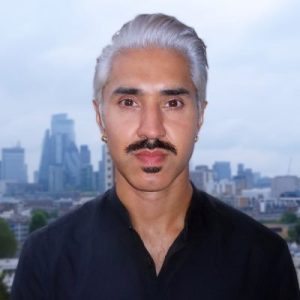
As one of the advisors for the programme, I was glad that my research has helped to publicize the South Asian contribution and help people Mobeen to find the truth.

I am left with a big question: how many are there like Mobeen in the world?

Continue reading “Ten million like Mobeen?”
Top 10 of 2018 – #8 – What Christopher Nolan left out: Dunkirk’s Indian soldiers

Editor’s Note: In the weeks leading up to the new year, please help us remember 2018 at the Imperial & Global Forum by checking out the past year’s 10 most popular posts.

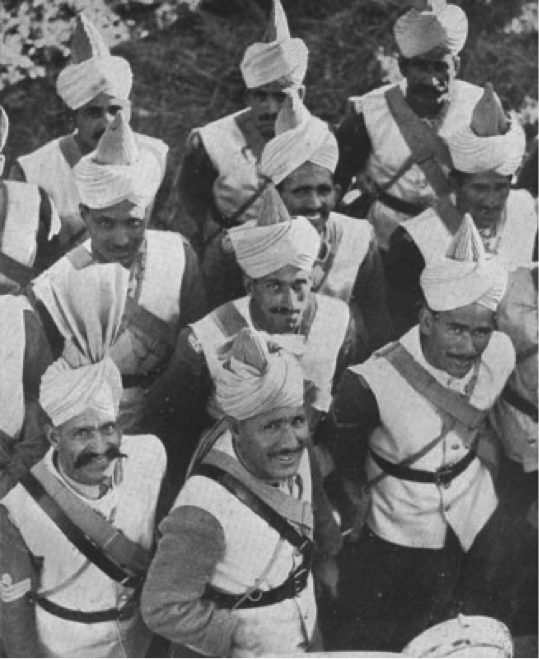
Len Puttnam, Men of K6 shortly after disembarking at Marseille, January 1940. Imperial War Museum F2016.

Ghee Bowman
University of Exeter

It’s been a year now since Christopher Nolan’s film Dunkirk was released to critical acclaim, public approval and criticism. Much of the criticism arose because the film omitted any mention of the Commonwealth troops who were in the British Expeditionary Force (BEF) and at Dunkirk.[1] It felt like a missed opportunity to correct an anomaly in the collective memory of Britain and the world: to remember the mule drivers of the Royal Indian Army Service Corps (RIASC) who were also on those beaches.

So here’s the missing piece of the story, derived from my research into Dunkirk’s Indian soldiers.

On May 29, 1940, in the middle of the evacuation of Dunkirk, with thousands of British soldiers lined up on the beaches east of the French town, with a giant pall of smoke from the burning oil refinery, with regular sorties by Luftwaffe planes scattering the queues, and with ships large and small taking men off the beaches, Major Mohammed Akbar Khan of the RIASC marched four miles along the beach at the head of 312 Muslim Indians, en route from Punjab to Pirbright.

These were the men of Force K6. [continue reading]

What Christopher Nolan left out: Dunkirk’s Indian soldiers

Len Puttnam, Men of K6 shortly after disembarking at Marseille, January 1940. Imperial War Museum F2016.

Ghee Bowman
University of Exeter

It’s been a year now since Christopher Nolan’s film Dunkirk was released to critical acclaim, public approval and criticism. Much of the criticism arose because the film omitted any mention of the Commonwealth troops who were in the British Expeditionary Force (BEF) and at Dunkirk.[1] It felt like a missed opportunity to correct an anomaly in the collective memory of Britain and the world: to remember the mule drivers of the Royal Indian Army Service Corps (RIASC) who were also on those beaches.

So here’s the missing piece of the story, derived from my research into Dunkirk’s Indian soldiers.

On May 29, 1940, in the middle of the evacuation of Dunkirk, with thousands of British soldiers lined up on the beaches east of the French town, with a giant pall of smoke from the burning oil refinery, with regular sorties by Luftwaffe planes scattering the queues, and with ships large and small taking men off the beaches, Major Mohammed Akbar Khan of the RIASC marched four miles along the beach at the head of 312 Muslim Indians, en route from Punjab to Pirbright.

These were the men of Force K6. Continue reading “What Christopher Nolan left out: Dunkirk’s Indian soldiers”