‘This country had a great empire’: The Nuances and Limits of the Rhetorical Premiership in Using the Imperial Past

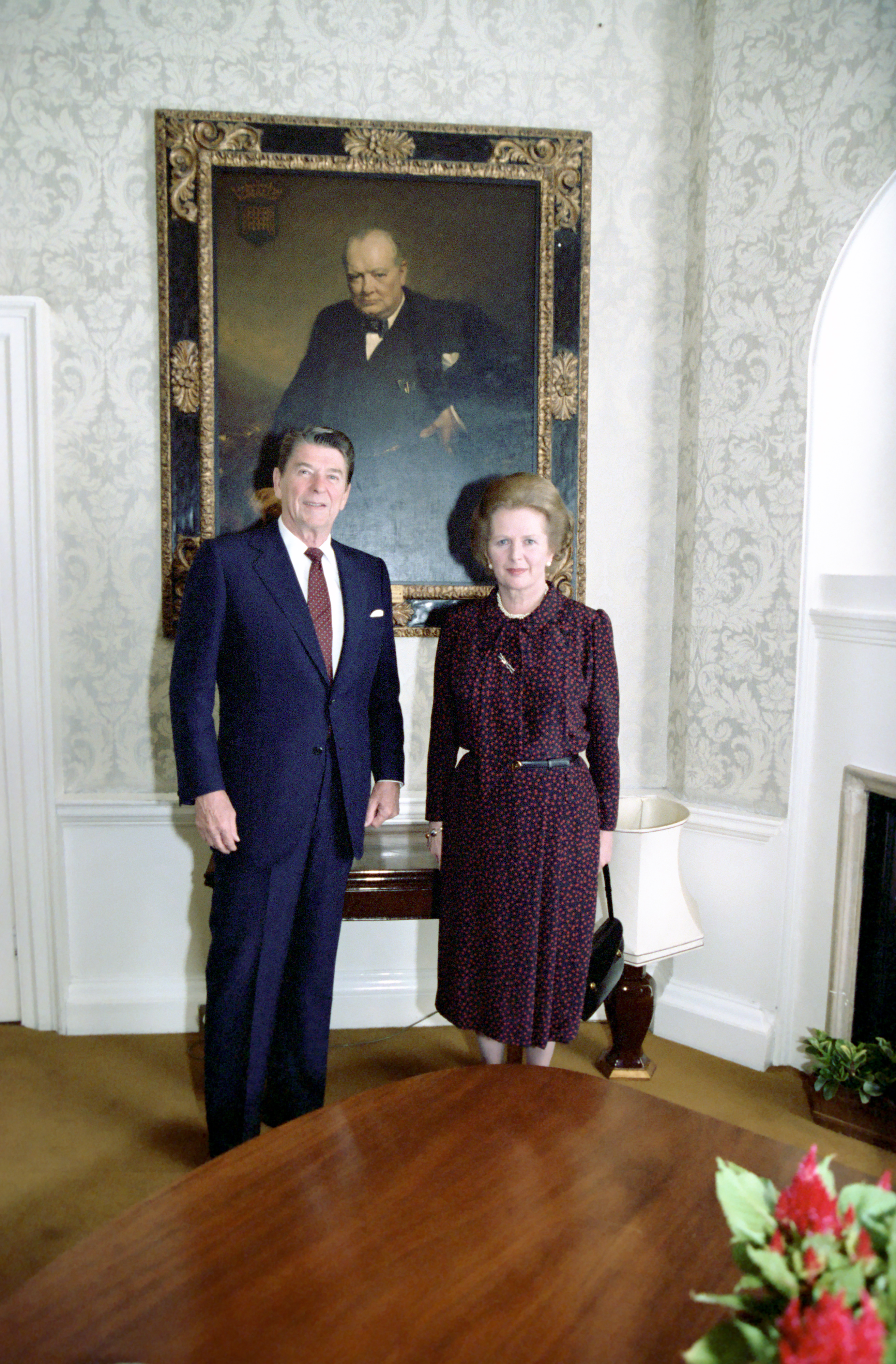
Prime Minister Margaret Thatcher posing with President Ronald Reagan in front of a portrait of Winston Churchill at 10 Downing Street, 9 June 1982 (Wikimedia Commons).

Shagnick Bhattacharya
University of Exeter

This article proposes that there were nuances and limits to Cold War-era British Prime Ministers’ use and abuse of the country’s imperial past to influence policy, shape national identity, and navigate international relations. That Prime Ministers’ use of public speeches to further their political agendas should receive greater academic attention was first proposed by Richard Toye[1] over a decade ago, and has currently taken the shape of an active research project[2] focussing specifically upon imperial rhetoric (titled ‘Talking Empire’—not to be confused with the CIGH’s podcast series!) led by Christian Damm Pedersen at the Syddansk Universitet, having recently received funding from the Carlsberg foundation.

Using contemporary newspaper reports from across Britain as sources, my intervention here will be on two counts: firstly, by showing how Margaret Thatcher used the legacy and memory of Churchill in her rhetoric as a surrogate for referring to the imperial past (rather than directly mentioning the Empire in the first place) in order to publicly talk about her desired economic policies; secondly, by noting how any rhetorical premiership’s reliance on the imperial past could also be turned against the premier by their political opposition (and not even necessarily by anti-imperialists) in an attempt to strip it of its usefulness as a political resource for the former.

Continue reading “‘This country had a great empire’: The Nuances and Limits of the Rhetorical Premiership in Using the Imperial Past”
Making Thatcher’s World – A Talk by Martin Farr – This Wednesday at the University of Exeter

margret-thatcher-hong

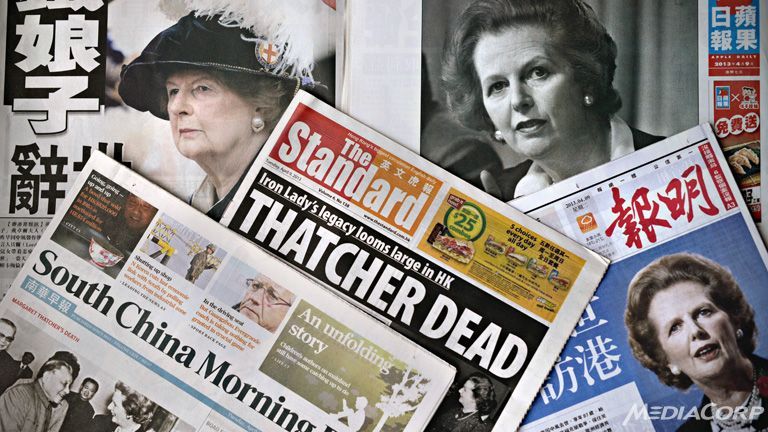
We say socialism tends to stand together throughout the world”, Margaret Thatcher said on American TV in 1977. “We must have what I call the freer way of life likewise standing together”. Margaret Thatcher’s World derives from the fact that no democratic leader has provoked so great an international reaction, and no political brand – defined in many often contradictory ways, but a recognisable brand nonetheless – has had such international salience as Thatcherism, both at the time and subsequently.

It is striking in public discourse in countries across the world, how often the person and the ‘ism’ is used and misused, revered and abused. Frequently the spectre (or specter) of Thatcherism is invoked; the term and the person has become an epithet of approbation or opprobrium. The project is an international history and a reception study which includes such aspects as policy networks and processes, rhetoric, gender, and ideology. So it was that Johannesburg’s Business Day described “the global implementation of Thatcherism”, Tehran’s Shargh felt “the majority of the countries of the world have put the Thatcherism movement in their agenda”, Toronto’s Financial Post that “Thatcher’s legacy lives far and wide”, and Santiago’s El Mercuria wrote of “the woman who transformed the UK and shocked the world”. The application of the term goes beyond Britain, and even the West: President Ershad of Bangladesh has referred to “third world Thatcherism”, and the Times of India to “Thatcherism of the Tigris”. As she said in Moscow in 1987, “[I]t is universally true, you know, Thatcherism”.

Dr. Martin Farr will be presenting his paper ‘Making Thatcher’s World’ this Wednesday at the Centre for Imperial & Global History’s seminar series. Continue reading “Making Thatcher’s World – A Talk by Martin Farr – This Wednesday at the University of Exeter”