No, Trump’s Coercive Use of Tariffs Isn’t New

Marc-William Palen
History Department, University of Exeter

Tariff Man” Trump continues to tear up the trading system while also making imperial demands for territorial expansion. To just about everyone’s surprise, his grand colonial scheme to “make America great again” now includes making Canada the 51st state – and using the threat of punitive tariffs to get what he wants.

Some, like the Washington Post‘s Max Boot, have been making the case that Trump’s coercive use of tariffs to obtain concessions “unrelated to trade” is “novel.”

But though Trump often cites 19th-century pro-tariff President William McKinley as his inspiration, Trump is using tariffs quite differently from the way that most other U.S. presidents — or other world leaders — have used them. Typically, tariffs are enacted either to raise revenue or to protect domestic industries from foreign competition. Trump, by contrast, is using tariffs as a coercive instrument of statecraft to achieve aims that are unrelated to trade.

Boot’s piece raises good points of comparison, including parallels with Chinese economic coercion today. And I agree that the results of Trump’s tariffs will likely be a net negative for the United States.

But I disagree that Trump’s coercive use of tariffs is new; rather, it’s straight out of the GOP’s old protectionist playbook.

Continue reading “No, Trump’s Coercive Use of Tariffs Isn’t New”
The decline of “Imperial Federation” and the rise of the “British Commonwealth”

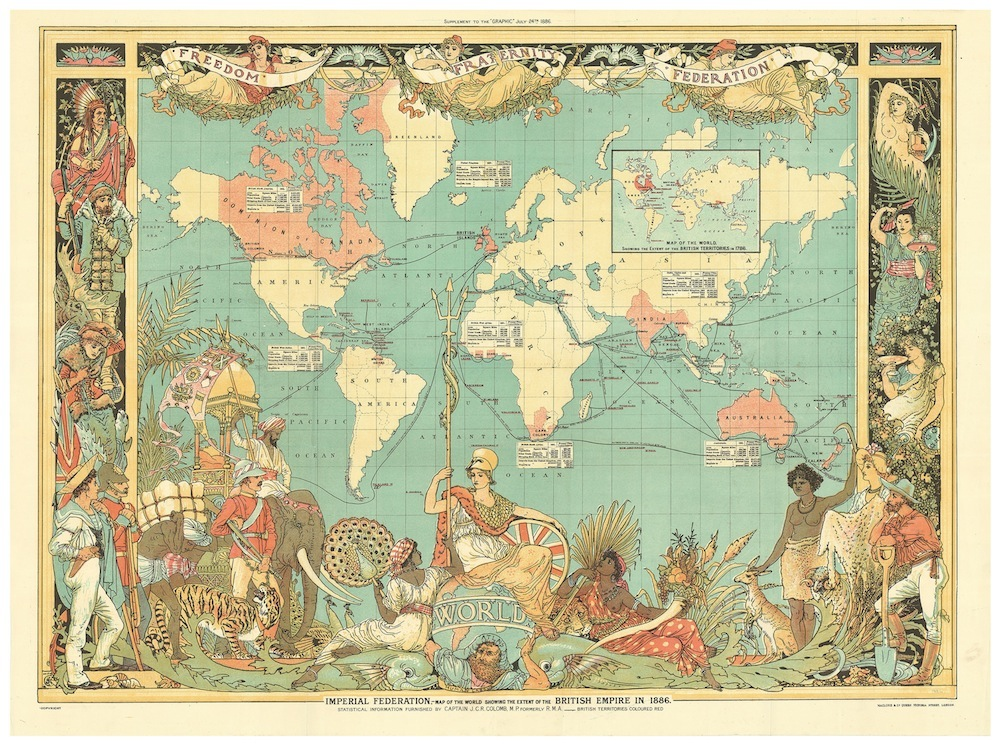
Walter Crane, Imperial Federation: Map Showing the Extent of the British Empire in 1886. Published by Maclure & Co., 24 July 1886.

Chuanyou Zhou
University of Exeter

This post explores the significance of the fact that the decline of the phrase “Imperial Federation” in British imperial discourse coincided with its replacement by the term “British Commonwealth.”

The concept of Imperial Federation was a political idea that gained public attention in the 1870s and evolved into a political movement following the establishment of the Imperial Federation League in 1884. The movement sought to unify the empire in a federal structure and counteract tendencies toward separation.

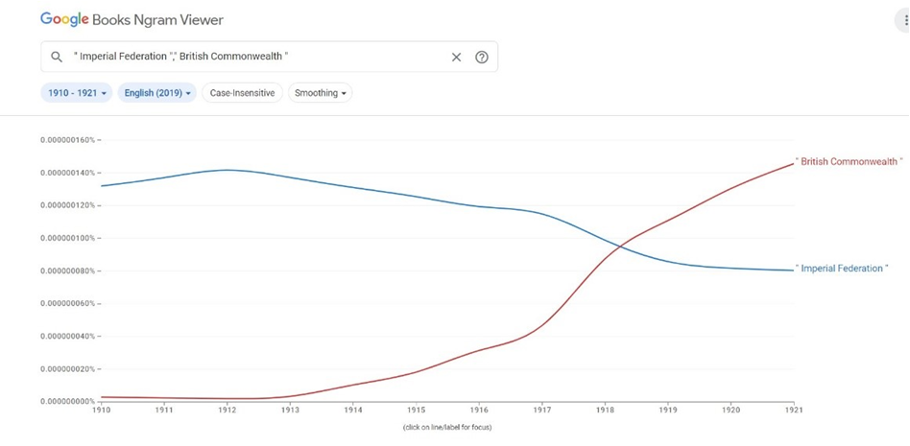
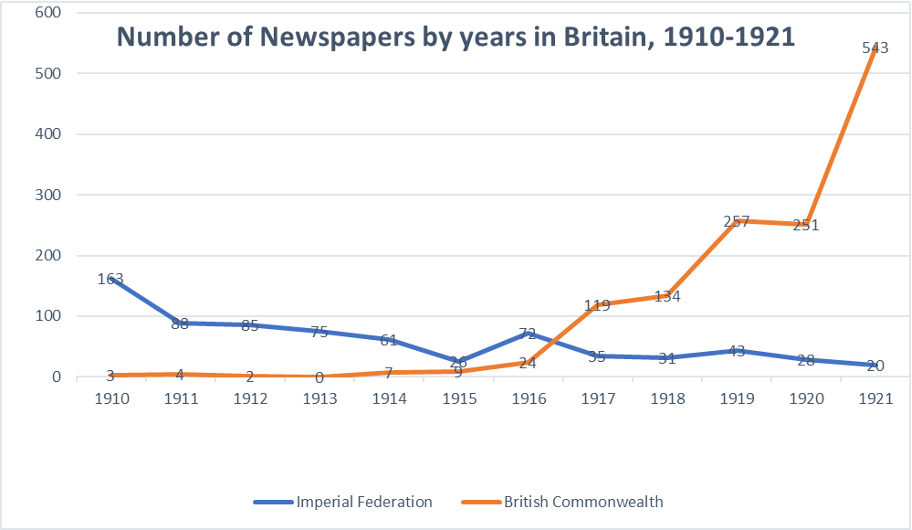
An analysis of newspapers from 1910 to 1921, conducted using the Gale Primary Sources database, reveals that the term “British Commonwealth” was rarely used in the context of the empire before 1916. In contrast, the term “Imperial Federation” saw a marked decline in usage after 1910, showing an inverse relationship with the rise of “British Commonwealth.” This trend is clearly observable in both the Gale Primary Sources database and Google Books Ngram.

Consequently, a hypothesis emerges that the term “Imperial Federation” was gradually supplanted by “British Commonwealth,” a shift largely attributed to changes in the perception of the empire following the First World War.

Gale Primary Sources database
Google Books Ngram

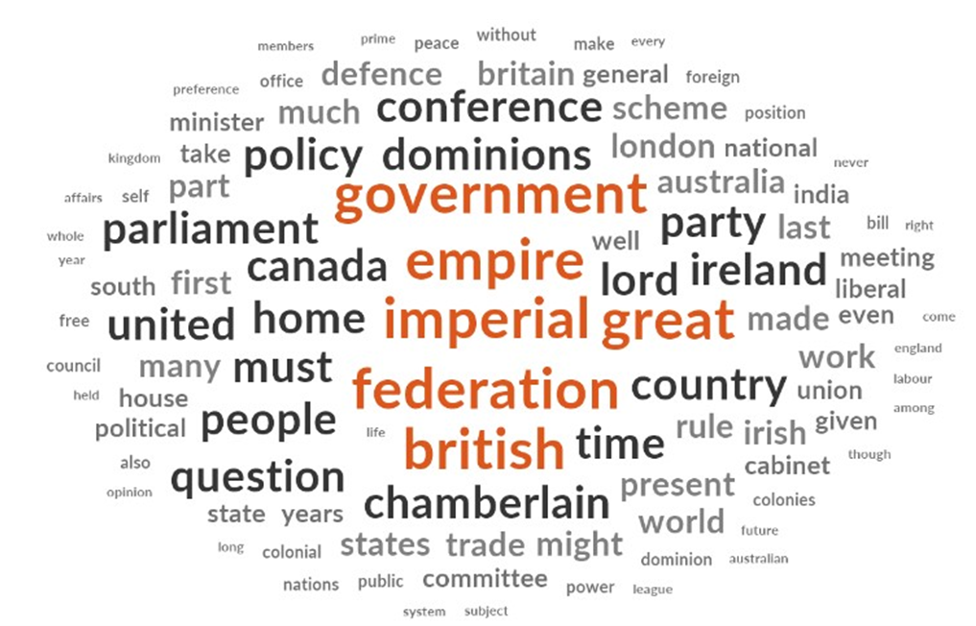
A word frequency analysis from 1910 to 1921 reveals that the terms “imperial parliament,” “Dominions,” and “Ireland” appeared frequently during this period. This suggests that the decline in the rhetoric of Imperial Federation was largely driven by opposition from the Dominions and Ireland to the concept of an “imperial parliament”.

Continue reading “The decline of “Imperial Federation” and the rise of the “British Commonwealth””