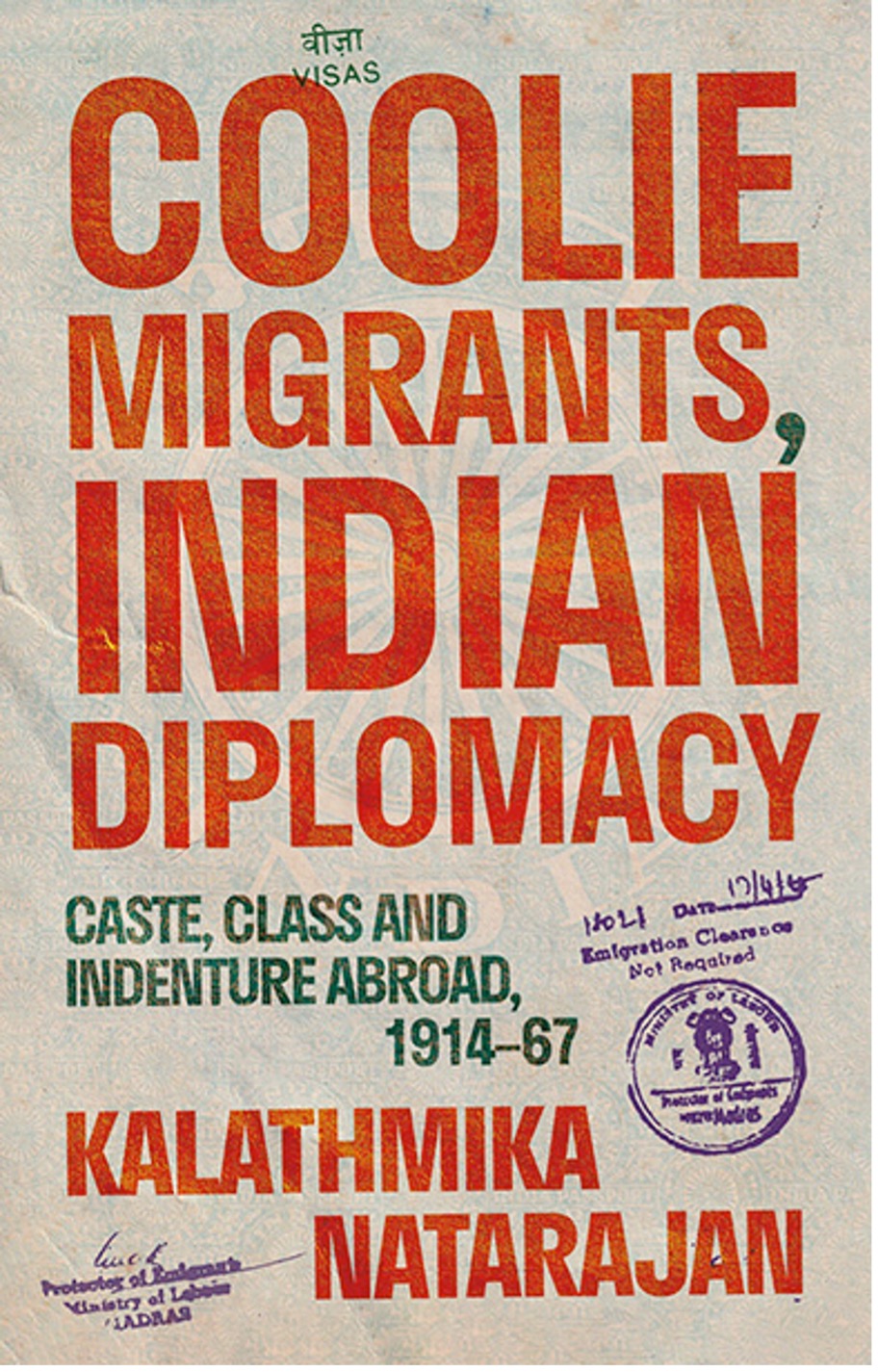
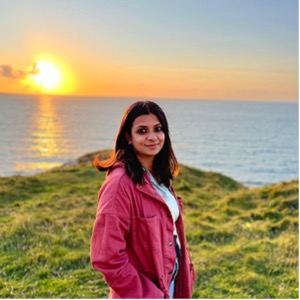
Coolie Migrants, Indian Diplomacy: A CIGH book interview with Dr Kalathmika Natarajan

Dr Kalathmika Natarajan, a Lecturer in Modern South Asian History at the University of Exeter, recently sat down for a Forum interview to discuss her exciting new book, Coolie Migrants, Indian Diplomacy: Caste, Class, and Indenture Abroad, 1914-67 (London: Hurst, 2025 and New York: Oxford University Press, 2026). Dr Natarajan’s CIGH book launch is Wed. Jan. 28 from 3:30-5pm. Click here for further details of the book launch.

  • Why did you write this book?

This book began as a PhD thesis at the University of Copenhagen in 2015 – it started off as a doctoral thesis focused on postcolonial ties between Britain and India but thankfully evolved into a larger project that explored the ways in which migration shaped Indian diplomatic history. I wanted to go beyond the overwhelming focus on high politics in this field by drawing on the critical, postcolonial turn in new diplomatic history.  This took me to a whole host of archives that made it abundantly clear how Indian diplomacy was irrevocably shaped by the histories and legacies of indenture and labour migration – most evident in the anxieties of caste elites over the figure of the ‘coolie’ migrant. Such a framework helped centre caste as an essential category that shaped Indian imaginations of the international realm and those best suited to traverse it. This also enabled me to write a bottom-up history about how labour migrants shaped diplomacy, rather than simply being recipients and ‘problems’ of diplomacy.  

Continue reading “Coolie Migrants, Indian Diplomacy: A CIGH book interview with Dr Kalathmika Natarajan”
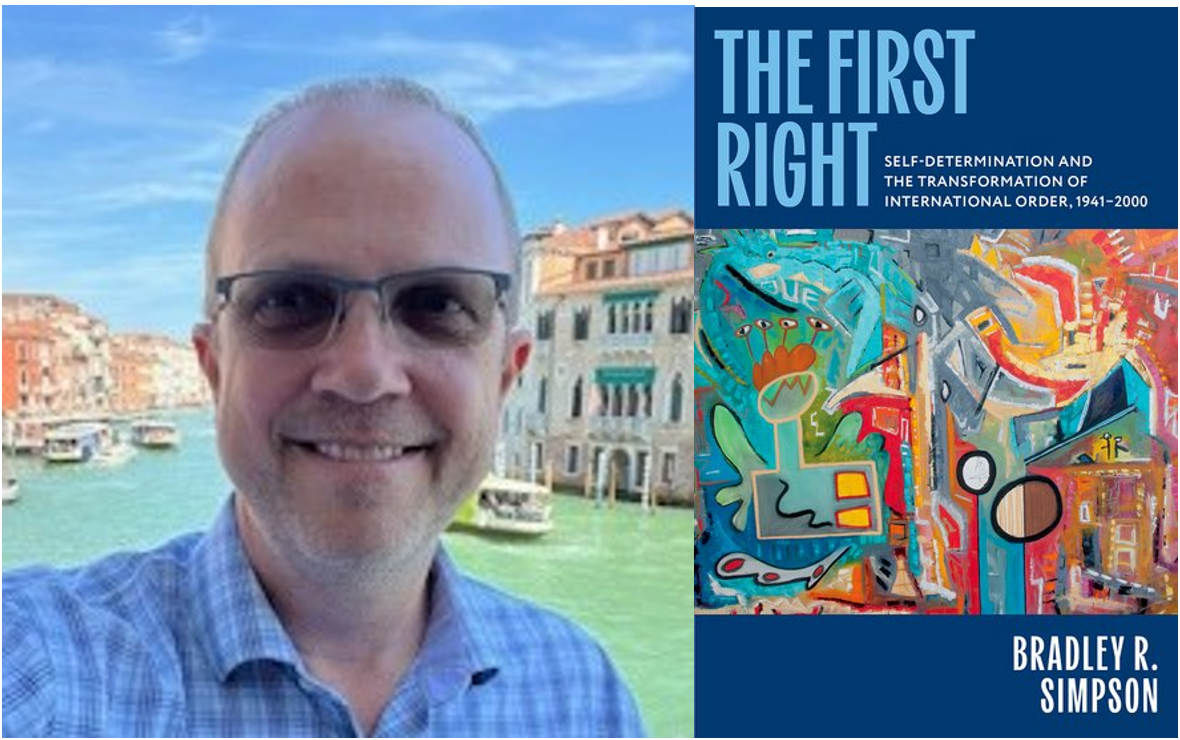

The First Right: Self-Determination and the Transformation of International Order, 1941–2000 – A CIGH Seminar with Brad Simpson (19 Nov.)

We are delighted to welcome Professor Bradley Simpson (University of Connecticut). He will be discussing his new book The First Right: Self-Determination and the Transformation of International Order, 1941–2000 (Oxford University Press, Oct. 2025). His talk is jointly convened by the Centre for Histories of Violence and Conflict and the Centre for Imperial and Global History.

Wednesday 19 November 2025, 2:30pm-4pm

Amory B310 and on Teams

Abstract: The idea of self-determination is one of the most significant in modern international politics. For more than a century, diplomats, lawyers, scholars, activists, and ordinary people in every part of the globe have wrestled with its meaning and implications for decolonization, human rights, sovereignty, and international order. This talk will examine self-determination as a century-long contest between contending visions of sovereignty and rights whose meaning has often emerged not just from the United Nations and great power diplomacy but from the claims of peoples, places, and movements on the margins of international society.

Click here to read the book’s introduction for free until 1 December.

Bio: Brad Simpson is Professor of History at the University of Connecticut. He teaches and researches twentieth century U.S. foreign relations and international history, and has an interest in US-southeast relations, political economy, human rights and development. His first book, Economists with Guns: Authoritarian Development and U.S.-Indonesian Relations, 1960-1968 (Stanford 2008) explores the intersection of anti-Communism and development thinking in shaping U.S. Indonesian relations. He is also founder and director of a project at the non-profit National Security Archive to declassify U.S. government documents concerning Indonesia and East Timor during the reign of General Suharto (1966-1998). This project will serve as the basis for a study of U.S.-Indonesian-international relations from 1965 to 1999, exploring how the international community’s embrace of an authoritarian regime in Indonesia shaped development, civil-military relations, human rights and Islamic politics.