Marc-William Palen History Department, University of Exeter
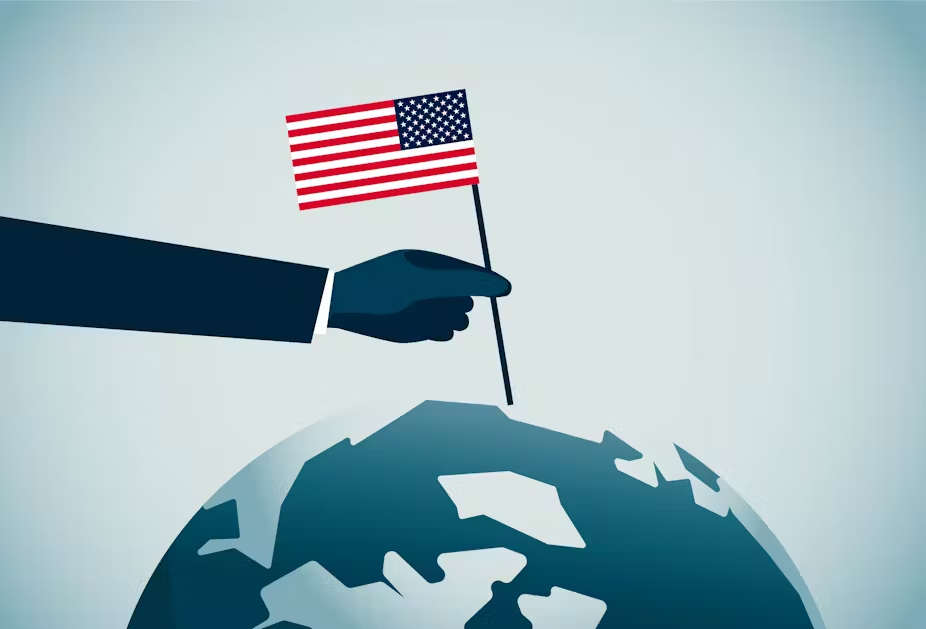
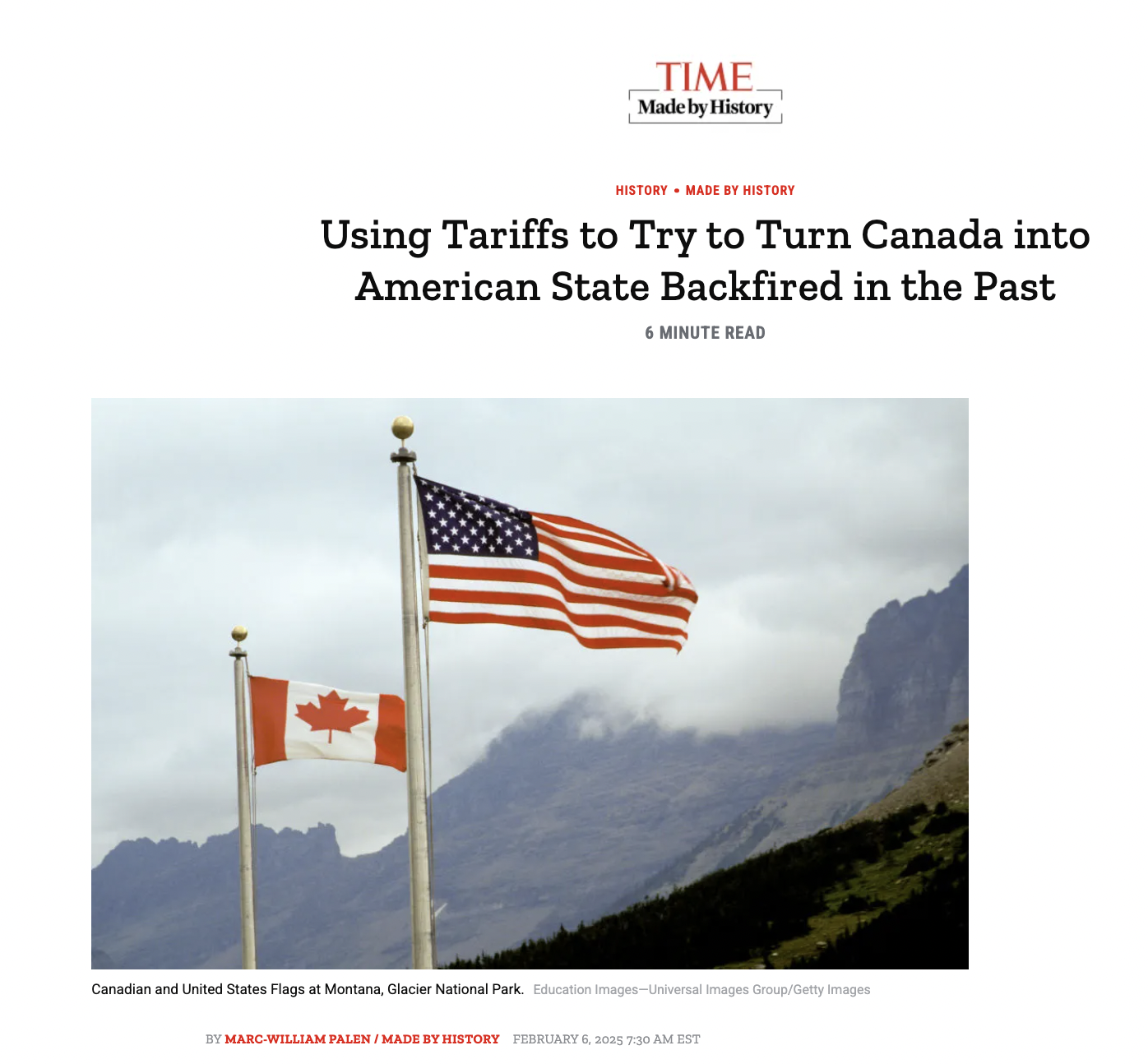
“Tariff Man” Trump continues to tear up the trading system while also making imperial demands for territorial expansion. To just about everyone’s surprise, his grand colonial scheme to “make America great again” now includes making Canada the 51st state – and using the threat of punitive tariffs to get what he wants.
Some, like the Washington Post‘s Max Boot, have been making the case that Trump’s coercive use of tariffs to obtain concessions “unrelated to trade” is “novel.”
But though Trump often cites 19th-century pro-tariff President William McKinley as his inspiration, Trump is using tariffs quite differently from the way that most other U.S. presidents — or other world leaders — have used them. Typically, tariffs are enacted either to raise revenue or to protect domestic industries from foreign competition. Trump, by contrast, is using tariffs as a coercive instrument of statecraft to achieve aims that are unrelated to trade.
Boot’s piece raises good points of comparison, including parallels with Chinese economic coercion today. And I agree that the results of Trump’s tariffs will likely be a net negative for the United States.
But I disagree that Trump’s coercive use of tariffs is new; rather, it’s straight out of the GOP’s old protectionist playbook.
Dr Chris Sandal-Wilson Co-Director, CIGH, University of Exeter
Hello, I’m Dr Chris Sandal-Wilson, Co-Director of the Centre for Imperial and Global History alongside Dr Rebecca Williams. I’m a historian of medicine and particularly psychiatry, though I also teach and research the histories of British colonialism, the modern Middle East, and sexuality – and welcome opportunities to connect with students and scholars across these fields.
These interests were brought together in my first book, Mandatory Madness: Colonial Psychiatry and Mental Illness in British Mandate Palestine, which was published at the end of 2023 by Cambridge University Press. In the book, I was able to bring to light a rich but overlooked seam of archival material and sources in Arabic, Hebrew, and English, and provide a new perspective on how questions around mental illness mattered not simply in clinical spaces but in the courtroom, the prison, the census, and ultimately in the context of crisis and collapse, too. And I was honoured that my book was shortlisted and awarded an Honourable Mention for the biennial British Society for the History of Science 2024 Pickstone Prize, recognising outstanding books on the history of science, technology, and medicine.

 Imperial & Global Forum
You must be logged in to post a comment.