
Mitchel Stuffers
Assistant Editor at CIGH Exeter & PhD Candidate in History, University of Exeter
From countering global kleptocracy to a possible merger of two major African conflicts, here are this week’s top picks in imperial and global history.
Kleptocracy has gone global – our laws haven’t
Editorial Team
ACE: Governance & Integrity
John Heathershaw argues that we need a legal conception of kleptocracy fit for our current era of personalist global politics where transnational inter-elite relations and illicit activity have been revealed to span Epstein, Putin, and Gulf monarchies.
It is surely not a coincidence that Andrew Mountbatten-Windsor (formerly known as Prince), was both a friend of Jeffrey Epstein and on good terms with some of the world’s most notorious kleptocrats, such as those of Kazakhstan. Nor that Peter Mandelson was a friend of both Epstein and Russian oligarch Oleg Deripaska. For kleptocracy researchers, the parallels between Epstein’s world and the networks we study, often centered on autocrats and their family offices, are notable. While attention is rightly focused on the abuse of women and girls, Epstein presided over a global network of elites brought together by a much wider array of illicit activities. [Continue reading]
‘The Catholic Church Had Better Take Its Side’: Pentagon Warned Pope Leo XIV Over Trump Criticism
Rohit David
International Business Times UK
Pentagon officials warned the Vatican that the Catholic Church ‘had better take its side‘ after Pope Leo XIV criticised US foreign policy under Donald Trump, reports published this week have revealed. The confrontation took place in January at a closed-door meeting at the Pentagon, just days after the pontiff’s State of the World address. The remarks were seen as a response to Pope Leo XIV’s speech, in which he warned that a diplomacy promoting dialogue was being replaced by one based on force and that war was back in vogue.
Pentagon Threatened Pope Leo XIV over Trump Criticism. Pope Leo XIV, the first American-born pope, was elected in May 2025. Born Robert Francis Prevost in Chicago to a family of French, Italian and Spanish descent, he previously served as a missionary in Peru and led the Order of Saint Augustine. Since his election, he has positioned the Church as a voice for peace, repeatedly criticising militaristic approaches. [Continue reading]
In a New Documentary, One of Britain’s Most Famous Historians Reframes the American Revolution as a ‘Messy Divorce’
Vanessa Armstrong
Smithsonian Magazine
In the United States, the story of the American Revolution is often framed as a triumphant fight for independence. But the colonists’ British counterparts had a different perspective. Some agreed with the Americans that the Thirteen Colonies shouldn’t be taxed without representation. Others thought the colonists shouldn’t question how George III chose to rule over his subjects. Still others were simply anxious about the prospect of war and its hardships.
As the U.S. prepares to celebrate the 250th anniversary of its founding on July 4, 1776, a new PBS documentary hosted by the British historian Lucy Worsley spotlights individuals on the other side of the Revolution, from the king and his fellow elites to British merchants and the working class. “Lucy Worsley Investigates: The American Revolution” also examines the events that sparked the Revolution and its aftershocks, with an emphasis on the emotional fallout of this historic rupture. [Continue reading]
Italian council buys Mussolini’s villa to keep it away from ‘fascist nostalgics’
Angela Giuffrida
Guardian
An Italian council has bought a villa where Benito Mussolini spent his summer holidays, partly to avoid the property falling into the hands of “fascist nostalgics”. Daniela Angelini, the leftwing mayor of Riccione, a town close to Rimini along Italy’s Adriatic coast, said the acquisition of Villa Mussolini through an auction was “an act of love and vision” and that bringing it back into public hands was a victory for the entire town.
Riccione’s council had fended off competition from a private buyer who was a former member of the Italian Social Movement, the neofascist party founded in 1946 by Mussolini’s lingering supporters. The villa has a long and, unsurprisingly, controversial history. Built steps away from the sea in 1893, it was bought by Mussolini’s second wife, Rachele, in 1934. The fascist dictator, who was born in Predappio, another town in the Emilia-Romagna region, would arrive by seaplane and often used the villa for government business during his stays. [Continue reading]
Regional mega-war? How renewed conflict in Ethiopia could pull in Sudan
Mat Nashed
New Humanitarian
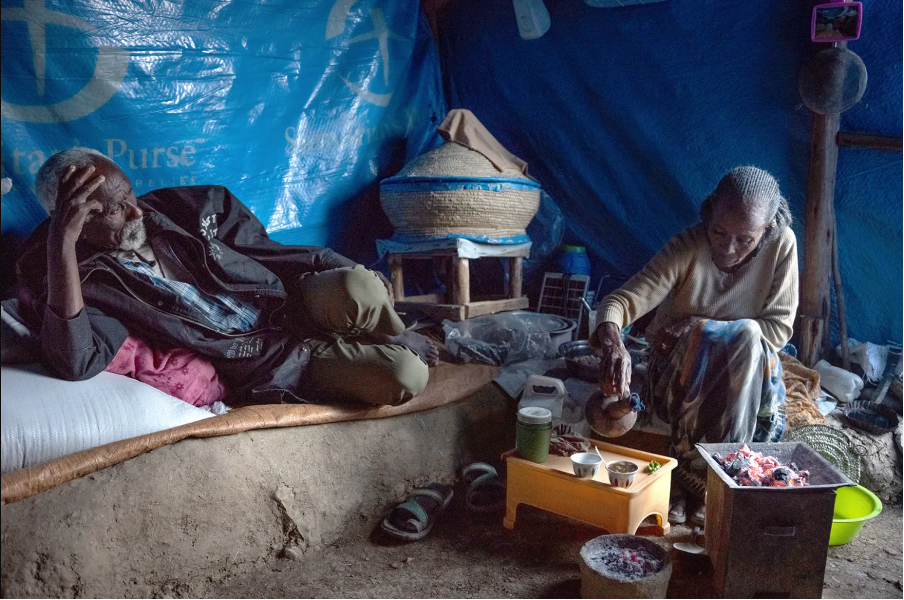
The prospect of renewed war in northern Ethiopia between government forces, Tigray factions, and Eritrea risks pulling in neighbouring Sudan and merging two of the deadliest conflicts in recent history. After fighting a war against Tigrayan forces from 2020 to 2022, the Ethiopian government may be on the verge of resuming hostilities to consolidate control over the country’s northernmost region. It is also increasingly threatening Eritrea. Ethiopia fought alongside Eritrea during the Tigray war but is now signalling it may seek to invade to regain direct access to Red Sea ports lost when its northern neighbour gained independence in 1993. A new conflict could lead to large-scale loss of life in Ethiopia and Eritrea while also triggering a messy, protracted regional crisis, potentially pulling in Sudan, given its military-led government’s fraught relations with the Ethiopian state. [Continue reading
 Imperial & Global Forum
You must be logged in to post a comment.