When Protectionism Dominated American Politics

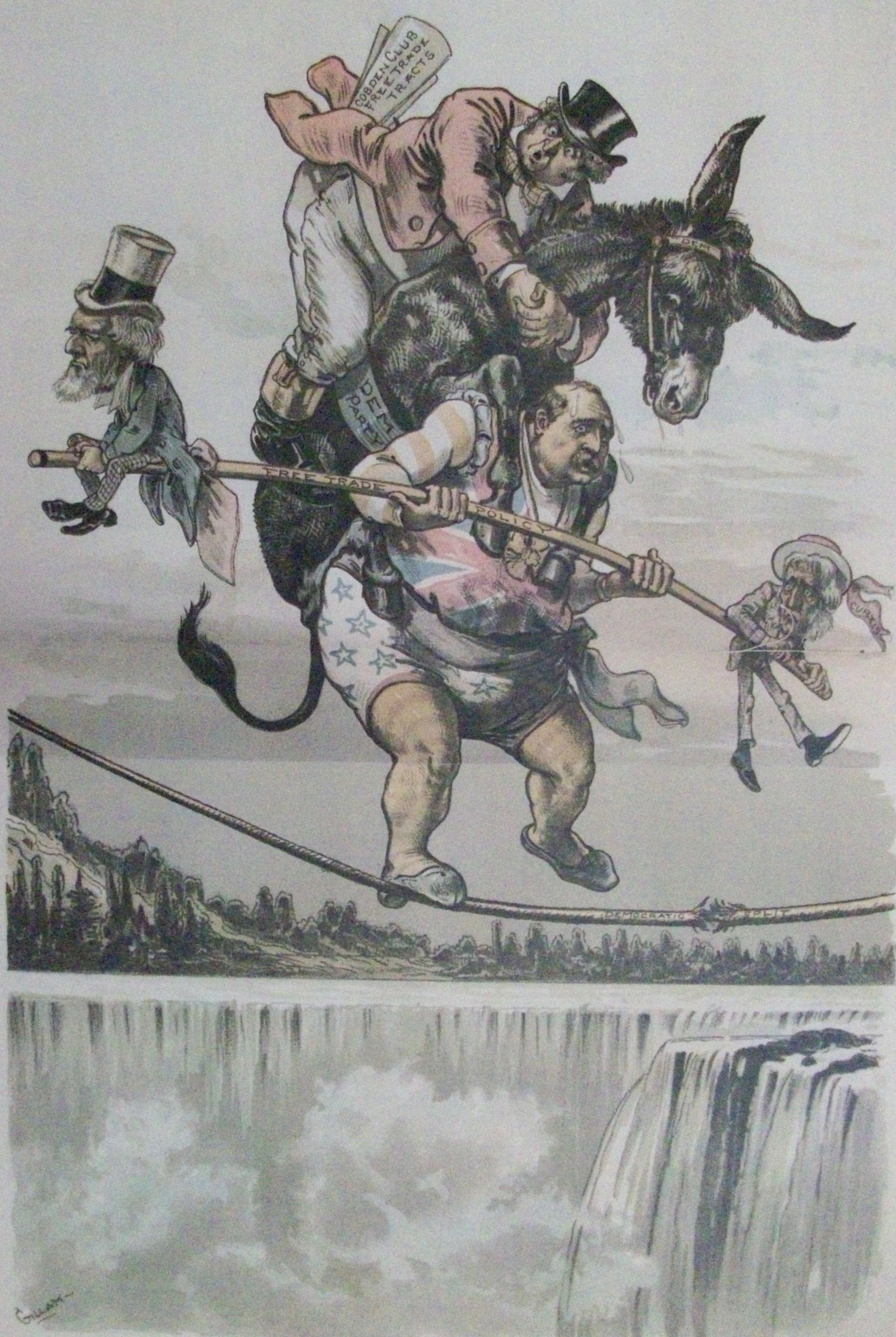
“Cleveland Will Have a Walk-Over.” Republican magazine Judge depicts Grover Cleveland balancing precariously on a fraying rope, holding a balancing pole labeled “Free Trade Policy” and carrying the Democratic Party donkey and John Bull on his back. John Bull’s back pocket is stuffed with “Cobden Club Free Trade Tracts.” Judge, 25 Aug. 1888.
“Cleveland Will Have a Walk-Over.” Republican magazine Judge depicts Grover Cleveland balancing precariously on a fraying rope, holding a balancing pole labeled “Free Trade Policy” and carrying the Democratic Party donkey and John Bull, a common representation of Britain,  on his back. John Bull’s back pocket is stuffed with “Free Trade Tracts.” Judge, 25 Aug. 1888.

Marc-William Palen
History Department, University of Exeter
Follow on Twitter @MWPalen

Cross-posted from The Globalist Magazine

How the 1888 elections decided the protectionist course of U.S. economic expansion for decades to come.

For most people alive today, Republicans have been the advocates of a free trade strategy for the United States, while the Democrats usually have sat on the fence.

The emergence of Donald Trump brings back the memory of when it was the other way around – when Republicans vehemently opposed open trade relations with the world, while Democrats advocated for free trade.

Era when Democrats were pro-free trade

The year was 1888, the tail end of Grover Cleveland’s first administration (1885-89). He was the only Democrat to hold the U.S. presidency in the half-century since the Civil War. And because of his actions, it was the tariff question that overshadowed all other economic issues that year.

The “Great Debate” of 1888 over U.S. trade policy arose after Cleveland, in his December 1887 annual message to Congress, had voiced his support for freer trade.

Cleveland’s free-trade message created political waves, both at home and upon the shores of Great Britain. Continue reading “When Protectionism Dominated American Politics”
This Week’s Top Picks in Imperial & Global History

soviet_wrench_man

Marc-William Palen
History Department, University of Exeter
Follow on Twitter @MWPalen

From ending the world’s weirdest border dispute to Russia’s strange world of Soviet nostalgia, here are this week’s top picks in imperial and global history. Continue reading “This Week’s Top Picks in Imperial & Global History”

Brexit and food prices: the legacy of the Hungry Forties

Screen Shot 2016-08-11 at 12.28.01 PM

Cross-posted from History & Policy

Places are limited and RSVP is essential. Please book your place here.

Plenty of attention is being paid to the political and constitutional effects of Brexit, but what will its economic impact be on life’s most basic commodities? How did food prices inform the debate in the weeks and months leading up to the referendum, and how have they informed debate in the past? How have the spectres of want and hunger been invoked over the last century and a half in political contexts, and are we paying them enough attention now?

Debating these questions will be five historians and policy makers with combined expertise covering the period since the 1840s, the “Hungry Forties,” which live in political memory as the UK’s last serious sustained period of food poverty. The discussion is aimed at policy makers and practitioners working in the area of food poverty and food security, and aims to show how lessons from the past can inform decision-making today. Continue reading “Brexit and food prices: the legacy of the Hungry Forties”

This Week’s Top Picks in Imperial & Global History

The Commune as Seen by Jacques Tardi (“Le cri du peuple”), 2002.

Marc-William Palen
History Department, University of Exeter
Follow on Twitter @MWPalen

From when Nazis held mass rallies in Madison Square Garden to colonial-era bear migrations, here are this week’s top picks in imperial and global history. Continue reading “This Week’s Top Picks in Imperial & Global History”

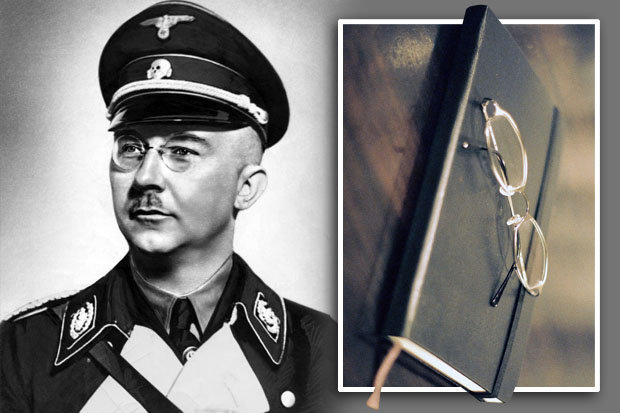
Himmler’s Newly Discovered Diaries in Historical Context

Himmler diaries

Nicholas Terry
History Department, University of Exeter

Cross-posted from Holocaust Controversies

British tabloids like The Sun, Daily Star, Daily Express and Daily Mail are currently agog at the news that Himmler’s diaries have been discovered in Russia, having learned that their German equivalent Bild is serialising excerpts (behind a paywall) of a remarkable discovery by German and Russian historians in the Russian archives.

So far, only Sven Felix Kellerhoff, the history editor at Die Welt, has offered properly grown-up commentary and avoided falling into the trap of over-sensationalising the find. Most of the British tabloids, by contrast, have evidently misread the text of the story in Bild and are now passing on a number of confusions. Continue reading “Himmler’s Newly Discovered Diaries in Historical Context”

This Week’s Top Picks in Imperial & Global History

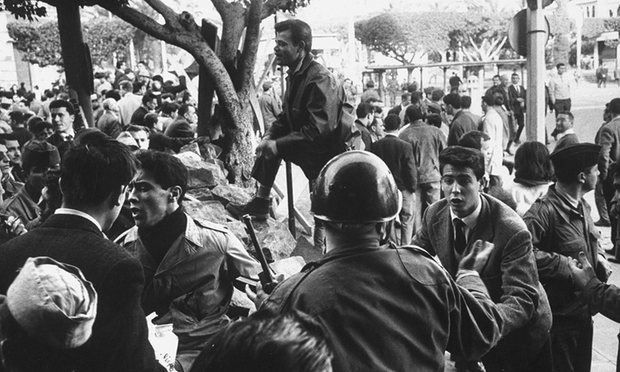
French armed forces suppress an uprising in colonial-era Algeria. Photograph: Loomis Dean/Time & Life Pictures/Getty Image

Marc-William Palen
History Department, University of Exeter
Follow on Twitter @MWPalen

From the unlikely origins of Russia’s Manifest Destiny to the street food that powered the British Empire, here are this week’s top picks in imperial and global history. Continue reading “This Week’s Top Picks in Imperial & Global History”

Free Course: ‘Empire – the Controversies of British Imperialism’

MOOC pic

Exeter’s Centre for Imperial and Global History is once again launching its free online course, which starts on 8 August.

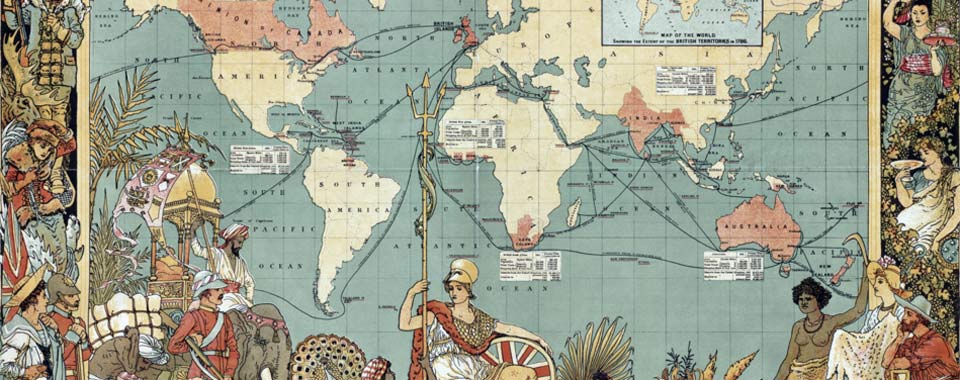
The British Empire was the largest empire ever seen. It ruled over a quarter of the world’s population and paved the way for today’s global economy. But British imperialism isn’t without controversy, and it continues to cause enormous disagreement among historians today. This free online course will help you understand why. Continue reading “Free Course: ‘Empire – the Controversies of British Imperialism’”

Brexit, the American Revolution, and the Problem with ‘Independence Day’

side-by-side-britannia-britains-day-23-june-2016-independence-2923801

Simon Hill
University of Chester

On Thursday 23 June 2016 the British electorate voted 51.9% to 48.1% to leave the European Union (EU). On election night the former leader of the UK Independence Party (UKIP) Nigel Farage declared this to be Britain’s ‘independence day.’ With ‘independence day’ on pro-Brexit lips, US pundits have been quick to connect 2016 with 1776, the year the Declaration of Independence was signed. The Federalist’s Robert Tracinski, for example, was among the first ‘to welcome the mother country to our revolution.’ And, in a similar act of transatlantic camaraderie, the Republican magazine National Review has accordingly rebranded the 1776 signing of the Declaration of Independence as ‘Amerexit.’

Critics have since been quick to point out some of the big historical problems with proclaiming the 23rd June as Britain’s ‘independence day’, including the common association between it and the outbreak of the American Revolution. And of course it’s worth noting that the EU referendum vote and the American Revolution (1775-1783) have obvious differences, not least that in the former the question of independence was settled by the ballot box, whilst in the latter it was decided by the barrel of a gun. Nevertheless, let’s assume for the moment that there are some useful comparisons to be drawn between the American Revolution and Brexit. If so, is 1776 the ideal date for comparison, as many pundits have recently suggested? I would suggest instead that events during the latter years of the American Revolution share far more in common with today. Continue reading “Brexit, the American Revolution, and the Problem with ‘Independence Day’”

This Week’s Top Picks in Imperial & Global History

3-nippon-kaigi

Marc-William Palen
History Department, University of Exeter
Follow on Twitter @MWPalen

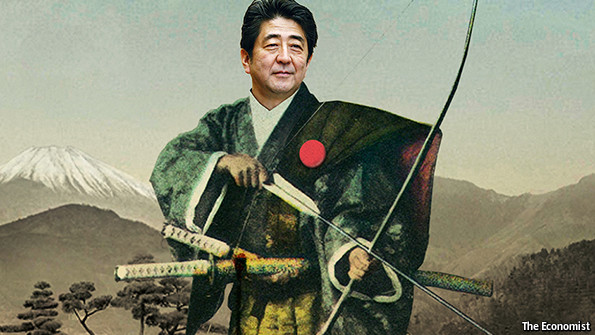
From colonial Havana to resurrecting the Japanese Empire, here are this week’s top picks in imperial and global history. Continue reading “This Week’s Top Picks in Imperial & Global History”

This Week’s Top Picks in Imperial & Global History

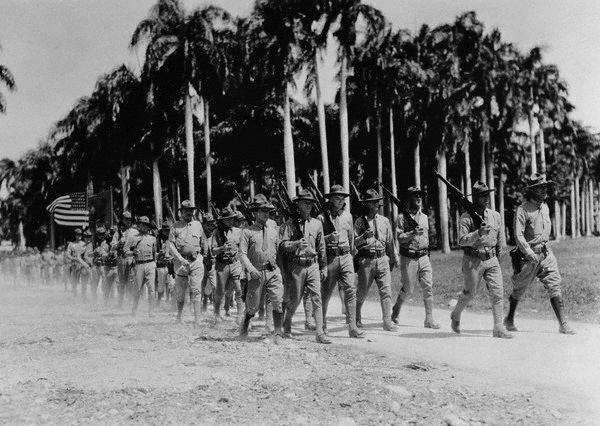
U.S. Marines marching in Haiti, 1934 (Photo: Bettmann/Corbin)

Marc-William Palen
History Department, University of Exeter
Follow on Twitter @MWPalen

From the forgotten Jewish pirates of Jamaica to acknowledging genocide in Namibia, here are this week’s top picks in imperial and global history. Continue reading “This Week’s Top Picks in Imperial & Global History”

How Empires Globalized New Age Religion

yoga

Lori Lee Oates
History Department, University of Exeter
Follow on Twitter @LoriLeeOates

In 2015, the print and online Yoga Journal celebrated its 40th anniversary. It currently claims a readership of 2.1 million people and receives more than 5 million online page views per month. Lululemon, the famous retailer of women’s yoga wear, has started opening stores for men. The Maharishi Foundation website reports that it has established Transcendental Meditation Centres in 108 countries across the globe. Some of the best selling books of recent decades have focused on themes and practices traditionally found in Eastern Religion. Eckhart Tolle’s The Power of Now (1997) has been translated into 33 languages and is estimated to have sold 3 million copies. The book is described as a New Age reworking of Zen. Elizabeth Gilbert’s Eat Pray Love (2006) spent 187 weeks on the New York Times Best Sellers List and sent women across the globe running toward the ashrams of India. Clearly, alternative religion is big business in the twenty-first century.

This global mass consumption of alternative religion has long been regarded as a manifestation of the increasing commercialization of, well, everything since the 1980s. It is true that religion, like everything else, has reached new heights of sales in the age of mass marketing. French scholar Frédéric Lenoir has provocatively argued in Les Métamorphoses de Dieu (2004) that secular societies are more religious than at any previous time in history. However, what is less frequently spoken of is the role that imperialism played in the expansion of interest in Eastern religions in the West. Continue reading “How Empires Globalized New Age Religion”

This Week’s Top Picks in Imperial & Global History

Title of Jürgens’ report on the visit to Japan in the Hitler Youth periodical Junge Welt, February to April 1941

Marc-William Palen
History Department, University of Exeter
Follow on Twitter @MWPalen

From historicizing Britain’s post-Referendum depression to digitizing thousands of Afghan periodicals, here are this week’s top picks in imperial and global history. Continue reading “This Week’s Top Picks in Imperial & Global History”

New @ExeterCIGH Book Featured in Financial Times

Screen Shot 2016-07-04 at 09.34.11

Marc-William Palen
History Department, University of Exeter
Follow on Twitter @MWPalen

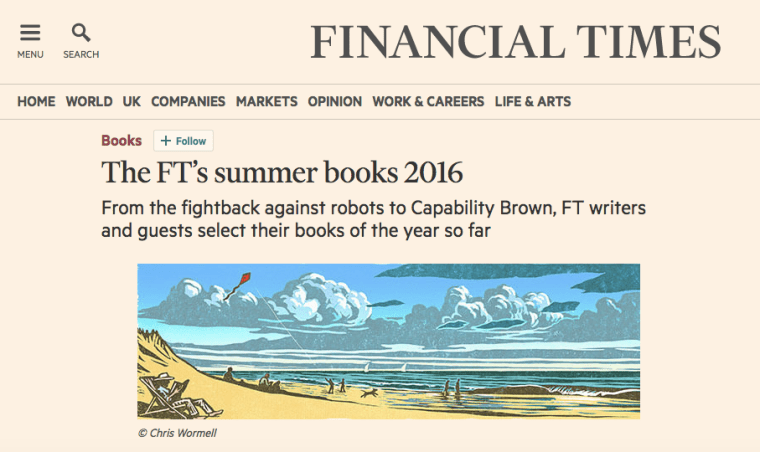
The post-Second-World-War liberal economic order has never looked more uncertain. Over the past few months, the long-dormant forces of protectionism, nationalism, populism, and xenophobia have been reawakened. Free trade is under attack, whether from Donald Trump’s protectionist presidential campaign or from the outcome of the Brexit referendum. Extreme nationalism is on the rise, not only in the US and the UK, but also in continental Europe and Asia. Trump climbed the GOP nomination ladder promising to put “America First,” resurrecting the isolationist mantra of the 1940s. The white supremacist, pro-apartheid killer of UK Labour MP Jo Cox was heard shouting “Put Britain First” as he stabbed and shot the 41-year-old anti-Brexit MP to death. Across the globe, foreigners have become the common target of racist hate crimes and extremist violence. Anti-Semitism is on the rise, as are Islamophobic attacks. Nowadays the cosmopolitan ideal – a global citizenry – appears to be more myth than reality.

It’s a difficult time to be an optimist. It doesn’t help that history is very nearly repeating itself. The Brexit referendum has hammered home how historical memory is far shorter and inaccurate than we might have feared. For example, nationalistic pro-Brexit Britons marked the centenary of the bloody Battle of the Somme this past weekend, either unaware or uncaring of the irony that the world war that wrought the same bloody battle arose largely because of extreme European nationalism, economic autarky, and disunity.

Granted, the current global crisis has many aspects that are unique to the 21st century. But there also many striking parallels between the situation today and the struggles that occurred during the global economic depressions of the late 19th and early 20th centuries. (These periods even had their fair share of international terrorism.) Now more than ever we need to be revisiting these earlier controversies over globalization and international conflict in order to find historical precedents, parallels, and lessons – so that we don’t repeat the same mistakes.

It would seem that the editors of the Financial Times agree. Continue reading “New @ExeterCIGH Book Featured in Financial Times”

This Week’s Top Picks in Imperial & Global History

How phosphates from Morocco nourish the planet

Entrance of a gallery of the mine Khouribga. Photograph from an advertising Chérifien Phosphates Office 1952. EN ANOM. Aix-en-Provence: BIB AOM 4911 // Youssoufia Phosphates. – The achievements of the Office for his daily personal, Rabat: Morocco-Matin 1952.

Marc-William Palen
History Department, University of Exeter
Follow on Twitter @MWPalen

From placing the American Revolution in global perspective to decolonizing Puerto Rico, here are this week’s top picks in imperial and global history. Continue reading “This Week’s Top Picks in Imperial & Global History”

Leopold Must Fall

cullen1
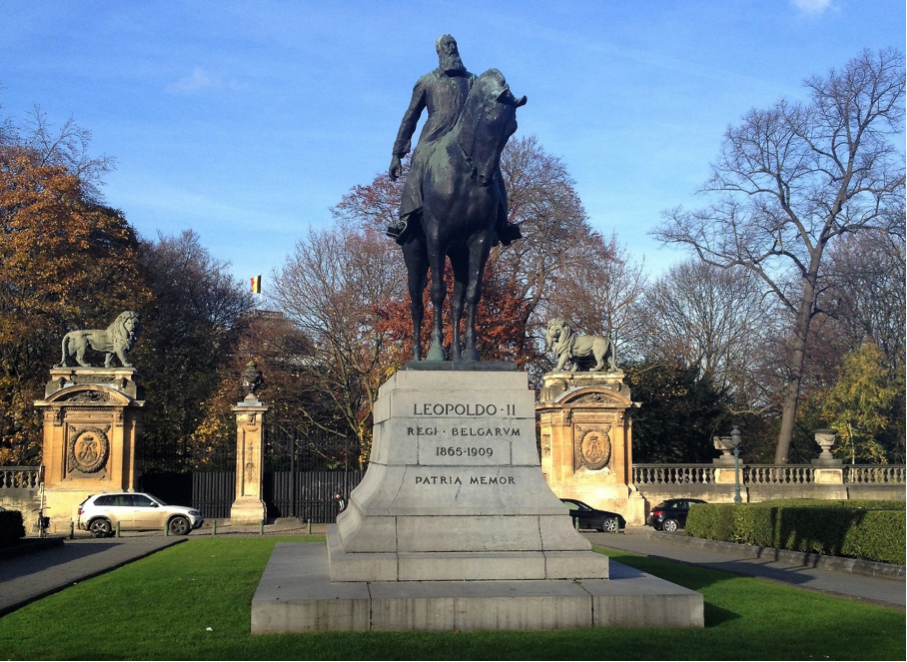
Statue of Leopold II in central Brussels. Photo credit: Daniel Cullen.

Daniel Cullen

Overshadowed by Oxford’s ongoing Rhodes statue controversy, in late April a motion was debated by student representatives at Queen Mary, University of London, calling for the removal of plaques commemorating the 1887 visit of King Leopold II of Belgium. Presenting the motion, the university’s Pan-African Society referred to atrocities committed during Leopold’s rule of the Congo Free State and argued that the presence of the “deeply offensive relics” was “glorifying and uncritical”. The group proposed that the plaques be relocated and recontextualised, “preferably in a space dedicated to the memorialization of the crimes of genocide, colonialism and imperialism”.

Transnational protestors across the world are presently demanding critical reflection on the legacies of prominent imperial figures and the “decolonisation” of higher education institutions, addressing wider issues of institutional racism, from Oxford to Princeton. This protest movement began in 2015 when students demonstrated against statues of Cecil Rhodes in Cape Town, before protests spread internationally, taking up the hashtag #RhodesMustFall.

The vote at Queen Mary is among the latest in a series of debates inspired by the ‘Rhodes Must Fall’ movement. The colonial history of the Congo Free State, if not always widely known, has been well established. From 1885, in the era of the European ‘Scramble for Africa’, an area of over 2,000,000 square kilometres around the Congo river basin (covering much of the modern Democratic Republic of the Congo) was brought under Leopold’s personal control. With the imposition of a brutal system of forced labour for the extraction of wild rubber, evidence of widespread abuses eventually surfaced. Though the exact figures are unknown, some have estimated a population loss in this period of up to 10 million lives. Following an international humanitarian outcry, the monarch was forced to relinquish his territory to the Belgian government in 1908. Continue reading “Leopold Must Fall”