This conference aims to provide a truly global account of the rise and entrenchment of the modern neoliberal order. Contributors will consider how neoliberal ideas travelled (or did not travel) across regions and polities; and analyse how these ideas were translated between groups and regions as embodied behaviours and business practices as well as through the global media and international organisations. As the fate of neoliberalism appears in question across many regions, it is an opportune moment to make sense of its ascendancy on a global scale.
Convenors: Professor James Mark, University of Exeter Professor Richard Toye, University of Exeter Dr Ljubica Spaskovska, University of Exeter Dr Tobias Rupprecht, University of Exeter
Speakers include: Professor Jennifer Bair, University of Virginia
Professor Susan Bayly, University of Cambridge
Professor Johanna Bockman, George Mason University
Professor Stephanie Decker, Aston Business School
Mr Julian Gewirtz, University of Oxford
Professor Vanessa Ogle, UC Berkeley
Professor Daisuke Ikemoto, Meijigakuin University
Professor Artemy Kalinovsky, University of Amsterdam
Dr Alexander Kentikelenis, University of Oxford
Professor Pun Ngai, Hong Kong University
Professor Pal Nyiri, University of Amsterdam
Professor David Priestland, University of Oxford
Professor Bernhard Rieger, University of Leiden
Professor Quinn Slobodian, Wellesley College and Harvard University
Dr Jorg Wiegratz, University of Leeds
Registration: A registration fee is payable at the time of booking. For further information and details of how to book please click on ‘Book event’.
Standard Admission: £95 for both days; £50 for one day
Early Bird booking (before 31 January 2018): £75 for both days; £40 for one day
Concessions: £36 for both days; £20 for one day
Date
Thu 7 Jun 2018 09:00 to Fri 8 Jun 2018 17:00
Location
The British Academy, 10-11 Carlton House Terrace, London, SW1Y 5AH
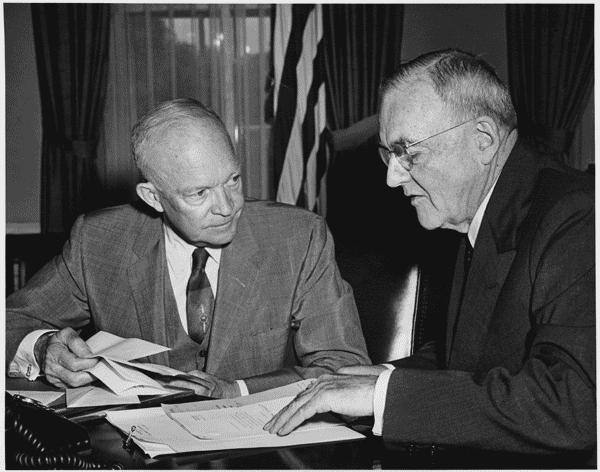
To experts on the history of U.S. foreign policy, the Dulles brothers’ service during Dwight D. Eisenhower’s presidency marks an important watershed in the evolution of American interventionism. In the context of brewing conflict with the Soviet Union, Eisenhower’s administration aimed to protect developing countries of the “Third World” from being converted to Communism. However, as recovery efforts following World War II mobilized international diplomatic efforts to broker world peace, U.S. officials were reluctant to deploy troops abroad. John Foster Dulles was Eisenhower’s secretary of state during this time. His brother, Allen Dulles, served as director of the recently founded Central Intelligence Agency. Together, the Dulles brothers used this agency to eliminate perceived communist threats in the Third World through covert operations, establishing a powerful precedent for “regime change” as foreign policy strategy.
What fewer scholars and policy enthusiasts know is that the Dulles brothers were products of an elite political family with a strong internationalist tradition. John Foster Dulles’ personal papers, stored at his alma mater Princeton University, exhibit how the eldest brother’s upbringing and family network, consisting of diplomats, missionaries, and international lawyers, influenced his developing world view. This is particularly the case with his maternal grandfather, John W. Foster, a prominent patriarchal presence during Dulles’ childhood. Ideological continuity between Foster and his oldest grandson is evident in their comparable career paths, their methods of preparing subsequent male generations, and their published texts and speeches which analyze the role of U.S. foreign policy in international affairs.
Caption: ‘Free Trade England Wants the Earth.’ Pro-Republican Judge magazine depicts US protectionism shielding the country from the British free trade spider’s grasp, 27 Oct. 1888. Source: The ‘Conspiracy’ of Free Trade: The Anglo-American Struggle Over Empire and Economic Globalisation, 1846-1896 (Cambridge University Press, 2016).
The last twenty-four months have witnessed world-wide dissent against the current regime of trade liberalisation. The United States disengaged from the North American Free Trade Agreement (NAFTA), Britons renounced the EU, and in Tokyo, Sydney, Lima, and other cities across the Pacific Rim thousands protested a potential transpacific trade partnership. While the popularity of protectionism is not unexpected, its recent embrace by political elites everywhere is more surprising. This is particularly true of the United States, which one president ago was still steering the global economy towards freer trade.
In The ‘Conspiracy’ of Free Trade: The Anglo-American Struggle Over Empire and Economic Globalisation, 1846-1896 (Cambridge University Press, 2016), Marc-William Palen traces the roots of this debate to the United States in the 1840s. There began a political and ideological battle between Victorian free trade cosmopolitanism and economic nationalism which lasted the remainder of the century and beyond. Talks about tariffs dominated American political life. Through them, Palen is able to tell a much broader story. The Republican and Democratic parties were transformed in the process. Debates about trade influenced the character of American imperial and commercial expansion, as well as the contours of the Anglo-American struggle for empire and globalisation. Palen’s argument that economic nationalism dominated the period also forces us to rethink received notions of the US Gilded Age, which is usually portrayed as an era dominated by laissez-faire and free trade.
We recently met with Marc-William Palen in Bristol, where he resides. He discussed nineteenth century American political thought, the political economy of Anglo-American globalisation and empire in the Victorian Era, and his future research plans. Dr Palen is a historian at the University of Exeter. The ‘Conspiracy’ of Free Trade is his first book. You can follow him via Twitter: @MWPalen.
—Martin Crevier
INTERVIEWER
Can you tell us something about yourself? How did you transition from studying classics as an undergraduate to modern globalization and imperialism as a graduate student?
MARC-WILLIAM PALEN
I was at the right place at the right time. In the summer of 2001, in the middle of my classics degree at the University of Texas at Austin, I registered in a spoken Latin program at the Vatican. At that time, anything after the Holy Roman Empire was journalism to me. However, while I was in Rome, the G8 was being held in Genoa. Rome was filled with anti-globalization protesters, as was the rest of Italy. Things turned violent. A protester in Genoa was even killed by the Carabinieri. This was one of my first encounters with anti-globalism. Then, a week after I came back home to the United States, 9-11 happened. All this awoke an interest in the history of modern globalization and how it had shaped the world today.
Jump forward a few years, after studying the classics I found myself working towards an actuarial science degree. I randomly signed up for a class on the British Empire with someone named A. G. Hopkins because I thought it sounded interesting. As I later discovered, Professor Hopkins had only recently arrived at the University of Texas (UT) by way of Cambridge, Geneva, and Harvard. His teaching, mentorship, and scholarship changed the way I viewed the history of empire and globalization. Sometime in the second semester, he pulled me aside and asked if I had ever considered a PhD in history. Professor Hopkins took me under his wing, and I joined the history PhD program at UT in 2007. There I also had the good fortune to be able to work closely with Wm. Roger Louis, as well as H.W. Brands and Mark Lawrence for the American side of things.
After finishing my PhD in 2011, I crossed the Pacific. I spent a year at the US Studies Center at the University of Sydney. It was a very exciting place to be in the midst of the 2012 presidential election. After Sydney, I briefly taught at Tufts before coming here to Exeter. At the time of my arrival, Andrew Thompson and the department were in the midst of launching the Centre for Imperial and Global History, which has since grown by leaps and bounds.
INTERVIEWER
From this came your book. There you trace the tensions between two economic ideologies that shaped Anglo-American visions of empire and globalization. On the one hand are free traders influenced by Richard Cobden (1804-1865), the Victorian Era’s famed radical British free trade and peace advocate. On the other are ‘Listian nationalists,’ whom you characterize after the German intellectual Friedrich List (1789-1846). We know about Cobden, but List is not a household name. Can you tell us more about him and walk us through the broader debate?
PALEN
List has actually made a bit of a comeback in recent decades. For example, Ha-Joon Chang, a heterodox economist, wrote a popular book in 2002 (Kicking Away the Ladder) borrowing from List’s 1841 National System of Political Economy. In the 1990s, James Fallows also wrote a fascinating piece about List in The Atlantic (‘How the World Works,’ December 1992) after he came across a Japanese translation of List’s critique of free trade, and Fallows used it to highlight debates about what I would call ‘Cobdenite cosmopolitanism’ and ‘Listian nationalism’ in Japan. But, essentially, List was a critic of free trade. He argued that states needed strong protectionist policies alongside strong national institutions and imperial expansion in order to develop ‘infant’ industries. This was very much the opposite of the hands-off, non-interventionist, anti-imperial, free trade arguments of Richard Cobden and his followers. Continue reading “Protectionism and Empire: A Toynbee Prize Foundation Interview with Marc-William Palen”→
Science fiction is the most important literature in the history of the world, because it’s the history of ideas, the history of our civilization birthing itself …. Science fiction is central to everything we’ve ever done.
– Ray Bradbury
I don’t think humanity just replays history, but we are the same people our ancestors were, and our descendants are going to face a lot of the same situations we do. It’s instructive to imagine how they would react, with different technologies on different worlds.
– Kage Baker
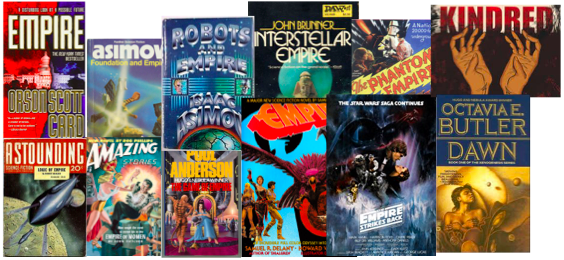
This is the call for blog post submissions for an Imperial & Global Forum roundtable on science fiction and imperial history. We are looking for submissions exploring the ways in which the imperial and anti-colonial past manifests itself in, and intersects with, the classics (and the obscurities) of science fiction. After all, as Patricia Kerslake has recently argued, much can be gleaned by examining “one of the most important and revealing foundations of SF, that of the function and manipulation of political power, of empire and its abuses within the genre, and to explore the great houses of fiction built upon such an informative substructure.”[1]
Have some thoughts about sovereignty and cylons?
Slavery and colonialism among Octavia Butler’s Oankali?
Interested in the relationship between Belter patois and the formation of the Outer Planets Alliance?
The “civilizing mission” of Arthur C. Clarke’s Childhood’s End?
British imperialism and H. G. Wells’s War of the Worlds?
Is time travel into Britain’s colonial past getting you feeling a bit wibbly wobbly, timey wimey?
What about the application of Marxist theories of imperialism to the interstellar world of The Expanse? Or perhaps anti-colonial theories and Avatar?
How does thinking about space—an often land- and water-less expanse—help us refine our definitions of formal and informal imperialism? Borderlands? Frontiers? Globalization?
What does a trade deal look like when it moves beyond the geographical boundaries of a single planet or even a single solar system?
Does the idea of a place with “final” frontiers push back against evolving notions of borders, and the people who crossed them?
In what ways does Star Wars’s Trade Federation or the Galactic Empire’s imperialism reflect that of modern empires?
How does possessing advanced technologies—sonic screwdrivers, Death Stars, protomolecules—change the state of power relations among colonized planets and rogue states?
Do universal human rights take on new meanings and implications when they are defended by Star Trek‘s Federation across a universe divvied up by rival empires?
The schedule for the Spring term’s Centre for Imperial and Global History seminar series, organised by Dr Emily Bridger, is now available. As previously, the seminars will take place on Wednesdays from 4:30-6pm. The seminars will take place bi-weekly beginning in Week 2, with an extra seminar in Week 11. Mark your calendars!
Date
Event
24 January
Week 2
Amory B219
Dora Vargha (Exeter), ‘World health in a Cold War: a view from behind the Iron Curtain’
7 February
Week 4
Amory B219
Richard Toye, (Exeter) ‘Churchill’s Great Game: rethinking the long-term origins of the Cold War’
21 February
Week 6
Amory B219
Meg Kanazawa (PhD Candidate, Exeter), ‘The Ford Foundation’s AIDS Grantees, 1990 to 2001: Visions for India’s Transformation through the NGO Sector’
7 March
Week 8
Amory B219
Katie Natanal, (Exeter, Institute of Arab and Islamic Studies) ‘Unruly affects: Tracing love and melancholia in Israeli settler colonialism’
21 March
Week 10
Amory B219
Rhian Keyse, (PhD Candidate, Exeter) ‘Forced Marriage in British colonial Africa: International, imperial, and local responses’
28 March
Week 11
Amory B219
* Note 5pm start
Emma Hunter (Edinburgh), ‘Nationhood and Nationalism in Sub-Saharan Africa’
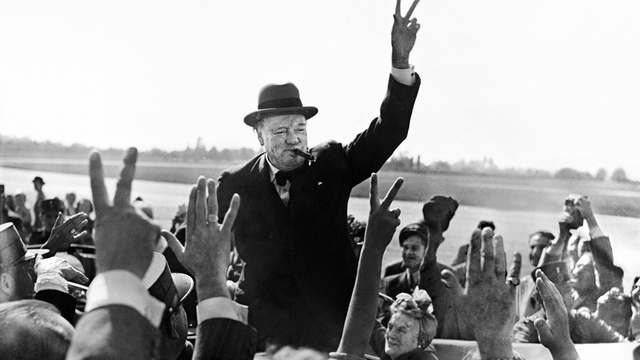
Richard Toye, the English historian and rhetoric expert, talks about the influence Winston Churchill’s speeches had at the time – and what kind of reaction they got.
How does the Brexit situation harp back to longings about the British Empire?
Certainly things seemed to have changed very abruptly, and I would put down a lot of what has happened to the pursuit of austerity policies since 2010, and the fact that people’s living standards have sort of frozen or gotten worse. That creates an opportunity for people to play out various sentiments. It’s probably worth saying that when people have these discourses about Britain becoming great again they may be talking in almost total ignorance of what happened at the time.
About the time during the war?
No, I’m trying to explain why opinion has changed in the last few years to become more sympathetic to Brexit and towards imperial nostalgia. It has to do with the policies of cutting public spending and public services that have taken place. Then the situation becomes ripe for people to exploit discontent by blaming immigrants. So you have the playing up of the glorious past. Continue reading “Some people got depressed by Churchill’s speeches”→
Editor’s Note: In the weeks leading up to the new year, please help us remember 2017 at the Imperial & Global Forum by checking out the past year’s 10 most popular posts.
China the Victim: The imperial powers carving up China.
Tom Harper University of Surrey
Where once China sought communist revolution, it now seeks global economic expansion. As a result, the African continent has been one of the major areas of Chinese foreign economic investment. Numerous studies of China’s Africa policy have appeared in recent years, a number of which accuse China of exploiting resource rich African states or behaving like an imperial power in the continent, most notably Peter Hitchens’s assertion that China is building a ‘slave empire’ in Africa [1].
These views on Chinese policy also reflect the changes in the perceptions of China in the Western mind. The crude stereotypes of the Yellow Peril that dominated Western culture in the late 19th and early 20th centuries have given way to a fear that China will follow in the West’s imperial footsteps. In other words, the legacy of imperialism underpins today’s perceptions of China’s foreign policy as well as Chinese identity. [continue reading]
Editor’s Note: In the weeks leading up to the new year, please help us remember 2017 at the Imperial & Global Forum by checking out the past year’s 10 most popular posts.
Ljubica Spaskovska University of Exeter
‘As a regular reader of NME I feel insulted by the way you write about Yugoslavia in your issues of May 3 and May 17′, wrote a New Musical Express reader from Zagreb in 1975.
In your ‘Teazers’ column you worry about »How will the Communist Bloc take to British pub rock when Kilburn And The High Roads tour Yugoslavia and Poland in August.« Now try to get this: Yugoslavia does not belong to any bloc, so you better don’t try to make jokes about something that may be irrelevant to you, but is of principal meaning for Yugoslav people […] This is not fair toward your Yugoslav readers and many other rock fans in our country. The same singles, albums, groups and singers that top the Pop Polls in Britain are very popular in Yugoslavia, too.
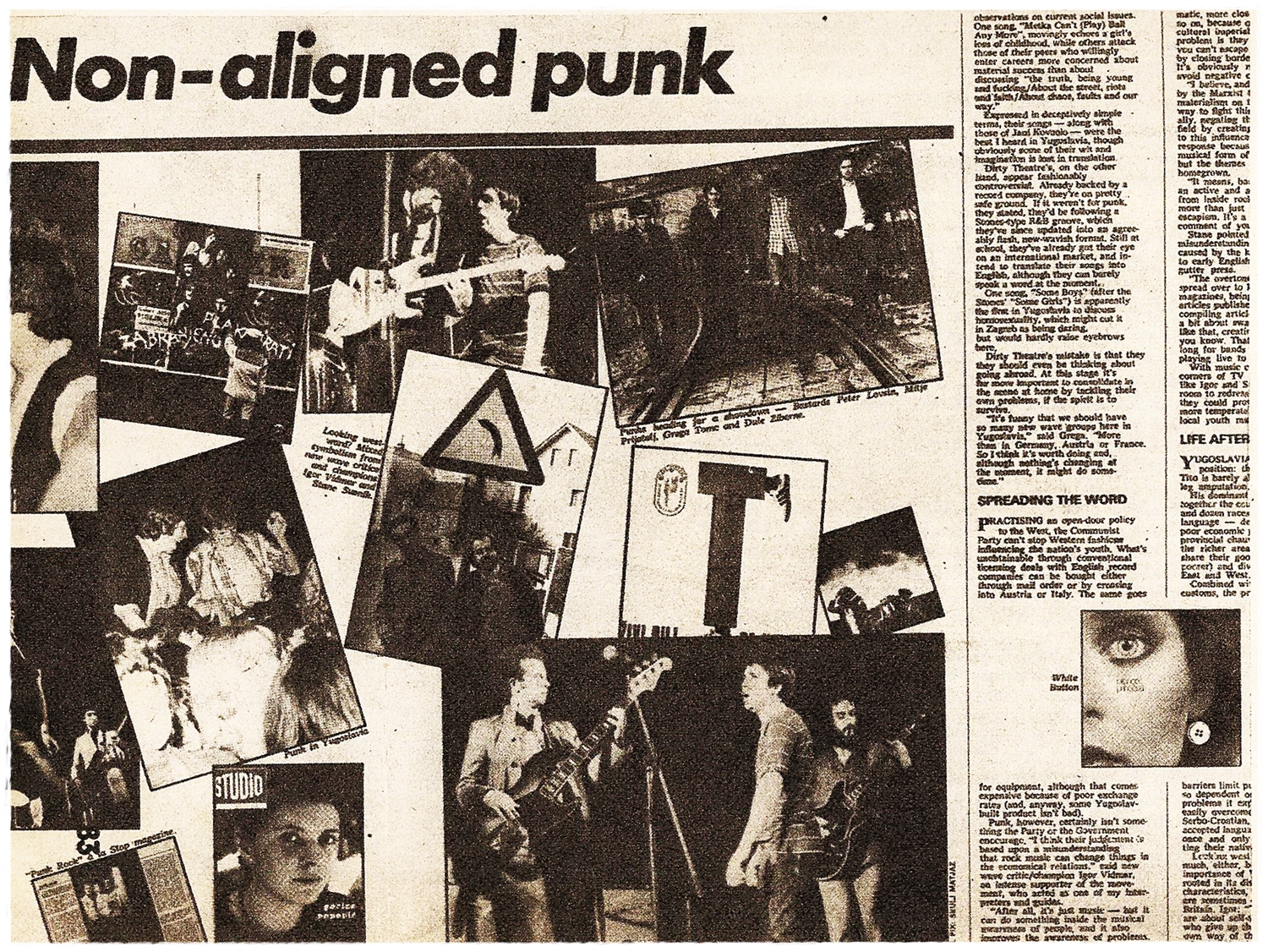
Similarly a Tomaz Domicelj from Ljubljana complained in a 1978 issue of Melody Maker that he was ‘fed up with reading again and again about Yugoslavia being behind the Iron Curtain. We are, if anything, on the border of that Curtain, which MM staff and other British people involved in the music business should know by now. Remember 1948, when we told Stalin off? If not, ask some historians about that.’ Two years later, Melody Maker columnist Chris Bohn visited Yugoslavia, a visit that he summarised in a two-page article entitled ‘Non-aligned punk’.
The geopolitical positioning of Yugoslavia had a significant impact on the way the youth conceptualised and articulated their self-identification and sense of belonging in wider global terms. It also enabled the development of a burgeoning youth culture. [continue reading]
Editor’s Note: In the weeks leading up to the new year, please help us remember 2017 at the Imperial & Global Forum by checking out the past year’s 10 most popular posts.
Paul Doolan Zurich International School and the University of Konstanz
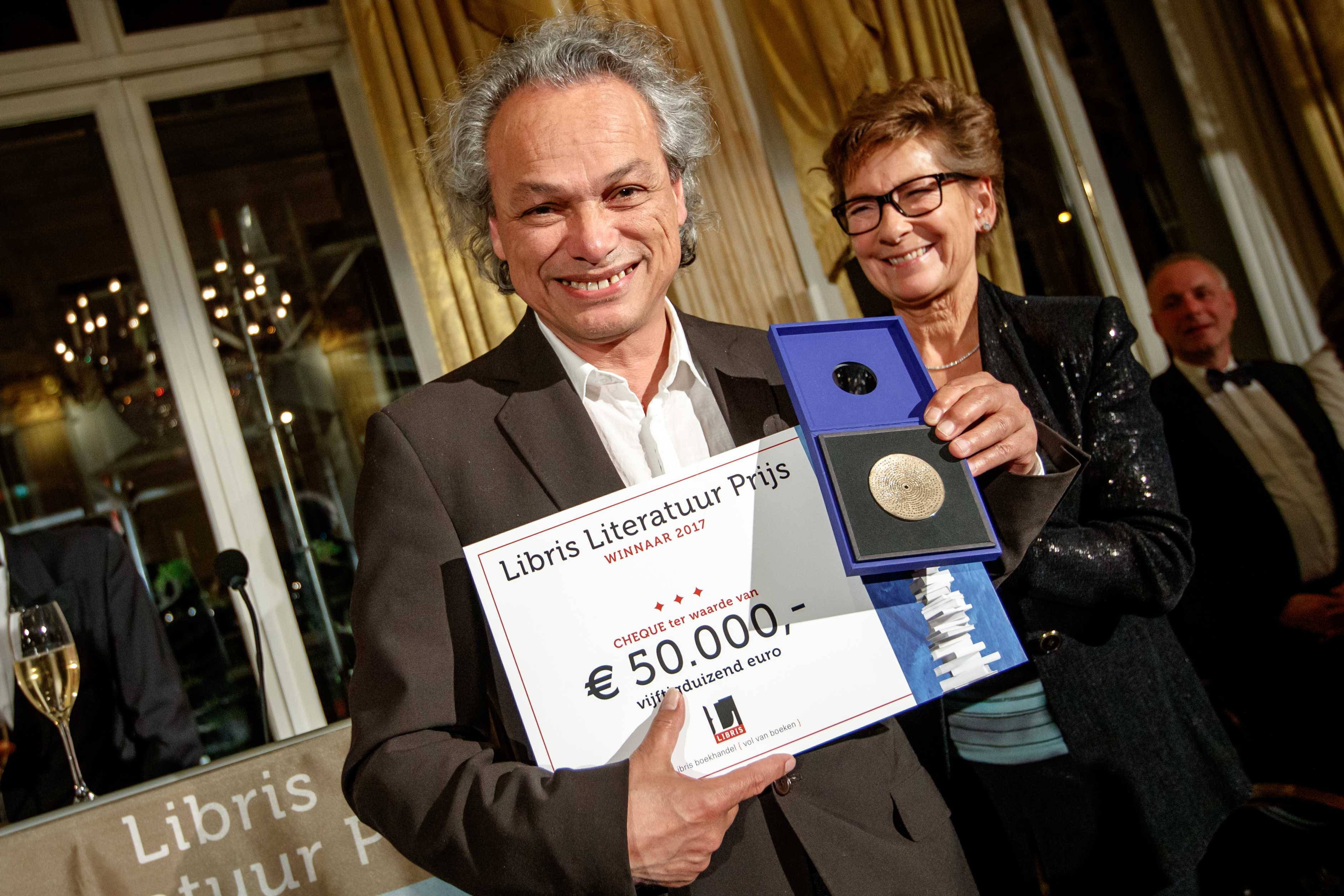
On May 8th the jury of the Libris Literature Prize announced in Amsterdam and live on television that they had unanimously chosen Alfred Birney as winner of the best Dutch language novel of 2016, for his novel De Tolk van Java [The Interpreter from Java]. According to the jury, Birney has “cast a new light upon a poisonous period of our history“. The book is a relentlessly violent postmemory novel and a searing indictment of not only Dutch colonial brutality, but also the willingness of a society to forget or unremember the uncomfortable parts of the nation’s past. Birney’s work forms a corrective to many historical myths regarding the decolonization of the Dutch East Indies.
In recent years we have seen Dutch courts finding the Dutch state guilty of massacring hundreds of civilians in Indonesia during the Indonesian War of Liberation (1945-1949). In 2016 Remy Limpach’s historical thesis, that the Dutch political and military leadership at the time had been responsible for the use of structural violence that amounted to war crimes, was well received in both the popular press as well as among academics. Last month’s decision of the jury of the Libris Literature Prize marks another milestone in the Dutch coming to terms with their past by working through the trauma of decolonization. [continue reading]
Editor’s Note: In the weeks leading up to the new year, please help us remember 2017 at the Imperial & Global Forum by checking out the past year’s 10 most popular posts.
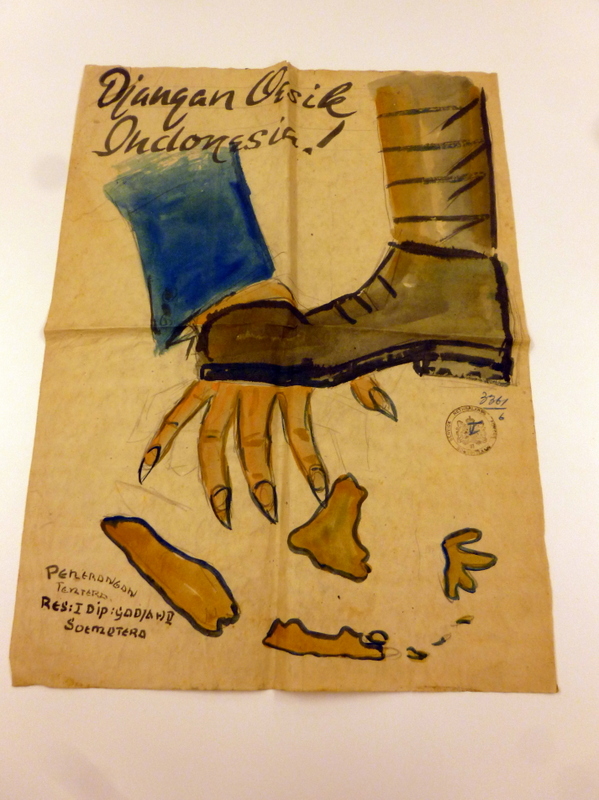
Unknown artist, Indonesian propaganda poster, Sumatra May 1947. From the archive of the NEFIS (Dutch intelligence service), courtesy of Nationaal Archief
Christiaan Harinck, Nico van Horn, and Bart Luttikhuis
Seventy years after the fact, the decolonization war in Indonesia still does not occupy an appropriate position in Dutch public memory. The absence of Indonesian victims in Dutch memory culture makes this painfully obvious: until now, no one has ever even attempted to calculate the Indonesian death toll of this war. Christiaan Harinck, Nico van Horn, and Bart Luttikhuis provide a first attempt, counting 97,421 Indonesian casualties in Dutch military sources – most likely the lower limit rather than a final estimate of the actual death toll.
The Indonesian decolonization war of 1945-1949 has re-entered Dutch public consciousness in recent years. For many decades, the war had only a very cursory presence in Dutch public memory – even though it is one of the largest military operations the country was ever involved in. But in the wake of a number of successful court cases in which Indonesian victims (aided by Dutch activists) forced the Dutch state to pay compensation, Dutch media and politicians over the last decade have gradually started talking about this war again. This has culminated (for now) in the announcement of an extensive government-funded research project. The war in Indonesia is also starting to make more frequent appearances in Dutch popular culture, with the novel Tolk van Java by Alfred Birney recently winning the prestigious Libris prize, and an action movie by popular director Jim Taihuttu announced, which is to be set in the context of the brutal Dutch counterinsurgency campaign in South Sulawesi.
Among all this new interest for the war in Indonesia, the principal focus has been the extent to which Dutch forces committed atrocities against Indonesian civilians and combatants. That atrocities such as summary executions, torture, widespread arson, etc., were a structural part of Dutch military practice has been well documented. But surprisingly, despite all this attention upon Dutch atrocities, the Indonesian victims remain hidden. Dutch historiography and Dutch public memory continue to enjoy a highly Eurocentric view on the war in Indonesia. More than ever before, the black chapters of Dutch history can now be discussed. But still, the public debate is highly inward-looking. The main interest is in ‘our’ atrocities in the colonies, in ‘our’ guilt and what ‘we’ should now do about it. Meanwhile the other, the Indonesian, is still no more than an extra on the stage of Dutch history, lacking a face or and autonomous historical agency. Nowhere is this absence of Indonesian faces more obvious than in the absence of Indonesian victims from Dutch memory culture. We haven’t even had a reliable estimate of Indonesian casualties during the decolonization war – until now. [continue reading]
Editor’s Note: In the weeks leading up to the new year, please help us remember 2017 at the Imperial & Global Forum by checking out the past year’s 10 most popular posts.
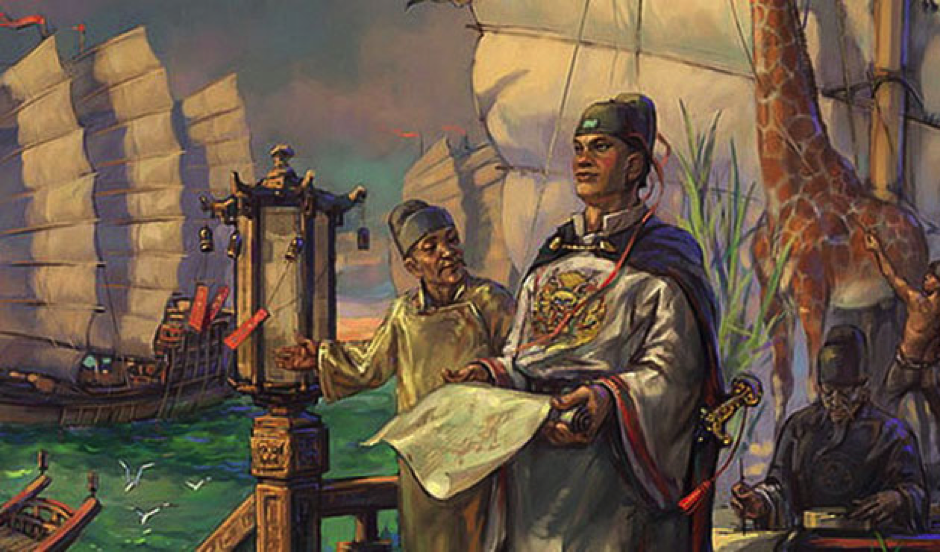
Zheng He, the eunuch admiral.
Tom Harper University of Surrey
The Sovietologist E.H. Carr once asked “what is history?” in his book of the same name. It is a question that may need to be asked again in light of plans by Oxford University to introduce exams in non-Western history. Such a move is cast against the background of the apparent backlash against the traditional notions of imperial history as symbolised by the protests over the philosophy courses of the School of Oriental and African Studies for focusing on European thinkers at the expense of Asian and African philosophers.
These Oxford initiatives should not be considered as merely simplistic, politically correct gesture politics. Instead, with the rise of the Eastern powers, most notably China, it has become imperative to reconsider the limitations of the current Eurocentric curriculum. As the influence of China grows, so too does its historical experiences with imperialism, as epitomised by Xi Jinping’s utilisation of China’s imperial past as a source of national pride. In order for UK universities to stay afloat in changing waters and to cast off the shackles of their Eurocentrism, they will need to start placing a greater emphasis on Asia – and China, in particular. [continue reading]




 Imperial & Global Forum
You must be logged in to post a comment.