Marc-William Palen
History Department, University of Exeter

Marc-William Palen
History Department, University of Exeter

June 30 – July 4, 2025
Call for applications: December 2, 2024 – March 2, 2025
Cross-posted from Venice International University
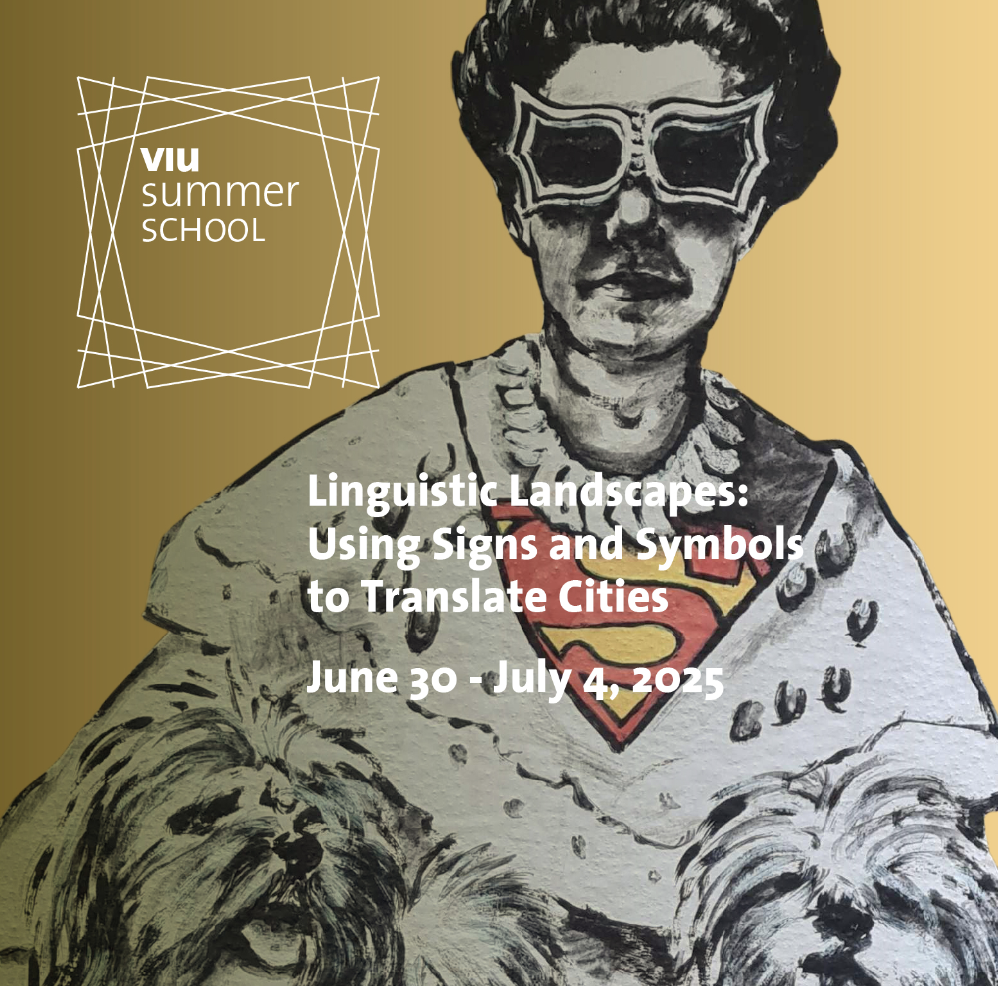
This course focuses on the growing interdisciplinary field of Linguistic Landscapes (LL), which traditionally analyses “language of public road signs, advertising billboards, street names, place names, commercial shop signs, and public signs on government buildings”, as they usually occur in urban spaces.
More recently, LL research has evolved beyond studying only verbal signs into the realm of semiotics, thus extending the analytical scope into the multimodal domain of images, sounds, drawings, movements, visuals, graffiti, tattoos, colours, smells as well as people.
Students will be informed about multiple aspects of modern LL research including an overview of different types of signs, their formal features as well as their functions.
Faculty
Kurt Feyaerts, KU Leuven (Coordinator)
Richard Toye, University of Exeter (Coordinator)
Matteo Basso, Iuav University of Venice
Geert Brône, KU Leuven
Claire Holleran, University of Exeter
Eliana Maestri, University of Exeter
Michela Maguolo, Independent researcher
Luca Pes, Venice International University
Paul Sambre, KU Leuven

Marc-William Palen
History Department, University of Exeter
Richard Toye
University of Exeter
This post is based on a paper delivered at the recent CIGH workshop on ‘New Approaches to Imperial and Post-Imperial Politics’.
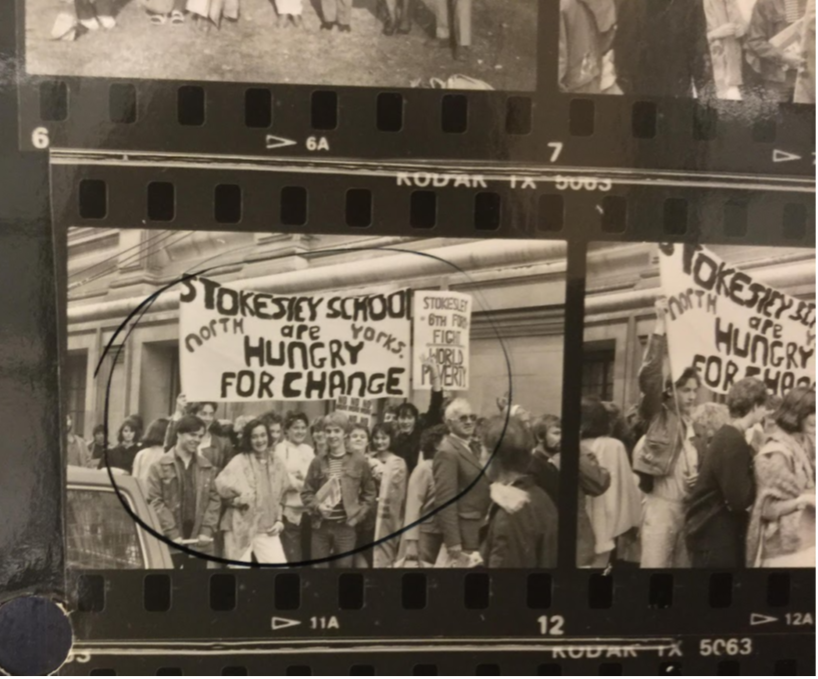
The origins of this post lie in some photographic contact sheets I discovered in the Oxfam Archive at the Bodleian Library, dating back to 1985. These captured a significant mass lobby against world poverty that took place that year. What immediately caught my eye was the slogan “Hungry for Change,” a rallying cry from the 1980s, which brought back memories of my own experiences as a teenage volunteer in an Oxfam shop in Brighton.

Not only did the mass lobby involve school children traveling all the way from North Yorkshire and other far-flung places to participate, but the photos also underscored the fact that someone, likely Oxfam itself, found it worthwhile to document the event by hiring a photographer. The day’s activities were intended not merely as a protest but as an “image-event”.
But the research I’ve done on this topic isn’t just about this one exciting day. It’s about a broader phenomenon of political activism during the 1980s, focusing on the mass lobbying efforts around aid, humanitarianism, and the struggle against poverty. This era was marked by well-organized efforts by NGOs, churches, and concerned citizens who sought to challenge the dominant policies of the time.
Continue reading ““Anytown Joins Lobby For Fairer Deal For World’s Poor”: Mass Lobbies Against World Poverty in Thatcher’s Britain”
Marc-William Palen
History Department, University of Exeter

Marc-William Palen
History Department, University of Exeter
Cross-posted from History Matters
A fragmenting world of trade wars. Food insecurity despite an abundance of food. European food wars. A broken Brexit Britain undermining European unity. The resurgence of right-wing nationalism. Human rights under attack. Children starving from wartime blockades.
The world disorder of 2024 would have looked all too familiar to the international women’s peace movement of a century ago.
Feminists back then tended to see themselves as the mothers of the world, believing that women’s active participation in politics would curb or counter men’s militant predilection for nationalism and war. ‘First wave’ feminist internationalists numbered among the leaders of the early-20th-century fight for world peace, what Harriet Alonso has described as “the suffragist wing” of the international peace movement from the First World War onwards.
Free trade was a key – but oft-overlooked – ingredient to their feminist vision for a peaceful world. Chicago social reformer Jane Addams, the figurehead of the international women’s peace movement, emphasized this free-trade dimension throughout the 1920s and 1930s.
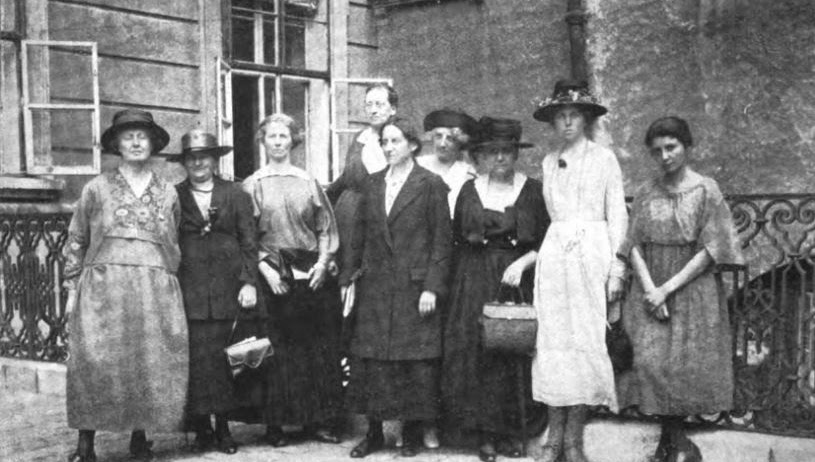
Jane Addams made landfall in Europe in early July 1919 to bear witness to the destructive aftermath of the First World War. Addams’s main concern was the famine afflicting millions of Europe’s children.
Addams’s 1919 trek marked the beginning of what would become a multi-year European humanitarian mission of a new left-leaning feminist organization: the Women’s International League for Peace and Freedom (WILPF), which remains active today. Addams was WILPF’s inaugural president.
Addams had her first of many encounters with Europe’s malnourished children during a stopover in Lille in northern France. There, inside a schoolhouse, Addams looked on as a physician examined them by the hundreds. ‘Stripped to the waist’, the children looked more like ‘a line of moving skeletons; their little shoulder blades stuck straight out, the vertebrae were all perfectly distinct as were their ribs, and their bony arms hung limply at their sides.’
Adding to the macabre scene, an eerie quiet hung over the improvised emergency room. You see, the French physician on duty had lost his voice, a side effect of wartime shellshock. He therefore ‘whispered his instructions to the children as he applied his stethoscope and the children, thinking it was some sort of game, all whispered back to him.
Addams encountered similarly graphic scenes in Switzerland and throughout Germany. The 1919 WILPF mission’s findings reinforced her belief that, while the war may have ended, securing the peace had just begun.
Addams therefore headed a follow-up WILPF humanitarian mission amid the hot summer of 1921, this time to southeastern Europe, where she once again encountered mass hunger. ‘Food resources which were produced in Europe itself and should have been available for instant use,’ Addams wrote, ‘were prevented from satisfying the desperate human needs. Why? Because ‘a covert war was being carried on by the use of import duties and protective tariffs’, which the war’s food blockades had legitimized.
These small starving European states, seeking self-preservation, mistakenly ‘imitated the great Allies with their protectionist policies, with their colonial monopolies and preferences.’ To Addams, such suffering in the name of ‘hypernationalism’ only amplified the need for a new international system of ‘free labor and exchange’ The world faced a clear choice: either ‘freedom of international commerce or international conflict of increasing severity.’
To meet world food demands, her envisaged free-trade order would also require supranational regulation of global transportation lines to counter ‘the ambition of rival nations.’
She called her cosmopolitan vision ‘Pax Economica’.
Continue reading “Feminism’s Forgotten Free-Trade Past”
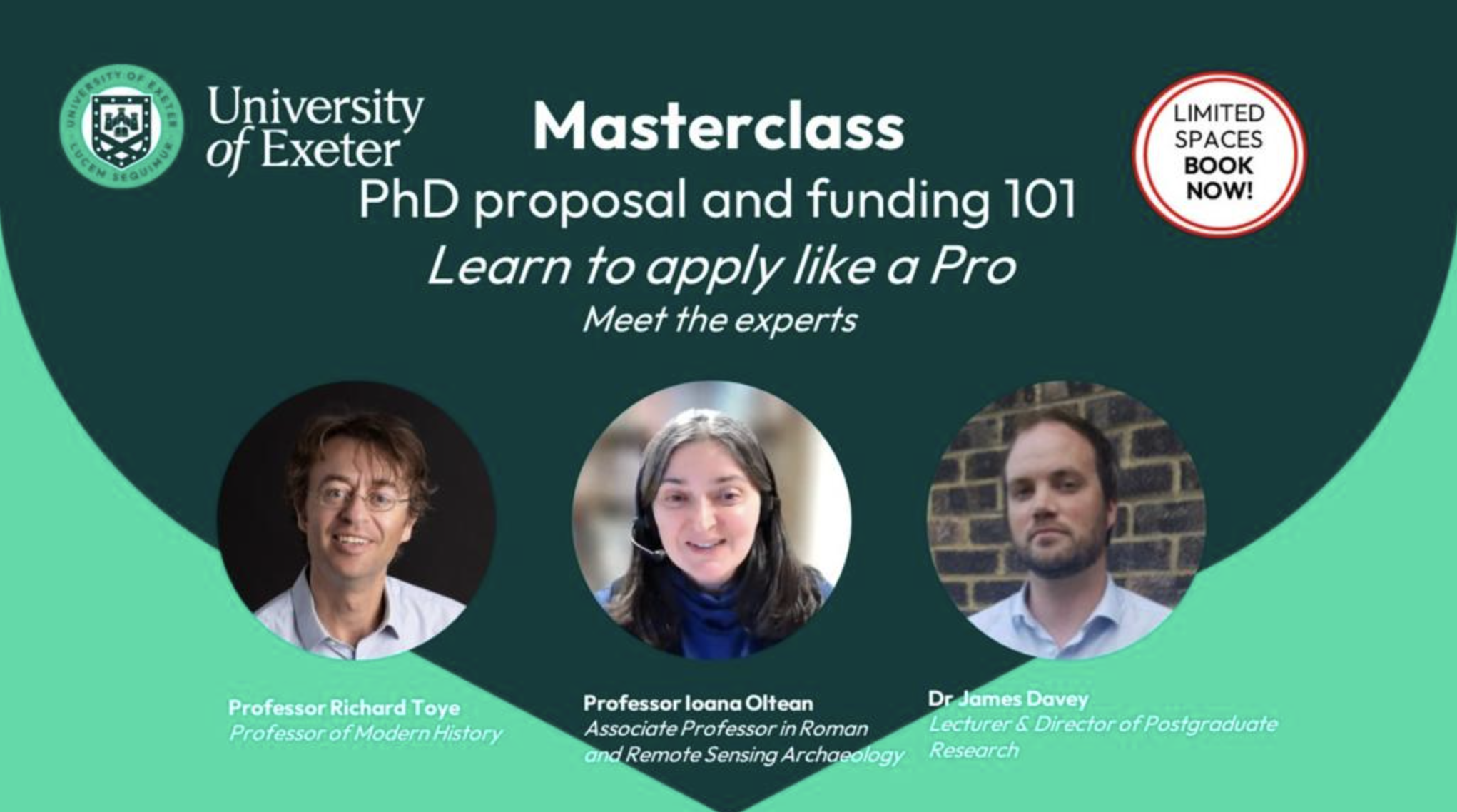
Course: Masterclass PhD Application | Exeter Online Courses Moodle
After this short course you should be able to:
• Maximise your chances of gaining admittance to a PhD programme and winning funding
• Identify and get guidance from potential supervisors
• Select appropriate content and structure for the proposal
• Use suitable tone, language, length, and style
• Use suitable referencing and formatting conventions
• Understand differences between disciplines
• Know how to avoid common errors
• Review a sample proposal
• Submit your idea and choose suitable next steps
Also, be sure to sign up for a free PhD Masterclass
Marc-William Palen
History Department, University of Exeter
Follow on Twitter @MWPalen

Marc-William Palen
History Department, University of Exeter

Marc-William Palen
History Department, University of Exeter

The co-directors of Exeter’s Centre for Imperial and Global History (CIGH), Dr. Chris Sandal-Wilson and Dr. Rebecca Williams, wish to welcome our new students and colleagues, and are really excited to begin a new year of CIGH seminars.
All seminars take place on Wednesdays 3.30pm-5.00pm, with the option to join remotely.
Reminders, links, and abstracts will be sent a week in advance of each seminar to the CIGH mailing list. To be added, please email Chris and Beccy at c.w.sandal-wilson@exeter.ac.uk and r.williams2@exeter.ac.uk.
WEDNESDAY 2 OCTOBER [Week 2] Welcome (Back) Social
Amory Senior Common Room
Join us for an informal gathering to mark the start of the academic year, welcome new researchers, and catch up with old friends. Drinks and nibbles provided!
WEDNESDAY 16 OCTOBER [Week 4] Archives: Digital, Material, Social
Room B310, Amory
Join our panel of expert historians – Martin Thomas, Nelly Bekus, and David Thackeray – as they reflect on the archive as a digital, material, and social phenomenon, and offer tips for working in the archives of imperial and global history.
WEDNESDAY 13 NOVEMBER [Week 8] Meet the Children at War Team
Room B310, Amory
Come along to hear about the research Chessie Baldwin, Pamela Nzabampema, Richard Raber, and Phoebe Shambaugh will be doing as part of the Children at War project.
WEDNESDAY 27 NOVEMBER [Week 10] Telling Our Stories, Finding Our Roots
Forum Seminar Room 6
Telling Our Stories, Finding Our Roots is a community heritage and oral history project focused on diverse and multicultural histories in Devon. Hilda Tosfor will be joining us to talk about the project – all welcome!
WEDNESDAY 11 DECEMBER [Week 12] Postgraduate Research Symposium
Room B310, Amory
As always, we’ll see out the term on a high note: join us as post-graduate researchers working on Imperial and Global History at Exeter share their work in progress.

Marc-William Palen
History Department, University of Exeter

The Faculty of Humanities, Arts and Social Sciences and the BME Network are delighted to invite you to The World Reimagined Globe Launch: ‘Uncertain Voyage’, on Friday 4th October 2024.
WHEN: Friday 4th October, 13:00 – 17:00
WHERE: University of Exeter, Queen’s Building, EX4 4QH
The full programme will be confirmed in due course, and will include a musical performance, exhibitions, and keynote speakers across the afternoon.
Background:
The World Reimagined is a groundbreaking art installation project which aims to redefine how we understand the Transatlantic Trade in Enslaved Africans and its lasting impact.
The university has been gifted two globes from this initiative, with one now installed at Exeter, Streatham Campus. The globe was gifted to the University on the agreement that it would be used for hosting educational and cultural events and activities.
Continue reading “The World Reimagined Globe Launch: ‘Uncertain Voyage’: Friday 4th October 2024”
To mark the 2026 Semiquincentennial of the American Revolution, the journal Diplomatic History seeks article proposals that engage with any aspect related to the international, transnational, transimperial, continental, or global dimensions of the American Revolution, including its origins or aftermath. The articles will be published in a special forum in 2026.
Please send proposals to diplomat@shafr.org. Review of proposals will begin on October 10, 2024. Selected authors will be notified by November 1. The submission date for completed articles will be June 1, 2025. For questions please contact either pgoedde@temple.edu or anne.foster@indstate.edu.
Katie Baker, Emily Cooper, Gabriel Labrie, Nicla Pennacchio, and Esther Roza
Faculty: Kurt Feyaerts, KU Leuven; Richard Toye, University of Exeter; Matteo Basso, Iuav University of Venice; Geert Brône, KU Leuven; Claire Holleran, University of Exeter; Eliana Maestri, University of Exeter; Michela Maguolo, Independent researcher; Luca Pes, Venice International University; Paul Sambre, KU Leuven
As part of the Summer School, Linguistic Landscapes: Using Signs and Symbols to Translate Cities, our team was tasked with carrying out a case study starting from the Santa Maria Gloriosa dei Frari Basilica in the sestiere of San Polo, Venice.
While exploring the area around the Frari, we noticed the following sign in front of a bar:
What does this divergent text tell us about the potential audience? What do the spelling mistakes tell us about the owner or the creator? (cf. Spolsky Handwritten bottom-up sign with divergent text 2008, 31). in Italian and English (Calle de le Chiovere)
The questions raised by this image piqued our curiosity about multilingual signage. Therefore, we decided to focus on signs containing more than one language (cf. Backhaus 2005 on Tokyo and Moser 2020 on Luxembourg City). Due to time constraints, the shaded area of the sestiere was omitted for this analysis, thus limiting our evaluation to the streets immediately surrounding the Santa

Maria Gloriosa dei Frari Basilica, which permeates the insulae of Frari and Nomboli. We also examined the shortest path from the Basilica to its closest vaporetto stop, San Tomà, as this is a common route taken by ourselves and other tourists (cf. Lynch 1960, 46−49).
Furthermore, only signs of the A4 format or larger were included. The size and language criteria allowed for systematic, thorough data collection in the defined area. Our final corpus accounts for 105 signs.
Continue reading “The Creame of the Crop: an Analysis of Multilingual Signs around the Frari, Venice”
You must be logged in to post a comment.