Faculty: Kurt Feyaerts, KU Leuven; Richard Toye, University of Exeter; Matteo Basso, Iuav University of Venice; Geert Brône, KU Leuven; Claire Holleran, University of Exeter; Eliana Maestri, University of Exeter; Michela Maguolo, Independent researcher; Luca Pes, Venice International University; Paul Sambre, KU Leuven
In this blog, we present our exploratory study of the linguistic landscape of the neighbourhood surrounding the Chiesa dei Santi Apostoli di Cristo in Venice. By the term linguistic landscape, we refer to “the visibility and salience of languages on public and commercial signs in a given territory or region”, as defined by Landry and Bourhis (1997). The fieldwork was carried out in the context of the VIU Summer School ‘Linguistic Landscapes: Using Signs and Symbols to Translate Cities’ that took place from June 24 until June 28, 2024. Our survey of the area focused on how bottom-up street communications (meaning those not put up by the city and its officials) differ between residential areas, more frequently utilised by locals, and busy thoroughfares frequented by large amounts of tourists.
By Ikuo Harimoto, Marian Gabani Gimenez, Dongfang Liu, Javiera Scarratt, and Alexander Van Herpe
Faculty: Kurt Feyaerts, KU Leuven; Richard Toye, University of Exeter; Matteo Basso, Iuav University of Venice; Geert Brône, KU Leuven; Claire Holleran, University of Exeter; Eliana Maestri, University of Exeter; Michela Maguolo, Independent researcher; Luca Pes, Venice International University; Paul Sambre, KU Leuven
When we were assigned the Basilica dei Santi Giovanni e Paolo, in the neighborhood of Castello, as the central point of our fieldwork for the 2024 “Linguistic Landscapes” Summer Course at Venice International University, we had to decide on the criteria to delimit the area we would be exploring. Based on Kevin Lynch’s (1960) typology of the contents of the city image, i.e. referable physical forms that people recognize and rely on in their wanderings through the urban space, we reflected on the various possible maps that Venice offered. As pointed out by Lynch, the image of the same physical reality shifts according to the circumstances of viewing, and Venice is the locus where numerous circumstances coexist: for instance, the canals seem to work as an edge for earth-bound wanderers, but a path for water-bound locals. In this reflection, we realized that water could be seen as this ambiguous–or fruitful–element according to which the “circumstances of viewing” shift profoundly. We opted, thus, to define the canals as the limit for our explorations.
Venice is formed by several small islands, connected by canals, lagoons, and waterways. One could argue that this is what makes Venice distinctively attractive to people all over the world. Such geographical features, coupled with its unique history, foreground a particular identity, expressed in signs, art, images, and structures across the city. On the flip side, Venice’s geography and history also bring their own issues: over-tourism, rise in water levels, and sinking foundations. This tension is what intrigued us and guided this project. Starting from the Basilica dei Santi Giovanni e Paolo, a 14th-century church of Gothic architecture, we wandered through the paths and followed the margins of the canals seeking structures, signs, and images that referred to water, however loose the reference might be. Our goal was to understand if and how water informed and still informs the architectural, semiotic, and linguistic landscape of Venice.
We divided the results of our research into three topics: the uses of water (utility), protection from water-related events (defense), and water as a cultural element. The first topic explores the structures in place to make use of water in Venice and how they differ depending on who is making use of it. The second topic investigates the remnants and the new strategies to defend the land from water-related events and disasters. In the third and last topic, we argue that water is also present as a symbol in the cultural landscape of Venice.
College and Departmental Lecturer in Modern and Contemporary History
Faculty of History, George Street, OX1 2RL and Trinity College, Broad St, Oxford OX1 3BH
About the role
This is an exciting opportunity to join the thriving Modern and Contemporary History community, and to gain teaching experience at the undergraduate and graduate levels. Although this is primarily a teaching role, you will also conduct independent research, assist in the running of the History School at Trinity College and play an active part in the interdisciplinary and intercollegiate community. The postholder will share in taking responsibility for pastoral duties and the general administration of History teaching at Trinity College, including by acting as Director of Studies for one year-group of undergraduate students.The post is intended to cover teaching and administrative duties for Professor James McDougall while he is on leave.The postholder will be entitled to 5 lunches and 3 dinners a week free of charge at the Common Table (SCR) during term and vacation, except when the kitchens are closed. The postholder will also have membership of the Senior Common Room which will also be provided free of charge.The post is a full-time, fixed term until 30th September 2025, tenable from 1st October 2024.
About you
You will have research and teaching interests in nineteenth and twentieth century history, with a strong preference for applicants with interests in the modern history of the Middle East and North Africa with knowledge of one or more of the following fields: global history, the history of empire, and related regional histories. You will be able to inspire and enthuse students and draw on your own research to inform and augment your teaching.You will hold a completed doctorate in a relevant field, or evidence that a doctorate is close to completion, and possess an aptitude for teaching with some experience of teaching Modern and Contemporary History. You will also have and familiarity with the existing literature and research in the field of Modern and Contemporary History.The ability to use technological innovations to improve teaching and research is desirable.
Application Process
We expect to hold interviews on either 11th or 12th of July 2024; overseas candidates will be offered Microsoft Teams interviews.For an informal discussion about this opportunity, please contact Professor Paul Betts (for Faculty responsibilities) at paul.betts@sant.ox.ac.uk and Dr Fanny Bessard (for college responsibilities) at fanny.bessard@trinity.ox.ac.uk; all practical and procedural queries should be sent to our recruitments team: recruitments@history.ox.ac.uk. All enquiries will be treated in strict confidence; they will not form part of the selection decision.You will be required to complete a supporting statement, setting out how you meet the selection criteria, curriculum vitae and the names and contact details of two referees as part of your online application.
The deadline for applications is 12.00 noon on Monday 1st July 2024.Only applications submitted online through the University e-recruitment system can be considered.
The challenge of commemorating wars: Developing an archive of family response to British military death after 1945. Photographs: Newport. Credit: Stuart Griffiths.
Professor Helen Parr (Keele University) will deliver the annual lecture of the Centre for Histories of Violence & Conflict on Wed. June 5 at the University of Exeter.
When: Wed. June 5 from 3.30pm-5pm.
Where: Digital Humanities Laboratory, Queen’s Building, University of Exeter.
Abstract: How has Britain commemorated its military campaigns after the era of total war? After 1945, Britain was almost continually engaged in conflict, but the numbers of British military dead were comparatively small. By focusing on a fundamental, but neglected, war experience – the memory of death – this lecture will explore how experiences of and attitudes towards military death changed with British military engagements and world role, and as society altered from the stoicism and reticence of the world wars, towards a more individualised, emotionally expressive culture. Based on ongoing archival research and on oral history, and tracing changes in commemoration from the Korean war to the recent conflicts in Iraq and Afghanistan, the lecture suggests that the world wars have shaped British expectations of commemoration, but that how Britons think of death in military service has been transformed.
Empires, until recently, were everywhere. They shaped borders, stirred conflicts, and set the terms of international politics. With the collapse of empire came a fundamental reorganization of our world. Decolonization unfolded across territories as well as within them. Its struggles became internationalized and transnational, as much global campaigns of moral disarmament against colonial injustice as local contests of arms. In The End of Empires and a World Remade, Martin Thomas tells the story of decolonization and its intrinsic link to globalization. He traces the connections between these two transformative processes: the end of formal empire and the acceleration of global integration, market reorganization, cultural exchange, and migration.
The Centre for Imperial and Global History at the University of Exeter hosted a workshop with colleagues from Hum:Global, the Global Humanities centre at Copenhagen University, this April on the challenges that the development of digital technologies poses for historians of global history. Amongst the key themes that connect our papers is a concern that many digitisation initiatives continue to focus on the history of the nation state and are driven by commercial imperatives. Existing approaches run the risk of reinforcing historical inequalities in access to knowledge between the Global North and South, an issue which has been discussed at length in a recent ‘History Lab’ feature in the American Historical Review. These concerns are becoming more pressing with the rapid advance of AI.
Jon Lawrence introduced the Living With Machines project (2018-23), a major collaboration led by the Alan Turing Institute and the British Library. As part of this project, the team have explored new ways of using the British Library’s existing digitised newspapers accessible to researchers in new ways. This involves critically reflecting on the decisions which were made regarding which papers to digitise twenty years ago and developing a more representative view of the nineteenth-century newspaper landscape through the development of an ‘environmental scan’.
Stuart Ward discussed his new project which uses the round-the-world travels of Sir Charles Dilke to consider how global imaginaries were reshaped in the late 1860s. Dilke was a young man when he undertook his circumnavigation, which followed the British empire around the globe, and the project was improvised rather than being meticulously planned. One of the challenges of this project will be to use historical newspapers to better understand Dilke’s mental world. Dilke avidly read the local press during his travels to consider how the connections between the different places he visited were being transformed by rapid advances in communications.
It’s been a whirlwind since Pax Economica was published in the USA in late February, and hopefully more to come after today, the official publication day for the UK/Europe.
I am truly grateful for all the support, endorsements, and reviews that Pax Economicahas already received from across the political spectrum, including making the New Yorker’s “Best Books” 2024 list.
In case Forum readers are interested, included below are details regarding some upcoming book events for April and early June, including the UK book launch on Wed, April 24 (5pm) hosted by the Rothermere American Institute at the University of Oxford.
Also, I am based in Venice, Italy, until early June, so for any interested Italian subscribers to the Forum, please just get in touch via email. I’d be delighted to visit and discuss the book.
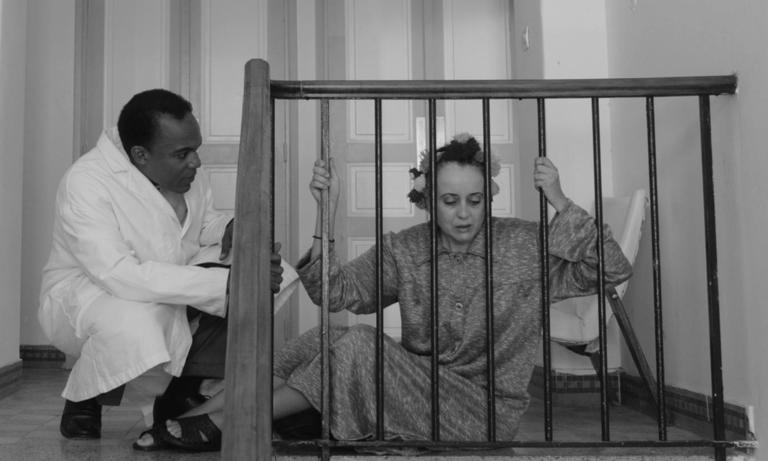
Algerian demonstrators arrested,hands above their heads, in Puteaux during peaceful demonstration, about to be questioned by police, during the Algerian war. October 17, 1961. FERNAND PARIZOT / AFP
Rothermere American Institute, 1a South Parks Road, OX1 3UB
Open to the public
Today, free trade is often associated with right-wing free marketeers. In Pax Economica, historian Marc-William Palen shows that free trade and globalisation in fact have roots in nineteenth-century left-wing politics. In this counterhistory of an idea, Palen explores how, beginning in the 1840s, left-wing globalists became the leaders of the peace and anti-imperialist movements of their age. By the early twentieth century, an unlikely alliance of liberal radicals, socialist internationalists, feminists, and Christians envisioned free trade as essential for a prosperous and peaceful world order. Of course, this vision was at odds with the era’s strong predilections for nationalism, protectionism, geopolitical conflict, and colonial expansion. Palen reveals how, for some of its most radical left-wing adherents, free trade represented a hard-nosed critique of imperialism, militarism, and war.
A book launch & conversation with Martin Thomas, author of ‘The End of Empires and a World Remade’. Hosted by Lars Cornelissen.
Was the twentieth-century collapse of European colonialism as definitive as it is often portrayed? How can we do justice to the historical complexity of decolonization while maintaining a broad global perspective?
In The End of Empires and World Remade: A Global History of Decolonization, Professor Martin Thomas [University of Exeter] brings together perspectives from global history, comparative politics, and international relations to re-evaluate decolonization in all of its historical messiness.
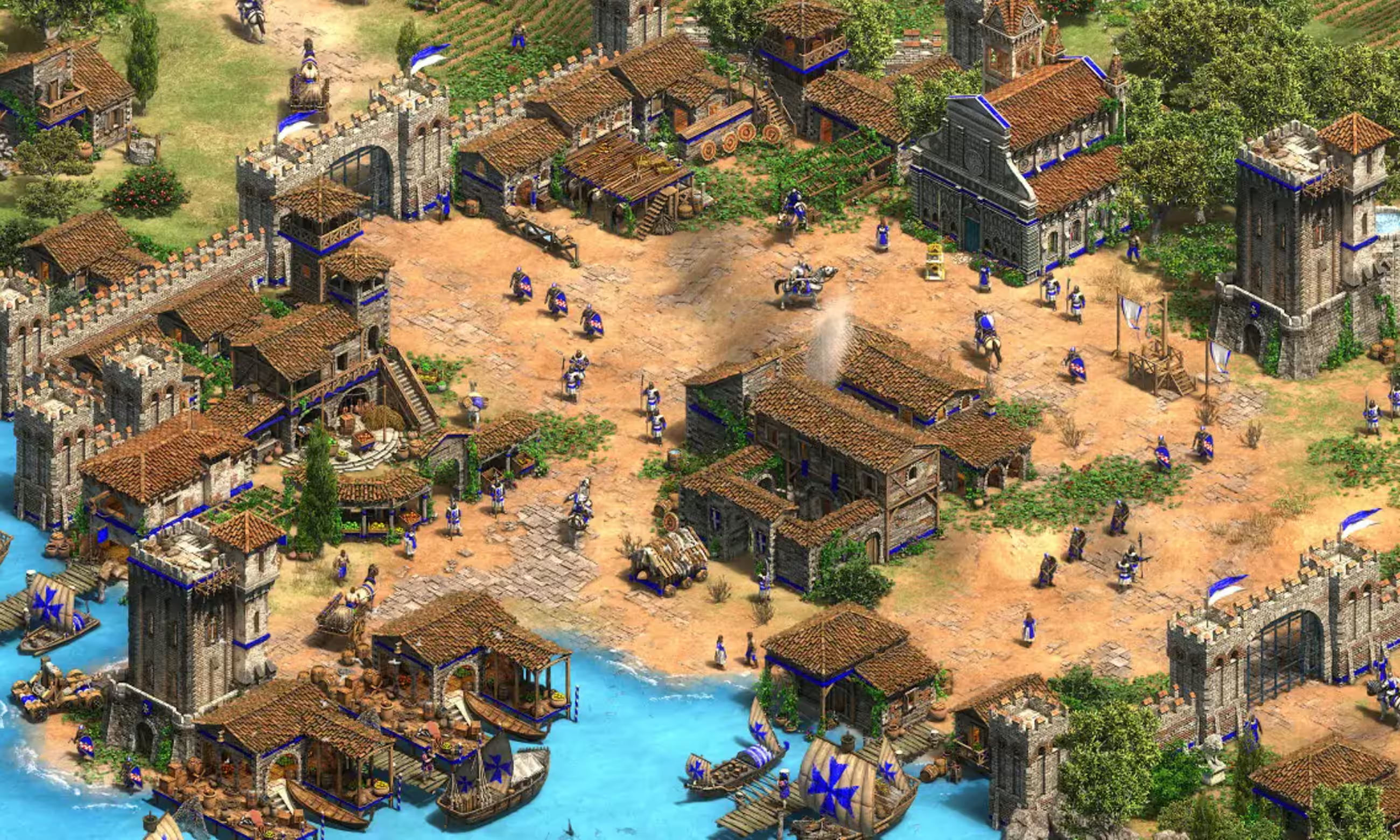
From how Shōgun exposes the brutal realities of colonization to how ‘Made in China’ became American gospel, here are this week’s top picks in imperial and global history.
Iona Ramsay and Maria Teresa Marangoni University of Exeter
The following lecture was given by Professor Alessandro Portelli during his recent trip to Exeter to take part in a PGR workshop on oral history. He was also interviewed by Professor Kate Fisher about his experiences of doing oral history.
Alessandro Portelli has taught American Literature at the University of Rome “La Sapienza”. He is the founder and president of the Circolo Gianni Bosio for the critical study of people’s cultures. He has served as advisor on historical memory to the Mayor of Rome (2005-2008). Among his books are The Order Has Been Carried Out. History, Memory and Meaning of a Nazi Massacre in Rome (2003); They Say in Harlan County: An Oral History (2011); Hard Rain. Bob Dylan, Oral Cultures and the Meaning of History (2017); and most recently, Dal rosso al nero. La svolta a destra di una città operaria (From Red to Black. The right-wing turn of a working-class town, 2022).
You must be logged in to post a comment.