

Marc-William Palen
History Department, University of Exeter
Follow on Twitter @MWPalen
Marc-William Palen
History Department, University of Exeter
Follow on Twitter @MWPalen

Earlier this month, experts from the University of Exeter shared their guidance and answered questions about how to develop a successful Ph.D. application in the Humanities. The video (below) is now available for viewing by anyone considering postgraduate study in the Humanities.
Themes covered in this video include:
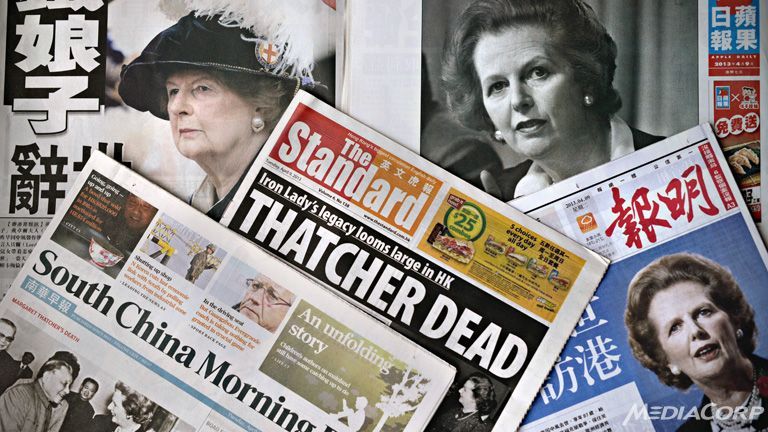
We say socialism tends to stand together throughout the world”, Margaret Thatcher said on American TV in 1977. “We must have what I call the freer way of life likewise standing together”. Margaret Thatcher’s World derives from the fact that no democratic leader has provoked so great an international reaction, and no political brand – defined in many often contradictory ways, but a recognisable brand nonetheless – has had such international salience as Thatcherism, both at the time and subsequently.
It is striking in public discourse in countries across the world, how often the person and the ‘ism’ is used and misused, revered and abused. Frequently the spectre (or specter) of Thatcherism is invoked; the term and the person has become an epithet of approbation or opprobrium. The project is an international history and a reception study which includes such aspects as policy networks and processes, rhetoric, gender, and ideology. So it was that Johannesburg’s Business Day described “the global implementation of Thatcherism”, Tehran’s Shargh felt “the majority of the countries of the world have put the Thatcherism movement in their agenda”, Toronto’s Financial Post that “Thatcher’s legacy lives far and wide”, and Santiago’s El Mercuria wrote of “the woman who transformed the UK and shocked the world”. The application of the term goes beyond Britain, and even the West: President Ershad of Bangladesh has referred to “third world Thatcherism”, and the Times of India to “Thatcherism of the Tigris”. As she said in Moscow in 1987, “[I]t is universally true, you know, Thatcherism”.
Dr. Martin Farr will be presenting his paper ‘Making Thatcher’s World’ this Wednesday at the Centre for Imperial & Global History’s seminar series. Continue reading “Making Thatcher’s World – A Talk by Martin Farr – This Wednesday at the University of Exeter”
Marc-William Palen
History Department, University of Exeter
Follow on Twitter @MWPalen
Stefan Piotrowski
Against the Current Productions
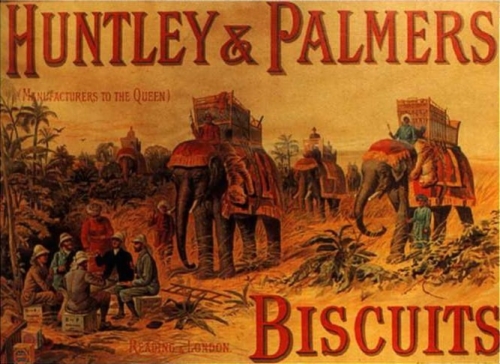
These six chapters were originally parts of a single film which sought to explore whether, during the nineteenth century, the Empire allowed Britons to transcend their other differences and embrace a shared sense of national identity. (The title of this three part series is Britishness: In Search of a National Identity – you can find part one Fragile Beginnings online) The preceding five chapters have laid the groundwork for the argument advanced in this final section, featuring Bernard Porter, John Mackenzie, Andrew Thompson, and Duncan Bell.
The subject of the film and the position I have taken in it have brought me into the middle of what has been an often quite heated debate. Rather than present a simple introduction here I have tried to sketch out the contours of this disagreement and my response to it. In very reductive terms, on one side of the argument there are historians who say that imperialism was a core ideology providing Britons with a shared worldview and sense of unique mission, and on the other side historians who say that it wasn’t. Continue reading “Ruling the Waves – Episode 6 – ‘An Imperial People?’”
Evan Smith
Flinders University
Follow on Twitter @Hatfulofhistory
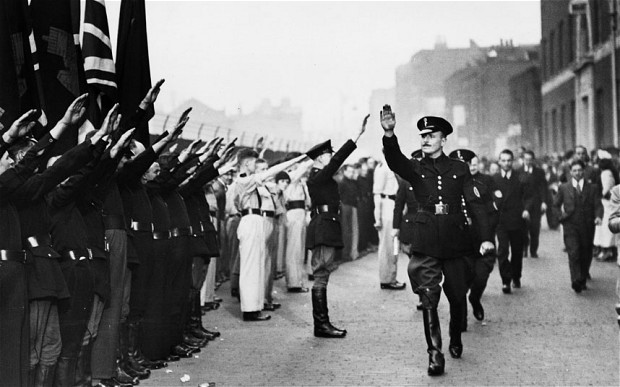
‘Our world mission is the maintenance and development of the heritage of Empire,’ the leader of the British Union of Fascists (BUF), Sir Oswald Mosley, declared in the BUF’s journal, Fascist Quarterly, in 1936.[1] Although often overlooked by scholars of British fascism, this pro-imperial sentiment was central to the ideology of the BUF. For the BUF, the maintenance of the British Empire was imperative – key to keeping Britain’s place within the world and ensuring living standards in the domestic sphere. Continue reading “Australia & the Fascist Idea of Greater Britain”
Marc-William Palen
History Department, University of Exeter
Follow on Twitter @MWPalen
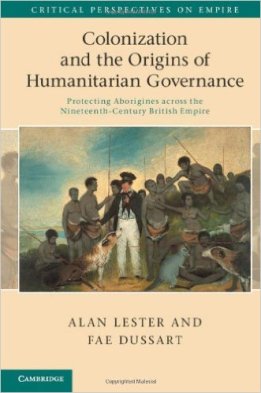
Alan Lester, Fae Dussart. Colonization and the Origins of Humanitarian Governance: Protecting Aborigines across the Nineteenth-Century British Empire. Cambridge: Cambridge University Press, 2014. x + 283pp. £65, US$99.00 (hardback), ISBN 9781107007833.
Reviewed by Richard Batten (University of Exeter)
Follow on Twitter @Richard_Batten
Through the early to mid-nineteenth century, the suffering of Aboriginal populations that resulted from violent settler colonization would provide the impetus for some individuals to endeavour to reconcile colonialism with ‘humanitarianism’. The endeavours that represented the project of ‘humane’ colonial governance towards indigenous peoples, like the Aborigines of Australia and the Māori of New Zealand, are the subject of this ambitious and important monograph. Published as part of the Cambridge University Press Critical Perspectives on Empire series, Colonization and the Origins of Humanitarian Governance explores how British colonial actors such as missionaries and governors attempted to reform colonial rule through the integration of ‘humanitarian’ aims into various colonial government initiatives. The authors, Alan Lester and Fae Dussart, suggest that humanitarian governance – the administration and regulation of colonial societies through a range of ‘humane’ approaches – became a key imperative in the mission to spread ‘Civilization’ across the British Empire. Continue reading “Colonization and the Origins of Humanitarian Governance”

Gareth Curless
University of Exeter
Follow on Twitter @IGHN_Exeter
 The Imperial and Global History Network’s second conference will take place at the University of Exeter in June 2016. The theme of the conference will be ‘Empire and Humanitarianism’ and we’re delighted to announce that Professor Matthew Hilton (University of Birmingham) and Dr Emily Baughan (University of Bristol) will be delivering the keynote lectures.
As with our first conference in 2014, we’re particularly keen to have submissions from PhD students and early career researchers but proposals from more established historians are welcome too. A selection of papers from the first conference are scheduled to appear in the Journal of World History in 2016 and we anticipate that our second conference will result in a special issue or edited collection. Continue reading “CFP: Empire and Humanitarianism, 13 and 14 June 2016, The University of Exeter”
Marc-William Palen
History Department, University of Exeter
Follow on Twitter @MWPalen
Continue reading “This Week’s Top Picks in Imperial & Global History”
The organizing committee for the Harvard Graduate Student Conference on International History (Con-IH) invites graduate students to submit proposals for its sixteenth annual conference. This year’s theme is the economic dimension in international and global history. The conference will take place at Harvard University in Cambridge, Massachusetts on Thursday March 10 & Friday March 11, 2016.
Financial, economic and political-economy issues have played a fundamental role in world development and continue to do so. They involve multiple agents besides the nation state; they prompt refined policy analysis; and they challenge historians to turn to the broadest range of sources and demand interdisciplinary analysis. Con-IH 16 seeks to discuss cutting-edge studies that take up the dimensions of economics in international, regional, and global historical study, for any era from Antiquity to the present, and proceeding outward from any world region.
We especially welcome submissions that address one or more of the following themes, but the list is suggestive only: Continue reading “CFP: CON-IH 16 || Global and International History: The Economic Dimension”

Stefan Piotrowski
Against the Current Productions
Historians – filmmakers, too – should always be careful about sweeping all particulars into a grand overarching narrative. Attitudes to race are a case in point. They are always complex, at both an individual and a societal level, but there does seem to be evidence from the historical record that over the course of the nineteenth century there is what we might describe as a hardening of opinions over questions of race.
At just over 10 minutes long, this episode cannot do justice to the complexity of the subject or the tremendous amount of research on the subject. In this introduction, I wanted to raise some points that hadn’t been properly addressed in the film or had only been touched on briefly. For that reason you may want watch it first and then read what I have written below. Continue reading “Ruling the Waves – Episode 5 – ‘The White Man’s Burden’”
Alvaro Cuenca
Montevideo, Uruguay
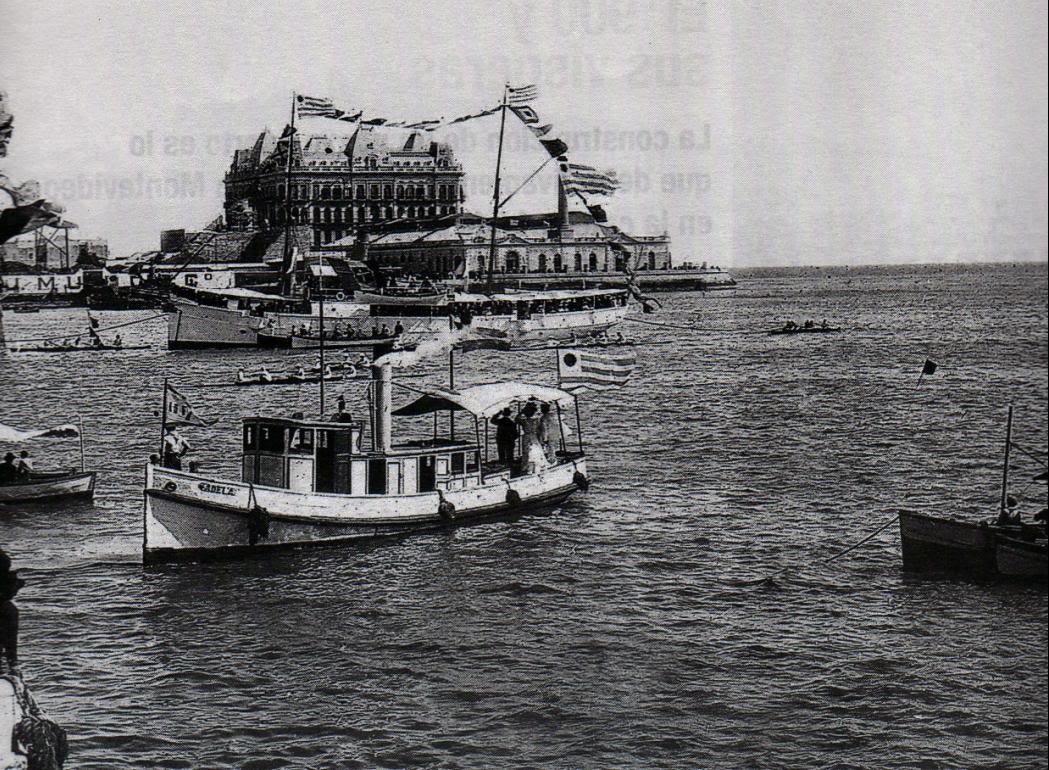
Greece’s potential financial downfall and semi-colonial economic status monopolized the news this summer. Much ink has been spilled on the apocalyptic consequences the crisis might yet hold for European Union finances and for the global monetary system. However, much less is known of a similar situation that happened more than a hundred years before in Uruguay, the effects of which would also reverberate across the Atlantic to shake the very foundations of the global financial world. Continue reading “How Uruguay Helped Spark a Global Financial Crisis in 1890”

Marc-William Palen
History Department, University of Exeter
Follow on Twitter @MWPalen
From inside Iran’s revolutionary courts to today’s secret Scramble for Africa, here are this week’s top picks in imperial and global history. Continue reading “This Week’s Top Picks in Imperial & Global History”
Stefan Piotrowski
Against the Current Productions
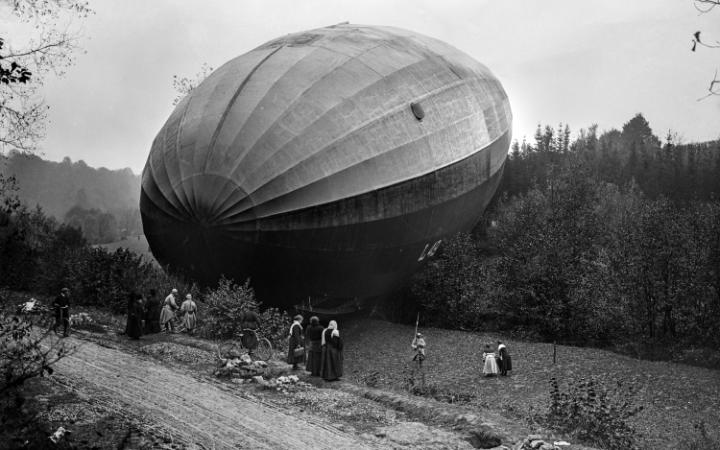
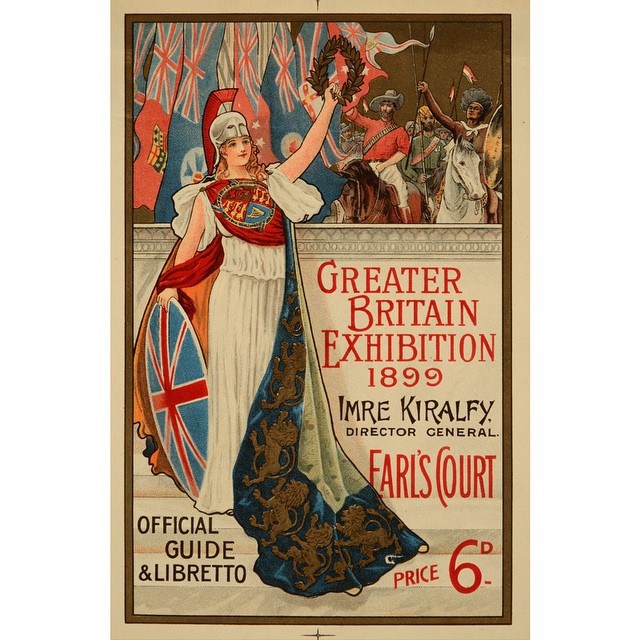
Communications technologies have played a sizable role in the shaping of political communities – national and otherwise. Not only had the invention of the telegraph brought about an immediacy in communication with far flung parts of the globe, this so-called collapse of space and time had also – in some minds – opened up the possibility for the creation of a new trans-national British state. By the second half of the nineteenth century, individuals within Britain’s political elite had begun to try to come to terms with the Empire as some kind of conceptual whole.
These technological developments were accompanied by a more general shifting of attitudes towards Britain’s settler colonies. Whereas in the first half of the century these lands had been seen as places for criminals, the disgraced or destitute, from the 1850s and 60s they increasingly came to be seen in a more positive light, as extensions of a clearly superior British civilisation or even as better versions of a tired and degenerate motherland.
This second view of the settlement colonies – as places of improvement and transformation – captured the imaginations of those on both left and right. To socialists the development of democratic ideals in the southern hemisphere had the potential to renew Britain’s hierarchical and profoundly unequal political system. To conservatives the Empire could act as a safety value for industrial discontent and associated radicalism – emigration could transform an urban underclass into property owning settlers. Continue reading “Ruling the Waves – Episode 4 – ‘Greater Britain’”
 Imperial & Global Forum
You must be logged in to post a comment.