Dockter on Thomas and Toye, ‘Arguing about Empire: Imperial Rhetoric in Britain and France, 1882-1956’

Authors: Martin Thomas, Richard Toye

Reviewer: Warren Dockter

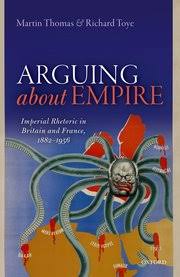
Martin Thomas, Richard Toye. Arguing about Empire: Imperial Rhetoric in Britain and France, 1882-1956. Oxford: Oxford University Press, 2017. 320 pp. $55.00 (cloth), ISBN 978-0-19-874919-6.Reviewed by Warren Dockter (Aberystwyth University)
Published on H-Diplo (November, 2017)
Commissioned by Seth OffenbachPrintable Version: http://www.h-net.org/reviews/showpdf.php?id=49706“A Silent, Rankling Grudge”

In the autumn issue of Nineteenth Century Review in 1877, W. E. Gladstone wrote an article on legacy of the British Empire and the Eastern Question entitled, “Aggression on Egypt and Freedom in the East.” In addition to supporting notions of self-rule in Egypt, Gladstone warned of the perils of imperial interventions, arguing, “My belief is that the day which witnesses our occupation of Egypt will bid a long farewell to all cordiality of political relations between France and England. There might be no immediate quarrel, no exterior manifestation, but a silent, rankling grudge” (p. 19). These words proved so prophetic that political radical Wilfred Scawen Blunt employed Gladstone’s rhetoric against him in his work The Secret History of the English Occupation of Egypt (1907), writing that “this article is so remarkable and so wonderfully prescient of evils he was himself destined to inflict upon Egypt that it deserves quoting” (p. 57). This exchange serves to illustrate the fluid nature of imperial rhetoric and the discursive relationship which formed between the British and French Empires.

Martin Thomas and Richard Toye have written a remarkably ambitious and excellent study which examines the intersections of imperial rhetoric between the French and British Empires during the late nineteenth and twentieth centuries. The book is based on seven case studies that focus on moments of imperial  intervention in which both the French and Britain played an equal part, ranging from Tunisia and Egypt in the early 1880s through to Suez in 1956. This breadth allows the reader to see the evolution of imperial rhetoric in Britain and France while illustrating how policymakers in their respective metropoles became intrinsically linked, forcing them toward “co-imperialism.” This is particularly true regarding the Middle East and North Africa, where the British and French Empires remained in concert from nineteenth century until the realities of full-scale decolonization became apparent in latter half of the twentieth century. Continue reading “Dockter on Thomas and Toye, ‘Arguing about Empire: Imperial Rhetoric in Britain and France, 1882-1956’”

This Week’s Top Picks in Imperial & Global History

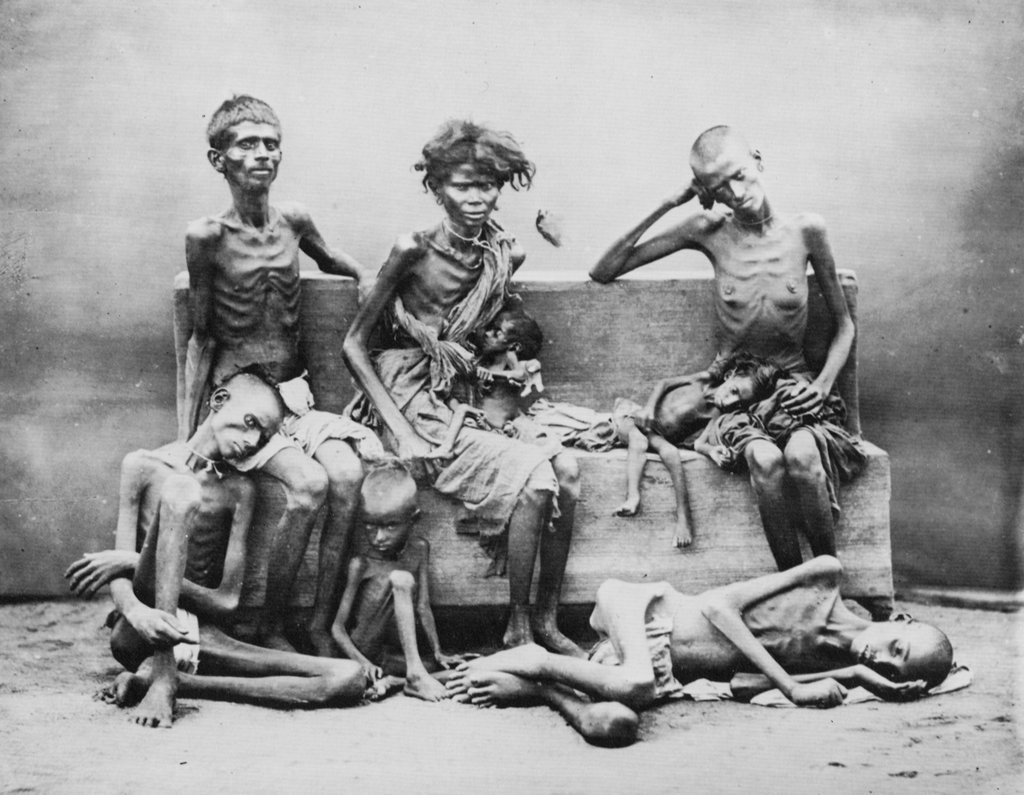
Inmates of a relief camp in Madras (during the famine of 1876-1878), by Willoughby Wallace Hooper. Image credit: Wikimedia Commons

Marc-William Palen
History Department, University of Exeter
Follow on Twitter @MWPalen

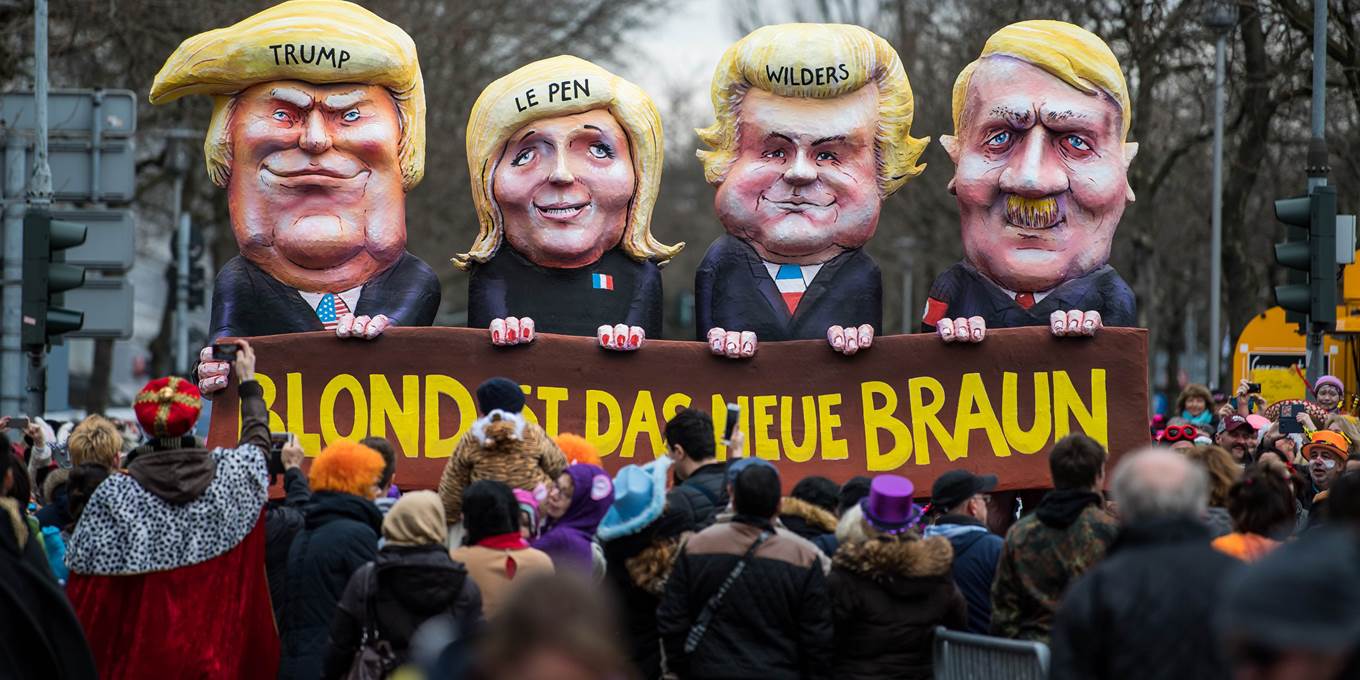
From memorializing Britain’s colonial crimes to the end of “Western civilization,” here are this week’s top picks in imperial and global history. Continue reading “This Week’s Top Picks in Imperial & Global History”

Crafting your PhD proposal: Routes to originality in historical research

PhD funding opportunities & introducing the new Exeter History MA by Research degree

Interested in advanced studies in imperial and global history at the University of Exeter?

Please find a list of a variety of PhD funding opportunities below, as well as information about our new MA by research degree.

PhD funding

AHRC South West and Wales Doctoral Training Partnership  Closing date for applications – 11 January 2018.

Up to 60 scholarships available across the consortium in all subject areas. Please remember that students will for preference be supervised across two institutions within the DTP, unless there is a compelling reason to be located at one institution (the DTP = Exeter, Bristol, Reading, Bath, Bath Spa, Cardiff, Aberystwyth, and Southampton).

ESRC South West Doctoral Training Partnership – +3 or 1+3 Doctoral Studentship – Economic and Social History (including projects with quantitative or strongly social science methodologies). Closing deadline – noon on 30 January 2018.

Wellcome Doctoral Studentships, covering Medical History. These awards are open to Home, EU or International students. The deadline for applications is the 29 March 2018 but applicants require departmental support to apply  so please contact s.hynd@exeter.ac.uk about applying before February 2018.

Further information about funding for students from particular countries and the University’s Sanctuary Scholarship for refugees and individuals seeking asylum can be found here:  https://humanities.exeter.ac.uk/graduateschool/funding/

new MA by Research degree

Also, to complement our taught MA in History degree programme, the History Department is now offering a new MA by Research (Streatham), which is now open for applications to start study in January 2018.  This joins the pre-existing MA by Research in History (Penryn).

The MA by Research is examined by a 40,000-word written dissertation based on original research. Following University guidance and student loan regulations, the MA by Research is now accredited as a 2 year degree (3 years part-time) but students can submit earlier  (i.e. do it as a one year degree). The programme can be pursued part-time and by distance-learning.

It is intended both as a degree in its own right, and can also act as a progression route for transfer onto the MPhil/PhD programme for students who make strong progress in the first six months and wish to pursue a PhD. Continue reading “PhD funding opportunities & introducing the new Exeter History MA by Research degree”

This Week’s Top Picks in Imperial & Global History

Marc-William Palen
History Department, University of Exeter
Follow on Twitter @MWPalen

From technoglobalism and its discontents to uncovering 21st-century slave auctions, here are this week’s top picks in imperial and global history. Continue reading “This Week’s Top Picks in Imperial & Global History”

James Mark Discusses ‘Red Globalization’ on BBC Radio 4

In case you missed it last week, the Centre for Imperial and Global History’s  Professor James Mark was on BBC Radio 4 discussing ‘Red’ globalization:

Marxism – Laurie Taylor talks to David Harvey, Professor of Anthropology at CUNY and world authority on Marx’s thought. His latest book explores the architecture of capital & insists that Marx’s original analysis of our economic system still resonates today. They’re joined by Jonathan Sperber, Professor of History at the University of Missouri. He insists that Marx was a 19th century figures who ideas have run their course. Also, ‘red’ globalisation. James Mark, Professor of History at the University of Exeter, tells a little known story about the way in which anti capitalist ideas once circulated the globe. [Listen to the programme]

CFP Reminder – Britain & the World Conference 2018, Exeter – Deadline 15 Dec. #BATW2018

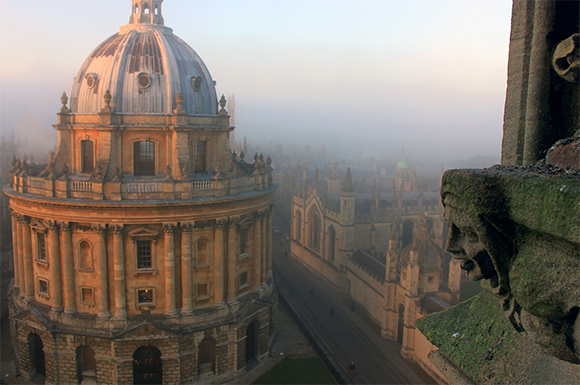
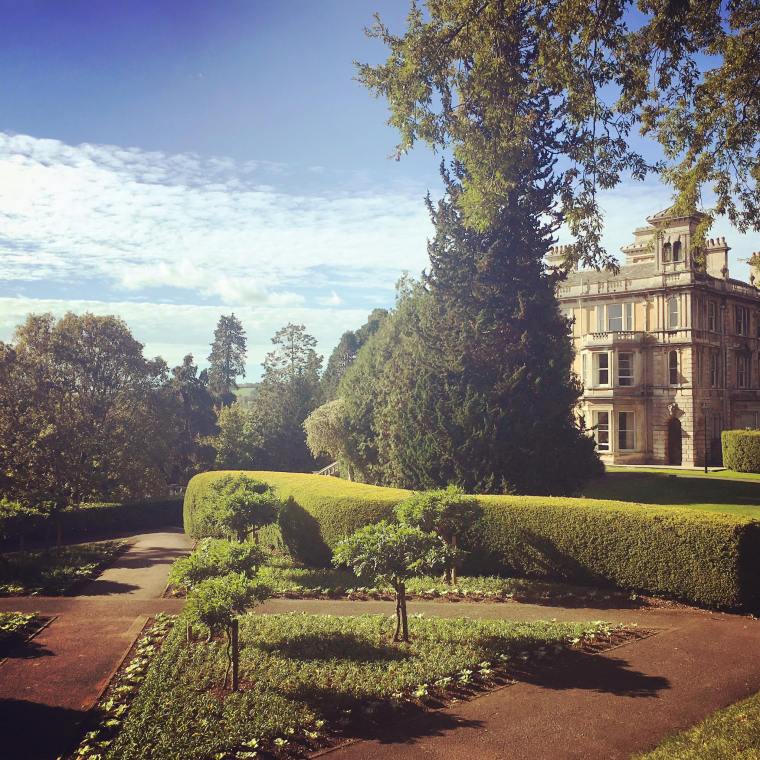
Reed Hall
Reed Hall, University of Exeter, where the 2018 conference will be held.

A reminder that the deadline for the Call for Papers for the 2018 Britain and the World Conference, Exeter is 15 December.

After our tenth anniversary conference in Austin in April 2017, Britain and the World returns to the UK for 2018: Thursday 21 to Saturday 23 June. It will be at Exeter University: the venue is Reed Hall and accommodation is at the neighbouring Holland Hall, and, as always, the conference is concerned with interactions within the ‘British world’ from the beginning of the seventeenth century to the present and will highlight the importance of transnational perspectives.

The Keynote Speaker will be Professor Richard Overy (Exeter), and the Plenary Speaker is Professor Audrey Horning (Queen’s University Belfast). There’ll be lunchtime roundtables on cinema and history, and on public history. Publishers present will include our journal publisher Edinburgh University Press, and our book series publisher Palgrave Macmillan, and the commissioning editor will be present throughout to discuss your publishing plans.

We accept both individual twenty-minute papers and complete panel submissions. Panels are expected to consist of three papers and should be submitted by one person who is willing to serve as the point of contact. Complete panels should also include a chair. In addition to abstracts for each individual paper, panel submissions should also include a 100-150 word introduction describing the panel’s main theme. The conference does not discriminate between panels and individual paper submissions, nor between graduate students and established academics.

As ever the conference icebreaker will be held on the Thursday evening, the Dinner Party on the Friday, and the outings downtown on the Saturday. These events will provide numerous opportunities for networking and more in the capital of Devon. Continue reading “CFP Reminder – Britain & the World Conference 2018, Exeter – Deadline 15 Dec. #BATW2018”

This Week’s Top Picks in Imperial & Global History

Marc-William Palen
History Department, University of Exeter
Follow on Twitter @MWPalen

From how First World War colonial violence came home to what if the Soviet Union hadn’t collapsed, here are this week’s top picks in imperial and global history. Continue reading “This Week’s Top Picks in Imperial & Global History”

Enclaves of Science, Outposts of Empire

Megan Raby
University of Texas at Austin

Cross-posted from Not Even Past 

At the end of 1960, near Cienfuegos, Cuba, on the Soledad estate of a U.S.-owned sugar company, the American Director and Cuban staff of Harvard’s Atkins Institution began packing up their scientific equipment. The Cuban Revolution had caught up with them. Director Ian Duncan Clement, his wife, Vivian, and lab technician Esperanza Vega worked quickly to put the station’s herbarium, library, and lab “in stand-by condition.” The station’s horticulturalist, Felipe Gonzalez, and his assistants pruned the trees in the station’s arboretum, preparing them “to withstand a period of neglect.”

The Atkins Institution had operated as an important field research station for visiting botanists and zoologists since shortly after the 1898 Spanish American War. It had survived difficult times in the past––hurricanes, economic depression, and the Revolution of 1933. Despite the escalation of Fidel Castro’s insurgency, Harvard held its Biology field course there as usual in the summer of 1958. The station remained unscathed even as the front lines of the revolution passed over its grounds later that year. Only when the Soledad estate was nationalized and diplomatic relations between the United States and Cuba disintegrated were the Clements and staff members Vega and Gonzalez forced to leave. They expected to return soon. Continue reading “Enclaves of Science, Outposts of Empire”

This Week’s Top Picks in Imperial & Global History

Some members of India’s ruling Hindu rightwing party claim the Taj Mahal does not reflect Indian culture.
Photograph: Pawan Sharma/AP

Marc-William Palen
History Department, University of Exeter
Follow on Twitter @MWPalen

From erasing the Mughals from Indian history to the 70th birthday of the foundation stone of global commerce, here are this week’s top picks in imperial and global history. Continue reading “This Week’s Top Picks in Imperial & Global History”

PGR Open Day – 15 November

For those considering postgraduate studies in imperial and global history at the University of Exeter, the Doctoral College is organizing an Open Day on the Streatham Campus on 15 November from 12.45-6.30pm for both PGT and PGR students. The Open Day includes talks on funding for both Masters and PhD students, Exeter’s PGR research environment and facilities, meeting departmental staff, and a drinks reception.

Prospective applicants can find further information and can sign up for the Open Day here.

This Week’s Top Picks in Imperial & Global History

The Eldorado club in Berlin was one of the many popular clubs for ‘homosexuals and transvestites’ visiting the city in the 1920s and early 30s. (c) Germany Federal Republic Archives

Marc-William Palen
History Department, University of Exeter
Follow on Twitter @MWPalen

From the Hollywood Nazi who spied for America to the myth of the spitting anti-war protester, here are this week’s top picks in imperial and global history. Continue reading “This Week’s Top Picks in Imperial & Global History”

Exeter unveils its new £1.2 million Digital Humanities Lab

This past week, we’ve had some exciting new developments for the study of imperial and global history at the University of Exeter. Introducing the new Digital Humanities lab!

The University of Exeter’s new £1.2m Digital Humanities lab opened this week.  The lab will allow researchers to use high-tech equipment to find out more about our cultural heritage and creative past and share their discoveries with the public. The new facilities confirm the University of Exeter’s position at the forefront of international research into historical and cultural artefacts. Continue reading “Exeter unveils its new £1.2 million Digital Humanities Lab”

Rethinking American Grand Strategy in the Asia Pacific

By More than Providence: Grand Strategy and American Power in the Asia Pacific Since 1783. By Michael J. Green. Illustrated. 725 pp. Columbia University Press. $45.

Reviewed by Jonathan R. Hunt (University of Southampton)
Follow on Twitter @JRHunTx

Otto von Bismarck once remarked that the United States was blessed: “The Americans are truly a lucky people. They are bordered to the north and south by weak neighbours and to the east and west by fish.” Thanks to this geographic grace, George Washington could call for freedom from “entangling alliances” in his farewell address. This distance has also bred a strong undercurrent of parochialism and chauvinism in American culture. From these two impulses has emerged the conceptual DNA of American foreign relations in the form of two dichotomies—exemplarism versus interventionism; cosmopolitanism versus exceptionalism—lending form and structure to debates about how a democratic people should manage their affairs in an often unkind, even hostile, world.

In his sweeping and authoritative account of United States grand strategy in the Asia Pacific, Michael J. Green reminds us that Americans have long regarded this maritime expanse – from the Aleutians to Cape Horn in the Western Hemisphere across to Australasia and Sakhalin in the Eastern — as integral to defending their ‘empire of liberty’. Nineteenth-century policymakers from Thomas Jefferson and Matthew C. Perry to Henry Seward and John Hay sought to pry open these watery frontiers to American influence (and conquest) so as to stave off any threats that might overleap the Pacific Ocean. Their twentieth-century successors, Alfred Thayer Mahan and Teddy Roosevelt, George Marshall and Franklin Roosevelt, Dean Acheson and Harry Truman, Henry Kissinger and Richard Nixon, George Shultz and Ronald Reagan, Hillary Clinton and Barack Obama, among others, have fought to keep the Pacific an American lake – for now. Continue reading “Rethinking American Grand Strategy in the Asia Pacific”

This Week’s Top Picks in Imperial & Global History

Claudia Jones

Marc-William Palen
History Department, University of Exeter
Follow on Twitter @MWPalen

From how colonial borders still influence the way academics study Africa to the transnational activism of Claudia Jones, here are this week’s top picks in imperial and global history. Continue reading “This Week’s Top Picks in Imperial & Global History”