Marc-William Palen History Department, University of Exeter
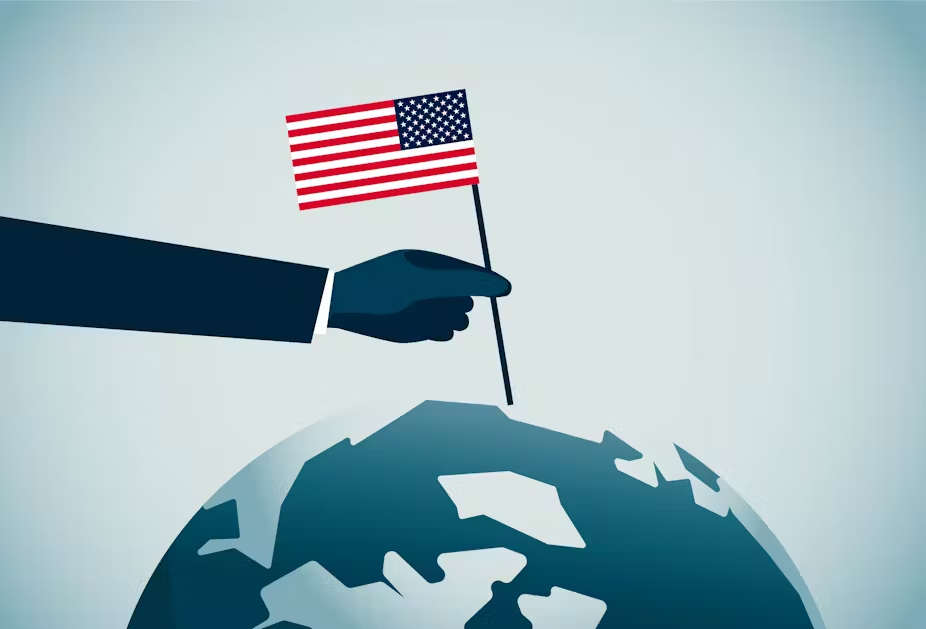
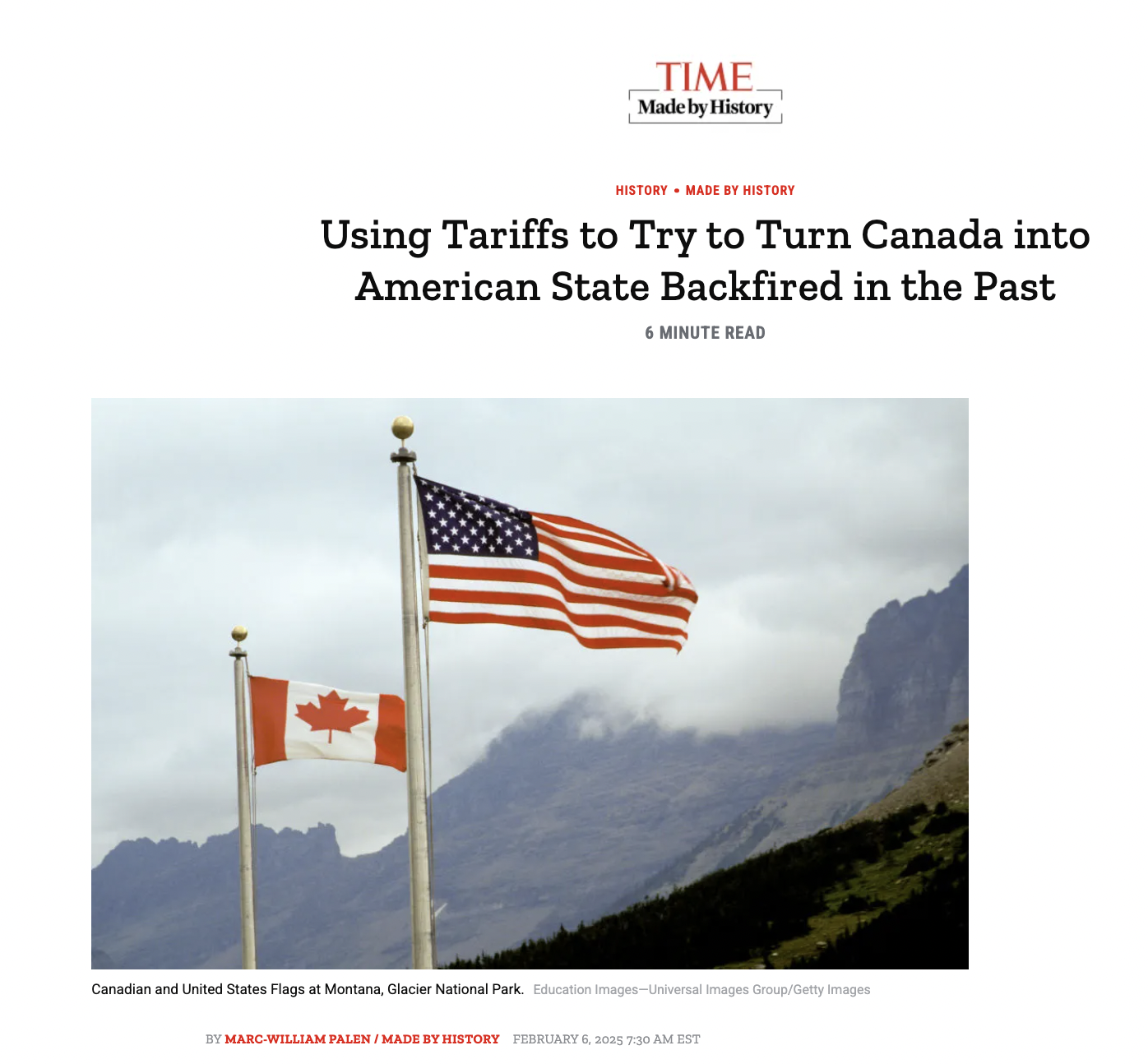
“Tariff Man” Trump continues to tear up the trading system while also making imperial demands for territorial expansion. To just about everyone’s surprise, his grand colonial scheme to “make America great again” now includes making Canada the 51st state – and using the threat of punitive tariffs to get what he wants.
Some, like the Washington Post‘s Max Boot, have been making the case that Trump’s coercive use of tariffs to obtain concessions “unrelated to trade” is “novel.”
But though Trump often cites 19th-century pro-tariff President William McKinley as his inspiration, Trump is using tariffs quite differently from the way that most other U.S. presidents — or other world leaders — have used them. Typically, tariffs are enacted either to raise revenue or to protect domestic industries from foreign competition. Trump, by contrast, is using tariffs as a coercive instrument of statecraft to achieve aims that are unrelated to trade.
Boot’s piece raises good points of comparison, including parallels with Chinese economic coercion today. And I agree that the results of Trump’s tariffs will likely be a net negative for the United States.
But I disagree that Trump’s coercive use of tariffs is new; rather, it’s straight out of the GOP’s old protectionist playbook.
Dr Chris Sandal-Wilson Co-Director, CIGH, University of Exeter
Hello, I’m Dr Chris Sandal-Wilson, Co-Director of the Centre for Imperial and Global History alongside Dr Rebecca Williams. I’m a historian of medicine and particularly psychiatry, though I also teach and research the histories of British colonialism, the modern Middle East, and sexuality – and welcome opportunities to connect with students and scholars across these fields.
These interests were brought together in my first book, Mandatory Madness: Colonial Psychiatry and Mental Illness in British Mandate Palestine, which was published at the end of 2023 by Cambridge University Press. In the book, I was able to bring to light a rich but overlooked seam of archival material and sources in Arabic, Hebrew, and English, and provide a new perspective on how questions around mental illness mattered not simply in clinical spaces but in the courtroom, the prison, the census, and ultimately in the context of crisis and collapse, too. And I was honoured that my book was shortlisted and awarded an Honourable Mention for the biennial British Society for the History of Science 2024 Pickstone Prize, recognising outstanding books on the history of science, technology, and medicine.
The co-directors of Exeter’s Centre for Imperial and Global History (CIGH), Dr. Chris Sandal-Wilson and Dr. Rebecca Williams are really excited to begin a new term of CIGH seminars.
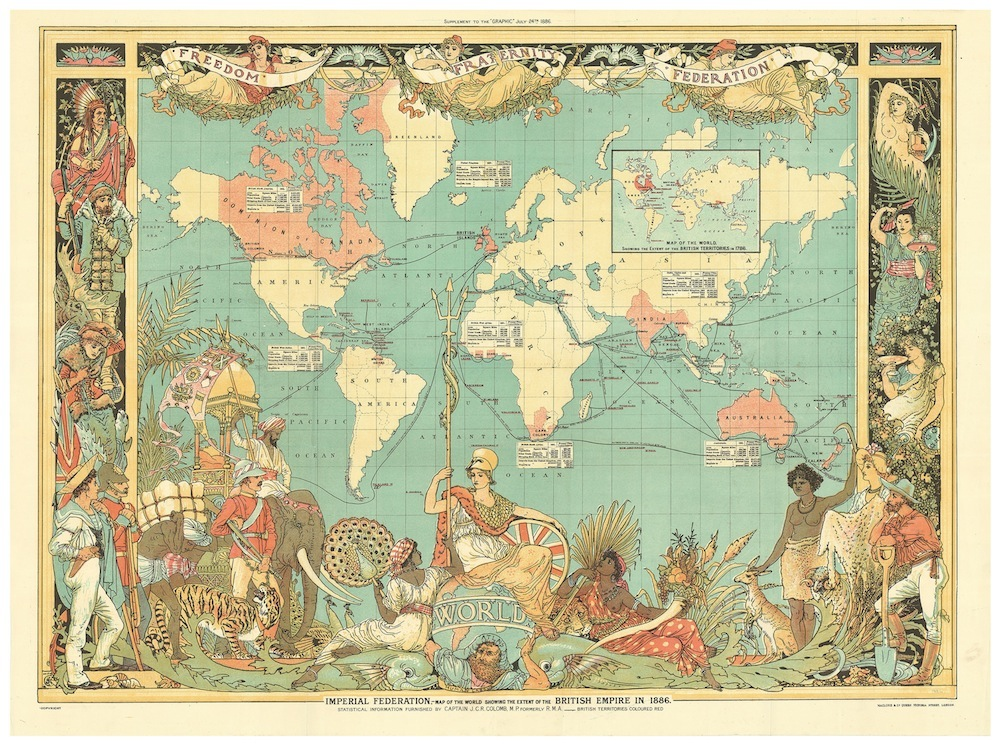
This post explores the significance of the fact that the decline of the phrase “Imperial Federation” in British imperial discourse coincided with its replacement by the term “British Commonwealth.”
The concept of Imperial Federation was a political idea that gained public attention in the 1870s and evolved into a political movement following the establishment of the Imperial Federation League in 1884. The movement sought to unify the empire in a federal structure and counteract tendencies toward separation.
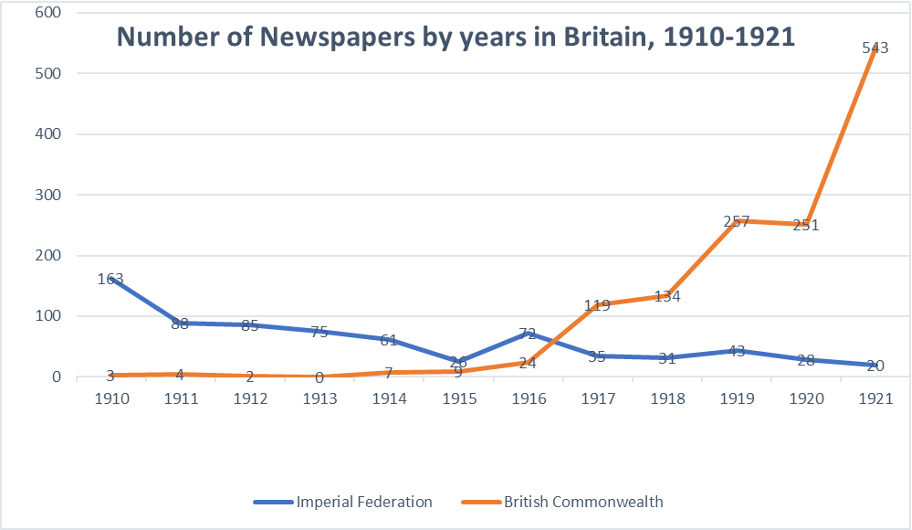
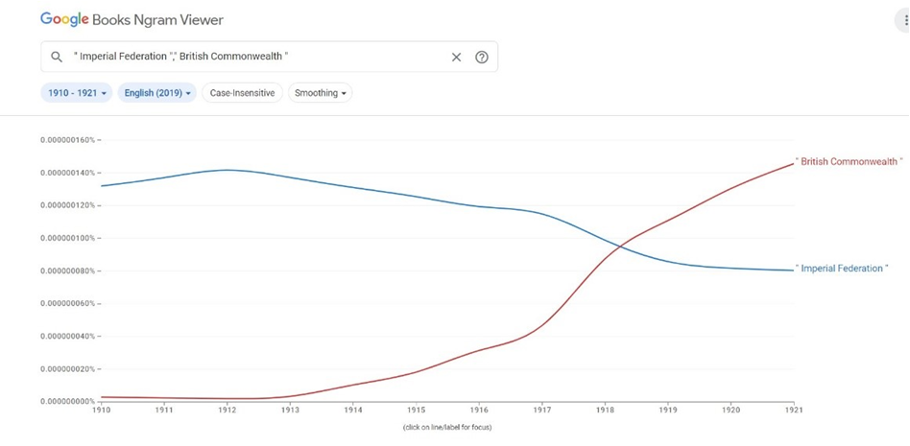
An analysis of newspapers from 1910 to 1921, conducted using the Gale Primary Sources database, reveals that the term “British Commonwealth” was rarely used in the context of the empire before 1916. In contrast, the term “Imperial Federation” saw a marked decline in usage after 1910, showing an inverse relationship with the rise of “British Commonwealth.” This trend is clearly observable in both the Gale Primary Sources database and Google Books Ngram.
Consequently, a hypothesis emerges that the term “Imperial Federation” was gradually supplanted by “British Commonwealth,” a shift largely attributed to changes in the perception of the empire following the First World War.
Gale Primary Sources database
Google Books Ngram
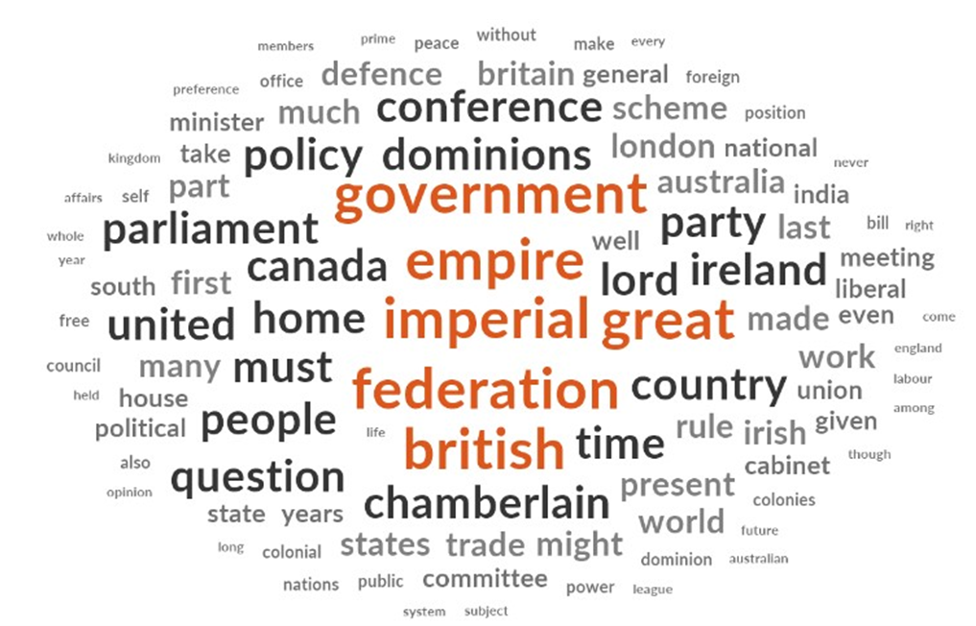
A word frequency analysis from 1910 to 1921 reveals that the terms “imperial parliament,” “Dominions,” and “Ireland” appeared frequently during this period. This suggests that the decline in the rhetoric of Imperial Federation was largely driven by opposition from the Dominions and Ireland to the concept of an “imperial parliament”.
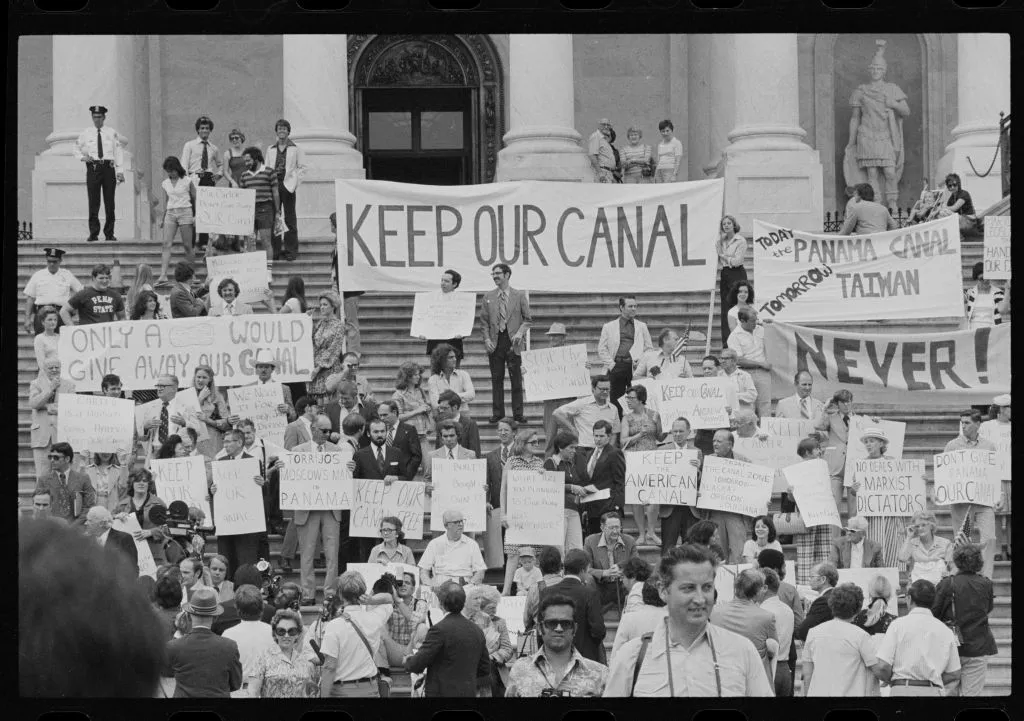
Demonstrators protesting a treaty to return control of the Panama Canal to Panama, U.S. Capitol building, Washington, D.C, Sept. 7, 1977. Warren K Leffler—US News & World Report Magazine Collection/PhotoQuest/Getty Images
Rebecca Williams Co-Director, CIGH, University of Exeter
Hello, I’m Dr. Rebecca Williams, Co-Director of the Centre for Imperial and Global History here at Exeter. I’m delighted to connect with scholars who are passionate about exploring the complex histories of medicine, health, and international development. My research focuses primarily on the history of health and medicine, particularly surrounding population, reproduction, and women’s health in modern South Asia, as well as the broader historical frameworks of international development that touch upon health, environmental concerns, and democracy.
Currently, I’m engaged in two significant research projects that shed light on these themes. My first project, which will result in a monograph tentatively titled Controlling Population, examines how India became the world’s test-case for state-led population control after independence. Through the Khanna Study—a pivotal family planning experiment in 1950s-60s Punjab—I explore why India became a laboratory for both transnational organizations and the Indian government’s ambitions in population control.
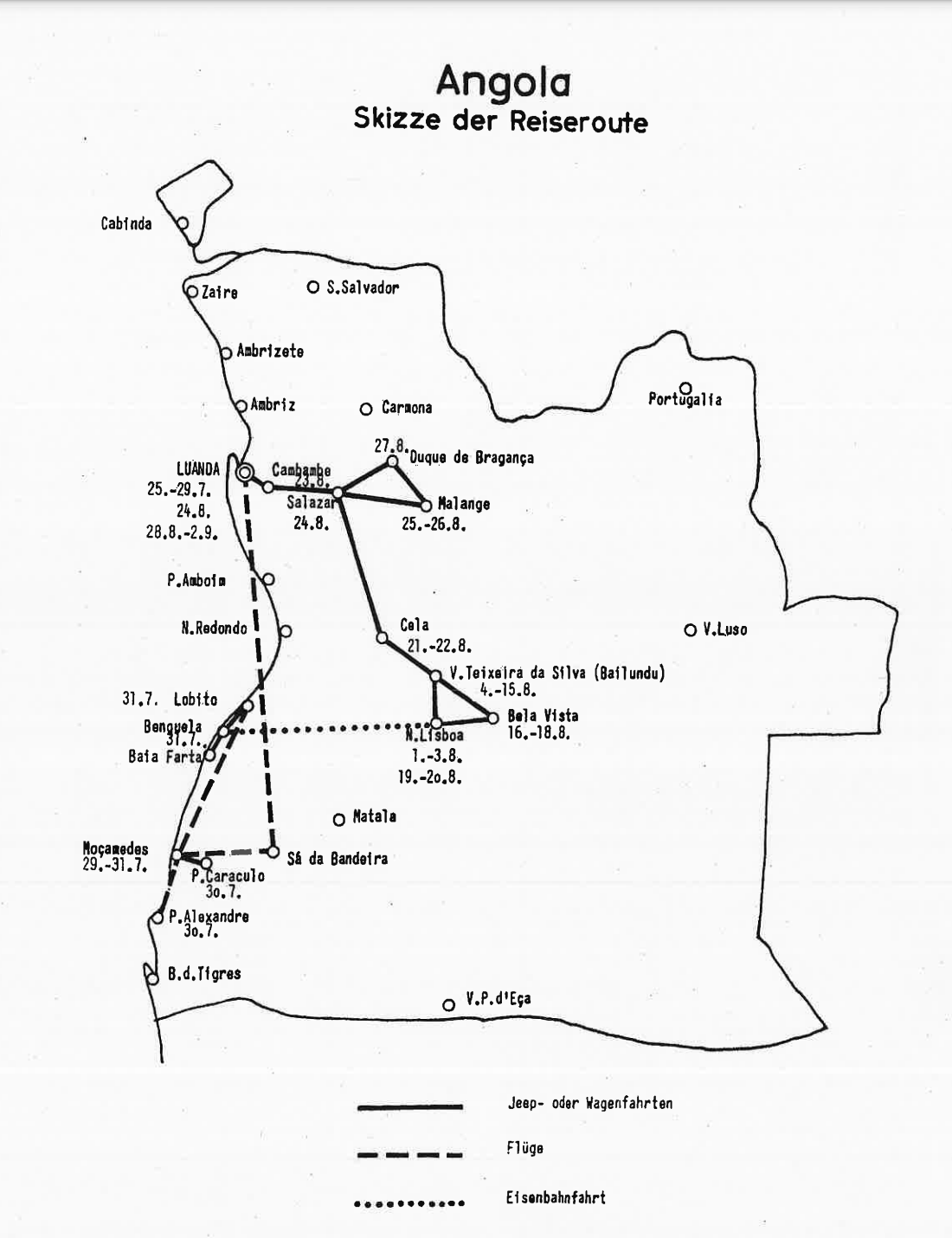
Exploring new avenues for cooperation between the German Institute for Economic Research (ifo) and the Portuguese colonial state: Pössinger’s travel route through Angola, 1963.
Andreas Stucki University of Bern
Nearly eighty years after World War II, research into the connections between Nazism, colonialism, and international development remains an underexplored area despite considerable scholarship on the complex history of development after 1945. Continued involvement of colonial development experts and bureaucrats in African late colonial states highlights how German practitioners with Nazi ties moved into new roles in imperial and international development after the Second World War.
This begs the question: to what extent might Nazi ideologies and practices have shaped postwar global development efforts?
Interested in pursuing a PhD in Archaeology or History at the University of Exeter?
Then be sure to check out these new funding opportunities and free masterclasses for writing a strong proposal.
AHRC South, West and Wales Doctoral Training Partnership (SWWDTP)
This is for projects that fall within the Arts and Humanities, so appropriate for any student wanting to do a PhD in Archaeology or History
They are advertising up to 39 studentships this year: this includes up to 35 student-led and up to 4 Collaborative Doctoral Awards.
Students are expected to apply with supervisors drawn from two separate participating institutions (the other institutions are: Aberystwyth, Amgueddfa Cymru (National Museums Wales), Bath Spa, Bristol, Cardiff, Cranfield, Reading, Southampton, UWE). Any single-institution supervisions must be strongly justified and made clear that there are no reasonable alternatives within the DTP.
Applications will open on 25 November 2024 and close on20 January 2025.
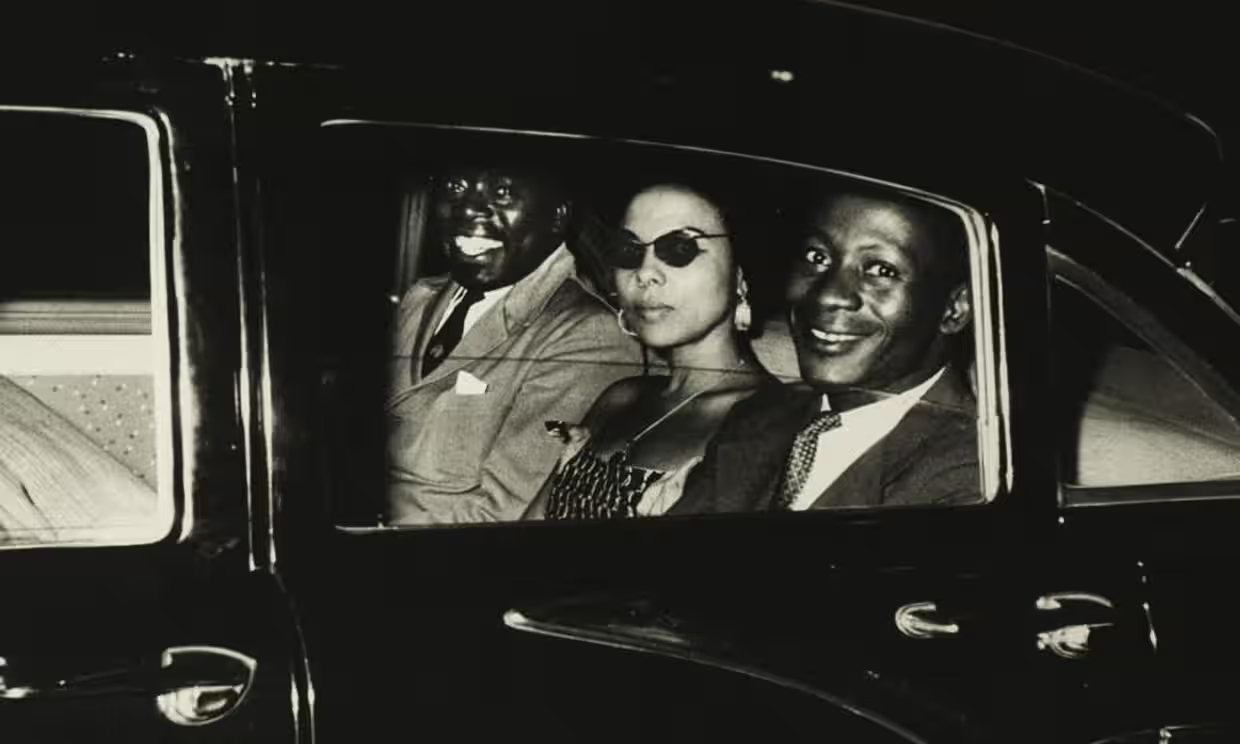
‘Warrants a whole other documentary’: Patrice Lumumba’s adviser and speechwriter,Andrée Blouin, centre, from Soundtrack to a Coup d’Etat. Photograph: Modern Films
I recently watched a great documentary on Channel 4, called ‘The Soldiers that Saved Britain’, made by British journalist Mobeen Azhar.
Mobeen went on a mission to uncover his grandfather’s experience in the Second World War, visiting battlegrounds and archives.
It was fascinating to see his personal journey, struggling with the conundrum of why his grandfather volunteered to serve the colonial power.
As one of the advisors for the programme, I was glad that my research has helped to publicize the South Asian contribution and help people Mobeen to find the truth.
I am left with a big question: how many are there like Mobeen in the world?
From a complicated history of slavery and resistance to the True Chronicles of the Blida Joinville Psychiatric Hospital, here are this week’s top picks in imperial and global history.
This course focuses on the growing interdisciplinary field of Linguistic Landscapes (LL), which traditionally analyses “language of public road signs, advertising billboards, street names, place names, commercial shop signs, and public signs on government buildings”, as they usually occur in urban spaces.
More recently, LL research has evolved beyond studying only verbal signs into the realm of semiotics, thus extending the analytical scope into the multimodal domain of images, sounds, drawings, movements, visuals, graffiti, tattoos, colours, smells as well as people.
Students will be informed about multiple aspects of modern LL research including an overview of different types of signs, their formal features as well as their functions.
Faculty
Kurt Feyaerts, KU Leuven (Coordinator) Richard Toye, University of Exeter (Coordinator) Matteo Basso, Iuav University of Venice Geert Brône, KU Leuven Claire Holleran, University of Exeter Eliana Maestri, University of Exeter Michela Maguolo, Independent researcher Luca Pes, Venice International University Paul Sambre, KU Leuven






 Imperial & Global Forum
You must be logged in to post a comment.