
Marc-William Palen
History Department, University of Exeter
Follow on Twitter @MWPalen
Marc-William Palen
History Department, University of Exeter
Follow on Twitter @MWPalen
Jon Piccini
University of Queensland
Follow on Twitter @JonPiccini
Ever since 2009, when the so called ‘Green Revolution’ in Iran mobilised disenchantment over rigged electoral processes via social media websites such as Twitter and Facebook, pundits have marveled at the ‘hashtag revolutionaries’ of the 21st century. Hashtags such as #BlackLivesMatter and #RhodesMustFall have come to define movements for African American dignity and the decolonisation of higher education, while the media have awarded popular ‘tweeters’ such as Deray Mckesson spokesperson positions in these otherwise leaderless movements.
However, some dispute the level to which these websites and social media celebrities were central to protest organisation, and broader questions of temporality are equally posed. The marvelling in Twitter’s spontaneous and instantaneous communication leaves little allowance for previous forms of transnational communication that, while perhaps not as quick or easily mediatised, created global movements long before the internet.
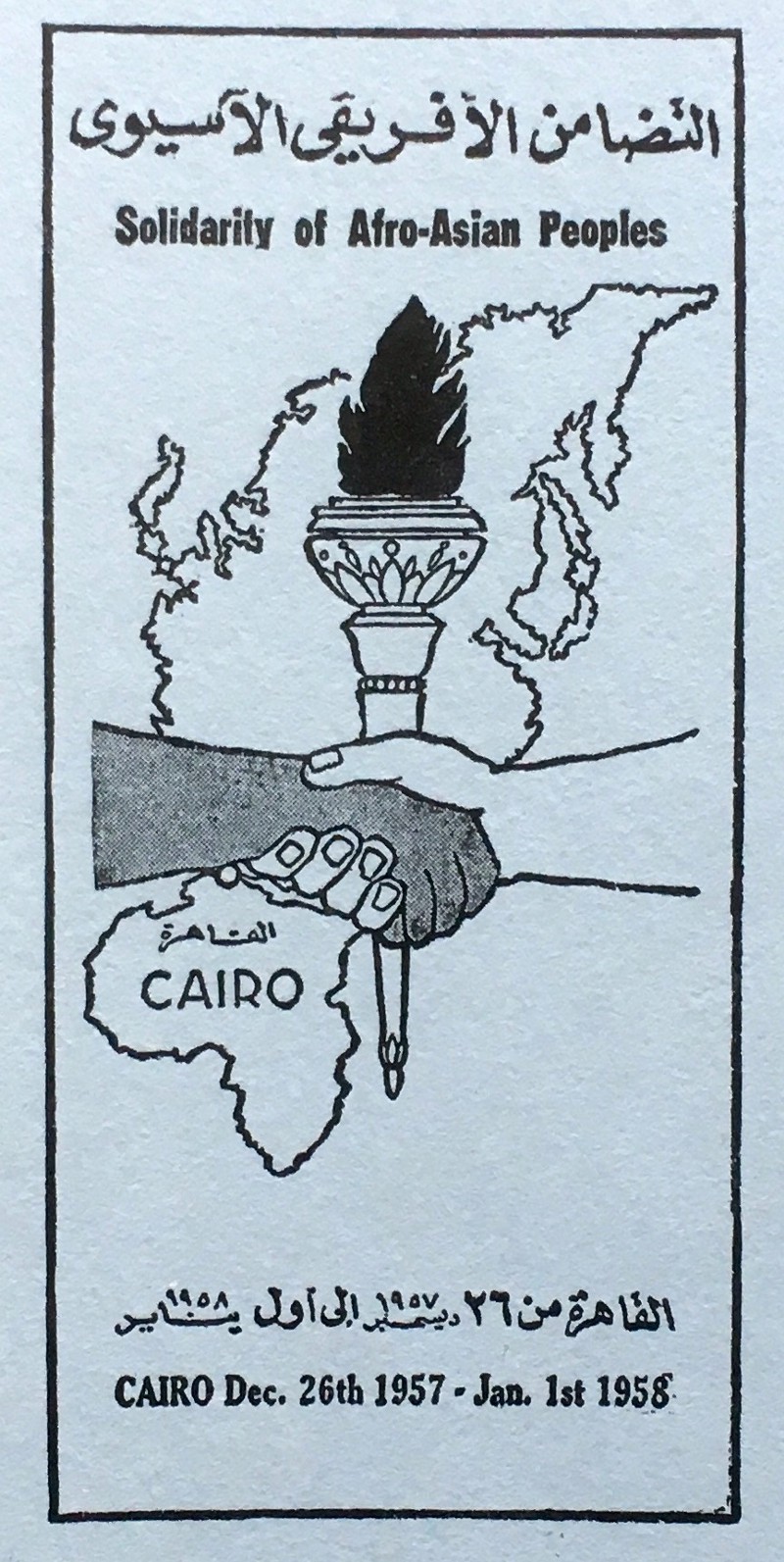
My book, Transnational Protest, Australia and the 1960s, published by Palgrave MacMillan shines a light on the processes of global political engagement that made the 1960s a transnational decade. It explores how Australian activists sought out, engaged with, experienced, and translated global ideas – from anti-colonial struggle in Vietnam to the Black Power movement in America and student-worker politics in France. Continue reading “Global Radicals: The Transnational Imagination of Australian Sixties Activists”

Abstract: Franklin Roosevelt epitomized liberalism in America in the 20th century, and Ronald Reagan conservatism. Yet while they disagreed on nearly everything in domestic affairs, they agreed on the need for the United States to play the leading role in world affairs. This consensus among liberals and conservatives is at risk from the mediocre performance of the U.S. economy since 2008 and from a questioning at both ends of the political spectrum of the value to the United States of trying to solve the world’s problems. Continue reading “Reminder to Register for Tomorrow’s Talk by H. W. Brands – on Reagan, FDR, and US Foreign Policy”
Marc-William Palen
History Department, University of Exeter
Follow on Twitter @MWPalen
Jeremy Black
University of Exeter
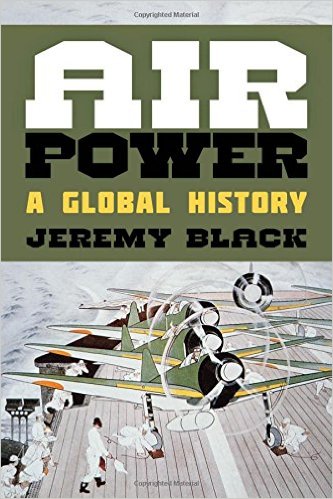
“We were very young in those days” is the most weighty phrase near the beginning of The Case of the Constant Suicides, a novel by the Anglo-American detective writer John Dickson Carr. Published in 1941, this novel begins in London on September 1 1940, just before the heavy German air attacks on the city had started: “An air-raid alert meant merely inconvenience, with perhaps one lone raider droning somewhere.” By 1941, as today, the experience of bombing was very different, although not as different as it was to be by the end of the war in 1945. Bombing by 1945 had become a key experience of urban life, both in Europe and in East Asia. Refracted through the media and the arts, the civilian experience has to be remembered as a human backdrop to the discussions about effectiveness and practicality.
Air power has played a key role in the military history of the last century, both independently and within land and sea conflicts. Air power has been particularly important at the tactical and operational levels. It has also been seen as a strategic tool, even if bringing this element to fruition has proved very difficult; and difficult, moreover, for the range of states that have sought to pursue this means. The debates about what air power can provide have taken considerably different directions based on whether the army was the dominant service and the degree to which the air force was independent. These issues raise questions not only about how best to present the history of air power, but also concerning its past and present rationale and relevance. Continue reading “Air Power and the Modern World”

Marc-William Palen
History Department, University of Exeter
Follow on Twitter @MWPalen
 The inaugural Centre for Imperial & Global History Annual Lecture, will take place on 25 May (full details and abstract below). Professor James Belich (Beit Professor of Imperial and Commonwealth History, University of Oxford) will be speaking on Globalization and Divergence over five millennia. The lecture should be of wide interest. Attendance is open to Exeter staff and students. The lecture will be followed by a drinks reception.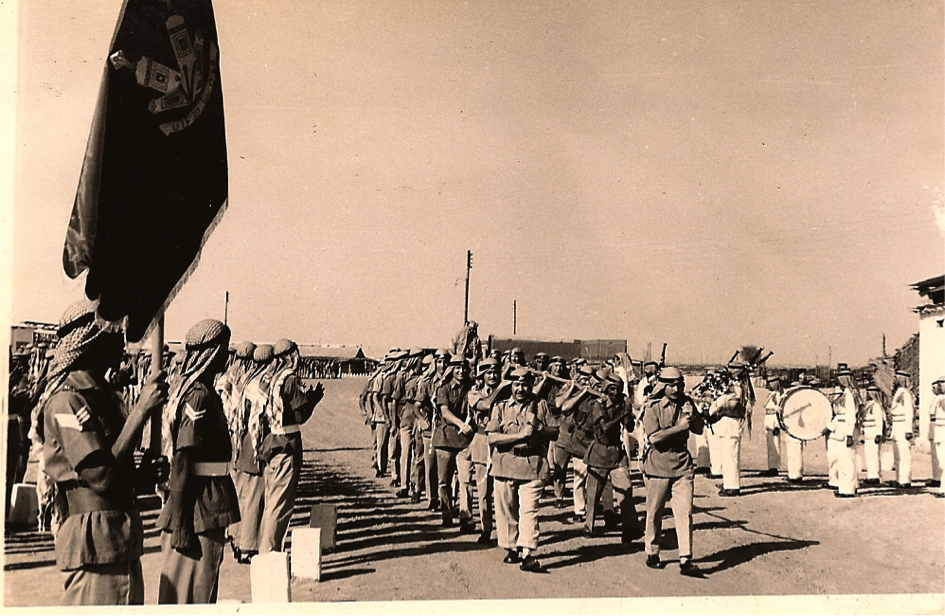
Helene von Bismarck
In March 2016, Defence Secretary Michael Fallon confirmed during a trip to Oman that the British Government was considering the establishment of a permanent army training base there. It is the latest in a series of announcements indicating that Britain is extending and consolidating its military presence in the Persian Gulf.
This development started in 2010, when incoming Conservative Prime Minister David Cameron announced the ‘Gulf Initiative’, by which he meant a coordinated attempt to rekindle Britain’s formerly close relationships with the Gulf States. The implementation of this policy was delayed by the advent of the Arab Spring, but was kickstarted again in December 2014 when Foreign Secretary Philip Hammond confirmed that Britain would build a Royal Navy base in Bahrain. In November 2015, the Strategic Defence Review published by the British Government called for a ‘new Gulf strategy’ and ‘a permanent and more substantial UK military presence’ in the area.
Nor has the British Government shied away from invoking Britain’s imperial past in this context. The Strategic Defence Review stressed Britain’s ‘historic relationships’ with Bahrain, Qatar, Oman, Kuwait and the United Arab Emirates, and Mr. Hammond went as far as calling the project to build a base in Bahrain Britain’s ‘return East of Suez’.[1] Continue reading “Britain’s ‘Return East of Suez’: A Historical Perspective”
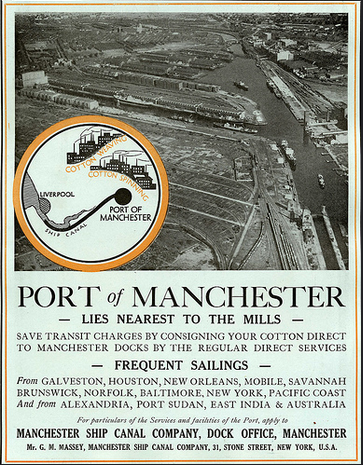
An advert for the canal, for the US market, c. 1930, from the Manchester Libraries, Information and Archives, Manchester City Council
Marc-William Palen
History Department, University of Exeter
Follow on Twitter @MWPalen

Embassies have long been integral to international diplomacy, their staff instrumental to inter-governmental dialogue, strategic partnerships, trading relationships and cultural exchange. But Embassies are also discrete political spaces. Notionally sovereign territory ‘immune’ from local jurisdiction, in moments of crisis Embassies have often been targets of protest and sites of confrontation. It is this aspect of Embassy experience that this conference explores.
The Embassies in Crisis conference will revisit flashpoints in the recent lives of Embassies overseas. Much of the focus will be on Britain’s Embassies, but several papers will also consider other instances of Embassies in crisis, whether British or otherwise. Serving and former British Ambassadors will be presenting as ‘witnesses’ alongside invited academics who have been invited to discuss dramatic instances of international confrontation or mass demonstration that placed particular nations, their capitals, and the Embassies they housed in the global spotlight.
Key themes include: Continue reading “Registration Open for ‘Embassies in Crisis’ – British Academy, 9 June 2016”
Abstract: Franklin Roosevelt epitomized liberalism in America in the 20th century, and Ronald Reagan conservatism. Yet while they disagreed on nearly everything in domestic affairs, they agreed on the need for the United States to play the leading role in world affairs. This consensus among liberals and conservatives is at risk from the mediocre performance of the U.S. economy since 2008 and from a questioning at both ends of the political spectrum of the value to the United States of trying to solve the world’s problems. Continue reading “What FDR and Reagan Had in Common – A Talk by H. W. Brands”
Marc-William Palen
History Department, University of Exeter
Follow on Twitter @MWPalen
Clinton Sandvick
Daily History
Cross-posted from Daily History
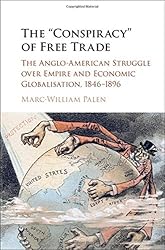 Marc-William Palen’s new book The ‘Conspiracy’ of Free Trade: The Anglo-American Struggle over Empire and Economic Globalisation, 1846-1896
Palen is a historian at the University of Exeter. He has written extensively on globalization and free trade for the New York Times, the Australian, The Conversation, Globalist Magazine, History News Network and many others. Palen has recently published two outstanding articles (‘Free trade is once again tearing apart the Republican Party‘ and ‘Trump’s anti-trade tirades recall GOP’s protectionist past‘) explaining how Donald Trump’s economic policies echo previous GOP stances on free trade. He is also the current editor for Imperial & Global Forum. You can follow Palen on Twitter at @MWPalen.
Here is the interview with Marc-William Palen.
If someone asked you to quickly summarize your book, what would be your 2-minute elevator version?
Briefly, The “Conspiracy” of Free Trade provides a new interpretation of Anglo-American imperialism and economic integration from the mid to late 19th century. The issue of free trade dominated the era’s political scene like no other. But whereas Britain turned to free trade as a national policy and ideology by mid-century, the United States turned to economic nationalism. The book thus argues that Anglo-American economic globalization was driven by this political and ideological conflict between free trade and economic nationalism from the 1840s onward.
Continue reading “Daily History Q&A: The “Conspiracy” of Free Trade”

Marc-William Palen
History Department, University of Exeter
Follow on Twitter @MWPalen
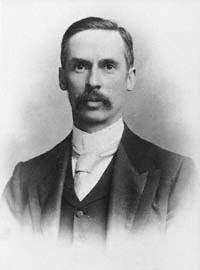 In 1902, journalist John A. Hobson published Imperialism: A Study. The book was among the first to connect the rise of finance capital with the growth of imperial expansion after 1870. Hobson’s theory would fast number among the most influential critiques of imperialism. Although Hobson himself was not a Marxist (he was a classical liberal), his theory would play a key role in shaping subsequent Marxist theories of imperialism, most notably that of V. I. Lenin.
In this Talking Empire podcast, Centre Director Richard Toye discusses Hobson’s Imperialism with Dr. Marc-William Palen.
 Imperial & Global Forum
You must be logged in to post a comment.