Call for Applications: Global Humanitarianism Research Academy

Global Humanitarianism

International Research Academy on the History of Global Humanitarianism

Academy Leaders:  

Fabian Klose (Leibniz Institute of European History Mainz)

Johannes Paulmann (Leibniz Institute of European History Mainz)

Andrew Thompson (University of Exeter)

In co-operation with the International Committee of the Red Cross (Geneva) and with support by the German Historical Institute London.

Venues:  

  • Leibniz Institute of European History, Mainz
  • Archives of the International Committee of Red Cross, Geneva

Date:                          13-24 July 2015

Deadline:                   31 December 2014

Information on:       

http://hhr.hypotheses.org/ and https://imperialglobalexeter.com/

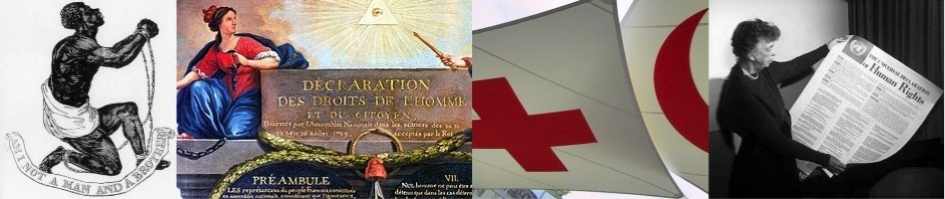
The international Global Humanitarianism | Research Academy (GHRA) offers research training to advanced PhD candidates and early postdocs. It combines academic sessions at the Leibniz Institute of European History in Mainz and the Imperial and Global History Centre at the University of Exeter with archival sessions at the Archives of the International Committee of the Red Cross in Geneva. The Research Academy addresses early career researchers who are working in the related fields of humanitarianism, international humanitarian law, peace and conflict studies as well as human rights covering the period from the 18th to the 20th century. It supports scholarship on the ideas and practices of humanitarianism in the context of international, imperial and global history thus advancing our understanding of global governance in humanitarian crises of the present. Continue reading “Call for Applications: Global Humanitarianism Research Academy”

This Week’s Top Picks in Imperial & Global History

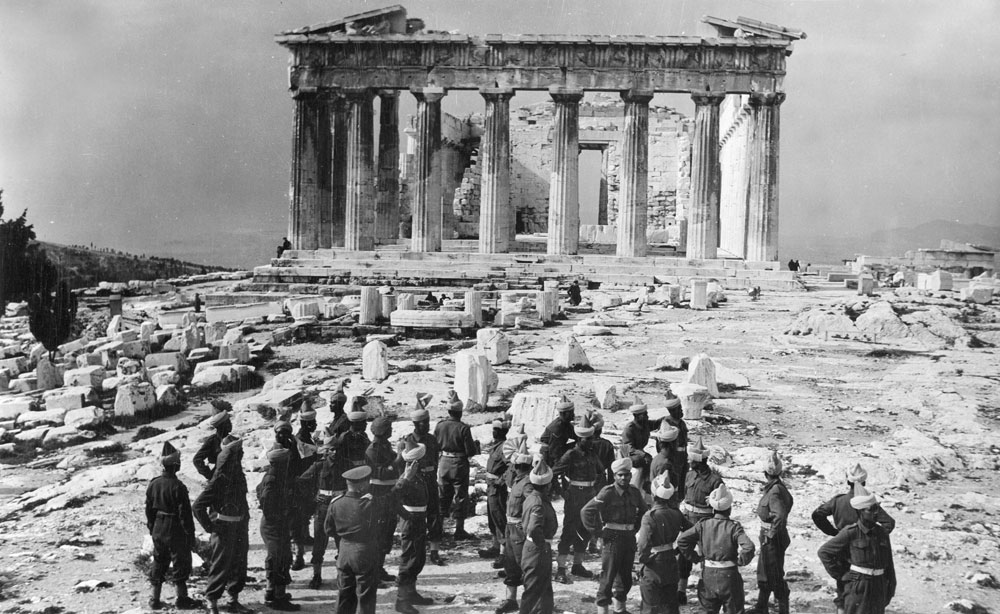
Indian Army troops tour Acropolis, Athens, 1944. NAM. 1990-08-65-211. Courtesy of National Army Museum.

Marc-William Palen
History Department, University of Exeter
Follow on Twitter @MWPalen

From Japan’s rightwing war on history, to the First World War through Arab eyes, here are this week’s top picks in imperial and global history. Continue reading “This Week’s Top Picks in Imperial & Global History”

7. Allende, the Third World, and Neoliberal Imperialism

Editor’s Note: It is hard to believe that the Imperial & Global Forum went live just a year ago. In the weeks leading up to the new year, please help us celebrate by checking out the year’s 10 most popular posts.

7. Allende, the Third World, and Neoliberal Imperialism

Chris Dietrich
Assistant Professor, Fordham University
Follow on Twitter @C_R_W_Dietrich

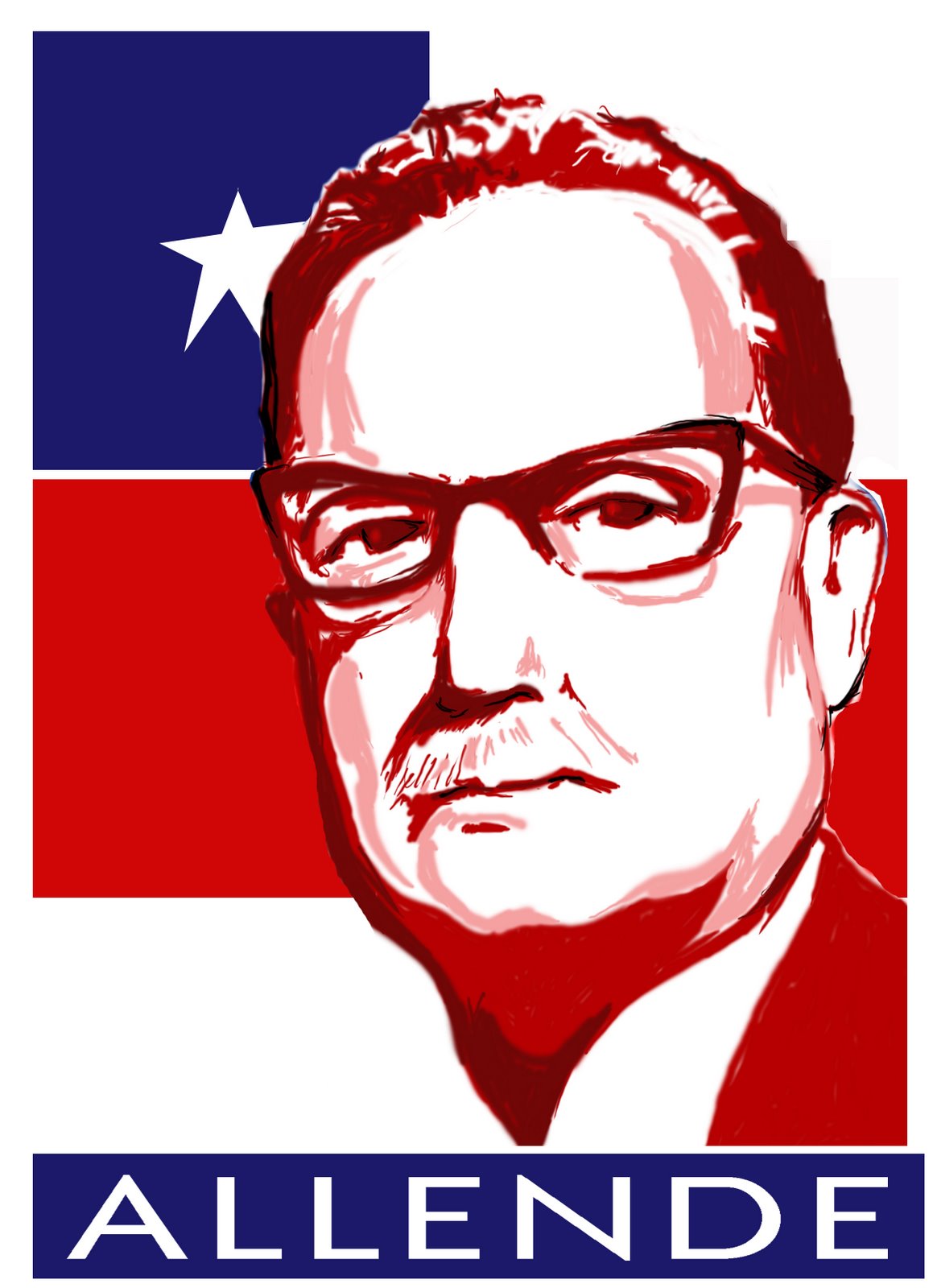
allende“Allende was assassinated for nationalizing the . . . wealth of Chilean subsoil,” Pablo Neruda wrote on September 14, 1973. Neruda was lamenting the overthrow and death of his friend, Chilean President Salvador Allende, a week before he himself succumbed to cancer.  “From the salt-peter deserts, the underwater coal mines, and the terrible heights where copper is extracted through inhuman work by the hands of my people, a liberating movement of great magnitude arose,” he continued.  “This movement led a man named Salvador Allende to the presidency of Chile, to undertake reforms and measures of justice that could not be postponed, to rescue our national wealth from foreign clutches.”  Unfortunately, Allende’s flirtation with economic nationalization ran up against the country’s multinational business interests, particularly those that had support from the U.S. government. His socialist reforms were also ill timed; the U.S. government’s ideological view towards the global economy tended towards the Manichean.

So what was the American role in Allende’s overthrow? [continue reading]

Exeter Postdoc Receives Fritz Stern Prize

Ned picCongratulations to Dr. Ned Richardson-Little on being awarded the German Historical Institute’s Fritz Stern Dissertation Prize for “Between Dictatorship and Dissent: Ideology, Legitimacy and Human Rights in East Germany, 1945-1990” (Ph.D. dissertation, University of North Carolina at Chapel Hill, 2013). Dr. Richardson-Little is a postdoctoral fellow at the University of Exeter. Continue reading “Exeter Postdoc Receives Fritz Stern Prize”

8. Imperial Globalization – The Presence of the Past and the Crucible of Empire

Editor’s Note: It is hard to believe that the Imperial & Global Forum went live just a year ago. In the weeks leading up to the new year, please help us celebrate by checking out the year’s 10 most popular posts.

8. Imperial Globalization – The Presence of the Past and the Crucible of Empire

Andrew Thompson

Centre Director Andrew Thompson explains that if globalization is not to silence the past, we need to delve back into its history – its imperial history.

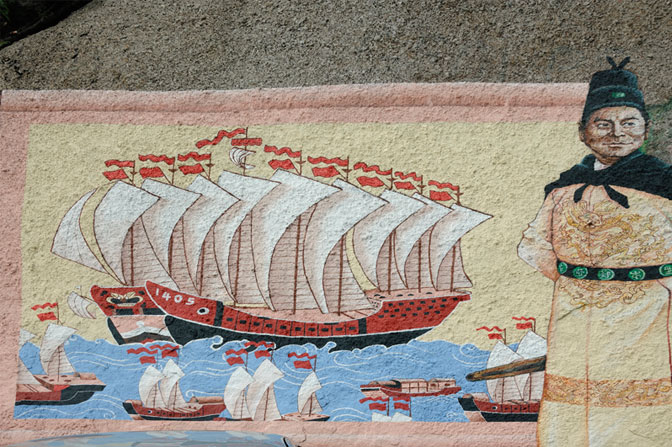
Almost a century before Christopher Columbus 'discovered' the Americas, Admiral Zheng He of the Ming Dynasty undertook voyages across the Indian and the Western Pacific Oceans. Photo credit: © Chris Hellier/Corbis
Admiral Zheng He. Almost a century before Christopher Columbus ‘discovered’ the Americas, Admiral Zheng He of the Ming Dynasty undertook voyages across the Indian and the Western Pacific Oceans. Photo credit: © Chris Hellier/Corbis

‘Globalization’ is among the biggest intellectual challenges facing the humanities and the social sciences today. It is a concept that conveys the sense that we are living in an age of transformation, where change is the only constant, nothing can be taken for granted, and no-one knows what the future might bring. But globalization is also much more than that. To borrow the phrase of the historical sociologist, Mike Savage, it is an ‘epoch description’, something that seeks to define for the current generation the very meaning of social change. By thinking of ourselves as part of a globalized world, we are saying something about how over time our identity has changed. We are locating ourselves in time, differentiating ourselves from our predecessors, signalling a break with what went before.

Champions of globalization are invariably concerned with the present. Their notion of time is unapologetically linear. Crudely exponential assumptions about the ever-increasing pace and scale of scientific and technological change are built into globalization’s teleology, and the belief that what we are experiencing today is as much incomparable as it is irreversible. ‘History’ is thus set to mean less and less for the present generation; the sense of the future as an outgrowth of the past is becoming less and less plausible. [continue reading]

History Carnival #140

Marc-William Palen
History Department, University of Exeter
Follow on Twitter @MWPalen

The veritable treasure trove of historical blogging never ceases to amaze me. It is therefore a pleasure to be hosting History Carnival #140 here at the Imperial & Global Forum for the month of December.

Map of Virginia, discovered and as described by Captain John Smith, 1606; engraved by William Hole (Via Wikimedia commons)

Some cautionary pieces to start off with: George Gosling offers a timely critique of historians’ ill-defined overuse of “transnational” in “The Trouble with Transnational History,” and Matt Houlbrook at the Trickster Prince warns that longue durée historians must be careful lest their focus upon policymakers shuts out the public.

Offering some new perspectives, Bradley Dixon, imagines how small the North American colonies of the British Empire would have appeared from the high vantage point of the Andes for Not Even Past. Unique views are also offered by Heather Campbell, who shifts the focus from Western Europe to the Muslim Middle East during the First World War over at Unspoken Assumptions, and Kelli Huggins, who gives a more literal meaning to dogs of war through her engaging and pictorial account of the canine veterans of the Second World War.

assassinscreedunityimagen

The French Revolution received its share of attention. With the example of the popular first-person game Assassin’s Creed Unity, which is set amid the 1790s French Revolution, David Andress argues that historians need to take video games seriously when they dip into the realm of history. And what about the ghost problem during the French Revolution’s Reign of Terror?

Some great detective work from medical historians, as well. Caroline Rance has a guest post at Victorian Supersleuth on the blackmail case “The Soldier and the Quack Doctor,” and Angela Buckley explores an encounter between the ‘real Sherlock Holmes’ and the case of a quack doctor’s dodgy elixir.

Jessica Borge provides a fascinating look at how “the Pill” transformed the 1960s contraceptive industry for the blog Perceptions of Pregnancy, and the Pirate Omnibus explores how the introduction of the communication chord transformed the railway. And we may love finding pieces of history at our local charity shop, but what about the change-over-time history of the charity shop itself?

oyster eating

Last but not least, if you haven’t yet encountered Dando the famous 19th-century gormandizing oyster eater, you can read all about him at All Things Georgian.

I hope you enjoy the posts in this month’s History Carnival. The next will be hosted at Performing Humanity on January 1st.

This Week’s Top Picks in Imperial & Global History

turkey map
Flickr/The Atlantic

Marc-William Palen
History Department, University of Exeter
Follow on Twitter @MWPalen

From the international origins of ‘turkey’, to the global response to Ferguson, here are this week’s top picks in imperial and global history. Continue reading “This Week’s Top Picks in Imperial & Global History”

9. Prelude to Bandung: The Interwar Origins of Anti-Colonialism

Editor’s Note: It is hard to believe that the Imperial & Global Forum went live just a year ago. In the weeks leading up to the new year, please help us celebrate by checking out the year’s 10 most popular posts.

9. Prelude to Bandung: The Interwar Origins of Anti-Colonialism

The Gathering of Visionary Anti-Imperialism. Plenary Meeting, Brussels Congress 1927. Source: Louis Gibarti (Hrsg.), Das Flammenzeichen vom Palais Egmont, Neuer Deutscher Verlag, Berlin (1927)

Fredrik Petersson
Åbo Akademi University
Russian State University for the Humanities (RGGU), Moscow

In 1927, the “First International Congress against Imperialism and Colonialism” convened in Brussels at Palais d’Egmont. The event celebrated the establishment of the League against Imperialism, and as the congress reached its crescendo, Willi Münzenberg, the German communist and General Secretary of International Arbeiterhilfe (IAH), declared that this was “neither the end, nor the beginning of a new powerful movement”.[1] Nearly 28 years later, amid the aftermath of the brutality of the Second World War, Münzenberg’s anti-colonial vision was revitalized at the Afro-Asian conference in Bandung, Indonesia.

In the 1955 Bandung Conference’s opening address, Achmed Sukarno, the Indonesian president, declared to the leaders of the twenty-nine countries in attendance: “I recognise that we are gathered here today as a result of sacrifices. . . . I recall in this connection the Conference of the ‘League against Imperialism and Colonialism’ which was held in Brussels almost thirty years ago.”[2] Separated by many decades and vast distance, these two events illustrate why a global history of transnational anti-colonial movements in the 20th century cannot be fixed around a particular moment in time and space – rather, it is a history enacted in radical spaces in a changing world. [continue reading]

Postgraduate Profile – Lori Lee Oates

Oates photoLori Lee Oates
PhD Candidate, History Department, University of Exeter

My research was born when I posed a single question: Why are people so interested in the texts of New Age religion at a time when church attendance and the power of traditional religion are declining in many parts of the world?

It was obvious to me that the way the world engages with religion had changed in recent decades as books like The Power of Now, Eat Pray Love, and Return to Love topped the New York Times bestseller list. I soon discovered that scholars have argued for some time that New Age religion is rooted in nineteenth-century occultism, the meeting of Eastern and Western religions, and the rise of secular society. Religious Studies scholars have used these factors to explain why Western society is now racing to meditation and yoga classes, or reifying New Age texts as contemporary religious symbols. Through my research, I discovered that scholars had already effectively established that New Age religion is rooted in the Hellenistic religious philosophies of the ancient world, combined with a synthesis of Eastern religion in the nineteenth century.

My project, however, seeks to set the emergence of commercialized religion within the context of nineteenth-century globalization, imperialism in India, growth in the printing activity, growth in liberalism, and the development of the market economy. Largely, I am doing this by examining the globalization and movement of literature between 1833 and 1900, in a way that has not been done previously. Continue reading “Postgraduate Profile – Lori Lee Oates”

10. Diminishing Returns of the Global Turn

Editor’s Note: It is hard to believe that the Imperial & Global Forum went live just a year ago. In the weeks leading up to the new year, please help us celebrate by checking out the year’s 10 most popular posts.

10. Diminishing Returns of the Global Turn

david avrom bellDavid A. Bell
Lapidus Professor of History, Princeton University
Contributing Editor, The New Republic

I am grateful to Marc-William  Palen for his smart, sharp comments on my New Republic essay, and also for his generous offer to let me respond to them on this blog.

Palen calls my essay ‘provocative’ and ‘eloquent’, but also ‘unfair’. I certainly prefer this judgment to ‘balanced, but dull and inarticulate’, but the adjective ‘unfair’ still rankles a little. In particular, Palen charges me with confusing page counts and criticism; with mixing up Atlantic history and global history; and with ‘expect[ing] the impossible’ from the volume that I was reviewing.

Of these charges, it is the third that really gets to the substantive differences between us.

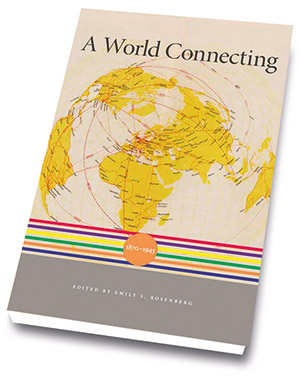
My use of page — and reference — counts in the review was simply a convenient shorthand, of the sort that is necessary in short essays, to give readers a quick sense of what a book under review does, and does not emphasize. Of course, historians can often ‘transmit an impressive amount of information and analysis’ in a small number of pages, as Palen says, but the overall allocation of space still has more than a little to tell us. The fact that A World Connecting allocated just three sentences (out of 1,168 pages) to the First and Second Socialist Internationales suggests pretty strongly, however crude the measurement, that the authors did not consider the Internationales an important subject. [continue reading]

JOB: Lecturer in Modern European History, post-1750, University of Exeter

ExeterThe result of the 2008 Research Assessment Exercise confirms Exeter’s position as one of the UK’s leading research-intensive universities. Almost 90% of our research is at internationally recognised levels and every single subject submitted included world-leading (4*) research. When adjusted for the 95% of staff submitted, Exeter ranks among the top 15 in the UK for research out of 159 higher education institutions. The Times Higher Education described Exeter as ‘a rising star among research-intensive institutions’.

Job reference: P47935

Application closing date: 18/12/2014

The post of Lecturer in Modern European History will contribute to extending the research profile of History at Exeter, particularly in areas related or complementary to history of politics, empire, economy, society, religion, culture or gender in this period. This full-time, fixed-term post is available from 1st March 2015 – 31st August 2017.  Continue reading “JOB: Lecturer in Modern European History, post-1750, University of Exeter”

This Week’s Top Picks in Imperial & Global History

The holy city of Mecca, 2013. Fayez Nureldine—AFP/Getty Images

Marc-William Palen
History Department, University of Exeter
Follow on Twitter @MWPalen

From the demise of the world’s largest monopoly to the smells of empire, here are this week’s top picks in imperial and global history. Continue reading “This Week’s Top Picks in Imperial & Global History”

British Soft Power in South Asia: Historicizing Deglobalization

british_empire_board_game_box

David Thackeray
History Department, University of Exeter
Follow on Twitter @d_thackeray

Cross-posted from History & Policy

Many of the core debates in UK politics today concern the nation’s future trade: the question of Scottish independence, devolution of political power to the regions, and a potential referendum on EU membership. Exploring the history of British trade identities can provide important insights into how we got here and the potential choices for policy makers. As historian Jim Tomlinson has argued, the twentieth century witnessed a gradual process of the ‘partial de-globalisation’ of British regions, with the declining influence of manufacturing and the growth of a more atomised service-sector economy. The discontents this has caused, exacerbated by the recent worldwide economic downturn, have been seized upon by parties such as the SNP and UKIP. Continue reading “British Soft Power in South Asia: Historicizing Deglobalization”

Lessons From the 1960s for UK Immigration Debate

uk border

Andrew Thompson
Director, Centre for Imperial & Global History

[This article first appeared as ‘How to talk about immigration, by the 1960s politician who made it his life’s work’, Conversation, 18 November 2014]

As the Rochester and Strood by-election approaches, raising the chances of another UKIP politician entering parliament, shadow home secretary Yvette Cooper has warned against getting caught in an “arms race of rhetoric” about immigration. On the other hand though, Cooper has attacked liberals who don’t want to talk about immigration at all.

This recent escalation in the rhetoric on immigration is best understood not simply on its own terms but when put into a proper historical perspective. Ever since the 1960s, talk of immigration in Britain has played into negative politics – a politics of what is opposed and what we are against. The latest example of this tendency is that of the defence minister Michael Fallon, when he suggested that British towns were being “swamped” by migrants from Eastern Europe.

Whenever the debate about immigration intensifies the media invariably recalls the inflammatory speeches of Enoch Powell. We might however be much better off re-reading some of the speeches made by a lesser known politician of the 1960s. Maurice Foley isn’t a household name like Powell but he made talking about immigration the centre of his career. Continue reading “Lessons From the 1960s for UK Immigration Debate”

CFP: ‘The Local and the Global’, University of Exeter, 7 March 2015

Lori Lee Oates
History Department, University of Exeter

globe celeste

The Local and the Global

ASMCF- SSFH PG Study Day, University of Exeter

Saturday March 7th 2015

Call For Papers

Keynote Speaker: Dr Claire Eldridge (Southampton)

Planned Professional Development Sessions: archival research; social media for academia; publishing journal articles; the Viva; and from PhD to monograph.

Deadline for Submissions: 9 January 2015

‘Tout le Monde à Paris’, proclaimed a poster for the 1900 Exposition Universelle. The world on your doorstep; the global meets the local through a cultural conduit. A century later, and with the World Wide Web in your pocket, the global has never been more connected to the local. Conceptually these terms are antonymous: the local is specific, on a small scale, and often suggests civic or regional affiliations to a place; the global is universal, world-wide, and lacks definitive spatial rooting. Yet considering the local and the global as opposites may belie the potential impact that they can have upon one another.  Continue reading “CFP: ‘The Local and the Global’, University of Exeter, 7 March 2015”