Britain, France, and their Roads From Empire: A New Talking Empire Podcast

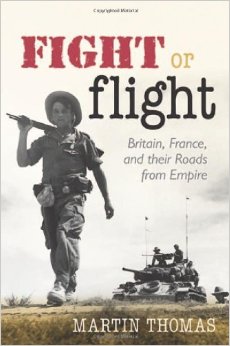
fight or flight thomasMartin Thomas’s path-breaking book Fight or Flight: Britain, France, and their Roads from Empire tells how the world’s two largest colonial empires disintegrated dramatically after the Second World War. Although shattered by war, in 1945 Britain and France still controlled the world’s two largest colonial empires, with imperial territories stretched over four continents. And they appeared determined to keep them: the roll-call of British and French politicians, soldiers, settlers and writers who promised in word and print at this time to defend their colonial possessions at all costs is a long one. Yet, within twenty years both empires had almost completely disappeared.

The collapse was cataclysmic. Peaceable ‘transfers of power’ were eclipsed by episodes of territorial partition and mass violence whose bitter aftermath still lingers. Hundreds of millions across four continents were caught up in the biggest reconfiguration of the international system ever seen.

In this new Talking Empire podcast Professor Thomas talks about the book with Professor Richard Toye.

In Wilson’s Shadow: Why the 1975 Europe Referendum Still Matters

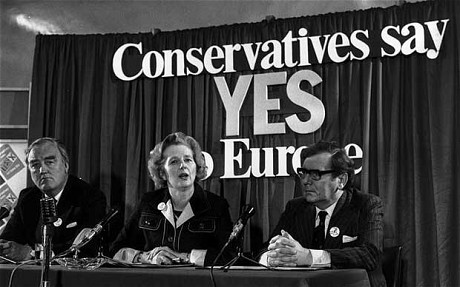
Margaret Thatcher,  William Whitelaw and Peter Kirk, at a referendum conference. June 1975. Photo: Keystone/Getty Images
Margaret Thatcher, William Whitelaw and Peter Kirk, at a referendum conference. June 1975. Photo: Keystone/Getty Images

Richard Toye and David Thackeray
University of Exeter

Forty years ago today Britain went to the polls to decide a crucial question: would the country remain in the European Economic Community (EEC)? It had only joined the EEC, the EU forerunner organisation, two years previously, and this was the first UK-wide referendum. When the votes were counted the results were emphatic. The nation had voted ‘yes’ to Europe by a two to one margin. The Labour Prime Minister Harold Wilson hailed the result, noting that no one in Britain or the wider world could be in doubt about its meaning. Margaret Thatcher, the recently-chosen Tory leader, observed that the ‘massive “Yes” vote could not have come about without a massive Conservative “Yes”.’ Today, as the British people prepare for a new European plebiscite, what lessons can be learned from the experience of 1975? Continue reading “In Wilson’s Shadow: Why the 1975 Europe Referendum Still Matters”

Richard Toye Reviews Blair Inc: The Man Behind the Mask for the Guardian

Screen Shot 2015-06-02 at 17.30.20

Richard Toye
History Department, University of Exeter

Follow on Twitter @RichardToye

Cross-Posted from the Guardian

During the early stages of the recent election campaign, Tony Blair emerged to deliver a speech in support of the Labour party’s European policy and to declare that he was backing Ed Miliband “100%”. The decision to make use of his predecessor in this way cannot have been easy for Miliband, as Blair remains potentially toxic, not least to many in the party itself, but doubtless he could not risk offering a rebuff. Blair’s motivation remains more obscure: previously he had done little to conceal his dislike of Miliband’s political approach, and he probably feels more than a little vindicated by Labour’s defeat. Certainly, a lot of people would reject with a laugh the idea that he said what he did because he genuinely believed it. Continue reading “Richard Toye Reviews Blair Inc: The Man Behind the Mask for the Guardian”

Violence and Colonial Order: A New Talking Empire Podcast

thomas violence and colonial order

Richard Toye
History Department, University of Exeter

Follow on Twitter @RichardToye

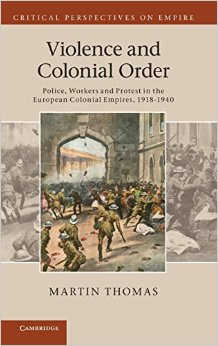
Professor Martin Thomas’s book Violence and Colonial Order: Police, Workers and Protest in the European Colonial Empires, 1918-1940 is a pioneering, multi-empire account of the relationship between the politics of imperial repression and the economic structures of European colonies between the two World Wars. Ranging across colonial Africa, Southeast Asia and the Caribbean, Thomas explores the structure of local police forces, their involvement in colonial labour control and the containment of uprisings and dissent. This work sheds new light on broader trends in the direction and intent of colonial state repression. It shows that the management of colonial economies, particularly in crisis conditions, took precedence over individual imperial powers’ particular methods of rule in determining the forms and functions of colonial police actions. In this Talking Empire podcast, I interview Professor Thomas about the issues raised by the book.

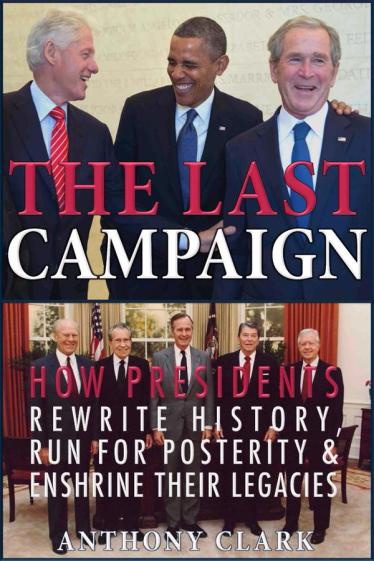
The Untold History of Presidential Libraries

last campaign

anthony clarkAnthony Clark is a former speechwriter, committee professional staffer, and legislative director in the U.S. House of Representatives. In the 111th Congress he directed hearings and investigations of the National Archives and presidential libraries for the House Committee on Oversight & Government Reform. His new book The Last Campaign: How Presidents Rewrite History, Run for Posterity and Enshrine Their Legacies was published this month [available on Amazon]. Professor Richard Toye [RT] recently interviewed Clark [AC] about how the presidential library system is influenced by power and politics.

RT: This book has taken you years to research and write. It’s clearly a labour of love. But some people would think that presidential libraries are rather a dry subject. What is it about them that you find so interesting?

AC: I began the book believing I would write a simple history of the presidential library system. But as I discovered more and more about the politics that drive the libraries, and inappropriately was kept from seeing hundreds of thousands of the National Archives’ own records about them, I began to change the focus of the book.

The system has strayed from its original purpose: to preserve presidential records and make them available to the public. The libraries have become taxpayer-funded legacy factories, and arms of the national political parties – particularly the Republican Party.

Modern presidential libraries open about four years after presidents leave office, but the papers of their presidencies will not be opened for 100 or more years. History is being locked up for a century due to conscious choices that Congress and National Archives officials have made and continue to make about our priorities, our budgets, and the sensitivities of powerful people.

The politics are fascinating: the site selection process, and what factors make for a winning bid; how they are funded, both with hundreds of millions of private dollars, and a billion dollars of taxes each decade; the exhibits that spin or ignore controversies; the political events, such as presidential primary debates and “debut” speeches by aspiring candidates; and the complex mechanisms that work to keep records – the core mission – closed, and unavailable for a century or more.

RT: You mention site choice, which is clearly fundamental. There has been a lot of speculation recently about where Barack Obama’s library will be located. What are the factors that influence a library’s location? Continue reading “The Untold History of Presidential Libraries”

12 Digital Research Suggestions for Dissertations on the History of Modern Britain & the British Empire

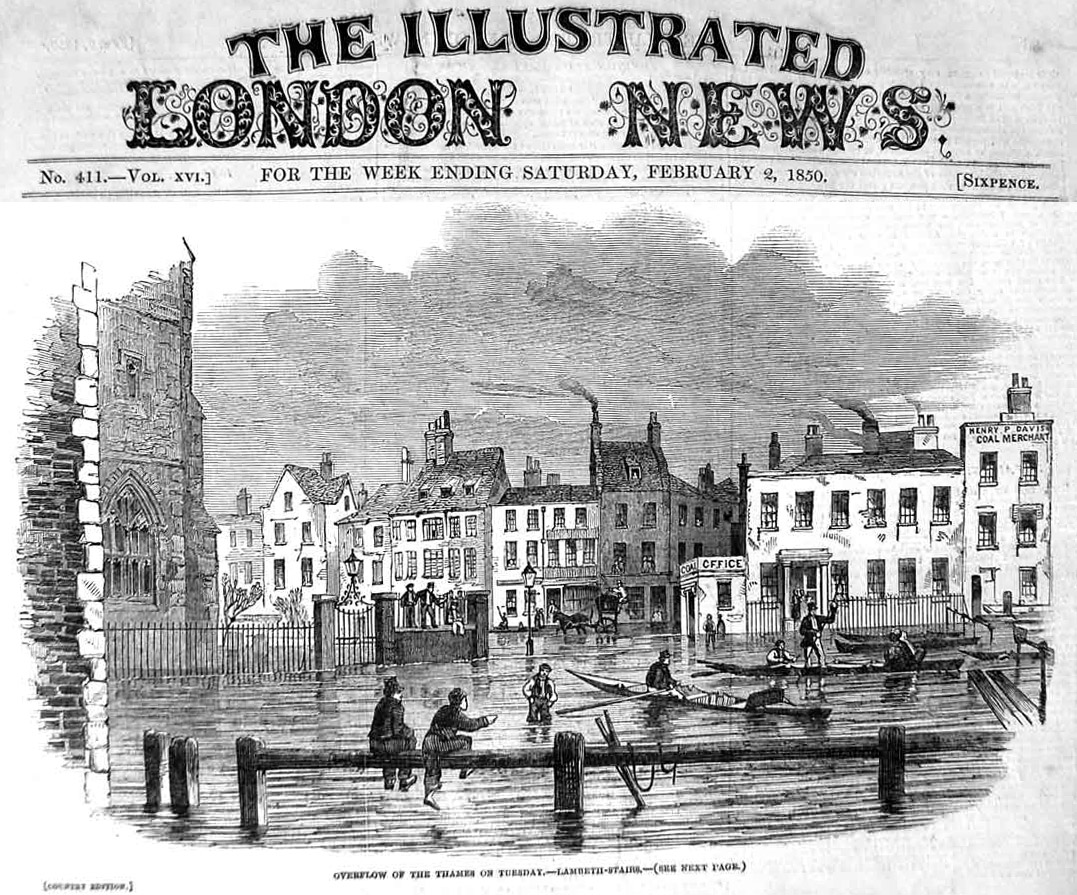
Illustrated London News

David Thackeray, Marc Palen and Richard Toye
University of Exeter
 

As 3rd-year students scramble to finish their dissertations and as 2nd-year students begin formulating topics for their own, it’s worth noting the dramatic expansion in the availability of sources for the study of modern British and British imperial history in recent years.

Many of these sources are free to use. However, it is often hard to keep track of what materials are now available. What follows is a short guide (which is by no means comprehensive) but gives an introduction to some of the most important sources and may be of particular use to students planning dissertations, as well as other researchers. Please feel free to add your own suggestions in the ‘comments’ section.

  1. Mass Observation was a social investigation organisation set up in the 1930s that produced a range of social surveys about British life until its disbandment in the late 1940s. This website provides online access to a range of data held in the Mass Observation archive at the University of Sussex and is invaluable for social historians. Dr. Lucy Robinson has also produced the excellent Observing the 80s website, which holds material compiled following the modern revival of Mass Observation, as well as oral history recordings from the British Library.

Continue reading “12 Digital Research Suggestions for Dissertations on the History of Modern Britain & the British Empire”

On Empire and Anachronism

anachronismRichard Toye
History Department, University of Exeter

Follow on Twitter @RichardToye

Our free online course Empire: The Controversies of Imperialism has now been running two weeks; between them, the participants have already made thousands of comments, often arguing their respective points of view quite vigorously. One persistent theme of debate is the degree to which it is possible to pass judgements on the actions of people in the past, who were operating on the basis of standards that are different from those held today. This is an important and difficult issue for historians in general, although the contentious topic of ‘Empire’ seems to throw it into particular relief. Everyone can agree that we shouldn’t reach assessments that are anachronistic; it is much harder to reach agreement on what constitutes anachronism. Continue reading “On Empire and Anachronism”

Why should we still study J. A. Hobson’s Imperialism?

Richard Toye
History Department, University of Exeter

Follow on Twitter @RichardToye

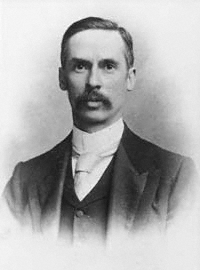
john_atkinson_hobsonIn preparation for our upcoming free course on The Controversies of Empire I’ve been thinking hard about the legacy of J.A. Hobson (1858–1940), one of England’s most famous critics of imperialism.

A clue to Hobson’s thinking can be found in the title of his 1938 autobiography, Confessions of an Economic Heretic. His core idea was that capitalism’s boom-and-bust cycles were caused by over-saving by the richer classes, or, to put it another way, by the forced ‘under-consumption’ of the poorer ones; their lack of spending power, a consequence of the unequal distribution of income, led to the repeated pattern of depression and unemployment.

What, though, did this have to do with Empire? Continue reading “Why should we still study J. A. Hobson’s Imperialism?”

Empire: The Controversies of British Imperialism

MOOC pic

Exeter’s Centre for Imperial and Global History launches a new, free online course.

We are delighted to announce that, starting in January 2015, we will be running a Massive Open Online Course (MOOC) on the history of the British Empire.

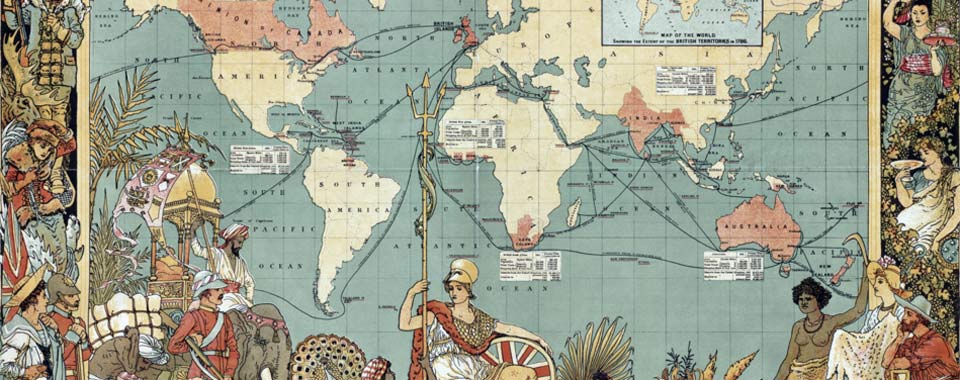
The British Empire was the largest empire ever seen. It ruled over a quarter of the world’s population and paved the way for today’s global economy. But British imperialism isn’t without controversy, and it continues to cause enormous disagreement among historians today.This free online course will help you understand why.

Continue reading “Empire: The Controversies of British Imperialism”

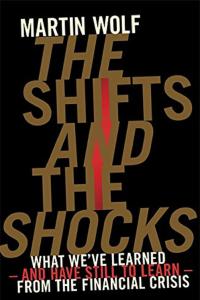
What We’ve Learned From the Crash – Review of ‘The Shifts and the Shocks’, by Martin Wolf

Richard Toye
History Department, University of Exeter

Follow on Twitter @RichardToye

Cross-posted from the Guardian

shifts_758504zMartin Wolf’s new volume on the causes and consequences of the world financial crisis comes with generous advance praise from, among others, Mervyn King, Larry Summers and Ben Bernanke. That, you might think, is a bit like a manual on maritime safety with jacket blurbs from the crew of the Titanic. But there is not much comfort for the these men within the book’s pages. Bernanke, in particular, gets it in the neck: “even two months before the crisis broke, the chairman of the Federal Reserve had next to no idea what was about to hit him, his institution and the global economy. To be blunt, he was almost clueless.” It seems he’s not too careful about reading the books he endorses, either.

That is a pity, because this is a work that repays close attention. Continue reading “What We’ve Learned From the Crash – Review of ‘The Shifts and the Shocks’, by Martin Wolf”

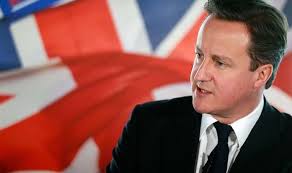
Turning Right, Talking Left: David Cameron’s ‘Four Nations’ Conference Speech and the Ghosts of Tory Leaders Past

cameron

Richard Toye
History Department, University of Exeter

Follow on Twitter @RichardToye

Cross-posted from Four Nations History blog

In a special post, the University of Exeter’s Professor Richard Toye reacts to David Cameron’s speech to the 2014 Conservative party conference and reflects on the Prime Minister’s vision of the United Kingdom. 

David Cameron’s speech to the Conservative party conference started with a line that will make it of direct interest to the readers of this blog:

‘I am so proud to stand here today as Prime Minister of four nations in one United Kingdom.’

Confessing that the Scottish referendum had given him sleepless nights, Cameron boasted that the British people have now been confirmed as ‘one people in one union’. The explicit Unionist message naturally places him in a long Conservative tradition. And whereas much of the instant reaction focussed on the promise of tax cuts, reading the full speech leads to interesting reflections on the extent to which today’s Conservative Party follows in the rhetorical footsteps of its past leaders. Continue reading “Turning Right, Talking Left: David Cameron’s ‘Four Nations’ Conference Speech and the Ghosts of Tory Leaders Past”

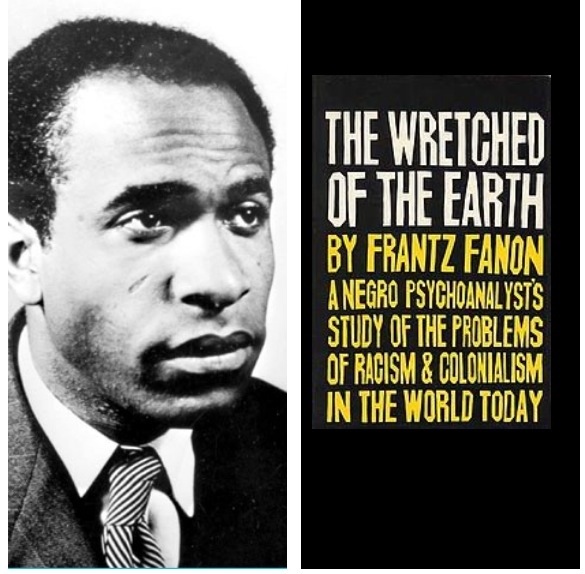
What’s So Shocking about the Wretched of the Earth?

fanon wretched of the earth

Richard Toye
History Department, University of Exeter

Follow on Twitter @RichardToye

Frantz Fanon (1925-1961) was a psychiatrist, intellectual and revolutionary. Born in the French Caribbean colony of Martinique, Fanon spent significant periods of his life in France and, crucially, Algeria. There he became an active member of the Front de Libération Nationale that fought, with ultimate success, against French rule. His most famous work The Wretched of the Earth, published shortly before his death from leukaemia, is a classic of decolonization literature. As Jean-Paul Sartre put it in his preface:  Continue reading “What’s So Shocking about the Wretched of the Earth?”

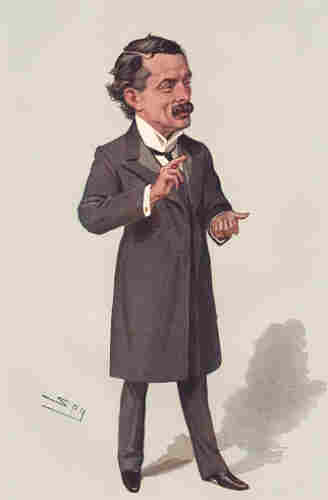
Lloyd George’s Greatest War Speech, 100 Years On

Lloyd George

Richard Toye
History Department, University of Exeter

Follow on Twitter @RichardToye

Today (19 September) is the centenary of David Lloyd George’s speech at the Queen’s Hall in the West End of London. As we digest the news that Scotland’s voters have rejected independence, it is interesting to reflect on the role that a different form of Celtic nationalism played in shaping the rhetoric of the Great War.

In the first autumn of the war, Lloyd George’s carefully cultivated public character was almost perfectly pitched. Continue reading “Lloyd George’s Greatest War Speech, 100 Years On”

Q&A: What Can Red Cross Records Say About History of Humanitarianism & Human Rights?

q&a

An Imperial & Global Forum Interview

Professor Richard Toye (RT) interviews Centre Director Andrew Thompson (AT). Professor Thompson recently returned from an archival visit to the ICRC and would like to thank Jean-Luc Blondel and his colleagues for their assistance and guidance.

RT: Andrew, you’ve recently come back from Geneva, where you’ve been doing some archival research. What were you looking at and why?

AT: I was looking at two sets of files in the archives of the International Committee of the Red Cross that have not yet been publicly released. The first on the Nigeria-Biafran War – a watershed in the history of the ICRC as well as a conflict that has been aptly described as the “crucible of modern humanitarianism”. Continue reading “Q&A: What Can Red Cross Records Say About History of Humanitarianism & Human Rights?”

Why do We Neglect Radio Sources When Studying #WW2?

World War Two. England. 1938. The family at home, tuning in to hear the news on the radio news. They have gas masks at the ready.

Richard Toye
History Department, University of Exeter

Follow on Twitter @RichardToye

It’s often struck me that historians of World War II don’t make nearly as much use as they might of radio sources.

By contrast, they draw on newspapers to a much greater extent. Of course, the print media was important, but in order to capture people’s lived experience of the conflict the significance of radio has to be appreciated. Continue reading “Why do We Neglect Radio Sources When Studying #WW2?”