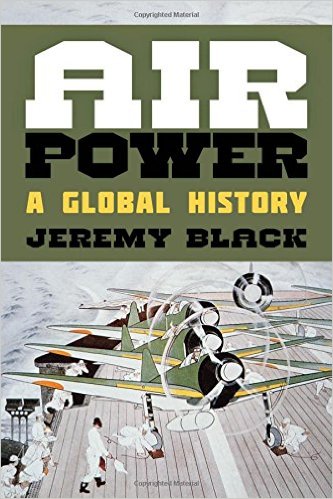
Air Power and the Modern World

Air Power Black

Jeremy Black
University of Exeter

“We were very young in those days” is the most weighty phrase near the beginning of The Case of the Constant Suicides, a novel by the Anglo-American detective writer John Dickson Carr. Published in 1941, this novel begins in London on September 1 1940, just before the heavy German air attacks on the city had started: “An air-raid alert meant merely inconvenience, with perhaps one lone raider droning somewhere.” By 1941, as today, the experience of bombing was very different, although not as different as it was to be by the end of the war in 1945. Bombing by 1945 had become a key experience of urban life, both in Europe and in East Asia. Refracted through the media and the arts, the civilian experience has to be remembered as a human backdrop to the discussions about effectiveness and practicality.

Air power has played a key role in the military history of the last century, both independently and within land and sea conflicts. Air power has been particularly important at the tactical and operational levels. It has also been seen as a strategic tool, even if bringing this element to fruition has proved very difficult; and difficult, moreover, for the range of states that have sought to pursue this means. The debates about what air power can provide have taken considerably different directions based on whether the army was the dominant service and the degree to which the air force was independent. These issues raise questions not only about how best to present the history of air power, but also concerning its past and present rationale and relevance. Continue reading “Air Power and the Modern World”

This Week’s Top Picks in Imperial & Global History

A woman in a traditional hoop skirt walked past graves adorned with Confederate battle flags in Santa Bárbara d’Oeste, Brazil. An annual celebration of the area’s many Confederate settlers was held in the cemetery last month. CreditMario Tama/Getty Images

Marc-William Palen
History Department, University of Exeter
Follow on Twitter @MWPalen

From Confederates in Brazil to Jacobins in India, here are this week’s top picks in imperial and global history. Continue reading “This Week’s Top Picks in Imperial & Global History”

James Belich to Give Inaugural @ExeterCIGH Annual Lecture – ‘Globalization and Divergence over Five Millennia’

Prof.James-Belich-e1398596928140The inaugural Centre for Imperial & Global History Annual Lecture, will take place on 25 May (full details and abstract below). Professor James Belich (Beit Professor of Imperial and Commonwealth History, University of Oxford) will be speaking on Globalization and Divergence over five millennia. The lecture should be of wide interest. Attendance is open to Exeter staff and students. The lecture will be followed by a drinks reception.

Continue reading “James Belich to Give Inaugural @ExeterCIGH Annual Lecture – ‘Globalization and Divergence over Five Millennia’”

Britain’s ‘Return East of Suez’: A Historical Perspective

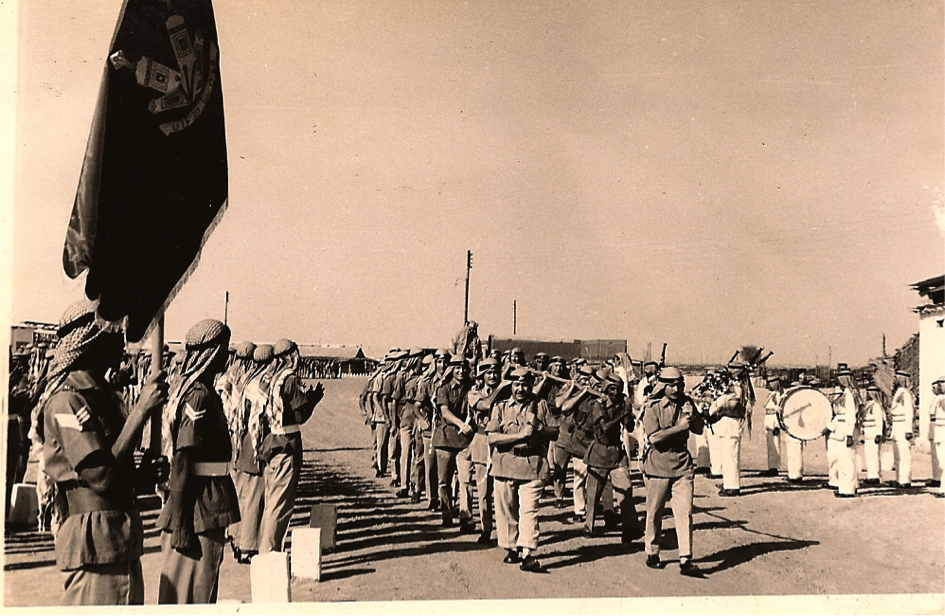
A parade of the Trucial Oman Scouts in the early 1960s. The Trucial Oman Scouts were a security force under direct British control designed to preserve law and order in the Trucial shaikhdoms (today’s United Arab Emirates)
A parade of the Trucial Oman Scouts in the early 1960s. The Trucial Oman Scouts were a security force under direct British control designed to preserve law and order in the Trucial shaikhdoms (today’s United Arab Emirates).

Helene von Bismarck

In March 2016, Defence Secretary Michael Fallon confirmed during a trip to Oman that the British Government was considering the establishment of a permanent army training base there. It is the latest in a series of announcements indicating that Britain is extending and consolidating its military presence in the Persian Gulf.

This development started in 2010, when incoming Conservative Prime Minister David Cameron announced the ‘Gulf Initiative’, by which he meant a coordinated attempt to rekindle Britain’s formerly close relationships with the Gulf States. The implementation of this policy was delayed by the advent of the Arab Spring, but was kickstarted again in December 2014 when Foreign Secretary Philip Hammond confirmed that Britain would build a Royal Navy base in Bahrain. In November 2015, the Strategic Defence Review published by the British Government called for a ‘new Gulf strategy’ and ‘a permanent and more substantial UK military presence’ in the area.

Nor has the British Government shied away from invoking Britain’s imperial past in this context. The Strategic Defence Review stressed Britain’s ‘historic relationships’ with Bahrain, Qatar, Oman, Kuwait and the United Arab Emirates, and Mr. Hammond went as far as calling the project to build a base in Bahrain Britain’s ‘return East of Suez’.[1] Continue reading “Britain’s ‘Return East of Suez’: A Historical Perspective”

This Week’s Top Picks in Imperial & Global History

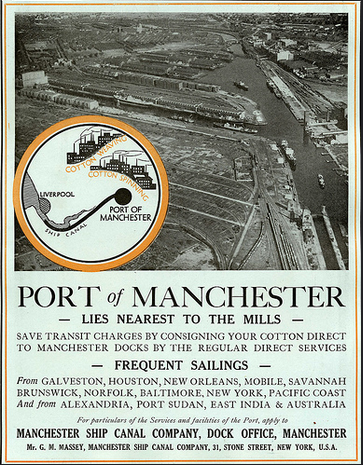
1930 US advert for canal

An advert for the canal, for the US market, c. 1930, from the Manchester Libraries, Information and Archives, Manchester City Council

Marc-William Palen
History Department, University of Exeter
Follow on Twitter @MWPalen

From empire by collaboration to the rise of the global citizen, here are this week’s top picks in imperial and global history. Continue reading “This Week’s Top Picks in Imperial & Global History”

Registration Open for ‘Embassies in Crisis’ – British Academy, 9 June 2016

Screen Shot 2016-05-04 at 16.36.38

Embassies in Crisis

British Academy, 9 June 2016

Embassies have long been integral to international diplomacy, their staff instrumental to inter-governmental dialogue, strategic partnerships, trading relationships and cultural exchange. But Embassies are also discrete political spaces. Notionally sovereign territory ‘immune’ from local jurisdiction, in moments of crisis Embassies have often been targets of protest and sites of confrontation. It is this aspect of Embassy experience that this conference explores.

The Embassies in Crisis conference will revisit flashpoints in the recent lives of Embassies overseas. Much of the focus will be on Britain’s Embassies, but several papers will also consider other instances of Embassies in crisis, whether British or otherwise. Serving and former British Ambassadors will be presenting as ‘witnesses’ alongside invited academics who have been invited to discuss dramatic instances of international confrontation or mass demonstration that placed particular nations, their capitals, and the Embassies they housed in the global spotlight.

Key themes include:  Continue reading “Registration Open for ‘Embassies in Crisis’ – British Academy, 9 June 2016”

What FDR and Reagan Had in Common – A Talk by H. W. Brands

What FDR and Reagan Had in Common

And What Might be Disappearing from American Foreign Policy

a Talk by

Professor H. W. Brands

Brands, Bill 2009

When: 24 May, 2.00-3.30

Where: Laver LT6, University of Exeter

RSVP online at Eventbrite

Abstract: Franklin Roosevelt epitomized liberalism in America in the 20th century, and Ronald Reagan conservatism. Yet while they disagreed on nearly everything in domestic affairs, they agreed on the need for the United States to play the leading role in world affairs. This consensus among liberals and conservatives is at risk from the mediocre performance of the U.S. economy since 2008 and from a questioning at both ends of the political spectrum of the value to the United States of trying to solve the world’s problems. Continue reading “What FDR and Reagan Had in Common – A Talk by H. W. Brands”

This Week’s Top Picks in Imperial & Global History

1
Abjad al-ḥarb ʻThe alphabet of warʼ (British Library, COI Archive, ‘Arabic A.B.C.’ PP/1/28L). © British Library, 2016

Marc-William Palen
History Department, University of Exeter
Follow on Twitter @MWPalen

From how history can save the global economy to African utopias of the 1960s, here are this week’s top picks in imperial and global history. Continue reading “This Week’s Top Picks in Imperial & Global History”

Daily History Q&A: The “Conspiracy” of Free Trade

Clinton Sandvick
Daily History

Cross-posted from Daily History

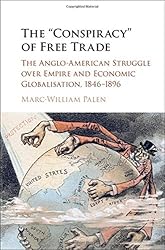
Marc-William Palen’s new book
The ‘Conspiracy’ of Free Trade: The Anglo-American Struggle over Empire and Economic Globalisation, 1846-1896 is relevant not only to historians of imperialism, capitalism, and economics, but to the 2016 American presidential primary election. Once again, free trade has become a central campaign issue during a presidential election. While Donald Trump and Bernie Sanders have discussed the consequences of free trade, they have provided very little historical context to help voters understand the rationale behind free trade. Palen’s book explores a world when extreme American economic nationalism came into conflict with Britain’s advocacy of global free trade. Palen’s book focuses “upon the ideological debates surrounding free trade and protectionism” within the United States and Great Britain.[1]

Palen is a historian at the University of Exeter. He has written extensively on globalization and free trade for the New York Times, the Australian, The Conversation, Globalist Magazine, History News Network and many others. Palen has recently published two outstanding articles (‘Free trade is once again tearing apart the Republican Party‘ and ‘Trump’s anti-trade tirades recall GOP’s protectionist past‘) explaining how Donald Trump’s economic policies echo previous GOP stances on free trade. He is also the current editor for Imperial & Global Forum. You can follow Palen on Twitter at @MWPalen.

Here is the interview with Marc-William Palen.

If someone asked you to quickly summarize your book, what would be your 2-minute elevator version?

Briefly, The “Conspiracy” of Free Trade provides a new interpretation of Anglo-American imperialism and economic integration from the mid to late 19th century. The issue of free trade dominated the era’s political scene like no other. But whereas Britain turned to free trade as a national policy and ideology by mid-century, the United States turned to economic nationalism. The book thus argues that Anglo-American economic globalization was driven by this political and ideological conflict between free trade and economic nationalism from the 1840s onward.

Continue reading “Daily History Q&A: The “Conspiracy” of Free Trade”

This Week’s Top Picks in Imperial & Global History

Abdel Kader Haidara with ancient family-owned manuscripts, Timbuktu, Mali, 2007. PHOTO: AMI VITALE/PANOS

Marc-William Palen
History Department, University of Exeter
Follow on Twitter @MWPalen

From the librarian who saved Timbuktu’s heritage to walking tours of Barcelona’s slave trade past, here are this week’s top picks in imperial and global history. Continue reading “This Week’s Top Picks in Imperial & Global History”

J. A. Hobson and Imperialism – A New Talking Empire Podcast

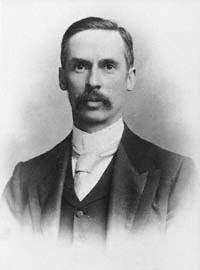
john_atkinson_hobson (1)In 1902, journalist John A. Hobson published Imperialism: A Study. The book was among the first to connect the  rise of finance capital with the growth of imperial expansion after 1870. Hobson’s theory would fast number among the most influential critiques of imperialism. Although Hobson himself was not a Marxist (he was a classical liberal), his theory would play a key role in shaping subsequent Marxist theories of imperialism, most notably that of V. I. Lenin.

In this Talking Empire podcast, Centre Director Richard Toye discusses Hobson’s Imperialism with Dr. Marc-William Palen.


The Victorian Origins of Will and Kate’s Visit to India

The Duke and Duchess of Cambridge at India Gate, a memorial to Indian service in the First World War, its foundation stone laid by the Duke of Connaught in 1921 Credit: @PARoyal
The Duke and Duchess of Cambridge at India Gate, a memorial to Indian service in the First World War, its foundation stone laid by the Duke of Connaught in 1921. Credit: @PARoyal

Charles V. Reed
Elizabeth City State University
Editor, H-Empire

As the Duke and Duchess of Cambridge visit south Asia this week, doing the sorts of things that royals are expected to do whilst abroad in the former empire – attend fancy social events, commemorate, inaugurate, and patronize, play cricket, and so on – the celebrity-obsessed global media has enthusiastically followed their every move. An even cursory glance at the tweets tagged #RoyalVisitIndia reveals the performative and visual character of the royal tour – so essential to its purpose since the first visits of the nineteenth century. William and Kate’s touring ancestors would find much familiar in their itineraries, the ceremony, the responses. It’s a quite odd thing, when we think about it, considering nearly seventy years of Indian independence from British rule. Of course, the present Queen’s dedication to the Commonwealth and maintaining the monarchy’s role in the former empire — as chronicled in Philip Murphy’s Monarchy and the End of Empire — explains much of it. But the Victorian history of the royal tour is of equal significance. Continue reading “The Victorian Origins of Will and Kate’s Visit to India”

Apply by April 17 for an International PhD Student Award @ExeterCIGH

exeter logo

The deadline (April 17) is fast approaching to apply for an international PhD student award, through which you can become a crucial part of the Centre for Imperial and Global History.

We offer internationally-recognised supervision with geographical coverage from staff across African, Asian (including Chinese), Middle Eastern, North American, Latin American, European, Imperial, and Global history from early-modern to contemporary eras. We have strong inter-disciplinary links with colleagues across the humanities and social sciences at Exeter, particularly with the Centre for War, State and Society and the Institute of Arab and Islamic Studies. The Centre has particular research interests in:

  • Globalisation’s past and present
  • Comparative empires and transnationalism
  • Humanitarianism, development and human rights
  • Law and colonialism
  • Political economy and the imperial state
  • Europe, decolonisation and the legacies of empire
  • The impact of armed conflict on society
  • Colonial warfare and counterinsurgency

Continue reading “Apply by April 17 for an International PhD Student Award @ExeterCIGH”

This Week’s Top Picks in Imperial & Global History

street sign 1

Marc-William Palen
History Department, University of Exeter
Follow on Twitter @MWPalen

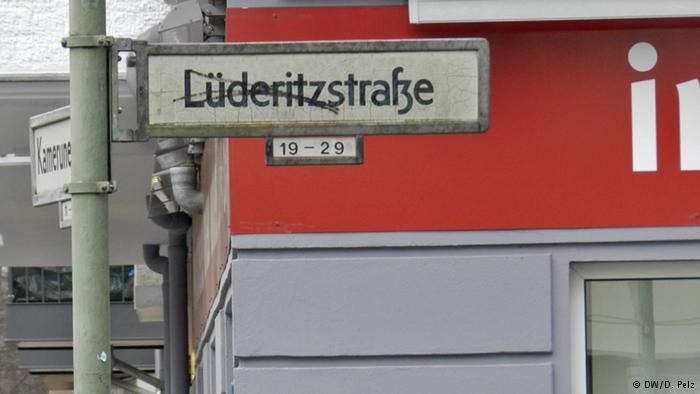
From the forgotten women behind the British Black Panthers to Berlin’s battle over colonial-era street names, here are this week’s top picks in imperial and global history. Continue reading “This Week’s Top Picks in Imperial & Global History”

India’s War: World War II and the Making of Modern South Asia

india's war

Nigel Collett
Cross-posted from Asian Review of Books

On 6 November 2002, the Queen inaugurated the Commonwealth Memorial Gates and Memorial Pavilion at the Hyde Park Corner end of London’s Constitution Hill. The Gates are inscribed “In memory of the five million volunteers from the Indian sub-continent, Africa and the Caribbean who fought with Britain in the two World Wars” and the Pavilion’s ceiling is inscribed with the names of the seventy-four of those volunteers who won the George and Victoria Crosses. It had thus taken the British fifty-seven years to publicly recognize that without the men and women of the British Empire, Britain would not have survived the World Wars.

This seems now an extraordinary and unforgivable lapse, but the denial it manifests had begun to emerge even as even as the second of the two wars in question was still being fought. Bill Slim’s 14th Army, which defeated the Japanese in Burma in 1944 and 1945 and was about two-thirds Indian in composition, ruefully called itself “The Forgotten Army”, and at the time there was more than a little truth in that. In Allied strategy, in the supply of manpower and materiel, even in the newsreels shown at home of the fighting around the world, the theaters of war around the Indian sub-continent always took third place to the campaigns in Europe and the Pacific.

This comparative neglect was followed at the War’s end, and particularly as the Empire then ebbed, by a public and academic amnesia that relegated India’s massive contribution to the War to the memoirs of soldiers who had fought on its borders. As the Empire increasingly grew to be a subject of denigration, India’s contribution to both Wars became unfairly tainted by imperialism and was largely forgotten. Continue reading “India’s War: World War II and the Making of Modern South Asia”