
Marc-William Palen
History Department, University of Exeter
Follow on Twitter @MWPalen
Marc-William Palen
History Department, University of Exeter
Follow on Twitter @MWPalen

Lori Lee Oates
History Department, University of Exeter
Follow on Twitter @LoriLeeOates
In 2015, the print and online Yoga Journal celebrated its 40th anniversary. It currently claims a readership of 2.1 million people and receives more than 5 million online page views per month. Lululemon, the famous retailer of women’s yoga wear, has started opening stores for men. The Maharishi Foundation website reports that it has established Transcendental Meditation Centres in 108 countries across the globe. Some of the best selling books of recent decades have focused on themes and practices traditionally found in Eastern Religion. Eckhart Tolle’s The Power of Now (1997) has been translated into 33 languages and is estimated to have sold 3 million copies. The book is described as a New Age reworking of Zen. Elizabeth Gilbert’s Eat Pray Love (2006) spent 187 weeks on the New York Times Best Sellers List and sent women across the globe running toward the ashrams of India. Clearly, alternative religion is big business in the twenty-first century.
This global mass consumption of alternative religion has long been regarded as a manifestation of the increasing commercialization of, well, everything since the 1980s. It is true that religion, like everything else, has reached new heights of sales in the age of mass marketing. French scholar Frédéric Lenoir has provocatively argued in Les Métamorphoses de Dieu (2004) that secular societies are more religious than at any previous time in history. However, what is less frequently spoken of is the role that imperialism played in the expansion of interest in Eastern religions in the West. Continue reading “How Empires Globalized New Age Religion”

Marc-William Palen
History Department, University of Exeter
Follow on Twitter @MWPalen
Marc-William Palen
History Department, University of Exeter
Follow on Twitter @MWPalen
The post-Second-World-War liberal economic order has never looked more uncertain. Over the past few months, the long-dormant forces of protectionism, nationalism, populism, and xenophobia have been reawakened. Free trade is under attack, whether from Donald Trump’s protectionist presidential campaign or from the outcome of the Brexit referendum. Extreme nationalism is on the rise, not only in the US and the UK, but also in continental Europe and Asia. Trump climbed the GOP nomination ladder promising to put “America First,” resurrecting the isolationist mantra of the 1940s. The white supremacist, pro-apartheid killer of UK Labour MP Jo Cox was heard shouting “Put Britain First” as he stabbed and shot the 41-year-old anti-Brexit MP to death. Across the globe, foreigners have become the common target of racist hate crimes and extremist violence. Anti-Semitism is on the rise, as are Islamophobic attacks. Nowadays the cosmopolitan ideal – a global citizenry – appears to be more myth than reality.
It’s a difficult time to be an optimist. It doesn’t help that history is very nearly repeating itself. The Brexit referendum has hammered home how historical memory is far shorter and inaccurate than we might have feared. For example, nationalistic pro-Brexit Britons marked the centenary of the bloody Battle of the Somme this past weekend, either unaware or uncaring of the irony that the world war that wrought the same bloody battle arose largely because of extreme European nationalism, economic autarky, and disunity.
Granted, the current global crisis has many aspects that are unique to the 21st century. But there also many striking parallels between the situation today and the struggles that occurred during the global economic depressions of the late 19th and early 20th centuries. (These periods even had their fair share of international terrorism.) Now more than ever we need to be revisiting these earlier controversies over globalization and international conflict in order to find historical precedents, parallels, and lessons – so that we don’t repeat the same mistakes.
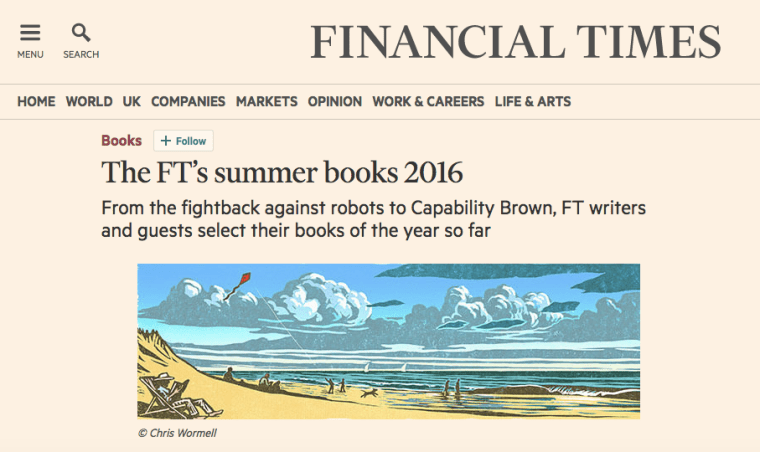
It would seem that the editors of the Financial Times agree. Continue reading “New @ExeterCIGH Book Featured in Financial Times”

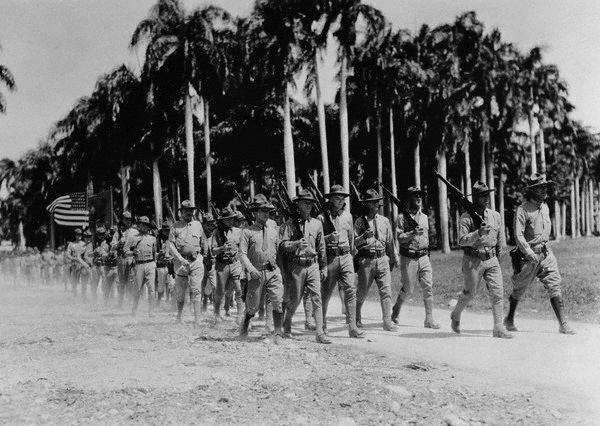
Entrance of a gallery of the mine Khouribga. Photograph from an advertising Chérifien Phosphates Office 1952. EN ANOM. Aix-en-Provence: BIB AOM 4911 // Youssoufia Phosphates. – The achievements of the Office for his daily personal, Rabat: Morocco-Matin 1952.
Marc-William Palen
History Department, University of Exeter
Follow on Twitter @MWPalen
Daniel Cullen
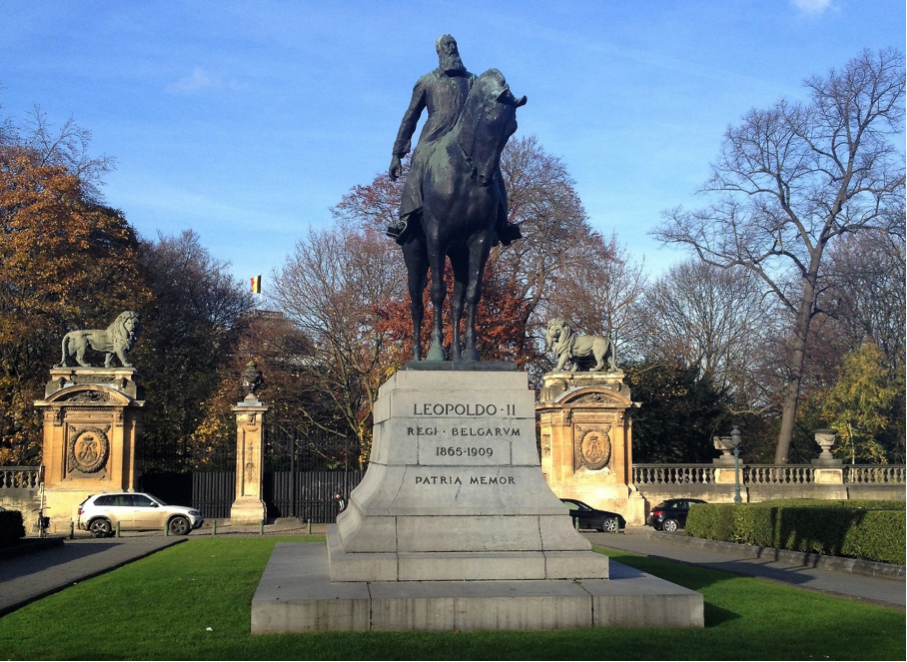
Overshadowed by Oxford’s ongoing Rhodes statue controversy, in late April a motion was debated by student representatives at Queen Mary, University of London, calling for the removal of plaques commemorating the 1887 visit of King Leopold II of Belgium. Presenting the motion, the university’s Pan-African Society referred to atrocities committed during Leopold’s rule of the Congo Free State and argued that the presence of the “deeply offensive relics” was “glorifying and uncritical”. The group proposed that the plaques be relocated and recontextualised, “preferably in a space dedicated to the memorialization of the crimes of genocide, colonialism and imperialism”.
Transnational protestors across the world are presently demanding critical reflection on the legacies of prominent imperial figures and the “decolonisation” of higher education institutions, addressing wider issues of institutional racism, from Oxford to Princeton. This protest movement began in 2015 when students demonstrated against statues of Cecil Rhodes in Cape Town, before protests spread internationally, taking up the hashtag #RhodesMustFall.
The vote at Queen Mary is among the latest in a series of debates inspired by the ‘Rhodes Must Fall’ movement. The colonial history of the Congo Free State, if not always widely known, has been well established. From 1885, in the era of the European ‘Scramble for Africa’, an area of over 2,000,000 square kilometres around the Congo river basin (covering much of the modern Democratic Republic of the Congo) was brought under Leopold’s personal control. With the imposition of a brutal system of forced labour for the extraction of wild rubber, evidence of widespread abuses eventually surfaced. Though the exact figures are unknown, some have estimated a population loss in this period of up to 10 million lives. Following an international humanitarian outcry, the monarch was forced to relinquish his territory to the Belgian government in 1908. Continue reading “Leopold Must Fall”
Marc-William Palen
History Department, University of Exeter
Follow on Twitter @MWPalen
In the light of the dramatic news of Britain’s vote to leave the European Union and David Cameron’s resignation, we release this special Centre podcast in which Prof. Richard Toye and Dr. David Thackeray reflect on its historic significance and the way ahead.
Marc-William Palen
History Department, University of Exeter
Follow on Twitter @MWPalen
 The OUPblog has just posted a great reading list for scholars of the history of US foreign relations, in advance of the annual meeting of the Society for Historians of American Foreign Relations (SHAFR). The list, some of which are below, includes blog posts, cutting-edge books, and the top five most-read Diplomatic History articles of 2015 (spoiler: one of them is mine). More than a few of the items on the list have an explicitly imperial history angle, including fresh-off-the-press books like Benjamin Coates’s Legalist Empire: International Law and American Foreign Relations in the Early Twentieth Century and Amanda Moniz’s From Empire to Humanity: The American Revolution and the Origins of Humanitarianism. Have a look! Continue reading “17 OUP-Recommended US Foreign Relations Histories That You Need to Read”

Marc-William Palen
History Department, University of Exeter
Follow on Twitter @MWPalen
Nadia Rhook
La Trobe University
I recently came across a photograph I can’t stop thinking about. Captured in 1905, it shows a Bangalore-trained masseur, Teepoo Hall, in the middle of a Melbourne Hospital room. One woman and twenty some men have clustered around Hall to watch him massage the bare shoulders of a reclining woman. Many of the students display bemusement in half-smiles. One of the men is positioned very close to Hall’s left shoulder and looks forthrightly at the camera, as if ready to learn from Hall; ready, even, to take Hall’s place.
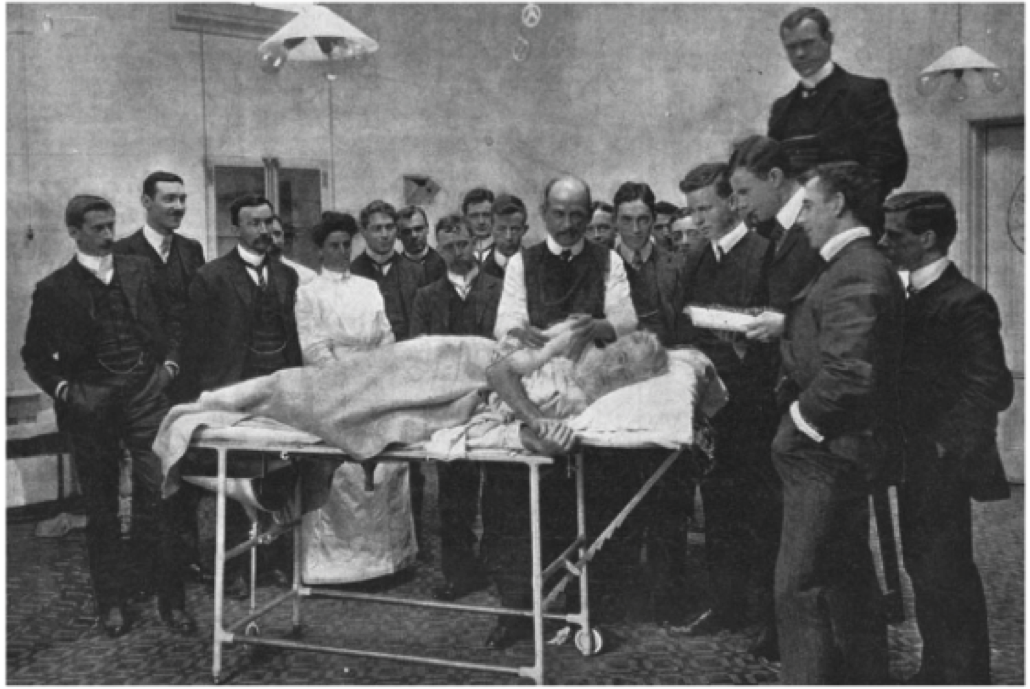
The photo shows the transfer of Indian knowledge in process in the medical heart of Melbourne. It does so four years after the institution of the racially exclusive federal 1901 Immigration Restriction Act (IRA), which was effectively reducing the numbers of Indians in Australia. And yet, as the picture shows, in the early 20th century Hall continued to promote the ‘art of massage’.[1] Indeed, Hall had recently become a founding member of the Australian Massage Association, and on this basis he features in histories of physiotherapy in Australia.[2]
The image thus tells an intriguing story, but not a typical one. Probing further, we can understand that the picture also reflects a tension of nation-building and empire. In Hall’s centrality and power, an inversion is at play. Most white-made representations of the day consigned Indians to the ‘slum’ margins of ‘Little Lon’, and showed them as an ‘undesirable nuisance’. But in this Melbourne Hospital room, Hall literally had the upper hand. Continue reading “‘The Indian masseur’: How Teepoo Hall Kneaded Early ‘White’ Melbourne”
Anthony Howe
University of East Anglia
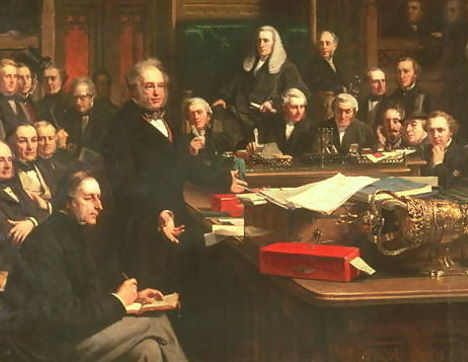
Amid much discussion of alternatives to Britain’s current relationship with Europe, the Canadian, Norwegian, and Swiss models have featured widely. But surprisingly little attention has been paid to the closest historical model of what Brexiteers might hail as ‘a free trade Europe’.[1]
The first version of a ‘common market’ based on free trade treaties was created in Europe in the 1860s. Following the signing of the 1860 Anglo-French (Cobden-Chevalier) commercial treaty, a further 50-60 interlocking trade treaties were negotiated between European states, in effect creating a free trade area, the closest Europe got to a single market before the 1970s.
The economic benefits of this first common market are still contested by economic historians, but, as a model of a loose institutional framework it successfully lowered tariffs between participating states (only Russia of major European states remained outside it).
And at first glance this treaty network appears remarkably similar to the goals of those wishing to avoid a European super state in favour of simpler trade-based relationships. However, the fate of this model should be less than encouraging for the Leave campaign. Continue reading “Brexit, Free Trade, and the Perils of History”
Marc-William Palen
History Department, University of Exeter
Follow on Twitter @MWPalen
Continue reading “This Week’s Top Picks in Imperial & Global History”

Rachel Herrmann
University of Southampton
Follow on Twitter at @Raherrmann
On any given weekend, you might find yourself on a train platform, surrounded by sports fans wearing “Native American” headdresses and “war paint,” and waving inflatable tomahawks. They’ll be wearing apparel purchased from the team’s online store (the “Trading Post”), where you can also buy a “Little Big Chief” mascot. During the event, supporters will chant the Tomahawk Chop to get into the spirit of things, and afterward, perhaps they’ll rehash the game on the team’s message boards (“The Tribe”).
No, this isn’t the Atlanta Braves. It’s not the Washington Redskins. This is a rugby match for the Exeter Chiefs. And it evokes Britain’s forgotten imperial American past. Continue reading ““Playing Indian”: Exeter Rugby in a Postcolonial Age”
Rachel Chin
University of Exeter
Follow on Twitter @chinra4
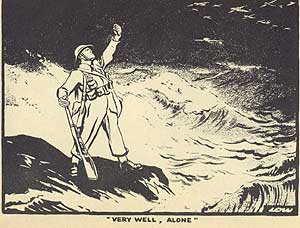
Billionaire stockbroker Peter Hargreaves recently claimed that leaving the EU could be likened to the British evacuation from Dunkirk in late May 1940. This withdrawal signalled the British retreat from the continent and immediately preceded the French capitulation to German forces two weeks later. Hargreaves declared, “We will get out there and we will become incredibly successful because we will be insecure again.”[1]
As a scholar of rhetoric and the Second World War, I have become particularly attuned to how conflict is used and abused by politicians as a means to convince the British public of the value of a particular issue. Most recently, Tory politicians and campaigners like Hargreaves have mobilised Britain’s role in the Second World War as a justification to vote either for or against staying in the European Union (EU). This type of rhetoric is, at its core, emotive and nostalgic. It’s also deeply troubling because such oversimplified ideas of national identity and wartime patriotism are circumventing any chance of having a meaningful discussion about how Brexit would or would not change life on this island nation. It also ignores the fact that the Second World War was a global conflict, however much that might challenge ingrained nationalistic nostalgia. Continue reading “Selective Memory: The Brexit Campaign and Historical Nostalgia”


You must be logged in to post a comment.