
Mitchel Stuffers
Assistant Editor at CIGH Exeter & PhD Candidate in History, University of Exeter
From Putin’s pick of a German ex-chancellor for peace talks to the Danish roots of shipping tolls, here are this week’s top picks in imperial and global history.
Berlin sceptical as Putin proposes Germany’s ex-chancellor Schroeder as Ukraine mediator
Editorial Team
France24
Russian President Vladimir Putin has proposed longtime ally and friend, former German chancellor Gerhard Schroeder, as mediator in the Ukraine war – an idea that has been met with scepticism in Berlin. Asked on Saturday who he would like to help restart talks with Europe, Putin said he would “personally” prefer Schroeder, who led Germany from 1998 to 2005. Schroeder, 82, has remained close to the Kremlin leader long after leaving office, standing apart from most Western leaders since Russia invaded Ukraine in 2022.
German officials reacted cautiously, saying they had “taken note” of Putin’s comments but viewed them as part of “a series of bogus offers” from Russia, government sources told AFP Sunday. One source said a real test of Moscow’s intentions would be to extend the current three-day truce. Schroeder’s stance has made him a controversial figure at home. He has never publicly condemned the invasion of Ukraine, costing him several privileges normally granted to former chancellors. [Continue reading]
It’s official: Moldova to reintegrate Transnistria
Editorial Team
RFU News
Today, there is interesting news from Moldova. Here, the escalation has reached a decisive turning point, as Moldova is now officially set their plan in motion to reintegrate the Russia-controlled separatist region of Transnistria. The Moldovans have already taken the first step and trapped the highest-ranking Russian generals in one place. In a bold and unprecedented move, Moldova declared the command of the Operational Group of Russian Forces in Transnistria persona non grata, including commander Dmitry Zelenkov and his top deputies
This decision immediately restricts their freedom of movement, if they attempt to leave Transnistria through Moldova, they face detention, deportation, and a permanent ban from re-entering. If they try leaving through Ukraine, this will lead to their immediate destruction, meaning the Russian command is now locked inside the breakaway region, unable to rotate, travel, or operate normally. Moldovan authorities made it clear that Russian troops are illegally stationed on their territory, and their presence will no longer be tolerated or facilitated. This move is not isolated, but part of a broader strategic shift, as the Moldovan government has already drafted and presented a comprehensive reintegration plan for Transnistria to their Western partners in Brussels, outlining a long-term path to restore control and reunify the region. [Continue reading]
Inner League Interview with the Editors of The Cambridge Handbook of the League of Nations and International Law
Editorial Team
Inner League, University of Copenhagen
This week we would like to share an interview with Haakon A. Ikonomou, Karin van Leeuwen, and Morten Rasmussen – the editors behind the new Cambridge Handbook. The book analyses the role of international law in the construction of the League of Nations: the first multilateral organisation to institutionalise global governance and intercontinental cooperation. We think that you will find the editors’ reflections intriguing as they explain how this book came to be and why. Without further ado, here is the inside scoop.
What did you individually contribute to the project of making this book? That is, in relation your academic background, your research interest, and your abilities. Morten: “The Handbook is the final result of a collective DFF project I was leading from 2019 to 2022. Laying the Foundations: The League of Nations and International law, 1919-1945. The aim of the project was to explore the role of international law in the League of Nations as well as the impact on the latter on the development of international law…” [Continue reading]
Story of enslaved boy featured in 1748 Joshua Reynolds portrait emerges in new study
Steven Morris
Guardian
Exclusive: Until now nothing was known about ‘Jersey’, depicted with naval officer, but research raises hopes he may have won freedom. For hundreds of years, he was known only as “Jersey”, an enslaved boy of about 11 rendered in oil on canvas by the great 18th-century portrait painter Sir Joshua Reynolds. But now the life of the youngster, believed to be Reynolds’ earliest depiction of a person of colour, has begun to emerge, thanks to a research project.
Details found in admiralty records and other archives have unearthed information about Jersey’s identity, his military service and even hint he may eventually have found freedom. The painting, thought to have been completed around 1748, shows the boy and his “master”, the naval officer and MP Paul Henry Ourry. While Ourry looks out into the distance authoritatively, the enslaved child gazes up at the officer tentatively. [Continue reading]
The method in Iran’s madness? Closure of Strait of Hormuz echoes a centuries‑old Danish play − and is a tragedy for the world order
Vivek Krishnamurthy
Conversation
More than two months into the war in Iran, navigation through the Strait of Hormuz – the key waterway through which more than a third of the international trade in oil and gas passes – remains perilous and uncertain. Underscoring the uncertainty, on May 3, 2026, the Trump administration launched Project Freedom to help stranded ships through the strait. Yet the next day, at least two ships came under fire from Iran. Iran began blocking the strait to navigation on Feb. 28, after the United States and Israel launched a military campaign against the country. By mid-March, Tehran was demanding tolls of up to US$2 million per vessel. In response, the U.S. imposed what President Donald Trump declared to be a “complete” maritime blockade on Iran and subsequently threatened punishing economic sanctions on any entity that pays Iran’s tolls.
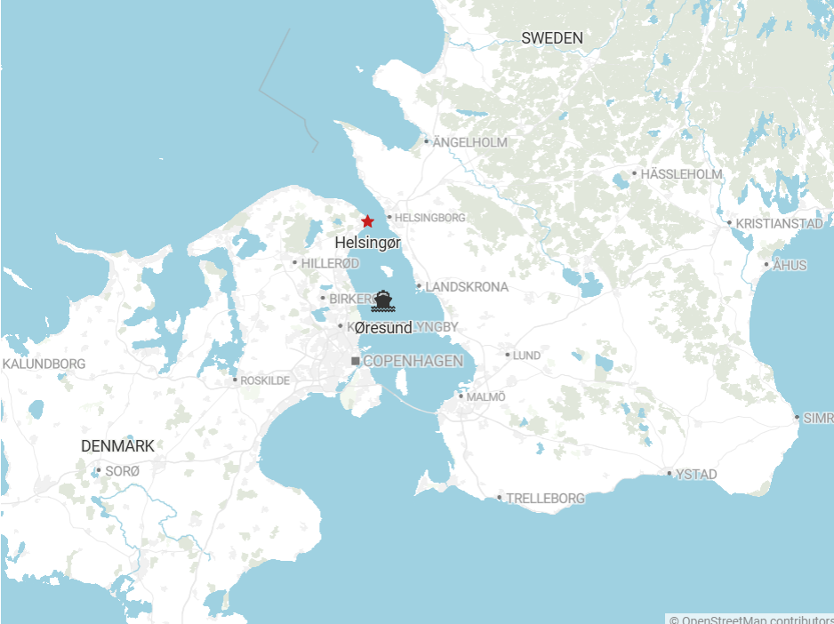
Following Iran’s lead, other nations are now contemplating using their own leverage over crucial choke points closer to their shores. Indonesia floated a proposal to charge tolls on vessels transiting the Strait of Malacca, before walking it back. China has also issued warnings against foreign military vessels transiting the Taiwan Strait. These events have prompted commentators to warn of the end of a golden era of navigational freedom that the U.S. has underwritten for more than a century. But as an expert on international law, I know that attempts by nations to weaponize their leverage over crucial geographic choke points at sea and on land are nothing new. In fact, they go back at least six centuries. [Continue reading]


You must be logged in to post a comment.