
Mitchel Stuffers
Assistant Editor at CIGH Exeter & PhD Candidate in History, University of Exeter
From the Vatican’s historic apology for legitimising slavery to three pioneers of modern humanism, here are this week’s top picks in imperial and global history.
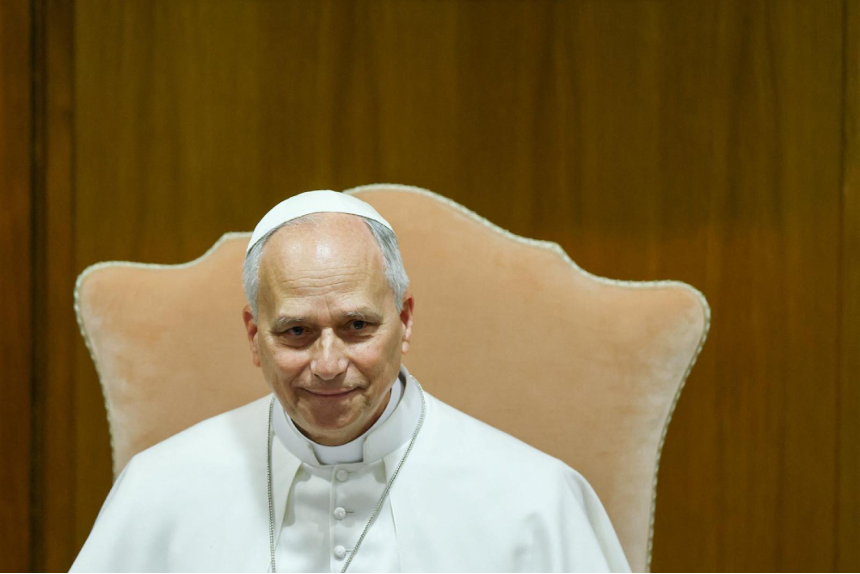
Pope Leo XIV makes historic apology for Holy See’s own role in legitimizing slavery
Nicole Winfield
National Catholic Reporter
Pope Leo XIV made a historic apology on Monday for the role the Holy See itself played in legitimizing slavery and for having failed to condemn it for centuries, calling the Vatican’s record a “wound in Christian memory.” Past popes have apologized for Christians’ involvement in the trans-Atlantic slave trade. But no pope has ever publicly acknowledged, much less apologized for, the role that past popes themselves played in giving European sovereigns explicit authority to subjugate and enslave “infidels.”
History’s first U.S.-born pope, whose family history includes both enslaved people and slave owners, delivered the apology in his first encyclical, Magnifica Humanitas, (“Magnificent Humanity”), which was released Monday. The sweeping manifesto is about safeguarding humanity in an era of increasing reliance on artificial intelligence. Leo raised the trans-Atlantic slave trade in relation to what he called the new forms of slavery and colonialism that the digital revolution is fueling, such as the unregulated labor required to procure rare minerals needed for AI chips. In doing so, Leo responded to decades of calls by Black American Catholics, activists and scholars for the Holy See to atone for its own role in the colonial-era trade in human beings. [Continue reading]
ICRC President: “We can no longer pretend that what we are witnessing across war zones is in accordance with the law”
Speech by Mirjana Spoljaric, President of ICRC
International Committee of the Red Cross
Wars fought without rules transform wars between combatants into wars against civilians. In recent weeks, I have undertaken several missions to the Middle East, where the impact of conflict on civilians is painfully clear. But brutal patterns of warfare are becoming pervasive across regions from the Middle East to the Horn of Africa, to eastern Europe, and beyond. We can no longer pretend that what we are witnessing across war zones is in accordance with the law.
Not the scale of destruction. Not the scale of suffering. And not the language being used to justify it. When leaders direct their militaries to act without restraint, when they label their enemies as sub-human, when they threaten entire populations, they do more than incite war crimes. They threaten to destroy the moral foundations of what it means to be human. Across history, dehumanization has been a consistent precursor to atrocity. Indiscriminate killing, torture and abuse become far easier to justify when we stop seeing others as equal human beings. But what happens when brutalizing rhetoric becomes the baseline? It gives your enemy the green light to do the same. [Continue reading]
Macron backs symbolic repeal of France’s slavery laws, warns against ‘false promises’ on reparations
Editorial Team
France24
President Emmanuel Macron on Thursday endorsed the symbolic repeal of royal decrees that governed slavery in French colonies, as France confronts its history and the sensitive issue of reparations. Calls have been mounting for Macron, whose second and final five-year term ends next year, to initiate a formal dialogue on how France should respond to the enduring legacy of slavery. He said the issue of reparations should be addressed but warned against making “false promises.” France abolished slavery more than a century ago but royal decrees from the 17th and 18th centuries that established the legal status of enslaved people in its colonies were never formally overturned.
In 2001, France became the first country in the world to recognise slavery and the slave trade as “crimes against humanity”, but stopped short of any reparations. Celebrating the 25th anniversary of the landmark legislation at the Elysee presidential palace on Thursday, Macron said the continued existence of the royal decrees was a “form of offence” and “a betrayal of what the Republic stands for.” “That is why I am asking the government to take up the bill aimed at repealing the Code Noir,” Macron said. [Continue reading]
Sonny Rollins, colossus of jazz saxophone, dies aged 95
Ben Beaumont-Thomas
Guardian
Sonny Rollins, one of the greatest jazz saxophonists of all time, has died aged 95. His death was announced on his website on Monday, “with deep sorrow and profound love”. His publicist Terri Hinte also confirmed the news. No cause of death was given but the statement said “the Saxophone Colossus” died at his home in Woodstock, New York, on Monday afternoon. The statement quoted Rollins reflecting on death: “I think when the creative person ends, he continues in the next existence. I’m a person who believes this life isn’t the be-all and end-all of everything. A spiritual person doesn’t feel like that.”
With more than 60 albums released from the late-1940s onwards, including collaborations with Miles Davis, Thelonious Monk, John Coltrane and others, Rollins was one of the last living stars of the bebop generation, who took jazz from a predominantly dance or ballad form into startlingly expressive new territory. Rollins himself was a genius of melody, whose bright, catchy lines – whether jazz standards or self-penned – would be unpicked, extended and refashioned in improvised and sometimes epic solos. [Continue reading]
Three lives, one vision: how Dunant, Demidoff and Abdelkader shaped modern humanitarianism
Anastasia Kushleyko, Cédric Cotter, and Ahmed Al-Dawoody
International Committee of the Red Cross
The brutal effects of war have long prompted efforts to limit suffering and preserve humanity in times of conflict. Across cultures, religions, and legal traditions, people have sought to restrain violence and preserve a measure of humanity in conflict. Yet the emergence of modern humanitarianism in the nineteenth century marked a turning point: compassion became increasingly organized, codified, and institutionalized. Against the backdrop of industrialized warfare, technological change, and growing public awareness of battlefield suffering, new forms of humanitarian action began to take shape.
In this post, ICRC experts Anastasia Kushleyko, Cédric Cotter, and Ahmed Al-Dawoody revisit the contributions of Swiss businessman Henry Dunant, Russian philanthropist Anatole Demidoff, and Algerian scholar and leader Emir Abdelkader. Through their efforts to protect prisoners of war, care for the wounded, and uphold humane treatment during conflict, these three figures demonstrated that humanitarian principles were neither confined to one region nor rooted in a single tradition. The authors argue that modern humanitarianism emerged through converging ideas, networks, and practices across different societies, and that revisiting these histories can help reaffirm the universal character of humanitarian principles today. [Continue reading]


You must be logged in to post a comment.