
Mitchel Stuffers
Assistant Editor at CIGH Exeter & PhD Candidate in History, University of Exeter
From foreign terms in America’s Declaration of Independence to a Romania-Moldova unification bill, here are this week’s top picks in imperial and global history.
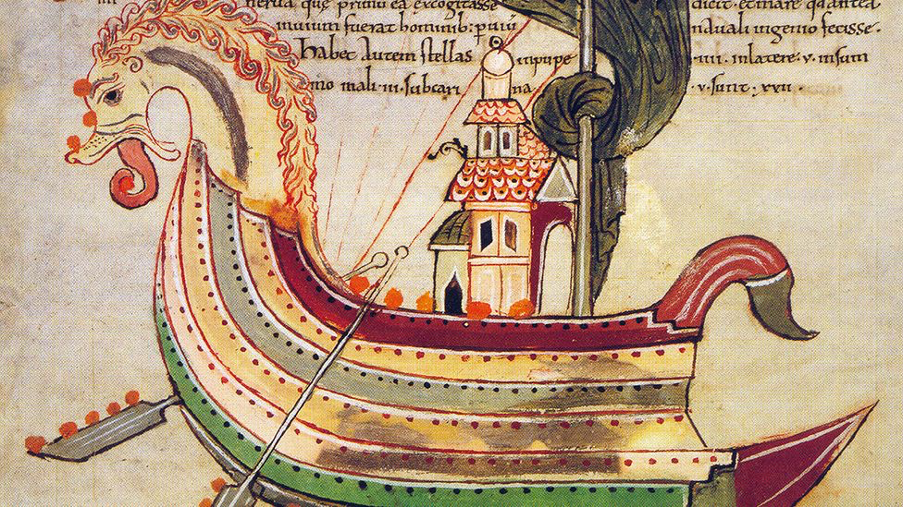
The Viking word hidden in the Declaration of American Independence
Sophie Hardach
BBC
From Roman freedom to Viking happiness, the iconic words in the Declaration of Independence reveal thousands of years of humans wrestling with how to live well together – and the power of language to put those ideas into action. “We hold these truths to be self-evident, that all men are created equal, that they are endowed by their Creator with certain unalienable Rights, that among these are Life, Liberty and the pursuit of Happiness.”
When Thomas Jefferson drafted these words in the Declaration of Independence, two things were on his mind. One: he needed to find “terms so plain and firm as to command their assent” by the colonies, as he later explained, and justify independence from Great Britain. Two: beyond the practical purpose, he wanted the text to be “an expression of the American mind, and to give to that expression the proper tone and spirit called for by the occasion”. 250 years ago, Congress approved the Declaration on 4 July 1776. But the meaning of those seemingly simple terms – “created equal”, right to “Life, Liberty and the pursuit of Happiness” – continue to provoke debate. [Continue reading]
The original Moana: Did a 1926 documentary give birth to a 21st century Disney blockbuster?
Christian Kriticos
Guardian
Next week sees the release of Moana, the live-action remake of the 2016 Disney animation smash – again starring Dwayne Johnson. But that was not the original Moana. That honour goes to a Moana released a full century ago: a glimpse of Polynesian life now largely forgotten but nonetheless offering some inspiration to the makers of today’s iteration. “Someone at Disney picked the bones of the 1926 Moana to make their movie,” believes film historian Bruce Posner.
The 1926 Moana was a silent documentary by American film-maker Robert Flaherty, who had cemented his reputation a few years before with Nanook of the North, a pioneering portrait of Inuit civilisation. Its epic sequences of walrus hunting and kayaking in icy waters had lit up the box office. So, for his next feature, Flaherty had carte blanche to go anywhere. He chose Samoa. [Continue reading]
Frida Kahlo at Tate Modern: how a radical artist became a global icon
Benedict Carpenter van Barthold
Conversation
Frida: The Making of an Icon at Tate Modern is the first major interrogation of the Mexican painter Frida Kahlo’s legacy in London for 25 years. It already has more advance sales than any exhibition in Tate history. The title puts the visitor on first-name terms with someone who died in 1954. Yet despite the many privileged glimpses into Kahlo’s life, from photographs, to objects, and – of course – her work, the show is more about ubiquity than intimacy.
The opening sections of the show are brilliant. Immediately to the left of the entrance are two photographs taken by Kahlo’s father when the painter was 18. In one, she is seated in ¾ profile, wearing a dress and holding a book, if not withdrawn, thoughtful. In the other she is pictured with her sisters and their cousins. She stands, slightly taller, in the centre, dressed in one of her father’s suits, one hand in her pocket. She stares out of the picture, with an outwardly directed intensity. The photographs were taken just months after Kahlo was involved in a bus accident that resulted in a life of periodic surgery. This trauma, among others, is a motif in her work. [Continue reading]
Pope Leo XIV makes first major appointment of a woman to senior Vatican role
Rosie Slater
Independent
Pope Leo XIV has made a significant move by appointing an Italian nun, Sister Alessandra Smerilli, to lead a key Vatican department, marking his first major promotion of a woman within the Holy See’s hierarchy. Sister Smerilli, an economist, will now head the Vatican office responsible for migrants, the environment, and development.
She currently serves as the second-in-command within the Dicastery for Promoting Integral Human Development and will succeed the retiring Canadian Cardinal Michael Czerny, who is set to turn 80 this month. This appointment suggests Pope Leo is continuing the precedent set by his predecessor, Pope Francis, who actively elevated women to senior management positions in response to ongoing calls for greater female involvement in the Church’s decision-making processes. [Continue reading]
Romania has passed a bill on unification with the Republic of Moldova
Igor Fomin
Logos Press: Business Review
A legislative initiative to unite Romania with the Republic of Moldova, introduced by lawmakers from the S.O.S. România party, was tacitly approved on Wednesday, June 24, by the Chamber of Deputies of the Romanian Parliament and sent to the Senate, which is the decision-making body in this case. The legislative proposal was submitted to parliament on April 14 and received a negative opinion from the government, as well as negative reviews from the Chamber of Deputies’ Legal Committee and Human Rights Committee, according to news.ro.
On Wednesday, the legislative initiative was tacitly adopted by the Chamber of Deputies after the 45-day deadline had expired, in accordance with Article 75, paragraph (2) of Section III of the Constitution, and will be sent to the Senate, which is the decision-making body, as the initiating chamber, given the absence of debate during the plenary session. According to the initiative, the Romanian Parliament decides on the unification of Romania with the Republic of Moldova. [Continue reading]


You must be logged in to post a comment.