
Mitchel Stuffers
Assistant Editor at CIGH Exeter & PhD Candidate in History, University of Exeter
From the passing of Microhistory pioneer Carlo Ginzburg to the inventor of a written Cherokee language, here are this week’s top picks in imperial and global history.
Microhistory pioneer Carlo Ginzburg, who gave voice to the marginalized, dies at 87
Giada Zampano
AP News
Carlo Ginzburg, an Italian historian whose pioneering work transformed the study of the past by recovering the voices of marginalized people, died Wednesday at 87. The Scuola Normale Superiore in Pisa, where he was both a student and professor emeritus, said he died in the northern Italian city of Bologna.
Ginzburg was a pioneer of microhistory, which focuses on small, specific units of analysis — such as an individual, a community, or a singular event — to reveal broader themes and issues within history. A leading figure in contemporary historiography, Ginzburg developed the so-called “evidential paradigm,” a method based on interpreting clues, traces and seemingly minor details to reconstruct the experiences of those excluded from dominant narratives. [Continue reading]
The Africa exception: the slavery reparations debate was once ‘unthinkable’. Now it is unavoidable
Panashe Chigumadzi
Guardian
The architect of the African Union’s reparations framework for the historic UN resolution explains why demands for historical justice are inseparable from the struggle for Black sovereignty.
Last month, at commemorations marking the 25th anniversary of France’s Taubira law recognising the trafficking of enslaved Africans as a crime against humanity, Emmanuel Macron did the unthinkable: he became the first French president to publicly utter the word “reparations”. Since 1825, when France punished Haiti for daring to declare itself the western world’s first Black sovereign republic by extorting 150m francs in compensation for the loss of what it regarded as enslaved “property”, reparations to Black peoples and nations have been politically “unthinkable”. [Continue reading]
A new look on Africa
Editorial Team
German Embassy Pretoria
With 54 countries and over 2000 languages, Africa is certainly a champion of diversity among the continents. With 1.4 billion people, economic growth and political weight, it also increasingly emerges as a centre of gravity in the multipolar world of today. Without the active participation of African nations, urgent global challenges that affect all of us, such as climate change, wars and conflict, or the prevention of future pandemics cannot be tackled successfully.
Because of the ever-growing significance of Africa, the German government initiated of process of drafting new guidelines on Africa policy. This process was concluded at the beginning of this year. During the past twelve month it involved a wide range of consultations with African partners, civil society, academia and businesses. We seek a two-way partnership with African countries, based on dialogue, trust and cooperation. We want an honest relationship where we listen to each other and try to support one another in various fields of mutual interests and needs. Let me highlight a few salient points: [Continue reading]
Defra Launches Updated Sustainable Farming Incentive with £240 Million Funding Commitment
Editorial Team
Sustainable Times
The UK Government has unveiled the latest version of its Sustainable Farming Incentive, outlining the funding available to help farmers restore nature, strengthen food production, and improve the resilience of agricultural businesses in the face of a changing climate. The announcement, made on Thursday 11 June, has been eagerly awaited by farmers and environmental groups alike, particularly following the scheme’s closure for more than a year.
For many in the sector, the relaunch represents an important opportunity to support sustainable land management while helping farms adapt to future environmental and economic challenges. At first glance, the headline funding commitment of £290 million appears positive. However, questions remain over whether the amount allocated for new agreements will be sufficient to drive meaningful change. [Continue reading]
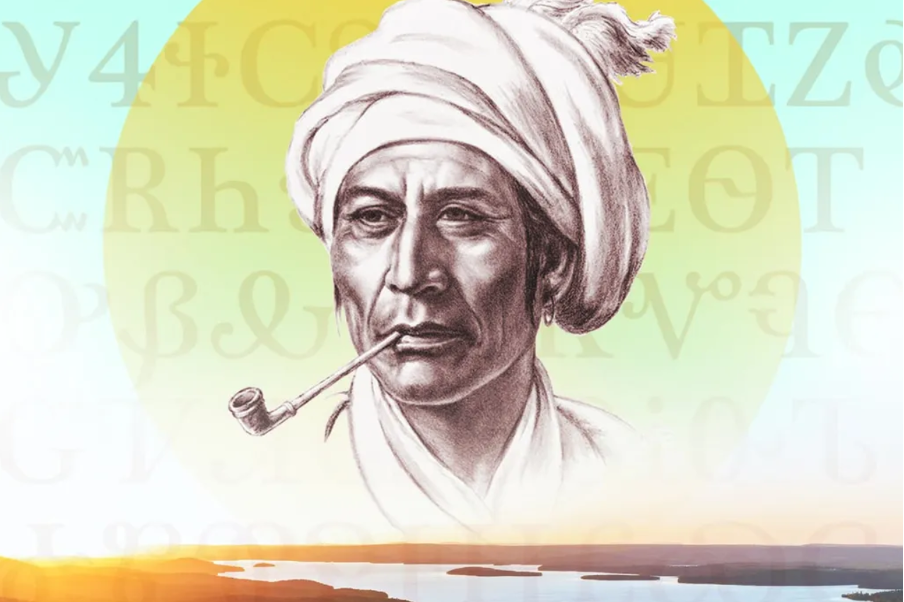
The Man Who Created a Written Language for the Cherokee Did It So Efficiently and Elegantly, His Peers Thought It Was Magic
Andrew Lawler
Smithsonian Magazine
Sequoyah’s syllabary faced suspicion initially, but after a demonstration, his version of “talking leaves” was widely embraced. And then the word spread. At first, they laughed. Then they scoffed. Finally, they accused him of witchcraft. The Cherokee silversmith named Sequoyah had spent years scratching strange marks on paper. In 1821, his fellow tribespeople, disturbed by his obsession, put him on trial for practicing black magic. Sequoyah insisted his invention would allow Cherokee speakers to write out Iroquoian language for the first time. To test his claim, tribal elders ordered Sequoyah’s young daughter, Ayoka, to another room. Father and daughter separately made marks on paper and told their minders in each room what the marks said.
Then the papers were exchanged. When each was able to read the other’s messages aloud, suspicion turned to wonder. The astonished elders immediately asked him to teach them his revolutionary transcription method. Within six months, one in four Cherokee, or Tsalagi, could read and write. Within a quarter-century, Cherokee people had achieved a higher rate of literacy than the country’s non-Native population. [Continue reading]


You must be logged in to post a comment.