
Mitchel Stuffers
Assistant Editor at CIGH Exeter & PhD Candidate in History, University of Exeter
From undeclared chemical weapons in Syria to wildlife adaptations in Ukraine, here are this week’s top picks in imperial and global history.
Undeclared chemical weapons found in Syria, including type used in notorious Ghouta massacre
Editorial Team
United Nations News – Global Perspective Human Stories
Izumi Nakamitsu briefed the Security Council on Thursday on the findings by the UN-backed Organisation for the Prohibition of Chemical Weapons (OPCW), which deployed a team to Syria in May. Inspectors found undeclared chemical munitions, related materials and extensive documentation. “These findings are a momentous discovery, not just for Syria, but for international security and the global disarmament regime,” Ms. Nakamitsu told the Council.
The discovery closes a long-standing gap in Syria’s accounting of its chemical weapons programme. Since 2014, the OPCW had been unable to confirm that Syria’s declaration – submitted by the government of ousted President Bashar al-Assad – was accurate or complete. The new Government led by President Ahmed al-Sharaa has cooperated closely with inspectors, Ms. Nakamitsu said, facilitating access to sites and providing documentation that made the breakthrough possible. [Continue reading]
Great mysteries of archaeology: an ancient Amazonian world revealed from the sky
José Iriarte
Conversation
From the air, you see it only through the constant jolt, tilt and shudder of the low-flying Cessna aircraft. The landscape of the Llanos de Moxos, northern Bolivia, appears as a disconnected patchwork of open grassland savannahs, forest islands and lakes.
It feels random, almost unreadable. Only gradually does the pattern resolve itself: raised causeways or paths fanning out to link the forest islands, and a dense, scattered web of canals threading the terrain. Slowly you realise it’s a structured network of intersecting lines, enclosures and roads – the imprint of past human design. If you stand on the open savannah, there is almost nothing to see of this ancient network. The horizon feels open, with fires in the distance from local people burning pastures and clearing forest as dry season begins. The old geometry is still faintly perceptible, but you have to know how to look. [Continue reading]
New Evidence Pushes Early Fire Use at Wonderwerk Cave Further Back
Editorial Team
Arciqoo
A new archaeological study has provided fresh evidence for early hominin use of fire at Wonderwerk Cave in South Africa, one of the most important sites for understanding the deep history of fire use. The research identifies burnt small mammal bones in Early Pleistocene Acheulean deposits, suggesting that fire was introduced into the cave by hominins more than one million years ago. Wonderwerk Cave, located in South Africa’s Northern Cape Province, preserves a long archaeological sequence covering nearly two million years of human occupation. Earlier research had already identified evidence of burning in Stratum 10, dated to around 1 million years ago, including burnt bone, stone, sediment, and ash. The new study confirms burning in this layer and adds evidence from the deeper Stratum 11, dated broadly between 1.79 and 1.07 million years ago.
To identify burning more clearly, the researchers introduced a rapid, non-invasive method based on bone luminescence. This technique uses specific light wavelengths to detect changes in burnt white and grey bones. The results were checked against Fourier Transform Infrared spectroscopy, a widely used method for identifying heat alteration in archaeological materials. [Continue reading]
India says it is working to stop water flow to Pakistan
Editorial Team
Daily Times
India has said it is actively working on measures to ensure that “not a single drop of water” flows into Pakistan in the coming years, escalating tensions over shared river resources governed by the Indus Waters Treaty. Indian Water Minister CR Patil made the remarks in an interview with Indian media, stating that the government was acting under directives from Prime Minister Narendra Modi. He said New Delhi was implementing long-term plans aimed at restricting water flows to Pakistan.
The statement comes after India suspended participation in the Indus Waters Treaty following a 2025 incident in Indian-administered Jammu and Kashmir. Pakistan has rejected the suspension, insisting that the treaty remains legally binding and cannot be unilaterally revoked. Pakistan has strongly opposed any attempt to alter the flow of shared rivers, calling such actions a potential “act of war” and warning that water should never be used as a geopolitical weapon. Islamabad has also accused India of attempting to politicise transboundary water resources in violation of international agreements. [Continue reading]
In the scorched earth of Ukraine, birds build nests with fiber optic cable left by drones
Ernestas Naprys
CyberNews
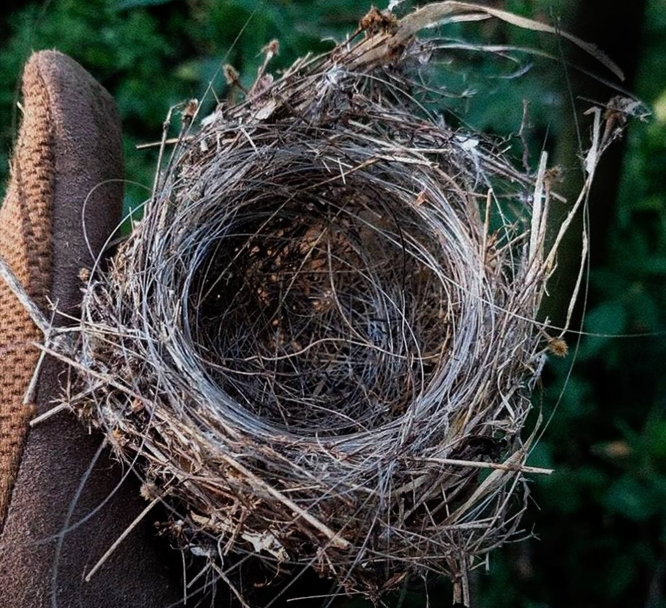
Suicide fiber-optic drones in Ukraine have covered the land with fiberglass. Birds now use the remains to build nests. Ultra-thin fiberglass cable spools, 5-20 km long, unwind as the drone flies and are used for the drone’s primary guidance and control system. This makes the weapon immune to interference, and such drones are hard to detect. But once their mission is done, the long trails of tangled fiberglass remain in the environment.
The 12th Special Forces Brigade “Azov” of the National Guard of Ukraine shared a photo on the official Telegram channel of an abandoned bird nest, which was primarily made from this non-biodegradable material. “Nature’s adaptation to war. Birds were the first to use the remains of fiber optics for their own needs before humans,” the translation of the post on Telegram reads. [Continue reading]


You must be logged in to post a comment.